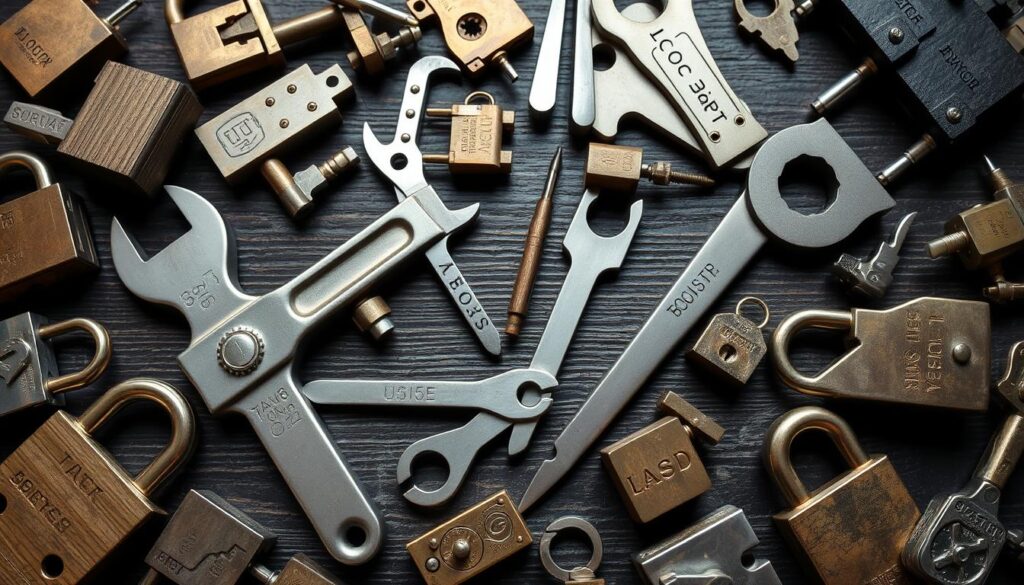
Lock picking blends technical precision with mechanical understanding. It’s a skill that sparks curiosity and intrigue. The internet has made lock picking resources more accessible, fueling interest in this unique hobby1.
Lock picking is more than just a skill. It’s a community-driven passion that fosters personal growth. Mastering lock picking develops transferable skills and builds connections with like-minded individuals1.
Both professionals and hobbyists are drawn to lock mechanisms. They find the intricate challenge irresistible2. Pin cylinder locks are popular targets for beginners1.
With the right tools and patience, you can hone this hobby. It combines mechanical knowledge with problem-solving abilities3. This sophisticated skill offers endless opportunities for growth and learning.
Key Takeaways
- Lock picking is a skill that requires practice and precision
- Online resources have made learning lock picking more accessible
- The hobby offers opportunities for skill development
- Understanding lock mechanisms is crucial to success
- Lock picking can be both a personal hobby and a professional skill
Understanding the Basics of Lock Picking
Lock picking blends mechanical know-how with precise technique. It’s a unique hobby that boosts security knowledge. This tutorial covers the key concepts of lock picking.
Lock picking opens locks without keys by manipulating internal parts. It requires knowledge of lock types and proper tools4. Mastering this skill demands practice and patience.
Types of Locks to Explore
Lock pickers encounter various lock designs. The most common types include:
- Pin cylinder locks (recommended for beginners)4
- Disc detainer locks
- Lever locks
- Warded locks
- Tubular locks
- Combination locks
Essential Lock Picking Tools
A good lock picking guide explains the right equipment. Your basic toolkit should include:
- Tension wrenches
- Hook picks
- Half-diamond picks
- City rakes
- Bogota rakes4
“The right tool can transform a complex lock into an open challenge.” – Lock Picking Enthusiast
Tool choice depends on lock complexity. Padlocks typically have 3-4 pins, while door locks often feature 5-8 pins5. Knowing these details sharpens your skills.
Practical Considerations
Lock picking is about grasping mechanical systems. Experts suggest using transparent practice locks to see internal workings6. This helps you understand how locks function.
This guide aims to educate and develop personal skills. It promotes understanding of security mechanisms for learning purposes only.
Techniques for Effective Lock Picking
Lock picking skills require understanding various techniques. Practice involves mastering methods that challenge precision and patience. These skills can transform you from beginner to expert.
Your lock picking journey starts with fundamental techniques. Pin cylinder locks are the most common starting point. These locks help build expertise progressively.
The Pin Tumbler Method
The pin tumbler method is crucial in lock picking practice. This technique uses specialized tools to manipulate individual pins.
- Insert tension wrench to apply rotational pressure
- Use pick to lift pins individually
- Listen for subtle clicks indicating pin alignment
The Raking Technique
Raking offers a faster approach for beginners. This method manipulates multiple pins at once7.
- Select appropriate rake tool
- Apply light tension
- Quickly move pick across pin stack
Advanced Lock Picking Methods
| Technique | Difficulty Level | Required Tools |
|---|---|---|
| Bottom-of-Keyway Tensioning | Beginner | Stainless steel tensioner |
| Top-of-Keyway Tensioning | Advanced | Specialized tension wrench |
| Single Pin Picking | Intermediate | Precision hooks |
Remember, mastering lock picking requires patience, practice, and respect for legal boundaries.
Lock picking skills develop through consistent practice. Start with basic methods and gradually progress. Understanding different techniques is key to improving your skills8.
Legal Aspects of Lock Picking
Lock picking laws are complex and vary across jurisdictions. Understanding these laws is crucial for responsible practice9.
Several key factors determine the legality of lock picking skills and tools. It’s vital to be aware of these elements.
Understanding Local Laws
Lock picking laws differ between regions. Owning lock picks is often legal, but using them without permission can bring legal troubles9.
Here are some important legal points to remember:
- Possession of lock picks is generally legal unless criminal intent is proven10
- Permission from the lock owner is crucial for legal lock manipulation9
- State-specific regulations can dramatically change legal interpretations10
Ethical Considerations
Professional lock pickers must follow ethical practices. Use your skills only with permission and for legitimate reasons. Respecting property rights is paramount.
Licensing and Certifications
Getting locksmith certification can offer legal protection and credibility. States have different rules for professional lock manipulation.
| State | Lock Pick Tool Regulations | Certification Requirements |
|---|---|---|
| California | Misdemeanor if criminal intent suspected | Professional locksmith license recommended |
| Michigan | Legal if not used for criminal purposes | Background check suggested |
| New Hampshire | No specific prohibitions | Voluntary certification available |
“Knowledge and responsibility are the keys to legal lock picking.” – Professional Locksmith Association
Research local laws and get proper locksmith certification. Practice your skills ethically to stay within legal boundaries10.
Practicing Lock Picking Safely
Lock picking mastery starts with smart practice. Choose locks that test your growing skills. Different lock types help you learn advanced techniques.
Begin with simple padlocks. Then, move on to more complex mechanisms. This gradual approach builds your skills effectively.
You don’t need to spend a lot on a practice kit. Start with cheap tools, even bobby pins11. Lock picking experts recommend brands like Sparrows and Peterson.
Starter kits cost around $4012. Buy tension tools and picks that match your level. This will boost your practice sessions.
Only pick locks you own or have permission to use. Join lock picking groups to learn from pros. Understand the ethical rules of the craft.
Keep your tools clean and store them safely. Remember, patience is crucial in this skill. Follow these tips for safe progress in lock picking.
FAQ
Is lock picking legal?
Lock picking laws differ by location. Owning lock picks is often legal. However, using them for criminal purposes is illegal. Always check your local laws before practicing.
Make sure you have clear permission to pick any lock you don’t own.
What are the best tools for beginners in lock picking?
Beginners should start with a tension wrench and basic picks. Hook and half-diamond picks are good choices. Pin cylinder locks are ideal for newcomers.
Practice kits with see-through locks help you grasp the inner workings. These tools allow you to develop your skills safely.
How difficult is it to learn lock picking?
Lock picking requires patience and regular practice. Start with simple padlocks and work your way up. Learn about lock mechanics and try different techniques.
Joining lock picking communities can boost your skills. With time and effort, you can master this craft.
What is LockSport?
LockSport is a hobby focused on lock picking skills. Enthusiasts learn about lock mechanisms and develop technical abilities. It’s a community-driven activity that explores various lock types.
Practitioners use these skills for personal interest and security research. It’s also a way to enhance problem-solving abilities.
What types of locks are best for practicing?
Pin cylinder locks are great for beginners. They have a simple mechanism that’s easy to understand. Clear practice locks let you see the parts as you work.
Only use locks you own or have permission to pick. Always practice in a safe, private place.
What are the most common lock picking techniques?
The pin tumbler method and raking are popular techniques. Pin tumbler involves setting pins one by one with tension. Raking uses a tool to move multiple pins at once.
Advanced methods like bump keying need more skill. These techniques require lots of practice to master.
Can I become a professional locksmith by learning lock picking?
Lock picking is just one skill locksmiths need. Most areas require formal training and licensing. You’ll also need to learn about lock installation and repair.
Key cutting and security system knowledge are important too. Background checks are often necessary for this profession.
Are there online communities for learning lock picking?
Many online groups focus on lock picking. They offer tutorials, advice, and tool suggestions. You can connect with experienced pickers in these communities.
Remember to practice ethically and legally. Use these skills responsibly and within the law.
Source Links
- How to Pick a Lock – the Absolute Beginner’s Guide – https://www.lockpickworld.com/blogs/news/the-absolute-beginners-guide-to-how-to-pick-locks?srsltid=AfmBOoqULngD-l67iQVd39LXDReUWkXmxUe7wgdG-PLTNiNHo1y2X7sK
- Learn Lockpicking: A Guide On How To Pick A Lock – https://www.bugoutbagbuilder.com/blog/learn-lock-picking-guide-how-pick-lock
- Master The Art Of Lock Picking – https://www.lowratelocksmith.com/lock-picking/master-the-art-of-lock-picking/
- How to Pick a Lock – the Absolute Beginner’s Guide – https://www.lockpickworld.com/blogs/news/the-absolute-beginners-guide-to-how-to-pick-locks?srsltid=AfmBOoqjWA-RaATzjICmoEAw6veIetWVmclJgaeISdbOt3HOyOQmQXg-
- How to Pick a Lock (with Pictures) – wikiHow – https://www.wikihow.com/Pick-a-Lock
- Beginners Guide to Lock Picking – https://practicalselfreliance.com/beginners-guide-to-lock-picking/
- Picking Techniques – BosnianBill’s LockLab – https://locklab.com/picking-techniques/
- How to Pick a Lock – the Absolute Beginner’s Guide – https://www.lockpickworld.com/blogs/news/the-absolute-beginners-guide-to-how-to-pick-locks?srsltid=AfmBOoogZQoP-Gv75IDMBgwSIvlFZXfsERGCoZvTXaNn4u-XLvhCL7mh
- Legal issues – Lockwiki – https://www.lockwiki.com/index.php/Legal_issues
- Is It Legal to Own a Lock Picking Tool Set in the US? – Legal Reader – https://www.legalreader.com/is-it-legal-to-own-a-lock-picking-tool-set-in-the-us/
- Introduction to Hobbyist Lock Picking Aka: LockSport – https://www.instructables.com/Introduction-to-Hobbyist-Lock-Picking/
- How do I start picking locks? – https://www.skullsecurity.org/2019/how-do-i-start-picking-locks