
Hashimoto’s disease affects your thyroid function and can feel overwhelming. But don’t worry! A targeted diet can transform your wellness and energy levels1. Your path to better health starts right here.
Thyroid disorders are common, especially among women. One in eight women will develop a thyroid problem in her lifetime2. Hypothyroidism affects about 5% of Americans, with women at higher risk3.
Your food choices can greatly impact your thyroid health. Half of Hashimoto’s patients have blood sugar issues, causing weight gain and tiredness1. Smart eating can lower thyroid antibodies and boost your overall health1.
Key Takeaways
- Hashimoto’s is the most common cause of hypothyroidism in the United States
- Dietary modifications can help manage thyroid symptoms
- Women are more susceptible to thyroid disorders
- Nutrient-dense foods can support thyroid function
- Personalized nutrition is key to managing Hashimoto’s
Understanding Hashimoto’s Disease and Its Impact on Your Body
Hashimoto’s thyroiditis is a tricky autoimmune condition. It silently attacks your thyroid gland, messing up your body’s hormone balance. This disease can seriously affect your daily life4.
How Hashimoto’s Affects Your Thyroid Function
Hashimoto’s messes with your thyroid function. Your immune system attacks the thyroid by mistake, causing swelling. This reduces hormone production and impacts important body processes.
Your metabolism, energy levels, and body temperature can all be affected. These changes can make you feel off-balance and unwell5.
Common Symptoms and Warning Signs
Spotting Hashimoto’s symptoms early is key to managing it well. Look out for these signs:
- Persistent fatigue
- Unexpected weight gain
- Increased sensitivity to cold
- Joint and muscle pain
- Irregular menstrual periods
Women aged 30 to 50 are more likely to get Hashimoto’s. It affects 5 in 100 Americans4. The disease is 4 to 10 times more common in women than men4.
The Role of Inflammation in Hashimoto’s
Inflammation is a big deal in Hashimoto’s thyroiditis. It damages the thyroid gland, cutting down hormone production. If not treated, this ongoing inflammation can cause health problems5.
“Understanding your body’s signals is the first step towards managing Hashimoto’s effectively.”
Genes, other autoimmune disorders, pregnancy, and environment can increase your risk. If you think you might have Hashimoto’s, talk to a doctor. They can help with diagnosis and treatment4.
The Hashimoto Diet: Essential Foods and Nutrients
Nutrition is key in managing Hashimoto’s thyroiditis. Your diet can support thyroid function and reduce inflammation. Choosing the right foods may improve your health and help manage symptoms.
https://www.youtube.com/watch?v=NMaosRali2E
Anti-inflammatory Foods to Include Daily
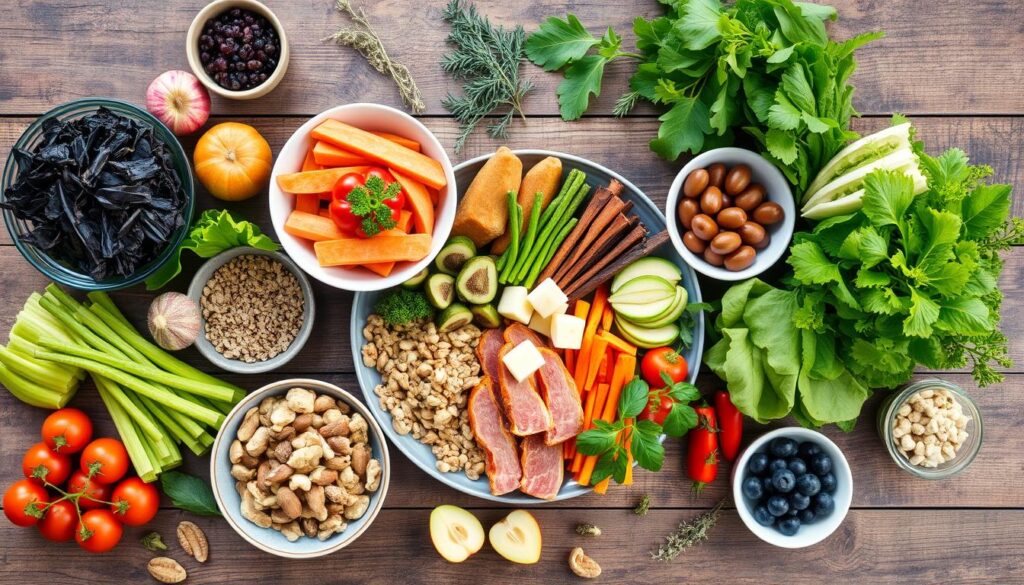
An anti-inflammatory diet is your ally against Hashimoto’s. Focus on nutrient-dense foods that support thyroid health:
- Colorful fruits and vegetables rich in antioxidants6
- Lean proteins like chicken and fish
- Healthy fats from avocados, nuts, and olive oil
- Gluten-free whole grains
Foods to Avoid with Hashimoto’s
Some foods can trigger inflammation and worsen symptoms. Consider avoiding or reducing these items:
- Gluten-containing grains7
- Processed sugars
- Dairy products
- High-glycemic fruits
- Nightshade vegetables
The Importance of Iodine and Selenium for Thyroid
Iodine and selenium are crucial for thyroid health. Low selenium is common in Hashimoto’s patients. Supplementation can help manage thyroid dysfunction6.
Try adding selenium-rich foods like Brazil nuts, mushrooms, and eggs to your diet. These can support your thyroid function.
“Your diet is a powerful tool in managing Hashimoto’s – choose foods that heal, not harm.”
Everyone’s needs are different. Experiment with different approaches like Paleo or Autoimmune Protocol diets. Find what best supports your thyroid health8.
Lifestyle Modifications for Managing Hashimoto’s
Your lifestyle is key in managing Hashimoto’s. It affects thyroid health and inflammation. Stress management is crucial, as it can worsen symptoms.
Here are key lifestyle strategies for your Hashimoto diet plan:
- Practice stress reduction techniques like meditation and deep breathing9
- Prioritize quality sleep for hormone balance10
- Engage in gentle exercise to boost metabolism10
Consider environmental factors in your gluten-free diet approach. Use filtered water and choose organic produce. These choices can support your thyroid health.
Nutrition is your ally in managing autoimmune challenges.
Eat foods that support thyroid function. Selenium-rich options like Brazil nuts can reduce inflammation. Some find relief by avoiding gluten and dairy.
Talk to a doctor before changing your diet. Supplements may help, but need professional guidance. Vitamin D, probiotics, and omega-3s could be beneficial.
Always seek expert recommendations for your specific needs. Your health journey is unique and requires personalized care.
Conclusion
Your Hashimoto Diet can be a powerful tool for reclaiming thyroid health. Specific nutritional choices play a crucial role in managing symptoms. Research shows dietary interventions can significantly impact your well-being thyroid health research11.
Genetic factors account for 70-80% of autoimmune thyroid diseases11. This makes personalized nutrition strategies essential. Understanding how nutrients like vitamin D and selenium affect your condition helps develop targeted approaches12.
Addressing nutritional deficiencies and making mindful food choices can reduce inflammation. These steps also support your thyroid function. Your journey with Hashimoto’s is unique, so there’s no one-size-fits-all solution.
Work closely with healthcare professionals and track your symptoms. Be patient with your body’s healing process. A well-planned Hashimoto Diet can empower you to take control of your health.
FAQ
What is Hashimoto’s disease?
Hashimoto’s is an autoimmune condition affecting the thyroid gland. It reduces thyroid hormone production, impacting metabolism and body functions. This disease is the leading cause of hypothyroidism in the U.S.
What are the typical symptoms of Hashimoto’s?
Common signs include fatigue, weight gain, and brain fog. Hair loss, cold sensitivity, and depression may also occur. These symptoms result from insufficient thyroid hormone production.
Can diet really help manage Hashimoto’s?
Yes! The Hashimoto Diet focuses on anti-inflammatory, nutrient-dense foods. It supports thyroid function and reduces inflammation. These dietary choices can help manage symptoms and improve overall well-being.
What foods should I avoid with Hashimoto’s?
Steer clear of inflammatory foods like sugar and processed items. Lectins in potatoes, tomatoes, and corn may also cause issues. Many find relief by eliminating these triggers.
Instead, focus on whole, unprocessed foods for better health outcomes.
Are there specific nutrients important for Hashimoto’s?
Iodine and selenium are crucial for thyroid health. Good sources include iodized salt, seaweed, and certain nuts. Consult your healthcare provider to determine your specific nutritional needs.
How does stress impact Hashimoto’s?
Chronic stress can worsen Hashimoto’s symptoms and trigger flare-ups. Managing stress through mindfulness, yoga, and proper sleep helps. These practices can reduce inflammation and support thyroid health.
Is there a cure for Hashimoto’s?
There’s no permanent cure, but Hashimoto’s can be effectively managed. A combination of medical treatment and lifestyle changes is key. Many people successfully control symptoms and improve their quality of life.
Should I go completely gluten-free?
Many with Hashimoto’s benefit from a gluten-free diet. Gluten can trigger inflammation and worsen autoimmune responses. Consult a healthcare professional before making major dietary changes.
An elimination diet test may help determine your individual needs.
How important is gut health in managing Hashimoto’s?
Gut health plays a crucial role in managing Hashimoto’s. A healthy gut reduces inflammation and supports the immune system. Probiotics and addressing food sensitivities can improve gut health.
Can I manage Hashimoto’s without medication?
Diet and lifestyle changes are important, but don’t stop prescribed medication without consulting your doctor. These modifications should complement medical treatment. Work closely with your healthcare provider for a comprehensive management plan.
Source Links
- The Best Diet For Hashimoto’s – Dr. Izabella Wentz – https://thyroidpharmacist.com/articles/best-diet-for-hashimotos-hypothyroidism/
- Conquer Hashimoto’s Disease with Proven Health Strategies – https://lemontnaturalhealthcare.com/life-changing-strategies-to-conquer-hashimotos-disease-and-reclaim-your-health/
- Hashimoto’s Thyroiditis – Gundry Health – Dr. Steven Gundry – https://gundryhealth.com/hashimotos-thyroiditis/
- Hashimoto’s Disease – NIDDK – https://www.niddk.nih.gov/health-information/endocrine-diseases/hashimotos-disease
- Hashimoto’s disease-Hashimoto’s disease – Symptoms & causes – Mayo Clinic – https://www.mayoclinic.org/diseases-conditions/hashimotos-disease/symptoms-causes/syc-20351855
- Hashimoto’s disease diet: The best foods for hypothyroidism – https://www.medicalnewstoday.com/articles/321197
- Hashimoto Diet – https://www.healthline.com/nutrition/hashimoto-diet
- Hashimoto’s Thyroiditis Diet: Best & Worst Food List – Baptist Health – https://www.baptisthealth.com/blog/family-health/hashimoto-s-thyroiditis-diet-best-worst-food-list
- Nutrition and Lifestyle Changes to Manage Hypothyroidism – https://pedagogyeducation.com/News/Nutrition-and-Lifestyle-Changes-to-Manage-Hypothyr
- Lifestyle Changes to Support Thyroid Health: Tips for Hashimoto’s and Graves’ Patients – Natural Endocrinology Specialists – https://www.nesaz.com/lifestyle-changes-to-support-thyroid-health/
- Nutritional Management of Thyroiditis of Hashimoto – https://pmc.ncbi.nlm.nih.gov/articles/PMC9101513/
- What to Eat When You Have Hashimoto’s Disease – https://www.verywellhealth.com/hashimotos-disease-diet-5180623

