
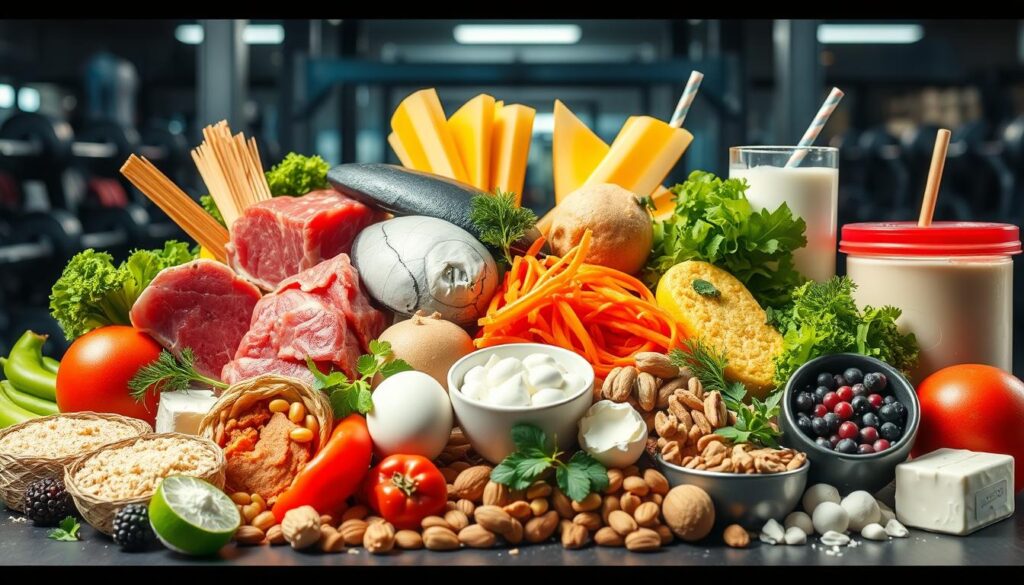
Protein is crucial for muscle building. It supports growth, repairs tissue, and boosts performance. The right protein intake can transform your fitness results1.
Protein needs vary for each person. Factors include body weight, activity level, and fitness goals. Experts suggest 1.2-1.7 grams of protein per kilogram of body weight daily12.
For muscle gains, strategic protein consumption is key. A 150-pound person might need 55 grams of protein for a sedentary lifestyle. However, this can increase to 150 grams with regular strength training2.
Key Takeaways
- Protein is essential for muscle repair and growth
- Daily protein needs vary based on individual fitness goals
- Active individuals require more protein than sedentary people
- Optimal protein intake supports muscle protein synthesis
- Distribute protein intake throughout the day for best results
Understanding Protein’s Role in Muscle Development
Protein is vital for muscle growth. It builds and repairs muscle tissue. Grasping protein’s function is key for your fitness goals3.
How Protein Builds and Repairs Muscle Tissue
Muscles constantly break down and rebuild. Protein provides essential building blocks for this process. Your protein intake directly affects muscle repair and growth3.
- Protein supports muscle cell repair
- Provides amino acids for tissue development
- Helps maintain muscle structure
Essential Amino Acids and Muscle Growth
Not all proteins are equal. Essential amino acids boost muscle protein synthesis. About half of protein’s amino acids are used during digestion4.
Quality protein sources are crucial for muscle development. Choose wisely to maximize your muscle-building efforts.
| Protein Type | Muscle Synthesis Efficiency |
|---|---|
| Whey Protein | High |
| Casein Protein | Moderate |
| Soy Protein | Lower |
Muscle Protein Synthesis Explained
Muscle protein synthesis peaks about 2 hours after eating protein. Athletes should meet protein needs to boost this process5.
Understanding protein’s role is key to effective muscle development.
Eat about 20 grams of protein after workouts. This helps maximize muscle growth5. Balanced nutrition is crucial for turning protein into muscle.
Protein Per Day to Build Muscle
Knowing your daily protein needs is key for building muscle. Your ideal intake depends on your fitness goals and activity level6. Current guidelines offer different protein strategies for muscle growth.
Most muscle-builders should aim for a specific protein range. Active folks need 1.2 to 2 grams of protein per kilogram of body weight7. This amount helps muscle growth and supports your fitness goals.
“Protein is the building block of muscle growth, but quantity and timing matter most.”
- For a 180-pound person, daily protein should be 98-131 grams7
- Athletes may need up to 2 grams of protein per kilogram of body weight6
- Older adults need about 1 gram per kilogram to prevent muscle loss6
Your protein plan should fit your needs. After exercise, eat 0.25 to 0.3 grams of protein per kilogram of body weight6. This boosts muscle growth.
Don’t go over 1.3 grams per kilogram daily. Too much protein can lead to unwanted weight gain6.
Choose high-quality protein sources that absorb well. Whey protein and lean meats are great for muscle growth8. Remember, muscles grow with both resistance training and proper protein intake8.
Best Sources of Protein for Muscle Growth
Choosing the right proteins is key for building lean muscle mass. Protein intake is crucial for muscle development and recovery. Understanding protein sources can help optimize your diet for muscle growth.
Check out this guide on muscle-building nutrition for more insights.
Complete vs Incomplete Protein Sources
Proteins are either complete or incomplete. Complete proteins contain all essential amino acids needed for muscle building9. Animal-based proteins usually provide a full amino acid profile10.
Animal-Based Protein Options
Animal proteins are excellent for muscle building. Here are top options:
- Chicken breast: Contains 26-35.5g of protein per serving911
- Salmon: Provides 17-22g of protein with beneficial omega-3 fatty acids911
- Turkey breast: Offers 25g of protein per serving11
- Eggs: Approximately 13g of protein each11
- Beef: Contains 21-22g of protein per serving1011
Plant-Based Protein Alternatives
Plant proteins can also support muscle growth. Consider these alternatives:
- Tofu: 10-12.68g of protein per serving11
- Quinoa: 4-8g of protein per serving1011
- Lentils: 9g of protein per half-cup9
- Edamame: 17g of protein per serving11
- Peanuts: Contains nearly 41g of protein per cup9
Pro tip: Mix different protein sources for a complete amino acid profile, especially on a plant-based diet.
The key is variety and consistent protein intake to support muscle development and recovery.
Conclusion
Understanding protein intake is crucial for optimal muscle growth. Balance your protein consumption to support your fitness goals. For most people, 1.2 to 1.6 grams of protein per kilogram of body weight daily is recommended1213.
Your activity level affects protein needs. Weightlifters might require 1.4-2 grams per kilogram of body weight1213. Aim for 20-25 grams of high-quality protein per meal to maximize muscle protein synthesis14.
Quality matters as much as quantity in protein intake. Spread your protein across four meals, about 0.4-0.55 grams per kilogram each1412. Choose animal or plant-based proteins to support muscle growth and recovery.
Listen to your body’s needs. Consult a nutrition expert to create a personalized muscle-building plan. Your journey to stronger muscles starts with smart protein choices.
FAQ
How Much Protein Do I Need to Build Muscle?
For muscle growth, aim for 1.2 to 1.6 grams of protein per kilogram of body weight daily. A 180-pound person needs about 98-131 grams of protein per day. Athletes might need up to 2 grams per kilogram.
It’s best to consult a nutritionist for personalized advice. They can help create a plan that fits your needs.
What Are the Best Protein Sources for Muscle Building?
Animal-based proteins like lean meats, poultry, fish, eggs, and dairy are complete proteins. They contain all essential amino acids. Plant-based options include combinations like rice and beans, tofu, and quinoa.
A 3-oz serving of turkey provides about 25g of protein. Salmon offers around 22g per serving.
Can I Build Muscle with Plant-Based Proteins?
Yes, you can build muscle with plant-based proteins! Combine different sources to create complete protein profiles. Beans, lentils, nuts, seeds, and soy products all support muscle growth.
The key is variety in your diet. Make sure you’re getting all essential amino acids through smart food combinations.
When Should I Consume Protein for Optimal Muscle Growth?
Timing matters for muscle growth. Eat protein around your workouts to boost muscle protein synthesis and recovery. This helps your body repair and build muscle tissue more effectively.
Spread your protein intake throughout the day. Include a protein-rich meal or snack before and after your resistance training.
How Do Essential Amino Acids Impact Muscle Growth?
Essential amino acids are crucial for muscle development. They stimulate muscle protein synthesis, which repairs and builds muscle tissue. Your body can’t make these amino acids, so you must get them from food.
Eat complete proteins or combine protein sources. This ensures you get all nine essential amino acids your body needs.
Is More Protein Always Better for Muscle Building?
Not always. While protein is essential, there’s a limit to its benefits. Research shows benefits max out around 1.5 to 1.6 grams per kilogram of body weight daily.
Too much protein doesn’t mean more muscle growth. It could strain your kidneys or lead to extra calories.
Do Protein Needs Change with Age?
Yes, protein needs change as you age. Older adults may need more protein to fight age-related muscle loss. Athletes and active people also need more protein than sedentary individuals.
Adjust your protein intake based on your activity level, age, and health goals. A balanced approach is key to meeting your body’s needs.
Source Links
- PDF – https://www.acsm.org/docs/default-source/files-for-resource-library/protein-intake-for-optimal-muscle-maintenance.pdf
- How Much Protein Should You Eat to Gain Muscle? – https://www.onepeloton.com/blog/how-much-protein-should-i-eat-to-gain-muscle/
- How to Build Muscle: Getting Enough Protein, Carbs and Fats – https://www.herbalife.com/en-us/wellness-resources/articles/building-muscle
- Recent Perspectives Regarding the Role of Dietary Protein for the Promotion of Muscle Hypertrophy with Resistance Exercise Training – https://pmc.ncbi.nlm.nih.gov/articles/PMC5852756/
- How Does Protein Help Build Muscles? | Britannica – https://www.britannica.com/video/How-Does-Protein-Build-Muscle/-279137
- How Much Protein a Day Do You Need to Build Muscle? – https://www.healthline.com/health-news/how-much-protein-per-day-build-muscle
- Protein for muscle mass: What is the optimal intake? – https://www.medicalnewstoday.com/articles/how-much-protein-do-you-need-to-build-muscle
- How Much Protein Do You Need Daily? Ideal Protein Intake for Muscle Growth, Weight Loss and Managing Chronic Conditions – https://www.unitypoint.org/news-and-articles/how-much-protein-do-you-need-daily-ideal-protein-intake-for-muscle-growth-weight-loss-and-managing-chronic-conditions
- 30 muscle building foods to fuel your goals – https://www.medicalnewstoday.com/articles/muscle-building-foods
- The Best Sources of Protein for Building Muscle – https://samsungfood.com/blog/best-sources-protein-building-muscle-mass/
- 20 Of The Best High Protein Foods For Building Muscle – https://www.liveinnermost.com/blogs/insight/the-best-high-protein-foods-for-building-muscle?srsltid=AfmBOooz7HR7r4-wdS9pyL9A8LJgbWADFUW7VZQVAPlWmj4G8EuG5hF0
- How Much Protein Do You Need to Build Muscle? – https://dymatize.co.in/thescoop/how-much-protein-do-you-really-need-to-build-muscle
- How much protein to build muscle? – https://www.bbcgoodfood.com/health/fitness/how-much-protein-to-build-muscle
- How much protein can the body use in a single meal for muscle-building? Implications for daily protein distribution – Journal of the International Society of Sports Nutrition – https://jissn.biomedcentral.com/articles/10.1186/s12970-018-0215-1

