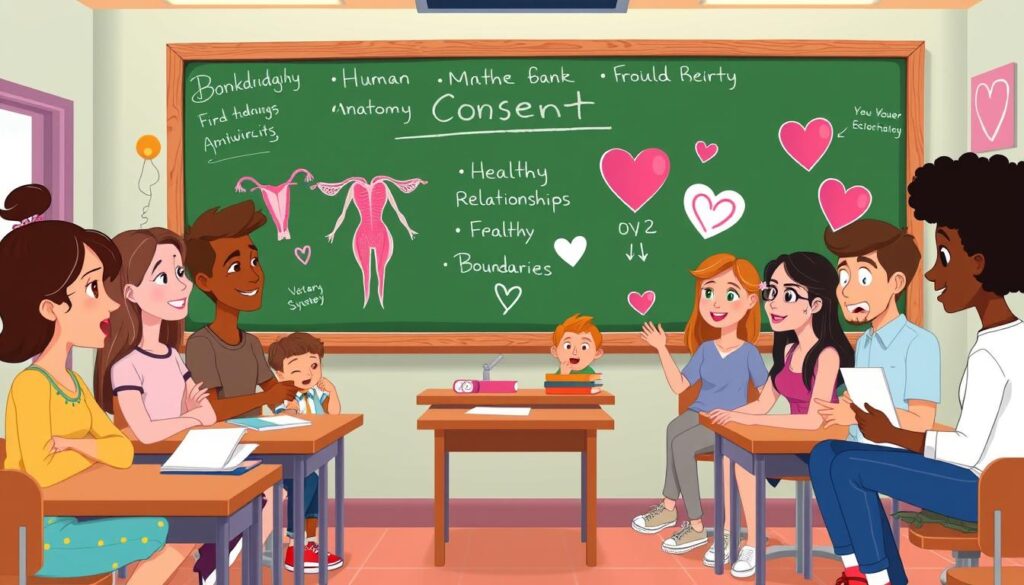
Animation has become a powerful tool for sexual education. It changes how young people learn about sensitive topics. Cartoon content makes complex subjects less intimidating and more approachable.
These animated series create a safe space for younger teens. They can explore important information about personal growth and relationships. This innovative approach allows for thoughtful discussions about friendship, puberty, and gender identity.
The content targets audiences aged 10 to 14. It builds understanding in age-appropriate ways. Digital platforms like YouTube, Snapchat, and Instagram are key to delivering this content1.
A planned release of 35 videos is in the works. New content appears weekly. These animated resources make sexual education more accessible and engaging than ever before.
Key Takeaways
- Animation offers a friendly approach to sexual education
- Cartoon content makes sensitive topics more approachable
- Digital platforms expand educational reach
- Age-specific content helps build understanding
- Interactive media supports comprehensive learning
Understanding the Importance of Sexual Education
Sexual education is vital for personal growth. It helps people understand their bodies, relationships, and boundaries. Animated films and kids’ shows make this topic more accessible for young learners.
Comprehensive sexual education goes beyond basic biology. It helps people make smart choices about health and relationships. Digital health games show promise in boosting teen sexual well-being2.
Many digital tools focus on HIV/AIDS prevention and sexual health education2. These resources make learning about sexual health more engaging and effective.
Why Sexual Education Matters for Everyone
Sexual health knowledge is key to personal growth. Research shows some interesting facts:
- Less than one-third of teens report being sexually active on confidential surveys3
- Nearly half of 26 million people with sexually transmitted diseases in the US are under 25 years old3
- 100% condom use can reduce infection chances by 30-80%3
The Role of Parents and Educators
Parents and teachers are crucial in providing accurate, age-appropriate sexual education. Open communication helps young people navigate complex changes. It builds understanding and respect for oneself and others.
Sexual education is about empowerment, understanding, and respect for oneself and others.
Misconceptions About Sexual Education
Many myths exist about sexual education. Some think it encourages early sexual activity. However, evidence shows it helps youth make more responsible choices.
| Misconception | Reality |
|---|---|
| Sexual education promotes sexual activity | It promotes informed, responsible decision-making |
| These discussions are inappropriate for children | Age-appropriate education builds understanding and safety |
Animated films and fun kids’ content make sexual education informative and comfortable. These tools turn learning about sexual health into an enjoyable experience4.
How Cartoon Content Enhances Learning Experiences
Visual learning has changed how we teach. Comedy animation and action animation turn complex info into fun, easy lessons. Animated characters do more than entertain; they help us grasp tough ideas.
Visual Learning and Retention
Most people learn best through visuals. In fact, 65% of us are visual learners. Our brains process 90% of info visually5.
Animation makes learning easier to understand and remember. It helps students tackle hard topics through lively storytelling6.
- Visual representations enhance understanding
- Animation simplifies complex concepts
- Storytelling improves information retention
Relatable Characters in Animated Shows
Animated characters connect with learners in powerful ways. They present real-life situations that help explain tricky or sensitive subjects. Popular learning sites use these characters to make lessons more fun6.
“Animation transforms education by speaking the language of imagination”
Engaging Storylines That Capture Attention
A key study showed cartoon-based teaching boosts learning results. Students who watched cartoons got much better test scores7.
Visual stories, relatable characters, and interactive plots make learning both informative and fun. This mix works well for students of all ages and learning styles.
Comedy animation and action animation create immersive learning experiences. These tools help educators reach students in exciting new ways.
Examples of Effective Cartoon Content in Sexual Education
Animated series are powerful tools for addressing sensitive topics in sexual education. They create safe spaces for learning about personal development. Engaging stories and relatable characters make complex issues easier to understand8.
Popular Animated Series Tackling Sensitive Topics
Cartoon Network and Disney Animation have pioneered new approaches to sexual education. Totally Spies! broke ground with strong female characters and complex relationship dynamics8.
- Shows that explore friendship and trust
- Characters representing diverse relationship models
- Nuanced portrayals of interpersonal connections
Evaluating the Impact of These Programs
Studies show animated series can effectively teach sexual education concepts. The cartoon puppet media for sexual education received high ratings from viewers9.
Scores ranged between 78-82% for appropriateness. This suggests cartoons are a valuable tool for sexual education.
Animated content provides a non-threatening approach to discussing sensitive topics
Testimonials from Parents and Educators
Many educators find sexual education difficult to discuss. Animated series offer an engaging alternative for these challenging topics.
Disney Animation and other studios now include nuanced portrayals of relationships. These shows explore personal growth in relatable ways10.
| Animated Series | Educational Impact |
|---|---|
| Totally Spies! | Challenging stereotypes |
| Modern Animated Series | Exploring complex relationships |
Entertaining animated series create meaningful learning experiences. These shows resonate with young audiences, making sexual education more accessible9.
Tips for Parents on Using Cartoon Content for Education
Choosing educational cartoons for kids can be tricky. Look for age-appropriate content that sparks meaningful talks. Cartoons make complex topics easier to understand through sight and sound.
Balance fun and learning when using cartoon content. Creative visual media can help kids develop problem-solving skills. Ask open-ended questions about what they’ve watched to boost critical thinking.
Set clear limits on screen time. Make sure to use different content sources. Watch cartoons together to bond and improve communication skills.
Use animated films to start important conversations. Your guidance can help kids learn valuable lessons from cartoon characters. This makes learning fun and interactive.
With your active involvement, cartoons can become powerful teaching tools. They can help make education an exciting adventure for your children1112.
FAQ
Why is animation an effective tool for sexual education?
Animation makes complex topics easy to understand through visuals and stories. It uses colorful objects, sounds, and meaningful narratives to explain sensitive information. Research shows animated content effectively teaches body awareness and personal safety to children.
At what age can cartoon content be used for sexual education?
Sexual education can begin as early as 4-5 years old. The AMAZE project targets young teens aged 10-14. Age-appropriate content should match the child’s understanding and maturity level.
How can parents use animated content for sexual education?
Parents can choose age-appropriate resources like AMAZE project videos. They can use these materials to start conversations about sexuality. It’s important to explain complex ideas and address misconceptions.
Creating an open, supportive environment for discussions is crucial. Be prepared to provide additional context and guidance when needed.
Are there any risks in using cartoon content for sexual education?
Some animations may oversimplify complex topics or promote problematic ideas. Parents should carefully evaluate the content before showing it to children. Watch the videos together and be ready to provide extra explanation.
What topics can be covered through animated sexual education?
Animated content can cover body awareness, puberty, friendship, and gender identity. It can also address personal boundaries and age-appropriate biological information. The AMAZE project shows how animation can explore emotional and social aspects of growing up.
How effective are animated sexual education resources?
Studies show animated content helps children understand sensitive topics well. A study with kindergarteners found they grasp information easily through animated videos. Parents, educators, and young people say these resources fill a gap in sexual education.
Where can I find reliable animated sexual education content?
The AMAZE project, educational websites, and professional sexual health organizations offer reliable content. Look for age-appropriate, scientifically accurate resources. Choose materials developed with child development experts and educators.
Source Links
- When Animation and Sex Education Meet: A Q&A With Nicole Cushman – https://rewirenewsgroup.com/2016/12/05/animation-sex-education/
- Improving Sexual Health Education Programs for Adolescent Students through Game-Based Learning and Gamification – https://pmc.ncbi.nlm.nih.gov/articles/PMC6163657/
- The Hidden Truths of “Comprehensive” Sex Education – https://publicsquaremag.org/media-education/education/missing-truths-comprehensive-sex-education/
- Promoting Sexuality Education for Children and Adolescents on a Large Scale: Program Design, Organizational Cooperation Network and Administrative Mobilization – https://pmc.ncbi.nlm.nih.gov/articles/PMC9600091/
- Classroom Animation: A Guide to Engaging and Effective Learning – https://flearningstudio.com/how-using-animation-in-the-classroom-can-transform-learning/
- Effective Strategies and Examples for Educational Animation – https://www.yellowbrick.co/blog/animation/effective-strategies-and-examples-for-educational-animation
- Evaluating the Impact of Cartoon-Based Learning on Student Performance and Engagement in Medical Education: An Experimental Study – https://pmc.ncbi.nlm.nih.gov/articles/PMC10960565/
- This Cartoon Will Help You Rethink Your Definition of Intimacy – https://magazine.catapult.co/culture/stories/this-cartoon-will-help-you-rethink-your-definition-of-intimacy-michele-kirichanskaya
- PDF – https://journal.staihubbulwathan.id/index.php/alishlah/article/download/5127/2417
- Sexual Innuendos in Children’s Cartoons: in depth analysis – https://medium.com/@baemisaalbybae/sexual-innuendos-in-childrens-cartoons-in-depth-analysis-f0138333719f
- Parents, here’s why you should let your kids watch cartoons. – Edvolution Enterprise | Revolutionizing Education – https://myedvolution.com/parents-heres-why-you-should-let-your-kids-watch-cartoons/
- How to Encourage Your Child to Create Cartoons: Tips for Parents. | IT STEP Academy Blog – https://th.itstep.org/blog/how-to-encourage-your-child-to-create-cartoons-tips-for-parents