
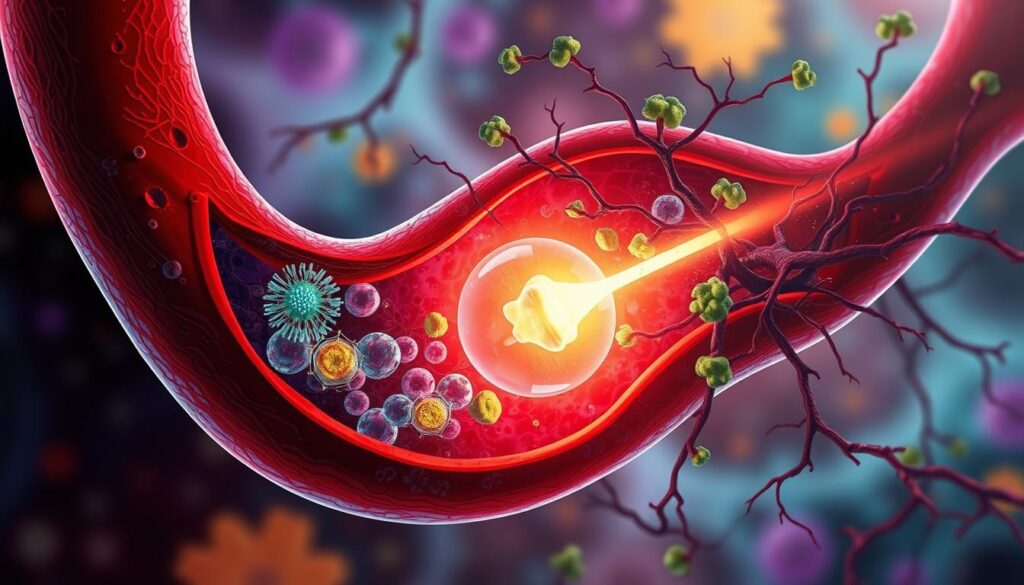
Medical researchers have found fascinating links between cardiovascular diseases and cancer. These discoveries challenge our traditional understanding of these serious health conditions1. Millions of new cancer cases and cardiovascular-related deaths occur worldwide each year1.
Vascular health is vital for your overall well-being. Cancer and atherosclerosis share surprising similarities, including inflammatory processes and environmental risk factors1. About 40% of cancer cases are linked to changeable factors like smoking, alcohol use, and obesity1.
The link between tumor growth and heart diseases is more complex than once thought. People with atherosclerotic cardiovascular disease (ASCVD) have a higher risk of certain cancers2. This unexpected connection offers new ways to understand and possibly prevent both conditions.
Key Takeaways
- Cancer and cardiovascular diseases share critical risk factors
- Chronic inflammation plays a significant role in both conditions
- Environmental factors contribute significantly to disease development
- Early detection and prevention are crucial for managing health risks
- Lifestyle choices can impact both cardiovascular and cancer risks
Understanding Cancer and Its Types
Cancer is a complex medical challenge affecting millions worldwide. It involves abnormal cell growth and uncontrolled multiplication of malignant cells. This disease can have devastating effects on the human body3.
Cancer develops through intricate genetic mechanisms involving tumor suppressor genes and cellular mutations. These changes disrupt normal cell division processes. This can lead to potentially life-threatening conditions.
What is Cancer?
Cancer is characterized by the following key features:
- Uncontrolled cell growth
- Ability to invade surrounding tissues
- Potential to spread to other body parts
- Disruption of normal cellular functions
Common Types of Cancer
The most prevalent cancer types include:
| Cancer Type | Estimated New Cases |
|---|---|
| Breast Cancer | 2.3 million4 |
| Lung Cancer | 1.8 million4 |
| Prostate Cancer | 1.4 million |
| Colorectal Cancer | 1.2 million |
How Cancer Develops
Cancer development involves multiple stages of genetic mutations. Tumor suppressor genes help prevent uncontrolled cell growth. When these genes become damaged, cells can multiply rapidly and form tumors3.
“Understanding cancer’s complexity is key to developing targeted treatments and improving patient outcomes.” – Dr. Emily Rodriguez, Oncology Researcher
Advances in genomic science offer deeper insights into cancer progression. This research provides hope for better prevention and treatment strategies4.
What is Atherosclerosis?
Atherosclerosis is a complex heart disease that develops silently in your arteries. It can threaten your vascular health. Knowing about this condition is key to maintaining your well-being.
Heart diseases pose a major global health challenge. Atherosclerosis is especially worrying as it causes many serious health risks5. Heart attacks and strokes from these issues are the top cause of death worldwide6.
Definition of Atherosclerosis
Atherosclerosis involves plaque buildup in your artery walls. This ongoing process turns healthy blood vessels into narrow, hard pathways5. As a result, blood flow becomes restricted.
Stages of Atherosclerosis
- Initial lipid accumulation in arterial walls
- Inflammatory response and cell recruitment
- Plaque development and arterial narrowing
- Potential plaque rupture and blood clot formation
Risk Factors for Atherosclerosis
Your risk of atherosclerosis depends on several factors. The PESA study found that 63% of people without symptoms have atherosclerosis5. This affects one or more of their vascular areas.
| Risk Category | Specific Factors |
|---|---|
| Lifestyle | Smoking, sedentary behavior, unhealthy diet |
| Medical Conditions | Diabetes, hypertension, high cholesterol |
| Personal Characteristics | Age, genetic predisposition, stress levels |
Research shows that 40% of heart risks can be managed by changing lifestyle factors5. You have the power to prevent and manage atherosclerosis. Making informed choices can make a big difference.
“The trajectory of cardiovascular disease is increasingly recognized as an intricate interaction between genetic factors and environmental influences”5.
Learning about atherosclerosis and its risks is crucial. This knowledge allows you to take steps to protect your heart health. You can reduce potential complications by being proactive.
The Connection Between Cancer and Atherosclerosis
Cancer and cardiovascular diseases share surprising links that challenge traditional medical views. Researchers have found crucial connections between these conditions. These insights offer new perspectives on human health.
Cancer and heart disease share key biochemical pathways that affect your health. Together, they cause nearly half of all deaths in the U.S. This fact underscores the importance of understanding their relationship.
Shared Risk Factors
Several factors increase your risk for both cancer and heart disease. These include obesity, smoking, chronic stress, and poor diet. Awareness of these risks can help you make better health choices.
- Obesity
- Smoking
- Chronic stress
- Poor dietary habits
Cancer survivors face a higher risk of heart disease. This highlights the need for comprehensive care after cancer treatment.
Inflammatory Processes
Chronic inflammation is a key link between cancer and heart disease. Inflammatory markers play a big role in how these diseases progress. They create complex interactions within your body7.
| Condition | Cardiovascular Incidence | Key Characteristics |
|---|---|---|
| Cancer Survivors | 23.1 per 1,000 person-years | Higher CVD risk |
| Non-Cancer Subjects | 12.0 per 1,000 person-years | Standard CVD risk |
“The intersection of cancer and cardiovascular disease represents a critical frontier in medical research.” – Oncology Research Team
New technologies are helping us understand and treat these linked conditions. Sodium glucose cotransporter-2 inhibitors and nanoparticles offer innovative approaches. These advances could lead to better treatments for both diseases7.
How Cancer Influences Atherosclerosis
Cancer and cardiovascular diseases have a complex relationship that affects patient health. Tumor progression can significantly impact heart health and overall cardiovascular risk. Your body’s response to cancer can alter your heart’s well-being.
Cancer Therapies and Heart Health
Cancer treatments can unexpectedly affect cardiovascular health. Chemotherapy and radiation may increase the risk of heart-related complications8. Cancer survivors face a higher incidence of cardiovascular diseases compared to those without cancer8.
Tumor-Induced Inflammation
Chronic inflammation links cancer and atherosclerosis. Tumors trigger inflammatory processes that can damage blood vessels and increase cardiovascular risk9. This process involves several key factors.
- Increased production of inflammatory markers
- Activation of cellular stress responses
- Potential disruption of normal vascular function
Hormonal Changes and Cardiovascular Risk
Cancer and its treatments can alter hormonal balances. These changes impact lipid metabolism and vascular health8. Advanced-stage breast cancer patients often show elevated plasma LDL levels8.
| Cancer Type | Cardiovascular Risk Factors | Potential Impact |
|---|---|---|
| Breast Cancer | Elevated LDL Levels | Increased Atherosclerosis Risk |
| Lung Cancer | Inflammatory Markers | Higher Cardiovascular Complications |
Understanding these connections empowers patients to take proactive steps in managing their health and mitigating potential risks.
Knowing how cancer affects heart health helps you make informed decisions. You can work with your doctors to create better health plans. This knowledge allows for improved monitoring and prevention strategies.
Atherosclerosis as a Risk Factor for Cancer
Cardiovascular diseases and cancer share surprising connections. This link could transform oncology research. Atherosclerosis and tumor progression are more than just medical coincidences.
Cancer patients face unique cardiovascular challenges. Research shows how atherosclerosis might contribute to cancer development1.
- Chronic inflammation plays a crucial role in both conditions
- Shared risk factors increase potential cancer progression
- Cardiovascular changes can impact tumor development
Mechanisms of Cancer Risk
Atherosclerosis may speed up cancer growth. Statistics reveal compelling connections between the two conditions.
- 47.2% of patients with coronary atherosclerotic heart disease have a documented cancer history10
- Inflammatory pathways contribute significantly to tumor progression1
- Cardiovascular risk factors can predict potential cancer development
Clinical Findings
New research shows links between cardiovascular diseases and cancer. Atherosclerosis patients have higher risks of certain cancers10.
Respiratory, digestive, and urogenital cancers strongly correlate with coronary artery disease.
“The inflammatory state may be a critical predictor of both cardiovascular and cancer outcomes” – Oncology Research Consortium
Research Implications
These connections open new paths for prevention strategies. Doctors can develop better screening methods for at-risk patients1.
Knowing these links could change your life. Regular heart checks and healthy habits can lower cancer risks tied to atherosclerosis.
Prevention Strategies for Atherosclerosis
Protecting your heart health requires a smart approach to prevent atherosclerosis. Key strategies can greatly lower your risk of serious vascular health issues.
Effective prevention combines lifestyle changes and medical care. These methods work together to keep your cardiovascular system healthy.
Lifestyle Modifications for Vascular Health
Your daily habits are crucial in preventing atherosclerosis. Important changes include:
- Regular physical activity to improve blood circulation11
- Maintaining a healthy body weight11
- Avoiding tobacco and excessive alcohol consumption12
- Managing stress through relaxation techniques
Nutritional Interventions
Diet is key for heart protection. The American Heart Association suggests eating:
Regular Health Screenings
Active health checks help spot and manage potential heart risks early. Regular screenings are vital for your heart health.
| Screening Type | Recommended Frequency | Key Metrics |
|---|---|---|
| Lipid Profile | Annually | LDL under 70 mg/dL12 |
| Blood Pressure Check | Every 6 months | Below 120/80 mm Hg12 |
| Diabetes Screening | Every 3 years | Blood glucose levels |
“Prevention is always better than cure when it comes to your heart health.”
Using these methods can greatly lower your risk of atherosclerosis. They help keep your heart strong and healthy for years to come.
Monitoring Cancer Patients for Heart Health
Protecting your heart during cancer treatment is vital for long-term wellness. Some cancer treatments can affect cardiovascular health. Regular monitoring is key to keeping patients safe13.
Importance of Cardiovascular Screening
Cancer survivors face unique heart health challenges. In 2014, the U.S. had about 14 million cancer survivors. This number is expected to grow by 202414.
Understanding potential risks is crucial for oncology research and patient care. Proper screening can help detect issues early and improve outcomes.
- Baseline cardiovascular risk assessments are recommended before cancer therapies13
- Echocardiography provides comprehensive cardiac function evaluation13
- Monitoring strategies help detect early cardiovascular complications
Integrative Care Approaches
Teamwork between oncologists and cardiologists can greatly improve patient health13. Different cancer treatments have varying effects on heart health.
| Treatment Type | Cardiac Complication Risk |
|---|---|
| Anthracyclines | High risk of left ventricular dysfunction14 |
| Immunotherapy | Potential myocarditis risk14 |
| Radiation Therapy | Long-lasting coronary vessel impacts14 |
The Role of Oncologists and Cardiologists
Working together, medical specialists can better manage heart risks during cancer treatment. Proactive monitoring can prevent complications and boost overall patient health13.
Early detection and integrated care are key to managing cardiovascular health during cancer treatment.
Emerging Research on Cancer and Atherosclerosis
Scientists are finding fascinating links between cancer and heart health. These discoveries are challenging traditional medical views. New research is opening doors for potential treatments15.
Studies are exploring how cancer and artery problems are connected. Researchers are looking at how cancer treatments affect heart health. They’re focusing on immune checkpoint inhibitors.
Recent Studies and Significant Findings
New research has uncovered important insights about these conditions:
- Immune checkpoint inhibitors show unique effects on arterial plaque progression16
- Non-calcified plaque volume demonstrates significant annual progression rates16
- Cardiovascular risk factors play a crucial role in disease development
Future Research Directions
Scientists are focusing on several promising areas:
- Advanced imaging techniques for precise plaque quantification16
- Investigating molecular pathways in inflammation
- Developing personalized therapeutic strategies
Potential Therapeutic Targets
| Research Area | Potential Intervention | Expected Outcome |
|---|---|---|
| Inflammatory Processes | Targeted Immune Modulation | Reduced Plaque Progression |
| Cellular Metabolism | Metabolic Pathway Regulation | Improved Cardiovascular Health |
| Genetic Markers | Precision Medicine Approach | Personalized Treatment Strategies |
By 2030, heart diseases may cause about 30 million deaths15. This shows why research on cancer and heart health links is crucial.
New findings could change how we treat and prevent these diseases. The future of medicine looks promising with these advancements.
“Understanding the molecular bridges between cancer and atherosclerosis could revolutionize how we approach treatment and prevention.”
Living with Both Conditions
Cancer and cardiovascular health present complex challenges. Patients with both cancer and atherosclerosis need a holistic approach. Strength, knowledge, and support are essential for managing these conditions.
Managing Comprehensive Health Strategies
Managing multiple health conditions requires strategic planning. Over 10% of cancer patients face serious cardiovascular risks. These risks can lead to life-threatening complications17.
Understanding these risks is key to effective treatment. It helps develop cancer treatment options and atherosclerosis prevention strategies.
- Regular cardiovascular screenings
- Personalized treatment plans
- Integrated medical care
- Lifestyle modifications
Support Systems and Resources
A strong support network is crucial. Cancer survivors with heart risks need multidisciplinary care. This approach addresses both physical and emotional challenges7.
Your medical team should include:
| Healthcare Specialist | Role in Care |
|---|---|
| Oncologist | Cancer treatment management |
| Cardiologist | Vascular health monitoring |
| Nutritionist | Dietary support and guidance |
| Mental Health Professional | Emotional wellness support |
Patient Experiences and Insights
Chronic inflammation affects both cancer and atherosclerosis. Cancer patients under 35 have the highest heart risk17. Early intervention is vital for these patients.
Knowledge, proactive management, and comprehensive care are your strongest allies in navigating complex health challenges.
Your health journey is unique. Understanding the links between cancer and heart health is crucial. This knowledge helps you create personalized strategies for better well-being.
The Role of Healthcare Providers
Healthcare providers are vital in managing complex conditions like cancer and cardiovascular diseases. Oncology research has shown links between patient health outcomes. These connections require specialized, comprehensive treatment approaches18.
Comprehensive Care Strategies
Effective cancer treatment needs a multidisciplinary approach. Providers must consider both oncologic and cardiovascular needs. They create integrated care plans that address patient risks holistically18.
- Collaborative screening for cardiovascular complications
- Comprehensive risk assessment protocols
- Personalized treatment modifications
Patient Education and Risk Management
Teaching patients about atherosclerosis prevention is crucial. Understanding shared risk factors helps patients make informed health choices19.
| Risk Factor | Cancer Impact | Cardiovascular Impact |
|---|---|---|
| Inflammation | Tumor progression | Arterial damage |
| Obesity | Increased cancer risk | Higher CVD probability |
| Lifestyle | Treatment response | Overall heart health |
Interdisciplinary Collaboration
Successful patient care requires smooth communication between specialists. Cardiologists, oncologists, and primary care doctors must team up. Together, they develop comprehensive care strategies18.
Integrated care is not just a medical approach, but a commitment to patient well-being.
A holistic view of patient health can greatly improve outcomes. This approach benefits those facing cancer and cardiovascular challenges14.
Conclusion: The Importance of Awareness
Cancer and atherosclerosis are closely linked. About 15 million Americans have cardiovascular disease, while 14 million have a cancer history20. These numbers show how common and serious these conditions are.
Your actions can make a difference. By changing certain habits, you could prevent over 30% of cancer-related deaths20. A well-rounded health plan can lower your risk for both heart problems and cancer.
The latest cancer studies highlight the importance of lifestyle changes20. These changes can help manage both health issues effectively.
To stay healthy, learn about shared risk factors. Keep track of your health through regular check-ups. Lifestyle adjustments and screenings can greatly improve your long-term health21.
FAQ
What is the connection between cancer and atherosclerosis?
Cancer and atherosclerosis share common risk factors and mechanisms. These include chronic inflammation, oxidative stress, and altered cellular metabolism. Both conditions involve similar inflammatory processes and can influence each other’s progression.
How can cancer affect atherosclerosis?
Cancer impacts atherosclerosis through various means. Some cancer therapies may have cardiotoxic effects. Tumor-induced inflammation can worsen systemic inflammatory responses. Hormonal changes can affect lipid metabolism and vascular health.
Can atherosclerosis increase the risk of cancer?
Yes, chronic inflammation from atherosclerosis can promote tumor growth. Studies show that atherosclerosis patients have a higher cancer incidence. This link involves shared inflammatory pathways and oxidative stress.
What are the common risk factors for both cancer and atherosclerosis?
Shared risk factors include age, smoking, obesity, and unhealthy diet. Physical inactivity and chronic inflammation also play a role. About 40% of cancer cases stem from factors known to increase cardiovascular risk.
How can I prevent both cancer and atherosclerosis?
Prevention starts with a healthy lifestyle. Follow the American Heart Association’s “Life’s Essential 8”. Eat a balanced diet, like Mediterranean-style meals. Exercise regularly and avoid smoking and excessive drinking.
Manage stress and get regular health screenings. These steps can significantly reduce your risk for both conditions.
What is the role of inflammation in cancer and atherosclerosis?
Inflammation is crucial in both conditions. It contributes to disease progression through various markers and cellular changes. The CANTOS study showed that targeting inflammation can reduce cardiovascular events and cancer incidence.
How are healthcare providers addressing the link between cancer and atherosclerosis?
Cardio-oncology focuses on integrated care approaches. It involves collaboration between oncologists and cardiologists. This approach includes comprehensive risk assessment and monitoring cardiovascular health during cancer treatment.
What recent research has been done on cancer and atherosclerosis?
Recent studies focus on shared molecular pathways. They investigate inflammatory mediators and explore the role of myeloid-derived suppressor cells. Multi-omic approaches help understand the complex relationships between these conditions.
Are cancer patients at higher risk of cardiovascular complications?
Yes, cancer patients have an increased risk of cardiovascular events. Studies show a short median time between cancer diagnosis and acute coronary syndrome. This highlights the importance of ongoing cardiovascular monitoring.
What emerging treatments are being explored for cancer and atherosclerosis?
Researchers are investigating potential therapeutic targets. These include inflammatory mediators like interleukin-1β and interleukin-6. Pathways involved in lipid metabolism and cellular senescence are also being studied.
Advanced imaging techniques and multi-omic approaches provide new insights. These methods are helping to develop potential interventions for both conditions.
Source Links
- Atherosclerosis and the Bidirectional Relationship between Cancer and Cardiovascular Disease: From Bench to Bedside—Part 1 – https://pmc.ncbi.nlm.nih.gov/articles/PMC11049833/
- Presence of CVD, especially atherosclerosis, could increase cancer risk – https://www.healio.com/news/cardiology/20230417/presence-of-cvd-especially-atherosclerosis-could-increase-cancer-risk
- Scientists find cancer-like features in atherosclerosis, spurring opportunity for new treatment approaches – https://www.nih.gov/news-events/news-releases/scientists-find-cancer-features-atherosclerosis-spurring-opportunity-new-treatment-approaches
- The Two-way Relationship Between Cancer and Atherosclerosis – https://www.revespcardiol.org/en-the-two-way-relationship-between-cancer-articulo-S188558571930074X
- Atherosclerosis and the Bidirectional Relationship between Cancer and Cardiovascular Disease: From Bench to Bedside—Part 1 – https://www.mdpi.com/1422-0067/25/8/4232
- Atherosclerosis is a tumor-like disease: study – https://news.vumc.org/2024/04/30/atherosclerosis-is-a-tumor-like-disease-study/
- Could a single drug treat the two leading causes of death in the US: cancer and cardiovascular disease? – https://theconversation.com/could-a-single-drug-treat-the-two-leading-causes-of-death-in-the-us-cancer-and-cardiovascular-disease-205461
- The Interplay between Atherosclerosis and Cancer: Breast Cancer Cells Increase the Expression of Endothelial Cell Adhesion Markers – https://www.mdpi.com/2079-7737/12/7/896
- Atherosclerosis, Diabetes Mellitus, and Cancer: Common Epidemiology, Shared Mechanisms, and Future Management – https://www.mdpi.com/1422-0067/24/14/11786
- Frontiers | Coronary Atherosclerotic Disease and Cancer: Risk Factors and Interrelation – https://www.frontiersin.org/journals/cardiovascular-medicine/articles/10.3389/fcvm.2022.821267/full
- The Scope Blog – 5 Ways to Prevent Atherosclerosis – https://www.tanner.org/the-scope/5-ways-to-prevent-atherosclerosis
- Atherosclerosis: Current Status of Prevention and Treatment – https://pmc.ncbi.nlm.nih.gov/articles/PMC3331649/
- Monitoring the heart during cancer therapy – https://pmc.ncbi.nlm.nih.gov/articles/PMC6937501/
- Cancer and cardiovascular disease: can understanding the mechanisms of cardiovascular injury guide us to optimise care in cancer survivors? – ecancer – https://ecancer.org/en/journal/article/1430-cancer-and-cardiovascular-disease-can-understanding-the-mechanisms-of-cardiovascular-injury-guide-us-to-optimise-care-in-cancer-survivors
- Immunity in cancer and atherosclerosis – https://atm.amegroups.org/article/view/25517/html
- Impact of immune checkpoint inhibitors on atherosclerosis progression in patients with lung cancer – https://jitc.bmj.com/content/11/7/e007307
- Cancer patients are at higher risk of dying from heart disease and stroke – https://www.escardio.org/The-ESC/Press-Office/Press-releases/Cancer-patients-are-at-higher-risk-of-dying-from-heart-disease-and-stroke
- Cardio-Oncology: Managing Cardiovascular Complications of Cancer Therapies – https://pmc.ncbi.nlm.nih.gov/articles/PMC10806352/
- Cancer and Cardiovascular Disease: The Conjoined Twins – https://www.mdpi.com/2072-6694/16/8/1450
- Shared Risk Factors in Cardiovascular Disease and Cancer – https://pmc.ncbi.nlm.nih.gov/articles/PMC4800750/
- Atherosclerosis: Process, Indicators, Risk Factors and New Hopes – https://pmc.ncbi.nlm.nih.gov/articles/PMC4258672/

