
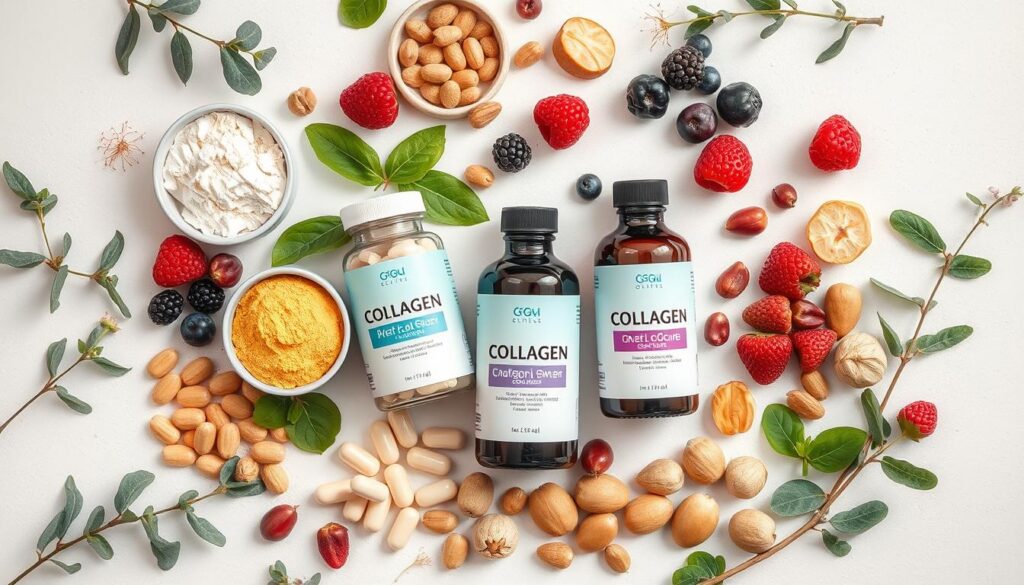
Collagen supplements could revolutionize your skin health and anti-aging routine. This protein is your body’s secret weapon for youthful vitality1. It’s the most abundant protein, crucial for keeping your body strong and resilient1.
Your natural collagen production slows down as you age. This process usually begins in your late 20s or early 30s1. Supplements can help maintain your body’s structural integrity.
Collagen benefits your skin, joints, and overall wellness. It supports skin elasticity and promotes joint health12. There are 28 different types of collagen in the body.
Key Takeaways
- Collagen is the most abundant protein in the human body
- Natural collagen production decreases with age
- Supplements can help support skin and joint health
- Multiple types of collagen exist for different bodily functions
- Nutrition plays a critical role in collagen maintenance
Understanding Collagen: Nature’s Building Block
Collagen is a remarkable protein in your body. It provides structure and support to various tissues and organs3. Collagen makes up three-quarters of human skin’s dry weight, crucial for maintaining structural integrity3.
What Makes Collagen Special
Your body’s collagen is truly unique. There are 28 different types, playing critical roles in human physiology3. Type I collagen is the most abundant, making up 90% of the body’s collagen4.
It’s essential for skin, bone, tendon, and ligament health. Collagen forms a complex triple helix structure, maintaining tissue elasticity and strength.
- Collagen contains special amino acids like proline and glycine
- It forms a complex triple helix structure
- Critical for maintaining tissue elasticity and strength
Types of Collagen Supplements
Collagen production naturally decreases with age. Supplements offer a way to boost collagen levels4. You’ll find various forms, including hydrolyzed collagen and marine collagen.
| Collagen Type | Primary Location | Supplement Form |
|---|---|---|
| Type I | Skin, Bones, Tendons | Hydrolyzed Collagen |
| Type II | Cartilage | Gelatin |
| Type III | Muscles, Organs | Marine Collagen |
Hydrolyzed collagen breaks down into easily absorbed peptides. It’s an excellent choice for supporting collagen production4. Marine collagen, sourced from fish, offers superior absorption.
“Collagen is not just a supplement, it’s a crucial component of your body’s structural framework.”
Comprehensive Benefits of Collagen Supplementation
Collagen is a vital protein for your body’s health. It makes up 75% of your skin and 33% of your body’s total protein5. Collagen supplements can greatly improve your wellness routine.
Regular collagen intake may boost your joint support. Studies show it can help reduce joint pain and increase mobility6. This makes daily activities more comfortable for athletes and those with joint discomfort.
- Supports bone strength by potentially improving bone density
- Enhances skin hydration and elasticity
- Promotes healthy hair and nail growth
Collagen peptides can improve gut health. These small protein fragments are easily absorbed by your body6. They can help repair and support your intestinal lining, boosting overall digestive wellness.
“Collagen isn’t just a supplement; it’s a comprehensive approach to body maintenance.”
Most collagen supplements contain types I, II, and III5. A 14-gram serving of collagen powder provides 50 calories and 12 grams of protein5. It’s an efficient addition to your diet.
The recommended daily intake is 2.5 to 10 grams. You may see results after 4-12 weeks of consistent use.
Remember, individual results may vary, and it’s always best to consult with a healthcare professional before starting any new supplement regimen.
Conclusion
Understanding your health needs is key when exploring collagen benefits. Collagen peptides have gained popularity in wellness circles. Consider your age, health goals, and diet when choosing supplements.
Selecting the right collagen supplement requires careful thought. Explore scientifically researched collagen sources and specialized formulations. After age 25, collagen production decreases, making supplements more important.
Collagen supplements can boost joint health, skin quality, and overall wellness. They work best as part of a balanced nutrition plan. Orally taken collagen peptides can reach your bloodstream and tissues.
Make informed choices for successful collagen supplementation. Talk to healthcare professionals about your unique health needs. Choose high-quality products that match your wellness goals. Your health journey is personal and complex7.
FAQ
What exactly is collagen?
Collagen is your body’s most abundant protein. It makes up about a third of all protein. This crucial structural component is found in skin, bones, cartilage, and connective tissues.
Collagen provides strength, elasticity, and support to various body parts. It’s a fundamental building block for your body’s structure.
How many types of collagen are there?
There are 28 different types of collagen. Types I, II, and III are the most common in the human body.
Type I is found in skin, bones, and connective tissues. Type II is mainly in cartilage. Type III is present in muscles and organs.
What are the main sources of collagen supplements?
Collagen supplements typically come from bovine (cow), marine (fish), or chicken sources. Hydrolyzed collagen, or collagen peptides, is the most popular form.
It’s broken down into smaller, easily absorbed particles. Marine collagen is popular due to its higher absorption rate.
What benefits can I expect from taking collagen supplements?
Collagen supplements may improve skin elasticity and reduce wrinkles. They can enhance hair and nail health, and provide joint pain relief.
Other benefits include increased bone density and potential gut health support. Athletes may experience improved mobility and reduced discomfort.
How much collagen should I take daily?
The recommended dosage ranges from 2.5 to 10 grams per day. Most people see noticeable effects after 4-12 weeks of consistent use.
Consult a healthcare professional to determine the right dosage for your specific needs.
Can I boost collagen production naturally?
Yes! You can support natural collagen production with a balanced diet. Eat foods rich in protein, vitamin C, and other nutrients.
Bone broth, fish, chicken, egg whites, and citrus fruits can help your body’s collagen synthesis.
Are collagen supplements safe?
Collagen supplements are generally safe for most people. Choose high-quality supplements from reputable sources, preferably third-party tested.
Consult a healthcare professional before starting any new supplement regimen. This is especially important if you have specific health conditions or dietary restrictions.
What’s the difference between hydrolyzed collagen and other forms?
Hydrolyzed collagen, or collagen peptides, is broken down into smaller particles. Your body can absorb and use it more efficiently than gelatin or whole collagen proteins.
This form is typically the most recommended for supplementation.
Can vegetarians or vegans take collagen supplements?
Traditional collagen supplements come from animals. However, plant-based collagen support supplements are now available. These provide nutrients to help your body produce its own collagen.
They typically contain amino acids, vitamins, and minerals that support collagen production.
Source Links
- What is Collagen? Your Ultimate Guide to Collagen Supplements – https://nourishedbynutrition.com/ultimate-guide-collagen-supplements/
- The Only (& We Mean Only) Guide To Collagen You’ll Ever Need – https://www.mindbodygreen.com/articles/guide-to-collagen-supplements?srsltid=AfmBOorr13qlNDeCt4OfcPtF45VMyWFla_UqL-C4nIHwj7jj6WTWG3GM
- COLLAGEN STRUCTURE AND STABILITY – PMC – https://pmc.ncbi.nlm.nih.gov/articles/PMC2846778/
- Unlocking the Power of Collagen Peptides | DermNurse – https://dermnurse.ca/collagen-peptides/
- Health Benefits of Collagen – https://www.webmd.com/diet/collagen-health-benefits
- Collagen: What It Is, Types, Function & Benefits – https://my.clevelandclinic.org/health/articles/23089-collagen
- The Collagen Conclusion | The BXNG Club – https://www.thebxngclub.com/blog/the-collagen-conclusion/

