
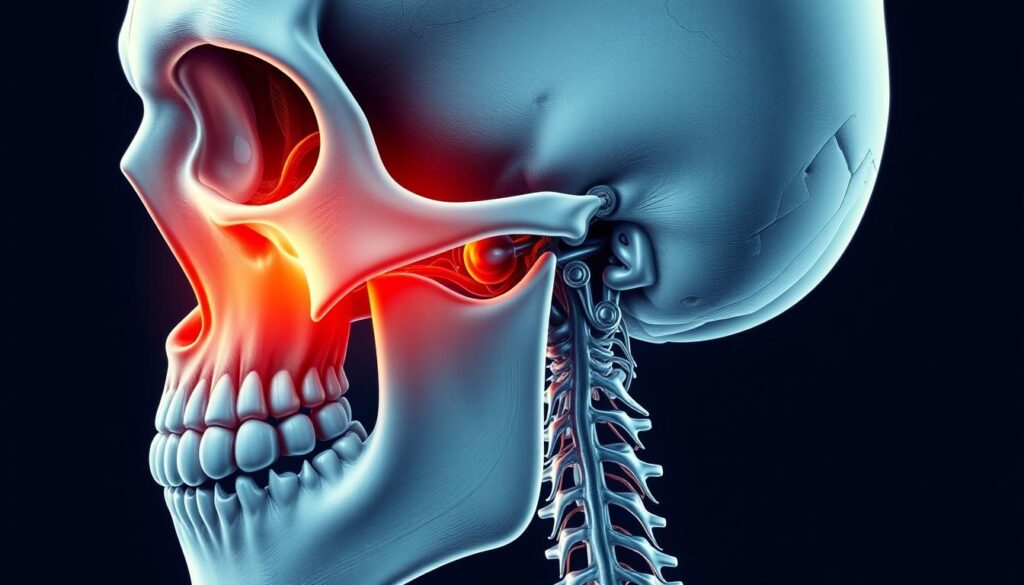
TMJ disorders can make life tough. About 11-12 million U.S. adults deal with jaw pain from these conditions1. They can affect eating, speaking, and everyday tasks2.
TMJ problems involve the jaw-to-skull joint, causing muscle and joint pain2. Women aged 35-44 are twice as likely to have these issues1. Symptoms may include jaw pain, chewing difficulties, and frequent headaches2.
Knowing what causes TMJ syndrome is important. Jaw injuries, stress, genetics, and teeth grinding can all play a role2. Research shows both physical and mental factors contribute to these disorders1.
Key Takeaways
- TMJ disorders affect millions of Americans
- Women are more likely to experience symptoms
- Multiple factors contribute to jaw pain
- Symptoms can significantly impact daily life
- Professional diagnosis is essential for proper treatment
Understanding TMJ Disorders
Temporomandibular joint (TMJ) disorders can greatly affect your daily life. Your jaw is vital for speaking, eating, and expressing yourself. Problems with this joint can cause significant discomfort3.
What Are TMJ Disorders?
TMJ disorders affect the jaw joint and nearby muscles. They can cause jaw popping, clicking, and lockjaw. Over 10 million Americans face these issues3.
Women are more likely to develop TMJ disorders than men3.
Common Symptoms You May Experience
- Persistent jaw discomfort
- Clicking or popping sounds when moving your jaw
- Difficulty opening or closing your mouth
- Earaches and headaches
- Facial pain
Causes of TMJ Disorders
Many factors can lead to TMJ disorders. Teeth grinding, or bruxism, is a major cause4. It puts extra stress on your jaw joints.
- Jaw injuries
- Arthritis
- Genetic predisposition
- Stress and muscle tension
Understanding your specific TMJ disorder is crucial for effective management and relief.
Research shows that clinical, psychological, and genetic factors can increase chronic TMJ disorder risk4. For most people, symptoms improve or vanish within weeks or months3.
Treatment Options for TMJ Disorders
TMJ disorders require a tailored approach to manage symptoms and improve jaw function. Your treatment plan may include several strategies to ease pain5.
Over-the-Counter Medications
Pain management often starts with over-the-counter options. These can provide relief:
- Ibuprofen for reducing inflammation
- Naproxen to control pain
- Acetaminophen for temporary discomfort
Lifestyle and Home Remedies
Your daily habits can greatly impact TMJ disorders. Try these home remedies:
- Practice gentle jaw exercises to improve mobility
- Apply ice or heat packs to reduce pain
- Eat soft foods to minimize jaw strain
- Use stress-reduction techniques
Professional Treatments and Therapies
For more focused TMJ treatment, professionals might suggest:
| Treatment Type | Description |
|---|---|
| Custom Mouth Guards | Designed to prevent teeth grinding and reduce jaw tension |
| Physical Therapy | Specialized exercises to improve jaw function |
| Prescription Medications | Muscle relaxants or tricyclic antidepressants |
Conservative and reversible treatments are strongly recommended by healthcare professionals5.
Your TMJ treatment plan should be customized to your needs. Most people see improvement within weeks or months5.
Surgery is typically a last resort. It’s only considered when other treatments don’t work6.
Finding Relief from TMJ Disorders
TMJ disorders need a thorough self-care plan. Learn to manage symptoms at home effectively. Good dental habits can stop TMJ pain from getting worse7.
Stress control is key to easing TMJ issues8. TMJ exercises can loosen tight muscles and improve jaw movement. Try gentle stretches and deep breathing to relax.
Consider targeted therapies for TMJ relief. Eat soft foods to reduce strain on jaw muscles8.
If self-care doesn’t help, seek expert advice. Most TMJ problems can be solved without surgery. Your doctor may suggest stretches, heat or cold packs, or medication8.
Surgery is rarely needed for TMJ. It’s only used as a last option8.
FAQ
What are TMJ disorders?
TMJ disorders affect the jaw joint connecting your lower jaw to your skull. They cause pain in jaw joints and muscles. These conditions can make speaking, eating, and moving your jaw difficult.
What are the most common symptoms of TMJ disorders?
Common symptoms include jaw pain and difficulty chewing. You might hear clicking sounds when opening your mouth. Headaches, facial pain, and limited jaw movement can occur.
Some people experience ear pain or facial tenderness. Your jaw may feel stuck or locked at times.
What causes TMJ disorders?
TMJ disorders have many possible causes. These include teeth grinding, jaw injuries, and arthritis. Stress, poor posture, and everyday wear can also contribute.
Sometimes, the exact cause remains unknown. Multiple factors may play a role in developing this condition.
How are TMJ disorders diagnosed?
Diagnosis involves a thorough physical and dental exam. Your doctor may order imaging tests like X-rays or MRIs.
They’ll check your jaw movement and listen for sounds. Pain or tenderness in the jaw area is also assessed.
What are the treatment options for TMJ disorders?
Treatment ranges from simple pain relievers to more complex procedures. Options include lifestyle changes, physical therapy, and custom oral splints.
Muscle relaxants and stress reduction techniques can help. Severe cases may require corticosteroid injections or surgery.
Can I manage TMJ disorders at home?
Yes, you can manage TMJ disorders at home. Apply heat or cold packs and do gentle jaw exercises. Maintain good posture and eat soft foods.
Try stress reduction techniques like meditation. However, see a doctor if symptoms persist or worsen.
When should I seek professional help?
Seek help if you have ongoing jaw pain or trouble opening your mouth. Chronic headaches or eating difficulties are also reasons to see a doctor.
A healthcare professional can diagnose your condition. They’ll create a treatment plan tailored to your needs.
Are mouth guards effective for TMJ disorders?
Custom-fitted mouth guards can effectively treat TMJ disorders. They’re especially helpful if you grind your teeth. These guards reduce jaw tension and protect your teeth.
They can also ease pain and discomfort linked to TMJ disorders.
Can stress affect TMJ disorders?
Yes, stress significantly impacts TMJ disorders. It often leads to increased muscle tension and teeth grinding. These habits can worsen TMJ symptoms.
Try stress management techniques like meditation or yoga. Regular exercise can also help reduce these effects.
Are TMJ disorders permanent?
TMJ disorders aren’t necessarily permanent. With proper care, many people see improvement or complete recovery. Early treatment and a comprehensive approach are key.
Lifestyle changes and professional guidance can make a big difference. Don’t hesitate to seek help for TMJ issues.
Source Links
- TMD (Temporomandibular Disorders) – https://www.nidcr.nih.gov/health-info/tmd
- TMJ disorders – Symptoms and causes – https://www.mayoclinic.org/diseases-conditions/tmj/symptoms-causes/syc-20350941
- TMJ Disorders – https://www.nidcr.nih.gov/sites/default/files/2017-12/tmj-disorders.pdf
- Temporomandibular Disorder (TMD) – https://www.hopkinsmedicine.org/health/conditions-and-diseases/temporomandibular-disorder-tmd
- Treatments – The TMJ Association – https://tmj.org/living-with-tmj/treatments/
- TMJ disorders – Care at Mayo Clinic – https://www.mayoclinic.org/diseases-conditions/tmj/care-at-mayo-clinic/mac-20350949
- The Comprehensive Handbook to Curing TMJ Pain Permanently | Blog – https://thesangerdentist.com/the-comprehensive-handbook-to-curing-tmj-pain-permanently/
- TMJ disorders – https://www.mountsinai.org/health-library/diseases-conditions/tmj-disorders

