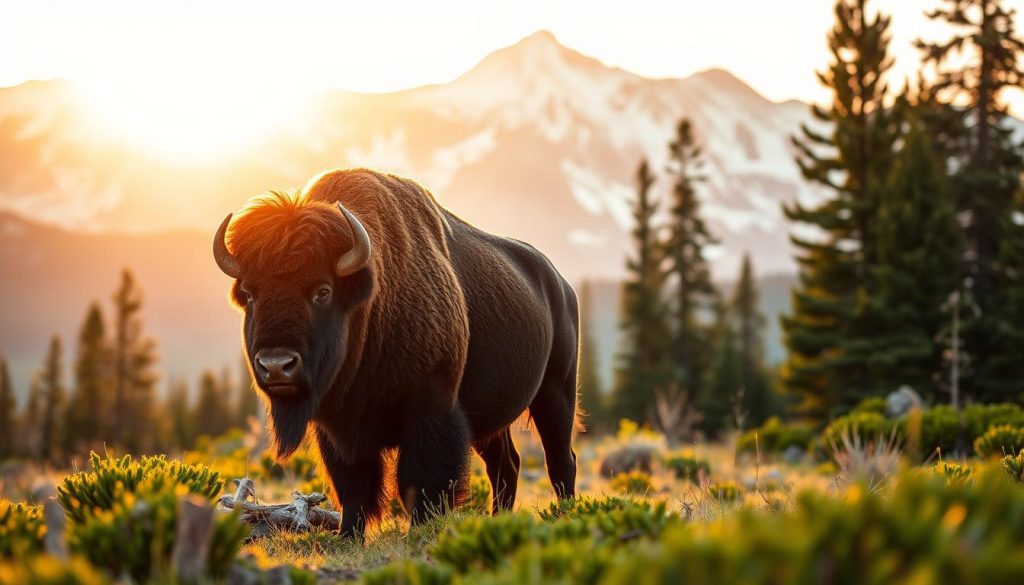
The American buffalo is more than just a bovine species. These majestic creatures inspire profound wisdom across cultures. They embody resilience, strength, courage, and determination.
Buffalo symbolize facing challenges head-on. Cherokee leader Wilma Mankiller said, “Cows run away from the storm while the buffalo charges toward it1.” This captures the essence of confronting obstacles directly.
The buffalo’s journey reflects a story of survival. Once near extinction, bison populations have since stabilized. Their recovery shows resilience against environmental and human challenges.
Key Takeaways
- Buffalo symbolize courage and direct problem-solving
- Native American cultures deeply revere buffalo wisdom
- Bison populations have recovered from near-extinction
- Buffalo represent strength and determination
- Cultural quotes highlight buffalo’s symbolic importance
Native American Perspective on Buffalo
For Native American tribes, buffalo were more than just prairie animals. These magnificent creatures held deep spiritual and cultural significance. Buffalo provided essential resources for food, clothing, and tools.
The bond between indigenous peoples and buffalo was strong. These animals were vital for tribal survival and traditions.
Before European settlement, buffalo roamed North America in vast numbers. Estimates suggest 20 to 40 million buffalo once inhabited the continent.
These magnificent creatures played a central role in tribal economies and spiritual practices. They were crucial to Native American life.
Spiritual Significance in Tribal Culture
Native Americans saw buffalo as sacred beings. They represented strength, resilience, and survival. This spiritual connection went beyond physical needs.
Buffalo held profound symbolic meanings in tribal beliefs. They were integral to Native American cosmology and traditions.
“The buffalo and the Plains Indians lived together, and together passed away.” – Walter Prescott Webb
Historical Relationship with Plains Tribes
The U.S. government deliberately destroyed buffalo populations to control Native American communities. By the mid-1880s, buffalo numbers plummeted from 60 million to a few hundred2.
This policy of buffalo eradication aimed to disrupt indigenous ways of life3. It had devastating effects on Native American cultures.
Buffalo in Native American Ceremonies
Buffalo remained crucial to tribal ceremonies. Many tribes kept traditional harvest practices alive. The InterTribal Buffalo Council, formed in 1991, works to restore buffalo populations2.
Over 20 tribes participate in this effort. They aim to revive cultural practices tied to buffalo.
- Yellowstone remains a critical sanctuary for buffalo preservation
- Tribal lands now manage over 32 million acres of buffalo habitat
- Cultural reclamation movements have restored nearly 1 million acres
Buffalo Strength and Resilience Quotes
Buffalo embody an extraordinary spirit of endurance. Their resilience resonates deeply with conservation efforts across America. Wildlife preservation strategies highlight their remarkable ability to survive against tremendous odds4.
Buffalo herds show incredible collective strength. They protect vulnerable members and showcase unity. Their resilience goes beyond physical survival4.
These magnificent creatures exhibit unique behavioral traits. Unlike other animals, buffalo charge directly into storms instead of fleeing. This approach represents a powerful lesson in facing adversity head-on4.
Buffalo conservation symbolizes hope and restoration. The American Prairie Reserve reintroduces bison to Montana lands. This effort represents a significant move towards wildlife preservation5.
Bison are considered a keystone species. They benefit entire ecosystems and maintain environmental balance. Their presence plays a critical role in nature5.
The buffalo’s journey mirrors survival, adaptation, and resilience. From near-extinction to managed conservation, these animals continue to inspire. Their unwavering spirit thrives against seemingly insurmountable challenges4.
FAQ
What’s the difference between buffalo and bison?
Bison are the true North American species. “Buffalo” is technically incorrect for American animals. True buffalo are native to Africa and Asia.
American bison are the large bovine species that roamed the Great Plains. However, “buffalo” remains widely used in popular culture.
How important were buffalo to Native American cultures?
Buffalo were crucial to Plains tribes’ survival. They provided food, clothing, shelter, and spiritual significance.
Nearly every part of the buffalo was used. These animals were central to indigenous economic, spiritual, and social life.
Why did buffalo almost go extinct in the 19th century?
Commercial hunting and government policies led to their dramatic decline. Buffalo were also eliminated to control Native American populations.
By the late 1800s, buffalo populations dropped from millions to hundreds. This created a significant wildlife conservation challenge.
Are buffalo conservation efforts successful today?
Yes, conservation efforts have been remarkably successful. Bison populations have rebounded to about 500,000 in North America.
Significant herds exist in Yellowstone National Park, tribal lands, and protected reserves. Government and Native American tribes have played crucial roles.
What symbolic meanings do buffalo represent?
Buffalo symbolize strength, resilience, abundance, and spiritual power. In Native American traditions, they represent community and survival.
Their connection to nature is considered sacred. Buffalo’s ability to survive harsh environments makes them symbols of endurance.
Can you see buffalo in the wild today?
Yes, you can! Yellowstone National Park offers opportunities to see wild bison.
Theodore Roosevelt National Park and various Native American reservations also have bison. Many conservation areas maintain healthy herds for visitors.
How do modern Native American tribes interact with buffalo?
Many tribes actively restore buffalo populations and maintain herds. They practice traditional hunting methods and reconnect with cultural practices.
Buffalo remain a symbol of cultural resilience. The Intertribal Buffalo Council works to restore both populations and traditional relationships.
Source Links
- 18 Buffalo Quotes About The Robust Bovids – https://www.trvst.world/biodiversity/buffalo-quotes/
- Reviving the Sacred Bond: Native Tribes and the Cultural Legacy of the American Bison – https://festival.si.edu/blog/buffalo-native-culture
- Bison or Buffalo & Native Americans – https://www.buffalofieldcampaign.org/buffalo-and-native-americans
- Embracing the Buffalo Mindset: Navigating Adversity with Unity and Resilience – https://medium.com/@andrewpoje/embracing-the-buffalo-mindset-navigating-adversity-with-unity-and-resilience-cbf4ffc7a034
- Last Words of Buffalo Inspiration – https://www.buffalofieldcampaign.org/last-words-of-buffalo-inspiration