
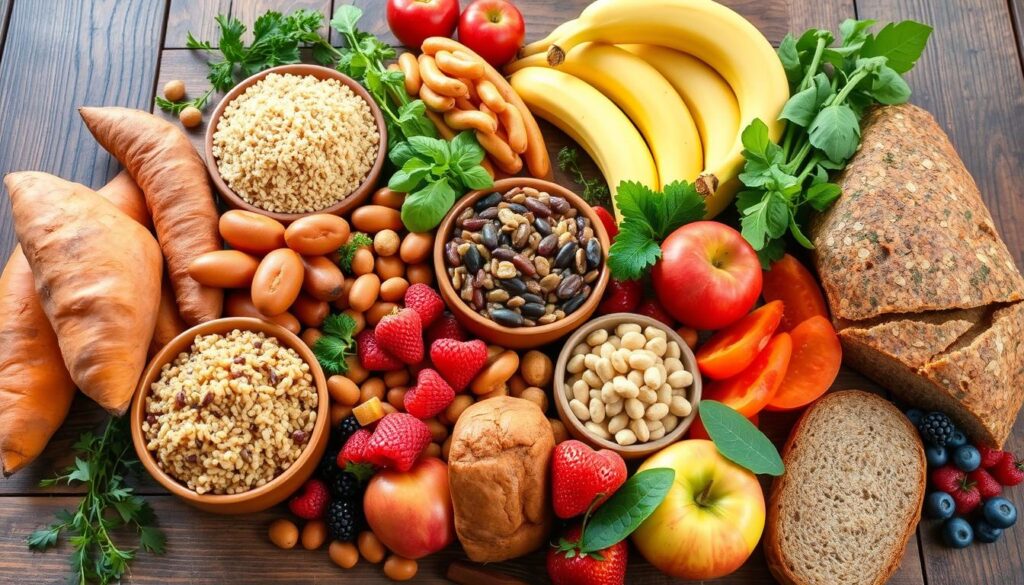
Carbs are your body’s main energy source. Healthy high-carb foods can boost your wellness journey. Complex carbs offer quality nutrition that supports your body’s key functions.
Nutritious starchy foods give more than just energy. Quinoa is a great example. It has 70% carbs and offers protein and fiber benefits1.
These foods can improve your diet without losing nutritional value2. Your daily calories should include 45% to 65% carbs. This range supports good metabolism and gives lasting energy2.
Whole grains like brown rice, quinoa, and oats are nutrient-dense options. They offer more than just calories3.
Key Takeaways
- Complex carbohydrates provide sustained energy
- Whole food sources offer superior nutritional value
- Aim for 45-65% of daily calories from healthy carbs
- Prioritize nutrient-dense carbohydrate sources
- Balance is key in carbohydrate consumption
Understanding the Role of Complex Carbohydrates in Your Diet
Carbohydrates are vital for a healthy diet. Complex carbs are nutritional powerhouses that can improve your eating habits. They can transform your approach to wellness and overall health.
The Science Behind Good Carbs
Complex carbs are made of long sugar molecule chains. They break down differently in your body than simple carbs. These carbs digest slowly, gradually releasing glucose into your bloodstream.
This unique feature offers several key benefits:
- Sustained energy release
- Stable blood sugar levels
- Improved digestive health
Benefits of Including Complex Carbohydrates
Eating fiber-rich carbs can greatly boost your health. The American Diabetes Association suggests 25 to 35 grams of fiber daily4. Whole grains and complex carbs offer amazing advantages:
- Better weight management support
- Heart health promotion
- Enhanced nutrient absorption
Difference Between Simple and Complex Carbs
Your body handles simple and complex carbs differently. Simple carbs are sugars that quickly spike blood sugar. Complex carbs provide a more balanced energy release5.
The U.S. Department of Agriculture recommends making whole grains a quarter of your plate5. This helps ensure optimal nutrition in your diet.
“Not all carbs are created equal – choose wisely for your health!” – Nutrition Experts
Your carb needs depend on factors like age, activity, and health goals5. Focus on whole grains, legumes, and nutrient-rich veggies for the best complex carbs6.
Healthy High-Carb Foods That Power Your Body
The right starchy foods can boost your energy and health. Let’s discover some powerful foods that give you nutrients and long-lasting energy.
Whole grains are packed with complex carbs. Quinoa is a great choice. It has 8 grams of protein and 5 grams of fiber per cup7.
Other great whole grains include:
- Oats: Rich in beta-glucan for cholesterol reduction7
- Brown rice: Providing steady energy
- Farro: Delivering approximately 5 grams of fiber per serving7
Most adults need 130 grams of carbohydrates daily8. Natural sugars from fruits can help. Dates give 3.2 grams of fiber in just two pieces7.
| Food | Carbohydrates per 100g | Key Nutrients |
|---|---|---|
| Quinoa | 64.2g | Protein, Fiber |
| Potatoes | 25g | Potassium, Fiber |
| Bananas | 23g | Vitamin C, Potassium |
“Your food choices are the foundation of your energy and wellness.”
Athletes may need different carb levels. Moderate to intense training may need 55-65% carbohydrates9. This supports your unique body needs.
Nutrient-Dense Fruits and Vegetables as Carbohydrate Sources
Nutrient-dense carbohydrates can revolutionize your diet and health. Fruits and vegetables offer natural sugars, vitamins, and fiber-rich carbs. These foods fuel your body efficiently with wholesome nutrition.
Vitamin-Rich Fruits: Nature’s Sweet Powerhouses
Natural sugars packed with essential nutrients are vital for your body. Let’s explore some top fruit choices:
- Apples: 34g total carbs, providing sustained energy10
- Oranges: 19g total carbs with excellent vitamin C10
- Bananas: 30g total carbs perfect for quick nutrition10
Starchy Vegetables: Complex Carbohydrate Champions
Starchy vegetables deliver incredible nutritional value with their complex carbohydrate profile. Sweet potatoes and potatoes offer substantial nutrient content:
| Vegetable | Total Carbs | Sugar | Fiber |
|---|---|---|---|
| Sweet Potato | 24g | 7g | 4g |
| Potato | 26g | 1g | 2g |
Fiber Content Benefits
Fiber-rich carbs support your digestive health and maintain steady energy levels11. Whole fruits offer more nutritional benefits than juices11.
Your body needs quality carbohydrates to function optimally. Choose wisely!
Balance is crucial when it comes to carbohydrates. Include various nutrient-dense options in your diet for optimal health12.
Conclusion
Nutrient-dense carbohydrates are key to a balanced diet. They’re vital for energy and overall health. Experts suggest 45% to 65% of daily calories should come from carbs13.
Carbs are especially important for athletes and active people. Studies show they’re crucial for physical performance. Intake recommendations vary based on activity levels14.
Choose whole grains, legumes, fruits, and vegetables for energy and nutrients. These foods boost your health and provide essential vitamins and minerals.
Fiber-rich carbs support digestion and heart health. They can also reduce inflammation13. Avoid processed grains and simple sugars.
Smart carb choices can transform your diet. They’re a powerful tool for maintaining wellness. Make informed decisions to reap the benefits of healthy carbohydrates.
FAQ
What percentage of daily calories should come from carbohydrates?
Experts suggest 45% to 65% of daily calories should come from carbs. This range ensures enough energy and a balanced diet. Choose complex carbs from whole grains, fruits, vegetables, and legumes for optimal nutrition.
What are complex carbohydrates and why are they important?
Complex carbs are nutrient-rich macronutrients found in whole grains, legumes, and vegetables. They provide sustained energy and have a lower glycemic index than simple carbs.
These carbs improve digestion, aid weight management, and lower chronic disease risk. They also stabilize blood sugar and keep you feeling full longer.
What are some of the healthiest high-carb foods?
Healthy high-carb foods include quinoa, oats, brown rice, sweet potatoes, bananas, kidney beans, and chickpeas. These foods are packed with nutrients, fiber, and provide long-lasting energy.
They offer a balance of complex carbohydrates, vitamins, and minerals that support overall health.
How do fruits contribute to healthy carbohydrate intake?
Fruits like blueberries, apples, and oranges are great sources of natural sugars and vitamins. They provide essential nutrients and fiber while satisfying sweet cravings.
The mix of natural sugars and fiber helps maintain steady energy levels. Fruits also support digestive health and overall well-being.
What’s the difference between simple and complex carbohydrates?
Simple carbs are quickly digested and can cause rapid blood sugar spikes. Complex carbs are digested slowly and provide sustained energy.
Complex carbs are found in whole grains, legumes, and vegetables. They offer more nutritional value and help maintain stable blood sugar levels.
Can high-carb foods help with weight management?
Yes, the right high-carb foods can support weight management. Fiber-rich complex carbs help you feel full longer and reduce overall calorie intake.
These nutrient-dense foods provide essential nutrients and control hunger. They also help maintain steady energy levels throughout the day.
Source Links
- 12 High Carb Foods That Are Incredibly Healthy – https://www.healthline.com/nutrition/12-healthy-high-carb-foods
- 5 High-Carb Foods That Are Actually Healthy – https://chphealthmt.org/news/5-high-carb-foods-that-are-actually-healthy
- 15 healthy high-carb foods – https://www.medicalnewstoday.com/articles/323110
- Simple Carbohydrates vs. Complex Carbohydrates – https://www.healthline.com/health/food-nutrition/simple-carbohydrates-complex-carbohydrates
- Carbohydrates: Getting the Most Out Of Fiber, Starches & Sugars – https://my.clevelandclinic.org/health/articles/15416-carbohydrates
- The Nutrition Institute – https://www.thenutritioninstitute.com/ph/en/blog-what-are-complex-carbs-why-are-they-essential-to-a-healthy-diet
- 10 Nutritious High-Carb Foods That Should Be Part of Your Diet – https://www.goodhousekeeping.com/health/diet-nutrition/g26860631/healthy-carbs/
- 10 Healthy High Carb foods – https://continentalhospitals.com/blog/10-healthy-high-carb-foods/
- 18 High Carb Foods to Take Your Training to the next Level – https://www.menshealth.com/uk/nutrition/a747978/11-carbs-that-should-be-in-your-diet/
- Which High-Carb Foods Should You Eat? – https://www.verywellhealth.com/high-carb-foods-7969014
- Carbohydrates – https://nutritionsource.hsph.harvard.edu/carbohydrates/
- Foods High in Carbs and Calories – https://www.webmd.com/diet/foods-high-in-carbs
- Pros and Cons of High-Carb Diets: Can You Lose Weight? – https://health.clevelandclinic.org/high-carb-diet
- High-Quality Carbohydrates and Physical Performance: Expert Panel Report – https://pmc.ncbi.nlm.nih.gov/articles/PMC5794245/

