
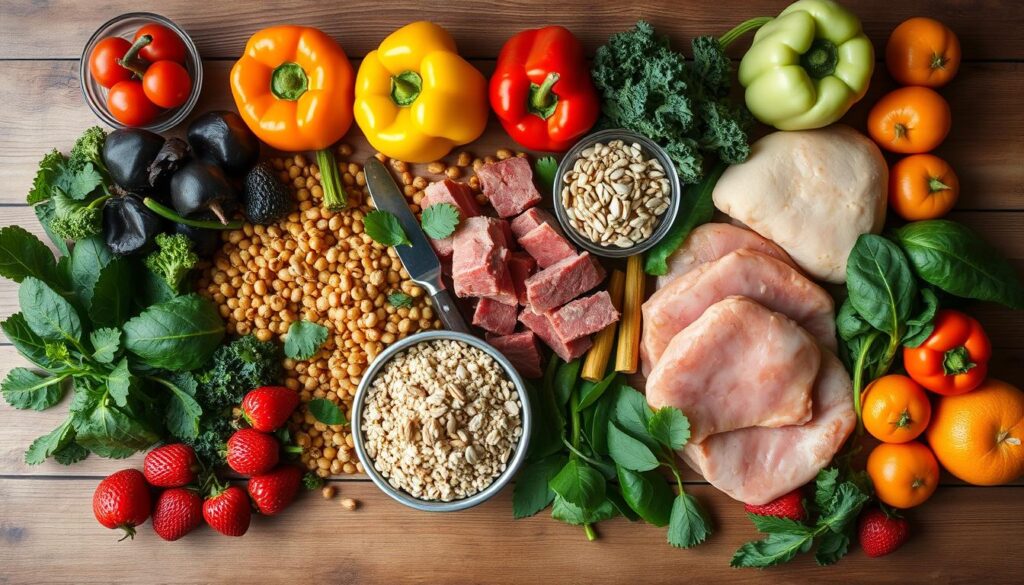
Iron is vital for your body’s energy and overall health. It helps create a balanced diet for optimal wellness. Adults need 8 to 18 mg of iron daily1, so eating iron-rich foods is key.
Your body uses iron to make hemoglobin. This protein helps red blood cells carry oxygen throughout your body. Clams offer up to 3 mg of iron per serving1. Beef liver packs an impressive 6.5 mg of iron1.
Vegetarians can get iron from plant sources too. Lentils provide 6.6 mg of iron per cup1. Other options include ground beef, pumpkin seeds, and quinoa1.
Iron comes in two forms: heme and non-heme. Heme iron from animal sources is easier for your body to absorb. Non-heme iron comes from plant sources.
Key Takeaways
- Iron is essential for oxygen transportation in the body
- Daily iron requirements vary from 8-18 mg for adults
- Both animal and plant sources provide iron
- Heme iron is more easily absorbed than non-heme iron
- Diverse food sources can help meet iron requirements
Understanding Iron Absorption and Daily Requirements
Iron is vital for your health. It powers oxygen transport and energy production. Your body’s iron absorption varies based on several factors.
Types of Iron: Heme vs Non-Heme
There are two main types of iron: heme and non-heme. Heme iron, found in animal products, is easily absorbed by your body.
Heme iron makes up 10-15% of total iron intake in western diets. Non-heme iron comes from plants and needs special strategies for better absorption.
Recommended Daily Iron Intake
Your iron needs change as you age. Adult recommendations include:
- Women (19-50 years): 18 milligrams daily2
- Men (19-50 years): 8 milligrams daily2
- Pregnant women: 27 milligrams daily2
Factors Affecting Iron Absorption
To boost iron absorption, know what helps and hinders it. Vitamin C improves non-heme iron absorption. Coffee and calcium might slow it down.
If you’re thinking about iron supplements, talk to a healthcare expert first.
Approximately 70% of body iron goes into hemoglobin production, highlighting its critical role in maintaining optimal health2.
Your diet and lifestyle greatly affect iron absorption. Learning these details helps you meet your body’s iron needs effectively.
Healthy Iron-Rich Foods for Optimal Nutrition
Low-calorie, high-iron foods can transform your diet and boost your health. Your body needs iron-rich foods to maintain optimal nutrition. Iron intake is crucial for multiple bodily functions.
- Shellfish: Clams and oysters provide 5.0 to 6.3 mg of iron per serving3
- Organ meats: Liver contains 4.6 to 13.4 mg of iron per serving3
- Plant-based options: Tofu and quinoa offer excellent iron content3
Iron-rich recipes can be both tasty and nutritious. Here are some protein-packed options to meet your daily iron needs4:
| Food Item | Iron Content |
|---|---|
| Spinach (cooked) | 3.4 mg per 1/2 cup |
| Eggs | 1.4 mg per two eggs |
| White Bread | 1.3 mg per slice |
Pro tip: Pair non-heme iron foods with vitamin C to enhance absorption4.
Daily iron needs vary by age and gender. Adults typically need 8-18 mg per day. Pregnant individuals may require up to 27 mg daily4.
Add these iron-rich foods to your meals. You’ll support your body’s needs while enjoying tasty, varied dishes.
Conclusion
Iron-rich foods can boost your health and nutrition. Iron deficiency is the most common nutrient shortage worldwide5. Mix protein sources and plant options to fill nutrient gaps6.
Smart iron intake isn’t just about quantity. Adult men need 8 milligrams daily. Women need 18 milligrams before menopause6.
Try various iron-rich foods like spinach, liver, and dark chocolate. Fortified cereals can also help meet your iron needs56.
Seek advice from healthcare pros for a tailored nutrition plan. Check out Continental Hospitals’ nutritional guidance to learn more about iron intake.
Balanced nutrition is an ongoing process. Stay informed and make smart food choices. Listen to your body and support your long-term health.
FAQ
What is iron and why is it important?
Iron is a vital nutrient that helps carry oxygen through your body. It’s crucial for energy, immunity, and preventing anemia. Without enough iron, you might feel tired and weak.
Iron also supports brain function. Getting enough iron is key to staying healthy and active.
What’s the difference between heme and non-heme iron?
Heme iron comes from animal sources and is easily absorbed by your body. Non-heme iron comes from plants and is harder to absorb.
Your body takes in 15-35% of heme iron, but only 2-20% of non-heme iron. To boost non-heme iron absorption, pair it with vitamin C-rich foods.
How much iron do I need daily?
Iron needs vary by age and gender. Adult men need 8 mg daily, while women aged 19-50 need 18 mg.
Pregnant women require about 27 mg per day. Ask a doctor about your specific iron needs.
What are the best food sources of iron?
Top iron-rich foods include shellfish, spinach, organ meats, and legumes. Red meat, pumpkin seeds, quinoa, turkey dark meat, broccoli, and tofu are also good sources.
Clams provide up to 17% of your daily iron per serving. Beef liver offers an impressive 36%.
Can I get enough iron from a vegetarian or vegan diet?
Yes, you can meet your iron needs with a plant-based diet. Good sources include lentils, beans, tofu, quinoa, and fortified cereals.
To boost iron absorption, pair these foods with vitamin C-rich items. Try citrus fruits, bell peppers, or strawberries with your iron-rich meals.
What factors can affect iron absorption?
Vitamin C boosts iron absorption, while calcium, coffee, and tea can block it. Eat iron-rich foods with vitamin C sources to increase absorption.
Avoid drinking coffee or tea with meals to maximize iron uptake. Space out these items to optimize iron absorption.
What are signs of iron deficiency?
Common signs include extreme fatigue, weakness, pale skin, and shortness of breath. You might also feel dizzy, have cold hands and feet, or brittle nails.
Frequent headaches can also indicate low iron. If you have these symptoms, see a doctor for a blood test.
Should I take iron supplements?
Only take iron supplements under medical supervision. Too much iron can be harmful. Consult a doctor before starting any supplement regimen.
They can check if you need supplements based on your diet and health status. A blood test can help determine your iron levels.
Source Links
- 12 Healthy Foods That Are High in Iron – https://www.healthline.com/nutrition/healthy-iron-rich-foods
- Top Iron-Rich Foods List – https://www.webmd.com/diet/iron-rich-foods
- Iron in Foods | HealthLink BC – https://www.healthlinkbc.ca/healthlinkbc-files/iron-foods
- 52 Foods High In Iron – https://health.clevelandclinic.org/how-to-add-more-iron-to-your-diet
- Dietary strategies for improving iron status: balancing safety and efficacy – https://pmc.ncbi.nlm.nih.gov/articles/PMC5155616/
- Iron-Rich Foods: Healthy High-Iron Food Sources | Metropolis Healthcare – https://www.metropolisindia.com/blog/preventive-healthcare/iron-rich-foods-boost-your-health-naturally

