
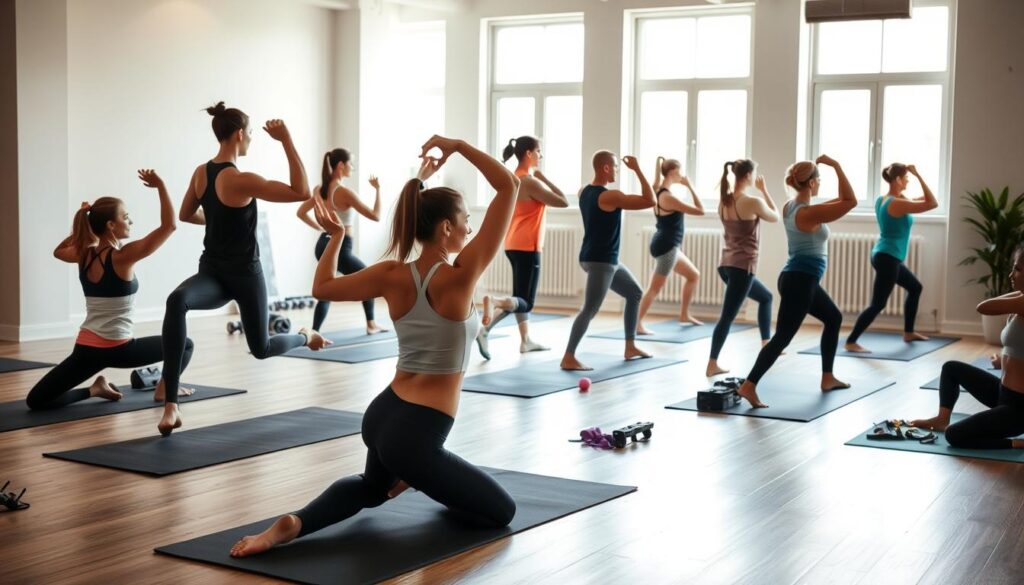
Hip flexors are vital for body movement, but often neglected in fitness routines. A sedentary lifestyle can weaken these muscles, causing pain and limited mobility1. Tight hip flexors may hinder physical performance, making exercises crucial for overall flexibility1.
Maintaining healthy hip flexors is essential to prevent injuries and boost physical well-being. Weakness in these muscles can lead to lower back pain and mobility issues1. Regular hip flexor stretches help maintain muscle function for both athletes and office workers2.
Key Takeaways
- Hip flexor mobility exercises are crucial for overall body movement
- Sedentary lifestyles can negatively impact hip flexor strength
- Regular stretching can help prevent lower back pain
- Hip flexor exercises improve flexibility and range of motion
- Different exercises target various aspects of hip flexor health
Understanding Hip Flexors and Their Impact on Body Movement
Hip flexors are vital for your body’s movement. These powerful muscles keep you mobile and stable. They’re key for walking, running, and even sitting3.
What Are Hip Flexors?
Hip flexors are muscles in your upper thigh front. They include five main muscles: psoas major, iliacus, rectus femoris, pectineus, and sartorius3.
These muscles work together to flex and stabilize your hip. They allow you to perform various movements4.
Functions of Hip Flexors
- Pull your thigh and torso together
- Enable walking and running
- Support standing and sitting postures
- Maintain hip and lower body stability
Signs of Tight Hip Flexors
Tight hip flexors can cause discomfort and limit movement. Look out for these warning signs:
- Lower back pain
- Hip discomfort
- Difficulty standing upright
- Reduced mobility
Common Causes of Hip Flexor Issues
Several factors can lead to hip flexor problems. Sedentary lifestyles often contribute to these issues3.
Long periods of sitting, repetitive sports movements, and weak muscles can cause strain4.
| Cause | Impact |
|---|---|
| Prolonged Sitting | Muscle Shortening |
| Running | Repetitive Strain |
| Weak Core Muscles | Improper Pelvic Alignment |
Knowing your hip flexors helps prevent injuries and maintain good movement. Hip flexor exercises can greatly improve your physical health4.
“Mobility is the foundation of physical wellness” – Sports Medicine Expert
Hip Flexor Exercises for Strength and Mobility
Hip flexors are vital for everyday movements. Strong, flexible hip flexors are key to overall body health. Hip flexor flexibility exercises can boost your physical performance5.
These muscles help you stand, walk, and bend. They’re among the most important muscle groups in your body5.
- Lunges for overall hip strength
- Floor-sliding mountain climbers
- Straight-leg raises
- Psoas hold for targeted muscle engagement6
Stretching is equally important for maintaining hip flexor health. Proper hip flexor stretching can boost athletic performance and ease low back pain5.
Try these recommended stretches:
- Half-kneeling hip flexor stretch (hold for 15-30 seconds)7
- Knee to chest stretch
- Pigeon pose
- Bridge pose
Pro tip: Aim to perform these best hip flexor exercises at least twice daily for optimal results.
Support your hip flexors with exercises like glute bridges, planks, and clamshells. These moves strengthen surrounding muscles and improve overall mobility5.
Conclusion
Hip flexor exercises can dramatically boost your mobility and overall wellness. They improve your body’s functional movement and are especially beneficial for seniors. These exercises can help reduce fall risks and enhance daily activities for older adults8.
Hip flexor workouts focus on more than just strength. They aim to improve overall muscle performance. Research shows that strategic exercise progressions can better activate key muscle groups like the iliopsoas9.
A diverse workout routine is crucial for comprehensive hip flexor development10. It should target different muscle ranges. Regular practice of these exercises prevents muscle strain and improves balance.
Consistent hip flexor mobility exercises support overall physical resilience10. By dedicating time to these movements, you’re investing in a more flexible and stronger body. Your long-term health will thank you for it.
FAQ
What are hip flexors and why are they important?
Hip flexors are muscles along your upper thigh’s front. They help you flex and stabilize your hip. These muscles are crucial for walking, running, sitting, and standing.
Hip flexors connect your torso to your legs. They play a vital role in maintaining overall body movement.
What causes tight hip flexors?
Tight hip flexors often result from prolonged sitting and repetitive movements. Weakness in core and glute muscles can also contribute. Modern sedentary lifestyles significantly increase the risk of hip flexor tightness.
What are the signs of tight hip flexors?
Common signs include lower back pain, hip pain, and difficulty standing upright. You might feel stiff when moving and have reduced range of motion.
Tight hip flexors can affect your posture. They may cause compensation patterns in other body areas.
How often should I do hip flexor exercises?
Do hip flexor exercises at least twice a day. Hold stretches for 30 seconds on each side. Repeat for three sets.
Mix stretching and strengthening exercises in your daily routine. This helps maintain hip flexibility and prevent injuries.
What are the best hip flexor stretches?
Effective hip flexor stretches include the half-kneeling hip flexor stretch and knee to chest stretch. Pigeon pose and bridge pose are also great options.
Try the 90/90 stretch, supine hip flexor stretch, and side-lying hip flexor stretch. These improve flexibility and relieve tension.
Can hip flexor exercises help prevent injuries?
Yes, regular hip flexor exercises can significantly help prevent injuries. They improve muscle strength, flexibility, and mobility. Strong, flexible hip flexors reduce strain risk and support better performance.
Are hip flexor exercises beneficial for athletes?
Athletes greatly benefit from hip flexor exercises, especially runners and cyclists. These exercises improve performance and prevent injuries. They enhance flexibility and support better overall body mechanics.
What equipment do I need for hip flexor exercises?
Many hip flexor exercises need minimal or no equipment. A yoga mat can be helpful. Optional tools include a foam roller and resistance bands.
Most basic stretches use just your body weight. A stability ball can be used for advanced exercises.
Source Links
- Hip Flexor Exercises to Strengthen and Stretch – https://www.healthline.com/health/fitness-exercise/hip-flexor-exercises
- Release Tight Hip Flexors with These 7 Must-Have Mobility Moves – https://www.onepeloton.com/blog/hip-mobility-exercises/
- American Hip Institute – https://www.americanhipinstitute.com/blog/hip-flexor-muscles-anatomy/?bp=33981
- Hip Flexor Health: A Guide to Prevent Strains and Tears – Orthopedic One – https://www.orthopedicone.com/news-events/hip-flexor-health-a-guide-to-prevent-strains-and-tears/
- The Top 6 Hip Flexor Exercises for Hip Pain Relief – https://www.hingehealth.com/resources/articles/hip-flexor-exercises/
- The Top 5 Hip Flexor Exercises To Build Strength – https://www.gymshark.com/blog/article/hip-flexor-strengthening-exercises
- Hip Flexor Strain: Rehab Exercises – https://myhealth.alberta.ca/Health/aftercareinformation/pages/conditions.aspx?hwid=bo1616
- Hip Flexor Exercises for Seniors – https://www.nautilusshc.com/blog/hip-flexor-exercises-seniors
- Hip Flexor Muscle Activation During Common Rehabilitation and Strength Exercises – PubMed – https://pubmed.ncbi.nlm.nih.gov/39518756/
- How To Strengthen Your Hip Flexors And Get Rid Of The Pain – https://www.dmoose.com/blogs/training/hip-flexor-exercises-improve-strength-flexibility?srsltid=AfmBOooUm7kP7lXp76bxIpbbkZI33y2e_tyzakF08ploiFtofTHRXstp

