
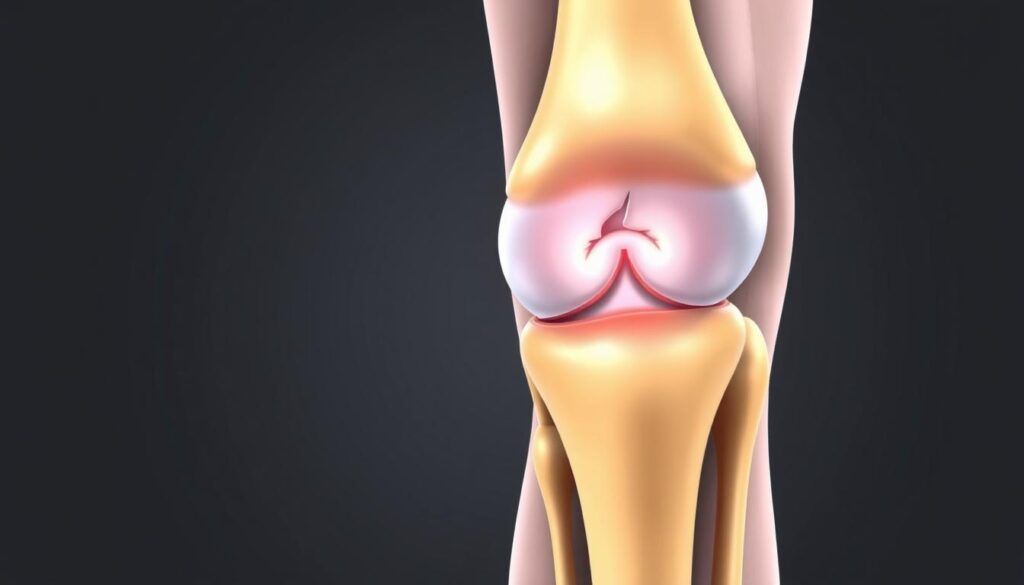
A meniscus tear can greatly affect your mobility and life quality. It often happens during sports, disrupting normal movement1. Understanding this injury is key for both athletes and those with knee pain2.
Meniscus tears are common in contact sports. Men face a 2.5 times higher risk than women2. Sudden twists, weight-bearing activities, or gradual wear can cause this injury.
The meniscus is vital for knee health. It cushions and stabilizes your knee. Damage can lead to pain, swelling, and limited movement.
Knowing the signs and treatments helps manage this injury. Early detection and proper care are crucial for recovery.
Key Takeaways
- Meniscus tears are common knee injuries with varying severity
- Athletes and individuals over 40 have higher risk factors
- Proper diagnosis is crucial for effective treatment
- Treatment options range from conservative approaches to surgical intervention
- Recovery time depends on tear location and treatment method
Understanding the Torn Meniscus: What You Need to Know
Knee pain can be complex, especially with meniscus injuries. Your knee relies on delicate structures to work smoothly. Knowing about these structures helps with treatment and recovery.
Understanding knee damage is crucial for proper care. It can make a big difference in your healing process.
What Is a Torn Meniscus?
A torn meniscus is a common knee injury. It affects the rubbery cartilage between your knee bones. Each knee has two menisci that cushion and stabilize the joint3.
When these cartilage cushions tear, your knee might swell and hurt. This can cause discomfort and limit your movement.
Causes of Meniscus Tears
Meniscus tears typically occur through several mechanisms:
- Sudden twisting movements during sports4
- Aggressive pivoting while feet remain planted3
- Repetitive stress on the knee joint
- Degenerative changes with age
“A torn meniscus can dramatically impact your mobility and quality of life,” says sports medicine experts.
Who Is at Risk?
Some individuals are more prone to meniscus tears:
- Athletes in contact sports like football4
- Players in pivoting sports such as tennis and basketball4
- Older adults experiencing natural knee wear4
- People with excess body weight
Knowing your risk factors helps you protect your knees. You can take steps to prevent injuries and seek help early.
This knowledge empowers you to safeguard your knee health. It also helps you respond quickly to potential injuries.
Recognizing the Signs and Symptoms of a Torn Meniscus
Knee pain and swelling often signal a meniscus tear. Spotting these signs early can help you get quick medical care. This can prevent further damage to your knee joint.
Common Symptoms to Watch For
Meniscus tears can show up in different ways. They often affect your daily activities. Catching these signs early can speed up your recovery5:
- Persistent knee pain along the joint line
- Noticeable knee swelling
- Difficulty bending or straightening your knee
- Catching or locking sensation in the knee
- Weakness when bearing weight
Differentiating Between Types of Tears
Meniscus tears come in different forms. They vary based on where they occur and what causes them6. Knowing these differences helps doctors make the right diagnosis.
| Tear Type | Characteristics | Typical Cause |
|---|---|---|
| Traumatic Tear | Sudden pain and swelling | Sports injuries or acute trauma |
| Degenerative Tear | Gradual onset of symptoms | Age-related tissue weakening |
| Lateral Tear | Pain on outside knee edge | Twisting or rotational movements |
| Medial Tear | Pain on inside knee area | Compression or direct impact |
Remember, each meniscus tear is unique, and professional medical evaluation is crucial for proper diagnosis and treatment.
“Early recognition of meniscus tear symptoms can prevent long-term knee complications and improve overall joint health.”
Diagnosis and Evaluation of a Torn Meniscus
Suspecting a meniscus injury? Understanding the diagnostic process is key for effective treatment. Knee injuries can be tricky, so an accurate diagnosis is crucial.
Getting the right diagnosis involves physical exams and advanced imaging. Your doctor will use various methods to confirm the injury and plan treatment.
Physical Examination Techniques
Doctors start with a thorough physical exam to check your knee. The McMurray test is a key tool for evaluating meniscus tears.
Your doctor will move your knee in specific ways during this test. They’ll look for signs of injury and assess your knee’s condition7.
- Applying gentle stress to the knee joint
- Checking for pain or clicking sounds
- Assessing range of motion limitations
Imaging Methods for Accurate Diagnosis
Advanced imaging is crucial in confirming a meniscus tear. MRI is the most effective method for spotting soft tissue injuries8.
| Imaging Technique | Purpose | Accuracy |
|---|---|---|
| X-ray | Rule out bone injuries | Limited soft tissue detection |
| MRI | Detailed soft tissue visualization | High accuracy |
| Arthroscopy | Direct visual inspection | Most precise diagnostic method |
Importance of Prompt Diagnosis
Quick and accurate diagnosis is vital for effective treatment. Waiting too long can lead to complications and longer recovery times.
This applies to both arthroscopic surgery and physical therapy1.
“The key to successful treatment is understanding the nature and extent of your injury” – Sports Medicine Specialist
Your doctor might suggest more tests based on initial findings. Talking to an orthopedic surgeon or sports medicine expert can help.
They’ll determine the best approach for diagnosing and treating your specific meniscus injury8.
Treatment Options for a Torn Meniscus
A torn meniscus treatment depends on the injury’s severity. Your options include conservative methods or surgery. Understanding these choices helps you make informed decisions about your knee health.
Conservative treatment often uses non-surgical strategies to reduce pain and promote healing. Physical therapy strengthens knee muscles and stabilizes the joint. Ice and pain relievers can manage discomfort and reduce swelling.
Arthroscopic Surgery might be needed if conservative treatments fail. Meniscus Repair can fix tears that won’t heal on their own. Recovery Time varies based on the surgery and your healing process.
Rehabilitation focuses on restoring knee strength and function. Your doctor will create a plan to help you safely resume activities. The goal is to regain mobility and reduce long-term knee problems89.
FAQ
What exactly is a torn meniscus?
A torn meniscus is a common knee injury. It involves damage to the C-shaped cartilage in your knee joint. This rubbery cartilage cushions and stabilizes your knee, acting as a shock absorber.
Tears can happen from sudden twists, repeated stress, or normal wear. The cartilage sits between your thighbone and shinbone.
What are the most common symptoms of a meniscus tear?
Key signs include knee pain, swelling, and stiffness. You might hear a pop or feel like your knee is locked.
Pain often occurs when bearing weight or twisting. The type and severity of the tear affect symptom intensity.
Who is most at risk for a meniscus tear?
Athletes in contact sports or activities with pivoting face high risk. Older adults and overweight individuals are also more prone to tears.
The risk goes up with age due to natural cartilage wear. People with jobs that stress their knees are at risk too.
How is a torn meniscus diagnosed?
Diagnosis starts with a thorough physical exam. This includes the McMurray test, which checks for pain during specific movements.
X-rays and MRI scans help confirm the diagnosis. They show the tear’s type and location, and rule out other knee issues.
What treatment options are available for a torn meniscus?
Treatment depends on the tear’s size, type, and location. Basic approaches include rest, ice, anti-inflammatory drugs, and physical therapy.
Severe tears might need arthroscopic surgery. This can involve repairing or trimming the damaged meniscus.
How long does recovery typically take?
Recovery time varies widely. Non-surgical treatments may take a few weeks. Surgery recovery can last several months.
Rehab focuses on restoring knee strength and flexibility. It involves targeted exercises and a slow return to normal activities.
Can a torn meniscus heal on its own?
Some minor tears might heal with conservative treatments. This is more likely if the tear has good blood supply.
Many tears need medical help to heal properly. Healing depends on the tear’s location, size, and your health.
Are there ways to prevent a meniscus tear?
Strong leg muscles and proper exercise techniques help prevent tears. Warm up before activities and wear good shoes.
Maintain a healthy weight to reduce knee stress. Regular stretching and strength training improve knee stability and lower injury risk.
Source Links
- Meniscus Tears – OrthoInfo – AAOS – https://orthoinfo.aaos.org/en/diseases–conditions/meniscus-tears/
- Torn Meniscus: Symptoms & Causes – https://www.massgeneralbrigham.org/en/patient-care/services-and-specialties/sports-medicine/conditions/knee/torn-meniscus
- Torn Meniscus – https://www.hopkinsmedicine.org/health/conditions-and-diseases/torn-meniscus
- Torn meniscus-Torn meniscus – Symptoms & causes – Mayo Clinic – https://www.mayoclinic.org/diseases-conditions/torn-meniscus/symptoms-causes/syc-20354818
- Recognizing Torn Meniscus Signs | OrthoTexas | Carrollton, TX – https://www.orthotexas.com/4-signs-that-you-may-have-a-torn-meniscus/
- Meniscus Tear – https://www.hoagorthopedicinstitute.com/what-hurts-/knee/conditions/meniscus-tear/
- McMurray Test: What It Is & How It’s Performed – https://my.clevelandclinic.org/health/diagnostics/23442-mcmurray-test
- Torn meniscus-Torn meniscus – Diagnosis & treatment – Mayo Clinic – https://www.mayoclinic.org/diseases-conditions/torn-meniscus/diagnosis-treatment/drc-20354823
- Torn Meniscus: Symptoms and Nonsurgical Treatment | HSS – https://www.hss.edu/condition-list_torn-meniscus.asp

