
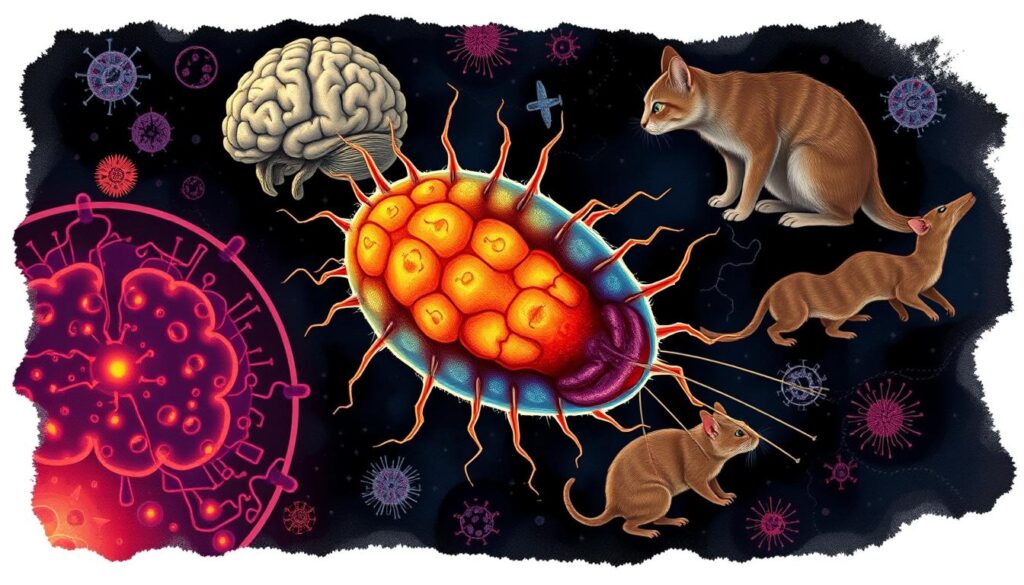
Toxoplasmosis is a widespread parasitic infection affecting millions in the United States1. This silent health challenge, caused by Toxoplasma gondii, can impact anyone. However, certain groups face higher risks2.
Understanding this infection is vital for protecting your health. It can help prevent potential complications. Millions of Americans are unknowingly infected with the Toxoplasma gondii parasite1.
Most healthy people show no symptoms. Yet, the infection poses serious risks to pregnant women and those with weak immune systems1. You can get this parasite through various ways.
Eating undercooked meat is one way. Handling cat feces or exposure to dirty water are others1. The disease is a major public health concern among foodborne pathogens2.
Key Takeaways
- Toxoplasmosis affects millions of people nationwide
- Most healthy individuals remain asymptomatic
- Pregnant women and immunocompromised people face higher risks
- Multiple transmission routes exist
- Prevention involves careful food handling and hygiene
What is Toxoplasmosis and How Does it Affect You?
Toxoplasmosis is a common parasitic infection caused by Toxoplasma gondii. It affects millions worldwide. Knowing about this condition helps protect your health and immune system.
The Toxoplasma gondii parasite can infect most animals and humans. Over 40 million people in the U.S. may carry this tiny organism3. Many infected people show no symptoms.
However, the health effects can be significant. The parasite can stay dormant for years, often creating lifelong immunity.
Understanding the Basics of Toxoplasmosis
How toxoplasmosis affects you depends on key factors. These include your immune system strength and the type of infection.
Potential exposure routes also play a role. The infection can be acute, reactivated, or congenital.
- Your overall immune system strength
- The type of infection (acute, reactivated, or congenital)
- Potential exposure routes
Common Symptoms You Should Watch For
Toxoplasmosis symptoms vary widely. They often include flu-like symptoms, swollen lymph nodes, and muscle aches. Headaches are also common.
- Flu-like symptoms
- Swollen lymph nodes
- Muscle aches
- Headaches
Healthy people may have mild symptoms for 1-2 weeks. Those with weak immunity could face more serious problems4.
For individuals with compromised immune systems, toxoplasmosis can lead to more severe health challenges affecting multiple body systems.
Pregnant women and people with HIV/AIDS are at higher risk. Congenital toxoplasmosis can cause issues in newborns5.
| Infection Type | Potential Symptoms |
|---|---|
| Healthy Individuals | Mild flu-like symptoms |
| Weakened Immune System | Severe complications (lung, brain, eye infections) |
| Congenital | Potential developmental delays |
How is Toxoplasmosis Transmitted?
Toxoplasmosis is a serious disease spread by cats. Knowing how it spreads helps protect you from danger. The Toxoplasma gondii parasite enters your body through various ways.
Common Sources of Infection
You can get toxoplasmosis from several sources:
- Consuming undercooked meat (especially pork, lamb, and venison)6
- Eating unwashed fruits and vegetables7
- Drinking untreated water7
- Handling cat litter or gardening in areas with cat feces7
- Consuming unpasteurized goat’s milk6
High-Risk Groups for Toxoplasmosis
Some people face higher risks of severe toxoplasmosis complications:
| High-Risk Group | Specific Risks |
|---|---|
| Pregnant Women | Risk of congenital toxoplasmosis6 |
| Immunocompromised Individuals | Potential for severe organ damage8 |
| Organ Transplant Recipients | Increased infection vulnerability6 |
Over 40 million people in the United States have this parasite8. Most healthy people won’t get very sick. But knowing about food safety and spread is key.
Protect yourself by practicing good hygiene and being aware of potential transmission sources.
You can lower your risk of toxoplasmosis. Handle food safely and keep good personal hygiene8. These simple steps can make a big difference.
Diagnosis and Treatment Options for Toxoplasmosis
Diagnosing and treating toxoplasmosis effectively is crucial for managing this infection. A thorough medical evaluation and targeted treatment plan are essential. Your health journey starts with understanding these key aspects.
Diagnosing toxoplasmosis requires careful medical investigation. Specialized blood tests detect antibodies against the Toxoplasma gondii parasite. These tests help doctors determine your infection status9.
Diagnostic Approaches
- Blood antibody screening
- Prenatal screening for pregnant women
- Eye examinations for ocular toxoplasmosis
- Brain imaging for immunocompromised patients
Treatment Strategies
Treatment for toxoplasmosis depends on your specific health condition. Pyrimethamine is the most effective anti-parasitic medication for managing the infection9.
Healthy individuals might not need treatment. Ocular toxoplasmosis typically requires pyrimethamine, sulfadiazine, and folinic acid9.
Special Considerations
Immunocompromised patients face higher risks from toxoplasmosis. Quick treatment is vital, as toxoplasmic encephalitis can be fatal if not addressed promptly9.
Early detection and targeted treatment are key to managing toxoplasmosis effectively.
Studies have found interesting links between Toxoplasma gondii and various health conditions. Some research suggests possible connections to neurological disorders10.
Prevention Tips to Keep Toxoplasmosis at Bay
Toxoplasmosis affects over 40 million people in the United States. Your daily habits can greatly reduce infection risk. Let’s explore effective prevention strategies to keep you safe.
Food safety is key in preventing toxoplasmosis. Cook meat to safe temperatures and wash hands after handling raw ingredients. Use a food thermometer to ensure meats are fully cooked.
Cat litter hygiene is crucial for prevention. Change litter boxes daily and wear gloves while cleaning. Veterinary experts suggest keeping cats indoors to limit parasite spread11.
Pregnant women and those with weak immune systems should avoid changing cat litter. If unavoidable, take extra precautions to protect yourself.
Wash hands often, prepare food carefully, and maintain good hygiene. These steps significantly lower your infection risk. Pregnant individuals should be extra cautious to protect their unborn babies.
FAQ
What is toxoplasmosis?
Toxoplasmosis is a common infection caused by the Toxoplasma gondii parasite. It can infect most animals and humans, with cats being the main host. Healthy people usually don’t have symptoms, but it can harm pregnant women and those with weak immune systems.
How do you get toxoplasmosis?
You can get toxoplasmosis by eating undercooked meat or unwashed produce. Drinking contaminated water or touching cat feces can also spread it. Pregnant women may pass it to their unborn child.
Rarely, organ transplants or blood transfusions can transmit the infection.
What are the symptoms of toxoplasmosis?
Symptoms depend on your immune system. Common signs include flu-like symptoms, swollen lymph nodes, and muscle aches. People with weak immune systems may have more severe symptoms affecting their eyes, lungs, and brain.
Ocular toxoplasmosis can cause eye pain, poor vision, and floaters.
Who is at highest risk for toxoplasmosis?
High-risk groups include pregnant women and people with weak immune systems. Newborns infected in the womb are also at risk. Those with compromised immunity are more likely to have serious complications.
How is toxoplasmosis diagnosed?
Diagnosis usually involves blood tests to detect antibodies against the parasite. Pregnant women may need prenatal screening, including amniocentesis or ultrasound. Eye exams and imaging tests help diagnose ocular toxoplasmosis.
Brain imaging may be necessary for people with weak immune systems.
How can I prevent toxoplasmosis?
Cook meat thoroughly and wash fruits and vegetables. Wear gloves when changing cat litter and keep cats indoors. Wash hands after gardening or handling raw meat. Avoid unpasteurized dairy products.
Pregnant women and those with weak immune systems should take extra care.
Is there a treatment for toxoplasmosis?
Most healthy people don’t need treatment, as their immune system controls the infection. Those who need help may get anti-parasitic drugs like pyrimethamine and sulfadiazine. Pregnant women might receive different medications to protect the baby.
Severe cases may require additional treatments for complications.
Can toxoplasmosis be serious?
While many have mild or no symptoms, toxoplasmosis can be serious for some groups. It can cause problems for unborn babies, leading to developmental delays and vision issues. People with weak immune systems may face severe complications affecting various organs.
Source Links
- Toxoplasmosis (for Parents) – https://kidshealth.org/en/parents/toxoplasmosis.html
- Toxoplasmosis – StatPearls – NCBI Bookshelf – https://www.ncbi.nlm.nih.gov/books/NBK563286/
- Toxoplasmosis – https://www.marchofdimes.org/find-support/topics/pregnancy/toxoplasmosis
- Toxoplasmosis – UF Health – https://ufhealth.org/conditions-and-treatments/toxoplasmosis
- Toxoplasmosis – Symptoms and causes – https://www.mayoclinic.org/diseases-conditions/toxoplasmosis/symptoms-causes/syc-20356249
- Toxoplasmosis: Causes and How It Spreads – https://www.cdc.gov/toxoplasmosis/causes/index.html
- Toxoplasmosis: Causes, Symptoms, Diagnosis & Treatment – https://my.clevelandclinic.org/health/diseases/9756-toxoplasmosis
- About Toxoplasmosis – https://www.cdc.gov/toxoplasmosis/about/index.html
- Clinical Care of Toxoplasmosis – https://www.cdc.gov/toxoplasmosis/hcp/clinical-care/index.html
- Approach Considerations, Emergency Department Care, Deterrence and Prevention – https://emedicine.medscape.com/article/229969-treatment
- Monk Seals and Toxoplasmosis – https://seagrant.soest.hawaii.edu/monk-seals-and-toxoplasmosis/

