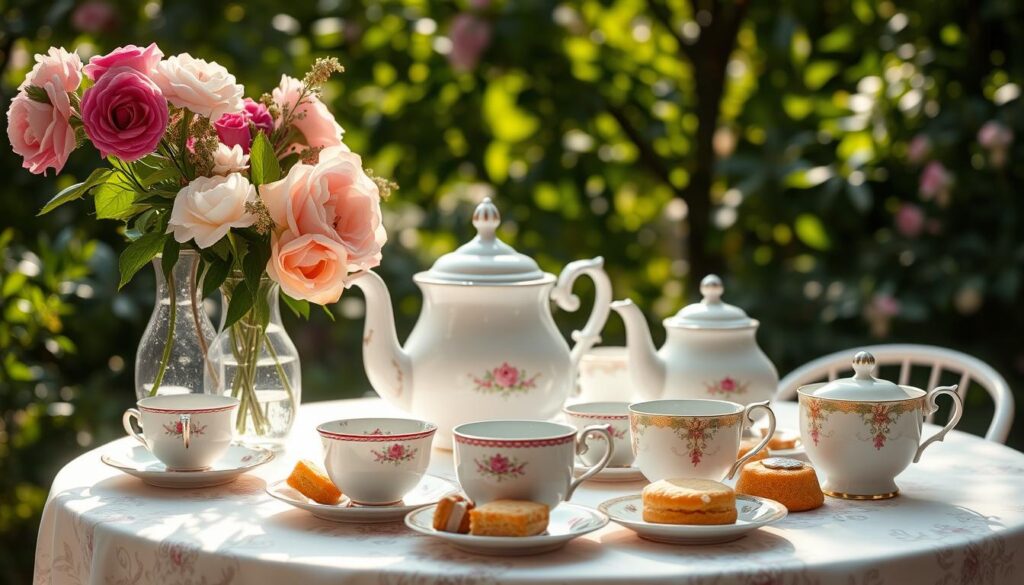
English tea ceremonies are a vital part of the country’s culture. They began as a sophisticated social ritual in 1840. Anna, the seventh Duchess of Bedford, introduced this custom to bridge the gap between meals.
Upper-class women made afternoon tea glamorous in the 1880s. They wore elegant gowns, gloves, and hats to these gatherings. These events showcased social sophistication and refined taste.
Traditional tea ceremonies offer a range of delicious treats. Sandwiches, scones with cream and preserves, and pastries make up the spread. Today, some homes use teabags and biscuits, but the tradition’s spirit lives on.
Regional versions like Devonshire Cream Tea are famous worldwide. These local takes spark debates about the right way to prepare scones. Such discussions show people’s passion for tea ceremonies1.
Key Takeaways
- Afternoon tea originated in 1840 as a social tradition
- Upper-class women transformed tea into a fashionable event
- Traditional tea includes sandwiches, scones, and pastries
- Regional cream tea variations showcase local pride
- Tea ceremonies continue to be a cherished cultural experience
The Rich History of Tea in England
Tea has become a cornerstone of English culture. It transformed from a rare luxury to a national obsession. This journey reveals a tale of cultural exchange and social transformation2.
The Origins of Tea Culture
Tea’s English debut occurred in the mid-17th century. Thomas Garway first sold tea in his London coffeehouse in 1657. This marked the start of a remarkable culinary tradition2.
Green tea from China initially captivated London’s elite. It was an exotic and expensive commodity2.
- Tea was six to ten times more costly than coffee
- Considered a medicinal drink initially
- Primarily imported from China
The Influence of the British East India Company
The East India Company reshaped global tea trade. They placed their first tea importation order in 16672. By 1839, Assam tea cultivation reached marketable quality.
This led to the first British auction of Assam tea3.
The Evolution of Tea Drinking Habits
Tea consumption in England grew remarkably. In 1851, annual tea consumption was under 2 pounds per person3. By 1901, this figure exceeded 6 pounds.
Cheaper imports from India and Sri Lanka drove this increase3.
“Tea drinking became a cornerstone of British social life, transcending class boundaries.”
Tea remains integral to British culture today. An impressive 84% of the UK population drinks tea daily. Approximately 100 million cups are consumed each day4.
The British passion for herbal infusions continues. Various tea types define their unique cultural identity.
Understanding the Elements of a Traditional Tea Ceremony
Traditional tea ceremonies are intricate art forms celebrating culture and refined elegance. They go beyond simply enjoying a cup of loose leaf tea. Each ceremony is a carefully choreographed experience that honors hospitality.
Types of Tea Served
Tea selection is crucial in traditional ceremonies. Black teas from prestigious regions often take center stage. Various tea blends are typically served.
The Japanese tea ceremony showcases a meticulous approach to tea preparation5. It offers valuable insights into this refined art.
- Classic black teas from India
- Ceylon tea varieties
- Rare regional blends
The Importance of Tea Etiquette
Tea etiquette elevates drinking tea into an art form. Your approach matters as much as the tea itself. Proper techniques enhance the overall experience.
- Holding the cup with grace
- Stirring gently
- Using tea accessories correctly
| Etiquette Element | Proper Practice |
|---|---|
| Cup Holding | Delicate grip, minimal movement |
| Stirring | Soft, circular motion |
| Sipping | Quiet, appreciative |
Essential Accompaniments
A true tea ceremony isn’t complete without its delightful accompaniments. Tea health benefits are enhanced by carefully selected treats. These complement your beverage perfectly.
- Cucumber sandwiches
- Freshly baked scones
- Clotted cream and jam
- Delicate pastries
“Tea is more than just a drink. It’s a moment of elegance, a pause in life’s chaos.”
Tea ceremonies turn ordinary moments into extraordinary rituals. They offer a unique blend of refinement and cultural appreciation. Your experience will be both memorable and enlightening.
Experiencing a Traditional Tea Ceremony
Tea ceremonies offer a unique glimpse into British hospitality. They provide a chance to explore an elegant cultural practice. From London hotels to home rituals, these ceremonies immerse you in tradition6.
Where to Enjoy an Authentic Tea Ceremony
London’s top spots for tea ceremonies include The Ritz, Claridge’s, and Fortnum & Mason. These venues offer more than just tea – they provide a full sensory experience.
You’ll discover carefully chosen tea accessories and ceremony details. Tea rituals are known for their precision and grace6.
Tips for Participating in a Ceremony
To master tea ceremony etiquette, pay attention to small details. Learn the right way to hold your cup and understand each movement’s meaning.
Dress in smart casual attire for most traditional tea events. Listen to your host, watch the tea prep, and enjoy each sip.
Tea ceremonies focus on mindfulness and connection, not just the drink6.
Creating a Tea Ceremony Experience at Home
Hosting a tea ceremony at home is simpler than you might expect. Use your best china and buy quality tea accessories.
Choose a peaceful spot and create a calm mood with nice table settings. Pick your tea types carefully for the best experience.
Hold your ceremony between 3 and 5 PM for a classic “Low Tea”. Serve small sandwiches and sweets to complete the ritual6.
FAQ
What is the origin of afternoon tea in England?
Anna, the seventh Duchess of Bedford, introduced afternoon tea in 1840. It filled the gap between lunch and dinner. By the 1880s, it became a fashionable social event among upper-class women.
What typically accompanies a traditional English afternoon tea?
A traditional afternoon tea offers dainty sandwiches, scones, and pastries. Cucumber sandwiches are a classic choice. Scones come with clotted cream and preserves.
Tea from India or Ceylon is served in silver teapots. Delicate bone china cups complete the elegant setting.
When did tea become popular in England?
Tea culture in England began in the 1660s. King Charles II and his wife popularized it. The British East India Company helped make tea a staple across all social classes.
What are the different types of tea services in England?
There are two main types of tea services in England. Low Tea happens between 3 and 5 PM and features lighter fare.
High Tea occurs after 5 PM and includes more substantial dishes. It was traditionally associated with working-class meals.
Where can I experience an authentic English tea ceremony?
You can enjoy authentic tea ceremonies at prestigious London hotels. Claridge’s, the Dorchester, the Ritz, and the Savoy are popular choices.
Department stores like Harrods and Fortnum & Mason also offer traditional afternoon tea experiences.
What are the key etiquette rules for an English tea ceremony?
Use fine china or silver teacups and brew loose leaf tea. Avoid interrupting others while speaking. Finish all food offered.
Proper attire and elegant presentation are important aspects of the ceremony. Never use tea bags during a formal tea ceremony.
What is the difference between Devonshire and Cornish Cream Tea?
Devonshire and Cornish Cream Tea differ in how cream and jam are applied to scones. Each region claims their method is superior.
This playful culinary rivalry between Devon and Cornwall continues today. Tea enthusiasts often debate this topic in friendly discussions.
How can I create a tea ceremony experience at home?
Choose your most beautiful room for an at-home tea ceremony. Use fine china or silver teacups. Serve bite-sized sweet and savory treats.
Brew tea properly and provide milk, sugar, and lemon for guests. Aim to serve between 3 and 5 PM for an authentic experience.
Source Links
- The history of afternoon tea – a great British tradition – https://www.historic-uk.com/CultureUK/Afternoon-Tea/
- Tea in the United Kingdom – https://en.wikipedia.org/wiki/Tea_in_the_United_Kingdom
- UK Tea & Infusions Association – https://www.tea.co.uk/history-of-tea
- How tea conquered Britain – BBC Bitesize – https://www.bbc.co.uk/bitesize/articles/zm2txyc
- Japanese Tea Ceremonies: History, Etiquette & Experiences – https://www.byfood.com/blog/culture/ultimate-guide-to-japanese-tea-ceremony
- What It’s Like to Take Part in a Japanese Tea Ceremony – https://www.jrpass.com/blog/what-it-s-like-to-take-part-in-a-japanese-tea-ceremony