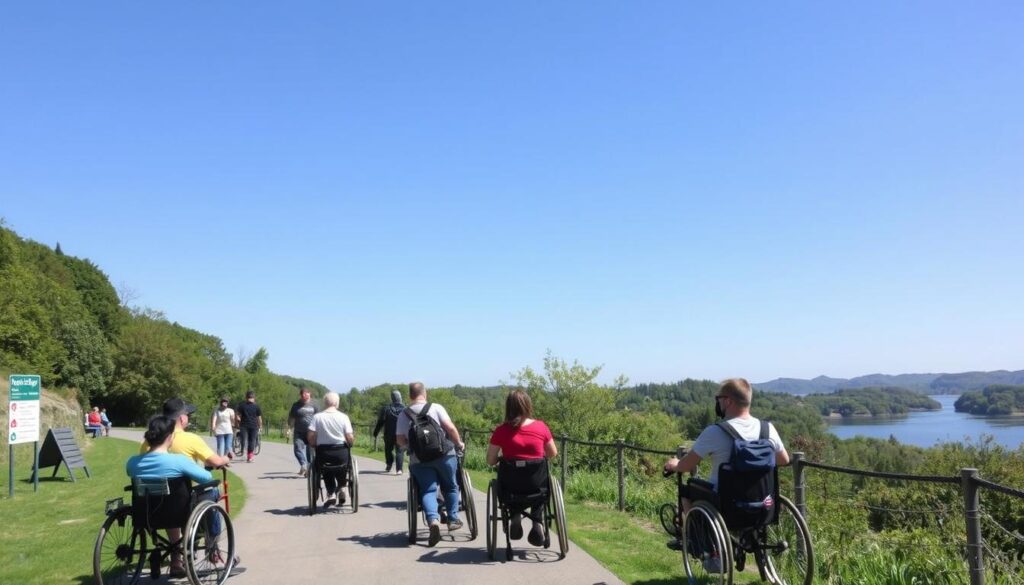
Accessible travel has become a reality for people with diverse needs. With proper planning, your journey can be empowering and exciting. Barrier-free adventures are now possible for travelers with disabilities1.
Each destination offers unique challenges for disabled travelers. Countries have different rules about accessibility and anti-discrimination. Knowing your rights helps make travel smoother and more enjoyable1.
Inclusive tourism aims to create welcoming experiences for everyone. More places now recognize the importance of universal design. The global travel scene is changing to accommodate disability rights2.
Key Takeaways
- Accessible travel requires careful planning and research
- Legal protections vary across different countries
- Technology and resources can enhance travel experiences
- Disability does not limit the ability to explore the world
- Preparation is key to successful and enjoyable travel
Understanding Your Rights as a Traveler with Disabilities
Legal protections and accessibility rights are crucial for travelers with disabilities. Key legislation ensures equal opportunities for all travelers. These laws have shaped inclusive travel experiences.
Disability awareness has revolutionized travel regulations. It empowers individuals with legal rights and accessibility features. The Americans with Disabilities Act (ADA) is a cornerstone of protection for disabled travelers.
The Americans with Disabilities Act Protections
The ADA bans discrimination and ensures equal access in travel. It covers various sectors of the industry.
- Preventing discrimination in transportation services
- Ensuring accessibility in public accommodations
- Mandating reasonable accommodation standards
Airline Regulations for Passengers with Disabilities
The Air Carrier Access Act provides specific protections for air travel. Airlines must offer comprehensive support for disabled travelers3.
- Airlines cannot refuse transportation due to disability3
- Mandatory assistance with boarding and deplaning3
- Accommodation of service animals3
- Staff training for disability support3
Accessibility in Hotels and Accommodations
Lodging standards now require specific accessibility features. These ensure comfort and convenience for all guests.
| Accessibility Feature | Required Standard |
|---|---|
| Doorway Width | 32 inches minimum |
| Roll-in Showers | Zero-threshold entry |
| Visual Alarms | Required in all rooms |
“Accessibility is not a privilege, it’s a right.” – Unknown
Knowing these legal protections empowers you to travel confidently. You can demand the respect and support you deserve. Your disability does not define your ability to explore the world.
Planning Your Trip: Tips for Accessibility
Traveling with a disability needs careful prep. Your exciting journey starts with knowing how to handle travel hurdles. Good planning is key for a smooth trip.
It’s vital to make the most of your mobility and comfort. Effective planning ensures an enjoyable experience for all.
- Research destinations known for accessible design4
- Verify specific accommodation requirements
- Prepare adaptive equipment and mobility aids
- Understand your travel rights
Choosing Accessible Destinations
Picking the right spot is crucial. Some places offer great accessibility features. National parks have upgraded their trails for better access4.
Muir Woods and Alcatraz are 100% accessible4. These spots are perfect for travelers seeking easy-to-navigate destinations.
“Planning ahead is the most crucial step for a successful trip” – Disability Travel Experts
Transportation Options for Travelers with Disabilities
Knowing your travel choices is important. Airlines must provide disability help by law5. This includes wheelchair support and suitable seating.
Greyhound Bus offers boarding help and luggage handling6. These services make bus travel more accessible for those with disabilities.
| Transportation Mode | Accessibility Features |
|---|---|
| Airlines | Wheelchair assistance, pre-boarding |
| Buses | Luggage handling, mobility device support |
| Train Services | Accessible seating, ramp assistance |
Pro tip: Always call providers to confirm your specific needs4. This ensures they can handle your equipment and mobility aids.
Bringing a travel buddy can boost your comfort5. It’s a great way to create lasting memories on your trip.
Navigating Airports and Train Stations
Traveling with disabilities needs careful planning. Transportation hubs can be challenging for those with mobility needs7. Preparing ahead makes security screening and airport facilities easier.
With the right strategies, airport accessibility becomes more manageable. Advance preparation helps ensure a smoother journey through various checkpoints.
Preparing for Security Checks
Security screening can be stressful for travelers with disabilities. The Transportation Security Administration (TSA) offers specialized support to ease the process.
- Contact TSA Cares helpline before your trip
- Arrive early to allow extra time for screening
- Inform staff about any assistive technology or medical devices
Wheelchair users may face additional screening procedures8. Be ready for possible full body pat-downs and equipment checks. Communication is key to smoothly navigate these checkpoints.
Finding Accessible Facilities
Modern transportation hubs are improving accessibility. Look for dedicated assistance areas with trained staff to support disabled travelers9.
| Facility Type | Accessibility Features |
|---|---|
| Restrooms | Wheelchair-accessible stalls, grab bars |
| Waiting Areas | Designated seating, clear signage |
| Information Desks | Staff trained in disability assistance |
Remember, preparation and proactive communication can transform your travel experience.
Use mobile apps and station maps to find accessible facilities. Pre-booking assistance services can greatly improve your travel comfort9.
Enhancing Your Travel Experience
Smart planning makes traveling with a disability easier. Use resources like Mobility International USA for better journeys. Pack essential medical equipment and assistive devices for comfort10.
Communication aids are vital for smooth travels. Learn key local phrases and use translation apps to talk with service providers. Apps like Moovit help with route planning11.
Lazarillo’s maps offer real-time guidance, making travel less stressful. These tools can greatly improve your travel experience11.
Online communities are great for travel advice. Share experiences and learn from others’ journeys. Ask for help when needed and keep important documents safe10.
Resources for Travelers with Disabilities
Use websites and apps for accessibility info. They help find suitable accommodations and plan routes. Contact travel organizations that focus on inclusive experiences11.
Communicating Your Needs Effectively
Clear communication ensures a successful trip. Prepare docs about your needs and carry a medical ID. Inform service providers early about any assistance you require10.
Utilizing Technology for Better Accessibility
Use tech to boost your travel independence. Navigation and translation tools help explore new places. Try portable devices for navigating less accessible areas11.
FAQ
What are my rights as a traveler with disabilities?
The ADA and Air Carrier Access Act protect your rights in the U.S. Airlines must help with boarding, stowing mobility aids, and accommodating service animals. Hotels must offer accessible rooms with wider doorways and roll-in showers. These rules ensure equal travel opportunities for all.
How can I find accessible destinations and accommodations?
Use wheelmap.org and AccessNow to find accessible venues. Look for disability-friendly cities like Barcelona, Singapore, or Sydney. Ask hotels about doorway widths, bathroom grab bars, and elevators.
Always confirm accessibility details directly with hotels before your trip. This ensures you’ll have the features you need during your stay.
What should I do to prepare for airport security?
Call the TSA Cares helpline for screening info. Arrive early for extra screening of medical devices or mobility aids. Tell airlines about your needs beforehand.
Ask for seats near the front for easier bathroom access. Bring important documents, including medical information and equipment details.
What technology can help me travel more easily?
Use apps like Moovit for accessible routes and Be My Eyes for visual help. Try translation apps to communicate your needs. Consider portable ramps or folding canes for less accessible areas.
Join online communities to share experiences with other disabled travelers. These forums offer valuable advice and support for your journey.
How can I communicate my accessibility needs while traveling?
Learn key phrases in the local language using translation apps. Don’t be afraid to ask for help when you need it. Contact disability travel organizations for extra tips and support.
Always be clear about your specific accessibility needs. This helps ensure you get the right assistance during your trip.
What transportation options are available for travelers with disabilities?
Look for accessible public transit and rental vehicles with hand controls or ramps. Try ride-sharing services with wheelchair-accessible options. For flights, ask about wheelchair help and pre-boarding.
On trains, check for assistance areas and trained staff. These options make traveling easier for people with disabilities.
What should I pack for traveling with a disability?
Pack spare parts for mobility aids and important medical documents. Bring adaptable clothing, medication, and a full medical kit. Include portable chargers for electronic mobility devices.
Always have a backup plan and extra supplies. This helps you handle unexpected situations during your travels.
Source Links
- Traveling with Disabilities – https://travel.state.gov/content/travel/en/international-travel/before-you-go/travelers-with-special-considerations/traveling-with-disabilties.html
- Traveling with Confidence: The Complete Guide to Disability Travel – Emergency Assistance Plus – https://www.emergencyassistanceplus.com/resources/traveling-with-confidence-the-complete-guide-to-disability-travel/
- Air travel rights for people with disabilities – Pacific ADA Center – https://www.adapacific.org/air-travel-rights-for-people-with-disabilities/
- 3 Top Tips for Accessible Travel Planning – https://www.sunset.com/travel/accessible-travel-tips
- Top 10 Travel Tips for Individuals with Disabilities | The League – https://leagueforpeople.org/traveling-checklist-10-tips-for-traveling-with-disabilities/
- Travel: Tips for People with Disabilities – DisabilityInfo.org – https://disabilityinfo.org/fact-sheet-library/transportation/travel-tips-for-people-with-disabilities/
- Make Traveling with a Disability Easier | Seven Corners – https://www.sevencorners.com/blog/travel-tips/traveling-with-disabilities-a-q-a
- Challenges of Navigating Airline Travel in a Wheelchair – https://alyciaanderson.com/challenges-of-navigating-airline-travel-in-a-wheelchair/?srsltid=AfmBOor_bXyAht7Jsf6psoW5UwOGDf3hWVQ0xo45l-C91KHEieCStdiU
- A guide to travel with disabilities travel safely and comfortably – Signal Health Group – https://signalhg.com/a-guide-to-travel-with-disabilities-travel-safely-and-comfortably/
- A Guide To Accessible Travel for People with Disabilities in 2024 – https://cehhs.utk.edu/a-guide-to-accessible-travel-for-people-with-disabilities-in-2024/
- Accessible Tourism: Enhancing the Experience of Traveling for Everyone (Including People with Disabilities) – https://lazarillo.app/blog/accessible-tourism-enhancing-the-experience-of-traveling-for-everyone-including-people-with-disabilities/