
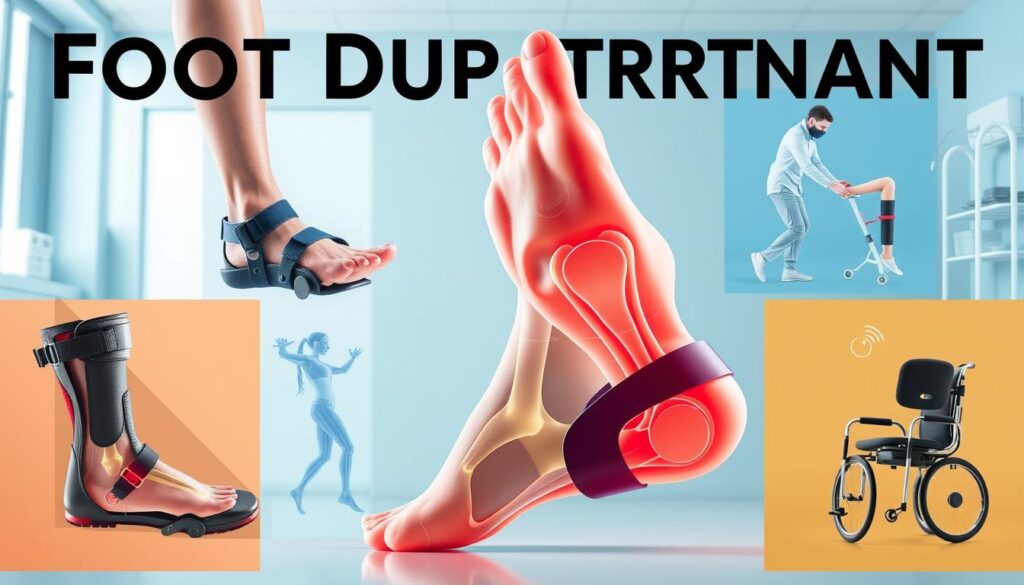
Foot drop makes lifting the front of your foot difficult. It’s not a disease, but a symptom of other problems. These issues can affect your ability to walk normally1.
Healthcare pros suggest a complete approach to treat foot drop. They offer different treatments based on the cause. Ankle-foot orthoses (AFO) often help manage the condition and prevent falls1.
Foot drop treatment varies for each patient. Physical therapy is key in managing this condition. It helps restore muscle strength and improves range of motion1.
Advanced options include tendon transfers and surgery. These treatments have shown promising results2.
Key Takeaways
- Foot drop is a complex condition requiring personalized treatment
- Physical therapy can help restore muscle strength
- Ankle-foot orthoses are effective management tools
- Early intervention can prevent potential complications
- Treatment options range from conservative to surgical approaches
Understanding Foot Drop: Causes and Diagnosis
Foot drop is a tricky neurological condition that affects your mobility. It makes lifting the front of your foot difficult, causing it to drag when walking3.
Knowing the causes and how it’s diagnosed helps manage foot drop better. This knowledge is crucial for improving your quality of life.
Common Causes of Foot Drop
Many factors can lead to foot drop, making it a diverse condition. The main cause is often compression of the peroneal nerve in the leg4.
Your risk goes up with certain conditions and activities. These include:
- Nerve root injuries in the spine4
- Diabetes-related nerve disorders4
- Inherited neurological diseases like muscular dystrophy4
- Serious knee or hip injuries3
“Foot drop can manifest in one foot or both, depending on the underlying cause,” explains neurological experts3.
Diagnostic Approaches
Diagnosing foot drop needs a thorough check-up. Doctors use different methods to find the cause and plan treatment.
| Diagnostic Method | Purpose |
|---|---|
| Physical Examination | Assess muscle strength and walking pattern |
| Imaging Tests | Identify nerve compression or structural issues |
| Electromyography (EMG) | Evaluate nerve and muscle electrical activity |
Your doctor might suggest specific exercises to help manage symptoms. These exercises can improve muscle strength3.
Treatment options vary based on the root cause. They can range from lightweight braces to physical therapy3.
Early diagnosis and intervention are key to managing foot drop effectively and preventing further complications.
Foot Drop Treatment Options
Foot drop treatment options can greatly impact your recovery journey. The approach varies based on whether your condition is flexible or rigid5. Your doctor may suggest different strategies to help you regain mobility and confidence.
A foot drop treatment often includes using a brace. These lightweight leg braces and ankle-foot orthotics (AFOs) provide crucial support and improve walking ability5.
Physical therapy is key in strengthening muscles and improving leg function. It helps maintain muscle strength and overall mobility.
- Innovative foot drop treatments include nerve stimulation techniques
- Exercise therapy to maintain muscle strength
- Specialized orthotics designed for improved mobility
Surgical options become important in challenging cases. The posterior tibial tendon transfer (PTTT) procedure shows remarkable results.
80% of patients achieve active dorsiflexion and 94% restore near-normal gait6. Surgeons choose between different approaches based on your specific condition6.
| Treatment Type | Success Rate | Primary Benefits |
|---|---|---|
| Ankle-Foot Orthosis | 70-85% | Improved Walking Stability |
| Nerve Stimulation | 50-60% | Muscle Function Restoration |
| Surgical Intervention | 80-94% | Long-Term Mobility Improvement |
Recovery is a journey, and with the right treatment, you can regain your mobility and confidence.
Clinical trials offer hope for new and advanced treatments for persistent foot drop5. Volunteers from diverse backgrounds are crucial in developing more effective therapies.
Conclusion
Foot drop can be tough, but new treatments offer hope. Your recovery journey starts with pinpointing the nerve injury. A personalized plan is key to improving your mobility and life quality. The common peroneal nerve is often affected, making accurate diagnosis crucial7.
Teamwork in foot drop treatment yields promising results. Targeted therapies like chiropractic care and physical therapy can help. Many patients see big improvements in ankle strength and movement after rehab7.
Surgery, such as tendon transfers, can be very effective. Some procedures improve foot function in about 665-669 out of 1,000 cases8.
Recovery takes time and effort. Foot drop has many causes, from nerve compression to surgical issues. Today’s medical approaches offer various treatment options.
Successful rehab often mixes conservative treatments, special exercises, and sometimes surgery8. Remember, every patient’s journey is different. Working closely with doctors can help you regain mobility and independence.
FAQ
What is foot drop?
Foot drop makes lifting the front of your foot difficult. It’s caused by muscle weakness or paralysis. This condition can stem from nerve damage or muscle disorders.
What are the most common causes of foot drop?
Foot drop has various causes. These include peroneal nerve injury, fibula fractures, and knee dislocations. Prolonged bed rest and neurological conditions like multiple sclerosis can also cause it.
Other factors are stroke and nerve compression. These can result from herniated disks or tumors.
How is foot drop diagnosed?
Diagnosis involves a thorough physical exam. Your doctor will observe your gait and check leg muscle strength. Additional tests may be needed.
These can include X-rays, MRI, and CT scans. Nerve conduction studies or EMG may also be done.
What are the treatment options for foot drop?
Treatment depends on the cause and severity. Options include ankle-foot orthoses (AFOs) and physical therapy. Nerve stimulation and muscle transfers may also help.
In some cases, surgery might be necessary. The goal is to improve mobility and prevent complications.
Can foot drop be cured?
Recovery depends on the underlying cause. Some cases are temporary and can be fully resolved. Others may be permanent.
Early diagnosis and targeted treatment can improve management chances. It may even help reverse the condition in some cases.
How can I manage foot drop in daily life?
Use assistive devices like braces or orthotics. Practice exercises to strengthen leg muscles. Work with a physical therapist to improve mobility.
Take precautions to prevent trips and falls. Adaptive strategies and rehab can help maintain independence.
What exercises can help with foot drop?
Helpful exercises include ankle dorsiflexion stretches and toe raises. Heel walks and resistance band exercises can strengthen foot and ankle.
Specific physical therapy techniques can improve muscle control. Always consult a doctor before starting any exercise program.
When should I see a doctor about foot drop?
Seek medical help if you suddenly can’t lift your foot. Also, get help for weakness, numbness, or pain. Early intervention can prevent long-term complications.
Source Links
- Comprehensive Rehabilitation of a Patient With Foot Drop Secondary to Lumbar Canal Stenosis: A Case Report – https://pmc.ncbi.nlm.nih.gov/articles/PMC10864693/
- Approach Considerations, Pharmacologic Therapy, Ankle-Foot Orthosis – https://emedicine.medscape.com/article/1234607-treatment
- Foot Drop: Causes, Symptoms, and Treatment – https://www.webmd.com/a-to-z-guides/foot-drop-causes-symptoms-treatments
- Foot drop – Symptoms and causes – https://www.mayoclinic.org/diseases-conditions/foot-drop/symptoms-causes/syc-20372628
- Foot Drop Syndrome – https://www.ninds.nih.gov/health-information/disorders/foot-drop-syndrome
- Surgical Management of Foot Drop | Published in Orthopedic Reviews – https://orthopedicreviews.openmedicalpublishing.org/article/120047-surgical-management-of-foot-drop
- DROP FOOT: A CASE FOR ENHANCED PATIENT OUTCOMES WHEN COMBINING CHIROPRACTIC AND PHYSICAL THERAPY INTERVENTIONS | Published in Journal of Contemporary Chiropractic – https://journal.parker.edu/article/78054-drop-foot-a-case-for-enhanced-patient-outcomes-when-combining-chiropractic-and-physical-therapy-interventions
- Foot Drop: Practice Essentials, Anatomy, Pathophysiology – https://emedicine.medscape.com/article/1234607-overview

