
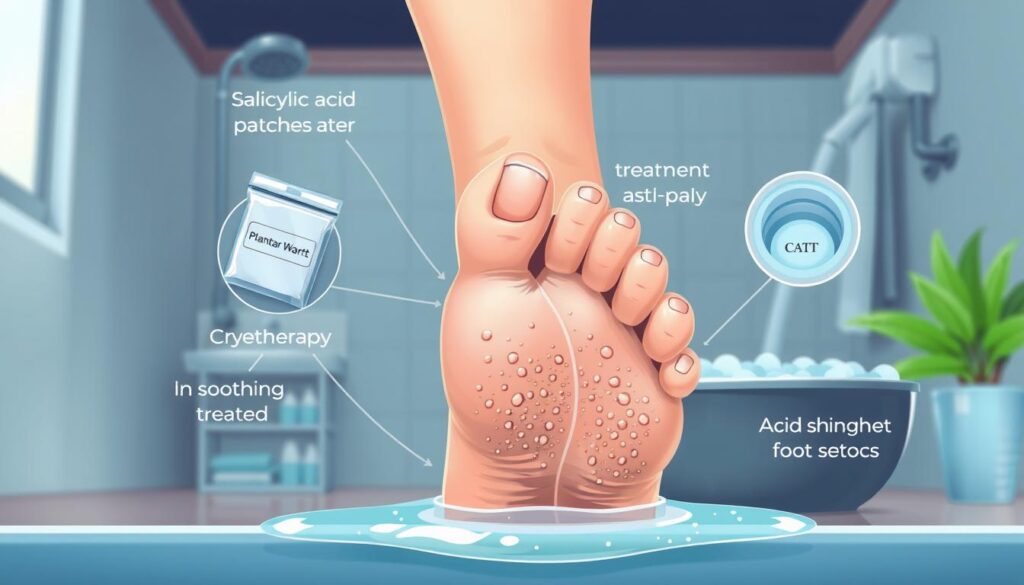
Plantar warts are pesky growths on your feet caused by the human papillomavirus (HPV). These rough bumps can make walking uncomfortable and might spread to other areas1. They sneak in through tiny cuts or weak spots in your skin2.
Verruca Plantaris often pops up in public places like showers, pools, and locker rooms1. Kids, teens, and those with weak immune systems are more likely to get these bothersome growths2.
Treatment for foot warts depends on how bad they are. Some vanish on their own within two years2. Others may need more help to go away.
You can try over-the-counter remedies, see a doctor, or use home care methods. The choice depends on your specific case and preferences.
Key Takeaways
- Plantar warts are caused by HPV and can develop on foot skin
- Public spaces increase risk of viral transmission
- Some warts may resolve without medical intervention
- Multiple treatment options are available
- Immune system health impacts wart development
Understanding Plantar Warts and Their Causes
Plantar verrucae are common foot problems that can affect your comfort and movement. These small growths need careful attention from a foot doctor. They’re more than just a simple skin issue.
What Are Plantar Warts?
Plantar warts are rough growths on your feet’s soles. They often appear where you put the most weight. These bumps come from specific types of human papillomavirus (HPV).
The virus enters through tiny cuts in your skin. It causes small, sometimes painful bumps to form.
Common Causes of Plantar Warts
- Walking barefoot in public areas like locker rooms3
- Exposure to warm, moist environments such as swimming pools3
- Direct contact with surfaces contaminated by HPV
- Weakened immune system
Risk Factors You Should Be Aware Of
Some people are more likely to get plantar warts. Children and young adults often get these skin growths4. People with weak immune systems are at higher risk.
Those who use public showers a lot can also get warts more easily. Knowing these risks can help you prevent warts.
| Age Group | Wart Occurrence | Spontaneous Resolution |
|---|---|---|
| Children | More Common | Two-thirds resolve within two years5 |
| Adults | Less Common | Warts may persist for several years |
Remember, while HPV is widespread with over 100 virus types, only a few specifically cause foot warts3.
Good foot care can help prevent and manage plantar warts. Proper hygiene is key to keeping your feet healthy. Learning about warts helps you take better care of your feet.
Treatment Options for Plantar Warts
Plantar warts can be frustrating, but there are many ways to treat them. Your choice depends on the wart’s severity and your preferences.
Over-the-Counter Remedies
Salicylic acid products are a popular first choice for plantar wart treatment. They can boost cure rates by 29% compared to placebo after 12-13 weeks6.
Other store-bought options include freezing sprays, zinc creams, and adhesive tape methods.
- Freezing spray treatments
- Zinc cream applications
- Adhesive tape occlusion methods
Professional Treatment Options
For stubborn warts, doctors offer more powerful solutions. Cryotherapy is a top choice among healthcare providers.
This method freezes warts with liquid nitrogen. It may need multiple sessions to work7.
| Treatment Method | Effectiveness | Sessions Required |
|---|---|---|
| Cryotherapy | High | 2-3 sessions |
| Laser Treatment | Moderate | 1-2 sessions |
| Immunotherapy | Variable | Multiple sessions |
Home Remedies That May Help
Some home remedies can support your wart removal efforts. Patience is key, as up to 80% of plantar warts may clear up naturally within two years6.
Try these gentle approaches:
- Regular use of a pumice stone
- Keeping the affected area clean and dry
- Using over-the-counter treatments consistently
“The right treatment can make all the difference in managing plantar warts effectively.” – Dermatology Experts
Preventing Plantar Warts: Tips for Healthy Feet
Protect your feet from plantar warts with smart care and good hygiene. These pesky skin growths can pop up without warning. Learn how to stop them before they start89.
Keep your feet dry and clean to ward off plantar warts. These warts love warm, damp spots. Wear shoes that let your feet breathe and change socks daily9.
Choose socks made of moisture-wicking materials. A strong immune system helps fight off potential infections9.
Wear flip-flops or water shoes in public pools and showers. This simple step can shield you from HPV, the virus behind plantar warts89.
Watch for any odd changes in your foot skin. See a skin doctor early if you spot something unusual9.
FAQ
What exactly are plantar warts?
Plantar warts are rough growths on foot soles caused by HPV. They look like small bumps with black dots. These warts can hurt when you walk or stand.
How do I know if I have a plantar wart?
Look for a rough growth on your foot’s bottom. It may have small black dots and resemble a hardened callus. You might feel pain when walking.
How do plantar warts spread?
Plantar warts spread through contact with HPV. You can get them by walking barefoot in public places. The virus enters through small cuts in your skin.
What are the most effective treatments for plantar warts?
Over-the-counter salicylic acid products can help treat plantar warts. Professional options include cryotherapy, laser treatment, and minor surgery. Home remedies like duct tape might work too.
The best treatment depends on the wart’s severity and your preference.
Are plantar warts dangerous?
Plantar warts are usually harmless and often go away on their own. However, they can be painful and spread easily. People with weak immune systems or diabetes should see a doctor.
How can I prevent getting plantar warts?
Keep your feet clean and dry to prevent plantar warts. Wear flip-flops in public areas and avoid walking barefoot. Change socks daily and don’t share personal items like towels.
When should I see a doctor about a plantar wart?
See a doctor if the wart is very painful or spreading fast. Seek help if it affects your daily activities. Those with diabetes or weak immune systems should consult a healthcare provider.
Can I remove a plantar wart at home?
Some home remedies can help with plantar warts. However, it’s best to consult a doctor for persistent or painful warts. DIY treatments might not fully remove the wart and could spread the infection.
Source Links
- Plantar Wart Treatment | Ankle & Foot Centers of America – https://ankleandfootcenters.com/plantar-wart-treatment/
- The Basics of Plantar Warts – https://www.webmd.com/skin-problems-and-treatments/understanding-plantar-warts-basics
- Plantar warts – Symptoms and causes – https://www.mayoclinic.org/diseases-conditions/plantar-warts/symptoms-causes/syc-20352691
- Understanding Plantar Warts – https://www.saintlukeskc.org/health-library/understanding-plantar-warts
- Patient education: Common warts, plantar warts, and flat warts (Beyond the Basics) – https://www.uptodate.com/contents/common-warts-plantar-warts-and-flat-warts-beyond-the-basics/print
- Plantar warts: a persistently perplexing problem – https://bpac.org.nz/BPJ/2014/December/plantar-warts.aspx
- Answering Your Plantar Warts FAQs – https://www.joelfosterdpm.com/faqs/answering-your-plantar-warts-faqs-joel-d-foster-dpm.cfm
- Can Plantar Warts Be Prevented?: The Foot & Ankle Specialists: Podiatric Medicine – https://www.footandanklespecialistsmi.com/blog/can-plantar-warts-be-prevented
- How to Prevent Plantar Warts: Tips for Keeping Your Feet Wart-Free – Goodless Dermatology – https://goodlessdermatology.com/posts/news/how-to-prevent-plantar-warts-tips-for-keeping-your-feet-wart-free/

