
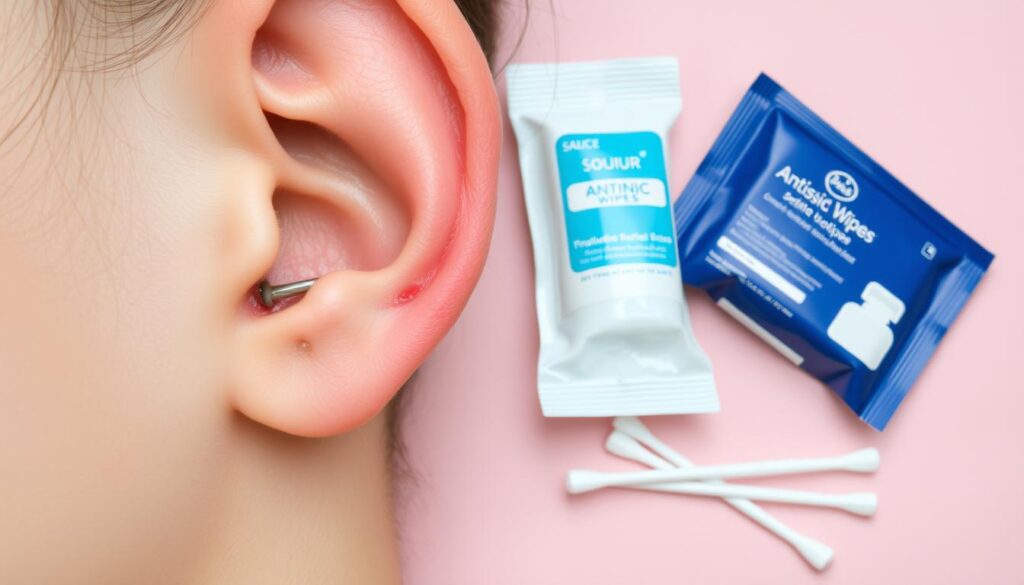
Body piercing complications can turn your new adornment into a health concern. Infected piercing treatment demands careful attention to prevent serious issues. Understanding the risks and proper care is vital for your health and piercing investment.
Piercing infections are a common concern for those with new body art. Prevention begins with thorough aftercare and understanding potential risks. Regular cleaning and good hygiene can greatly reduce infection chances.
Key Takeaways
- Proper cleaning is critical for preventing piercing infections
- Different body piercings require specific care routines
- Hand washing is essential before touching pierced areas1
- Avoid using alcohol or hydrogen peroxide on new piercings1
- Monitor your piercing for signs of potential infection
Understanding Piercing Site Infection: Signs and Symptoms
Piercing infections can be tricky. Knowing the right signs helps address potential problems quickly. Piercings are popular among young adults, bringing important health considerations2.
Common Infection Indicators
Identifying a potential piercing site infection involves recognizing key symptoms. Watch for these signs of Piercing Redness Swelling and Piercing Pain and Discharge:
- Persistent redness around the piercing site
- Unusual swelling that doesn’t subside
- Intense pain or tenderness
- Yellow or greenish discharge
- Burning or itching sensation
Ear piercings are often prone to infections. 20% of earlobe piercings and 30% of cartilage piercings can develop an infection3.
Fresh piercings typically need 4 to 6 weeks to heal completely3.
When to Seek Medical Attention
Not all infections are minor. A Piercing Abscess could develop if left untreated. Consult a healthcare professional if you experience:
- Infection doesn’t improve within 2-3 days
- You develop a fever
- The infection spreads beyond the piercing site
- The jewelry becomes embedded in the skin
“Prevention and early detection are key to managing piercing infections effectively.”
Up to 35% of individuals with pierced ears may experience complications. These include infections caused by bacteria like Pseudomonas aeruginosa and Staphylococcus aureus4.
| Infection Type | Risk Level | Common Symptoms |
|---|---|---|
| Minor Infection | Low | Slight redness, minimal discharge |
| Moderate Infection | Medium | Significant swelling, pain, yellow discharge |
| Severe Infection | High | Fever, spreading redness, pus |
Most minor ear piercing infections heal within two weeks. Proper home care is essential3. Stay alert and prioritize your health.
Essential Home Treatment Steps for Infected Piercings
Proper care is vital for infected piercings. Gentle treatment helps healing and prevents complications5. Always clean your hands before touching the piercing.
Follow these key steps for your cleaning routine. Clean the piercing three times daily with a sterile saltwater solution. Use a mixture of salt and warm water.
- Clean the piercing three times daily with a sterile saltwater solution6
- Use a mixture of ½ teaspoon salt in one cup of warm water6
- Gently clean both sides of the piercing
- Pat dry with a clean paper towel
“Proper cleaning is your most effective weapon against piercing infections”
Take these precautions when treating infected piercings. Keep the jewelry in to avoid trapping the infection. Avoid using harsh chemicals on the piercing.
- Never remove the jewelry, as this can trap the infection5
- Avoid alcohol, hydrogen peroxide, or antibiotic ointments5
- Use over-the-counter anti-inflammatory medicines to reduce pain
| Piercing Type | Typical Healing Time |
|---|---|
| Earlobe Piercings | 6-8 weeks5 |
| Cartilage Piercings | 3-6 months6 |
Look out for signs of worsening infection. These include spreading redness, increased pain, or fever. See a doctor if symptoms last more than two days5.
Professional Treatment and Medical Interventions
Piercing infections sometimes need expert care. When home remedies don’t work, knowing when to get help is key for Professional Piercing Safety7.
Preventing Piercing Infections involves spotting serious signs. Your body sends clear signals when you need a doctor’s check8.
- Persistent symptoms lasting more than 2-3 days
- High fever above 101°F
- Intense pain around the piercing site
- Spreading redness or swelling
- Visible pus with foul odor
When to Consult Healthcare Professionals
Cartilage piercings need extra care. They heal slower and can get more complex infections9.
A doctor might suggest special treatments based on how bad your infection is7.
Treatment Approaches
Doctors usually use targeted treatments for infected piercings:
- Oral Antibiotics: A week to ten days of pills for bad infections9
- Topical antibiotic creams
- Potential jewelry removal if infection is extensive
Your health matters more than preserving a piercing. Always prioritize medical advice when infections seem serious.
Getting professional help can stop problems like tissue damage or widespread infections8.
Conclusion
Body piercing safety requires careful attention to professional practices. Understanding potential complications helps you make informed decisions about style and health10. Prioritize prevention and act quickly if an infection develops11.
Piercing site infections are more common than many think. About 24% of people face infection-related issues, ranging from mild to serious10. Quick treatment is key to preserving your body art11.
Professional guidance is your best defense against complications. Choose a reputable piercing studio and follow strict aftercare instructions. Monitor your piercing closely and seek medical advice if symptoms persist.
Your health and personal expression can safely coexist with proper care. Take proactive steps to enjoy your piercing with confidence. Professional safety extends beyond the piercing moment to long-term health maintenance.
FAQ
What are the common signs of a piercing infection?
Piercing infections often show redness, swelling, pain, and yellow discharge. Ear piercings may develop symptoms within a week. Cartilage piercings are more infection-prone and heal slower.
How can I treat a minor piercing infection at home?
Clean your hands before touching the area. Use saltwater or saline to clean the piercing thrice daily. Keep the jewelry in to prevent trapping the infection.
Clean both sides of the earlobe and dry with paper towels. Over-the-counter anti-inflammatory medicines can help ease pain and swelling.
When should I seek medical attention for a piercing infection?
Consult a healthcare professional if:
– The infection doesn’t improve within 2-3 days of home treatment
– You develop a fever
– The infection spreads beyond the piercing site
– The earring becomes stuck or embedded in the skin
– You have a cartilage piercing with persistent symptoms
What can I do to prevent piercing infections?
To prevent infections, follow these key steps:
– Always get piercings from a professional using sterile tools
– Follow proper aftercare instructions carefully
– Clean the piercing regularly with saline solution
– Avoid excessive handling of the jewelry
– Maintain excellent personal hygiene
Are some types of piercings more prone to infection?
Cartilage piercings are more likely to get infected. They heal slower and can be trickier to treat. These piercings need extra care and might require antibiotics if infected.
What should I avoid when treating a piercing infection?
Avoid using:
– Alcohol – Hydrogen peroxide – Antibiotic ointments These can irritate the piercing and slow down the healing process. Stick to saline solution or sterile salt water for cleaning.
How long should I continue aftercare treatment?
Keep cleaning for 6-8 weeks or until the piercing heals fully. Stay consistent with your care, even if healing seems to be going well.
Source Links
- Body Piercings: Cleaning and Healing – https://uhs.berkeley.edu/health-topics/body-piercings
- Piercing precautions: Get the facts – https://www.mayoclinic.org/healthy-lifestyle/adult-health/in-depth/piercings/art-20047317
- What to Know About Ear Piercing Infections – https://www.webmd.com/skin-problems-and-treatments/what-to-know-about-ear-piercing-infections
- Complications of Body Piercing – https://www.aafp.org/pubs/afp/issues/2005/1115/p2029.html
- How to Treat an Infected Ear Piercing – https://www.healthline.com/health/beauty-skin-care/how-to-treat-an-infected-ear-piercing
- How to treat an infected piercing – https://patient.info/news-and-features/how-to-treat-an-infected-piercing
- It’s easy for piercings to become infected – https://www.uclahealth.org/news/article/its-easy-for-piercings-to-become-infected
- Infected Ear Piercing: Symptoms, Treatment, and When to Visit Urgent Care in Fairfield, CT – https://docsmedicalgroup.com/docsurgentcare/infected-ear-piercing-symptoms-treatment-and-when-to-visit-urgent-care-in-fairfield-ct/
- Treating an Infected Ear Piercing – https://www.verywellhealth.com/infected-ear-piercing-5184120
- Body Piercing: Medical Concerns with Cutting-Edge Fashion – https://pmc.ncbi.nlm.nih.gov/articles/PMC1496593/
- Case Report: Infected ear cartilage piercing – https://pmc.ncbi.nlm.nih.gov/articles/PMC1781501/

