
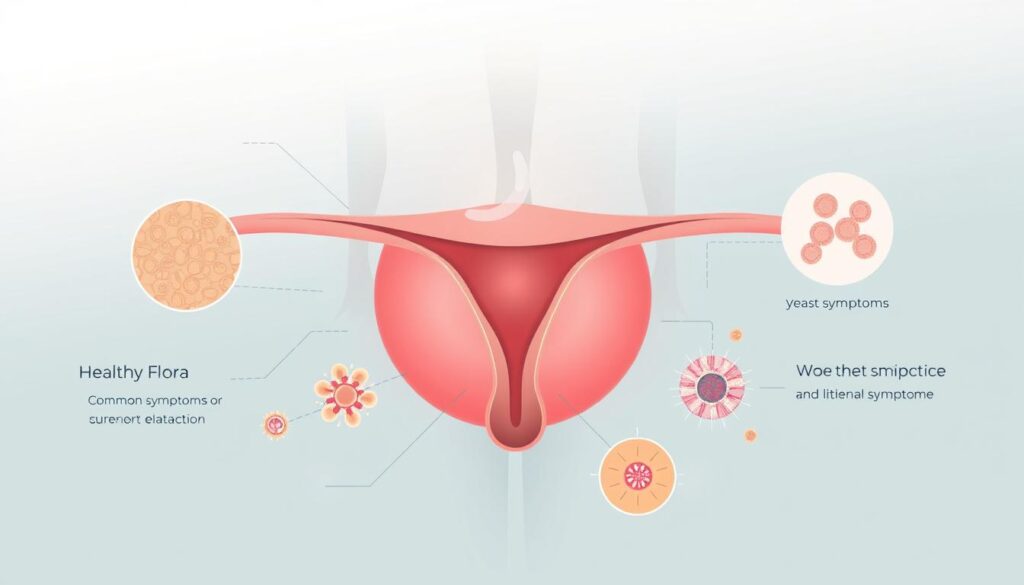
Vaginal yeast infections can disrupt your daily life and comfort. About 75% of women experience at least one Candidiasis episode in their lifetime1. Understanding feminine health basics helps you manage these uncomfortable situations effectively2.
Yeast infections can affect women of all ages. Certain factors like antibiotics, hormonal changes, and lifestyle choices increase susceptibility23. Recognizing early signs and knowing treatment options is key to maintaining vaginal health.
Most yeast infections can be managed with proper care. They often improve within a few days of treatment2. This guide offers insights into managing Candidiasis, whether it’s your first or a recurring episode.
Key Takeaways
- 75% of women experience at least one yeast infection
- Medications and hormonal changes can trigger infections
- Most infections improve within a few days of treatment
- Proper hygiene and lifestyle choices can help prevent recurrence
- Consult a healthcare professional for persistent symptoms
What is a Vaginal Yeast Infection and Its Common Symptoms
Vaginal yeast infections can disrupt your daily life. Candida Albicans, a natural fungus, causes these uncomfortable infections4. Up to 75% of women face this common condition at least once4.
Understanding Candida and Its Role
Candida normally exists in the vagina. When it overgrows, it becomes problematic. Various factors can disrupt the balance of microorganisms5.
Recognizing Key Symptoms
Knowing the signs helps identify a yeast infection. Look out for these indicators:
- Intense itching and burning in the vaginal area
- Thick, white, cottage cheese-like vaginal discharge
- Redness and swelling of the vulva
- Pain during urination or sexual intercourse
Risk Factors and Common Triggers
Certain factors increase your chances of fungal infections. These include:
- Antibiotic use
- Pregnancy and hormonal changes
- Uncontrolled diabetes
- Weakened immune system
“Understanding your body’s signals is the first step in managing vaginal health”
Prevention is crucial for vaginal health. Wear breathable cotton underwear and avoid tight clothing. Stay away from scented products to reduce infection risks5.
Diagnosis and Treatment Options for Vaginal Yeast Infection
Suspecting a vaginal yeast infection? Proper diagnosis and treatment are key. Your doctor will do a thorough check-up to confirm Vaginal Thrush6. This includes a pelvic exam and lab tests of vaginal fluids7.
Treatment depends on how severe your symptoms are. For mild to moderate cases, short-course vaginal therapy is common. This uses antifungal meds applied directly for 3 to 7 days6.
- Short-course vaginal therapy with antifungal creams
- One-dose oral medication
- Long-course vaginal therapy for persistent infections
- Boric acid therapy for resistant cases
The FDA approved two new meds for vaginal yeast infections: oteseconazole (Vivjoa) and ibrexafungerp (Brexafemme)6. These offer new hope for women with repeat infections7.
| Treatment Type | Duration | Best For |
|---|---|---|
| Short-course Therapy | 3-7 days | Mild to moderate symptoms |
| Long-course Therapy | Up to 2 weeks | Severe or recurrent infections |
| Oral Medication | Single dose | Quick relief |
For severe or recurring infections, your doctor might suggest a more intense plan. This could include daily antifungal meds for up to two weeks. Then, weekly treatments for six months6.
Talking to medical pros for personalized is the best way to manage Vaginal Thrush.
Remember, completing the entire prescribed treatment is essential, even if symptoms improve quickly.
Conclusion
Knowing about vaginal yeast infections helps you manage your health better. Most women face this issue at least once. Quick action and proper care can lead to better results89.
Be proactive in dealing with vaginal yeast infections. About 5-9% of women get them often. Good health habits are key to prevention10.
Diabetes, hormone changes, and immune system issues can make you more prone to these infections108. Know your body to prevent problems.
Keep good hygiene and wear breathable clothes. Manage health conditions and seek expert advice. For ongoing symptoms, visit a vaginal health specialist for thorough care9.
Your health journey is unique. Stay informed about yeast infections. This can help you avoid issues and keep your well-being intact.
FAQ
What causes a vaginal yeast infection?
Vaginal yeast infections occur when Candida, a natural fungus, overgrows in the vagina. This happens when the balance of microorganisms is upset. Candida albicans is the most common cause, but other species can trigger infections too.
Several factors can increase your risk. These include antibiotics, hormonal changes, diabetes, and a weakened immune system.
What are the typical symptoms of a vaginal yeast infection?
Key signs include intense itching and irritation around the vulva and vaginal opening. You may feel pain or burning when urinating or during sex. The vaginal area might be sore, red, and swollen.
A thick, white discharge like cottage cheese is common. However, some women may have little or no discharge at all.
How are vaginal yeast infections diagnosed?
Doctors usually diagnose yeast infections through a pelvic exam and lab tests. They’ll check your symptoms, medical history, and may take a sample to confirm Candida’s presence.
Getting a proper diagnosis is crucial. Yeast infection symptoms can mimic other conditions like bacterial vaginosis or trichomoniasis.
What are the treatment options for a vaginal yeast infection?
Treatment varies based on infection severity. Mild to moderate cases often respond to antifungal creams, ointments, or suppositories.
Severe or recurring infections might need oral antifungal medications like fluconazole. New options include oteseconazole (Vivjoa) and ibrexafungerp (Brexafemme).
How can I prevent recurring vaginal yeast infections?
Good hygiene and wearing breathable cotton underwear can help prevent infections. Avoid tight clothes and change quickly out of wet swimsuits or sweaty workout gear.
Manage health conditions like diabetes and avoid unnecessary antibiotics. Probiotics may support vaginal health. If infections are frequent, consult your doctor.
Are yeast infections sexually transmitted?
Yeast infections aren’t sexually transmitted, but sex can cause irritation that may trigger an infection. Partners can pass the infection back and forth.
If you or your partner have recurring infections, it’s wise to see a healthcare professional.
When should I see a doctor about a yeast infection?
See a doctor if it’s your first infection or if symptoms are severe. Medical attention is needed for frequent infections or if over-the-counter treatments don’t work.
Consult a healthcare provider if you have diabetes, a weak immune system, or are pregnant. These conditions may need special treatment.
Source Links
- What Are Vaginal Yeast Infections? – https://www.webmd.com/women/understanding-vaginal-yeast-infection-basics
- Vaginal Yeast Infection: Care Instructions – https://myhealth.alberta.ca/Health/aftercareinformation/pages/conditions.aspx?hwid=uf7069
- Think You Have a Vaginal Infection? Here’s What You Need to Know. – https://www.acog.org/womens-health/experts-and-stories/the-latest/think-you-have-a-vaginal-infection-heres-what-you-need-to-know
- Vaginal Yeast Infection: Causes, Symptoms & Treatment – https://my.clevelandclinic.org/health/diseases/5019-vaginal-yeast-infection
- Yeast infection (vaginal) – Symptoms and causes – https://www.mayoclinic.org/diseases-conditions/yeast-infection/symptoms-causes/syc-20378999
- Yeast infection (vaginal) – Diagnosis and treatment – https://www.mayoclinic.org/diseases-conditions/yeast-infection/diagnosis-treatment/drc-20379004
- Patient education: Vaginal yeast infection (Beyond the Basics) – https://www.uptodate.com/contents/vaginal-yeast-infection-beyond-the-basics/print
- Evaluation and Management of Vaginitis – https://pmc.ncbi.nlm.nih.gov/articles/PMC1496957/
- A Comprehensive Look at Vaginal Yeast Infections – https://cura4u.com/blog/a-comprehensive-look-at-vaginal-yeast-infections
- Patient education: Vaginal yeast infection (Beyond the Basics) – https://www.uptodate.com/contents/vaginal-yeast-infection-beyond-the-basics

