
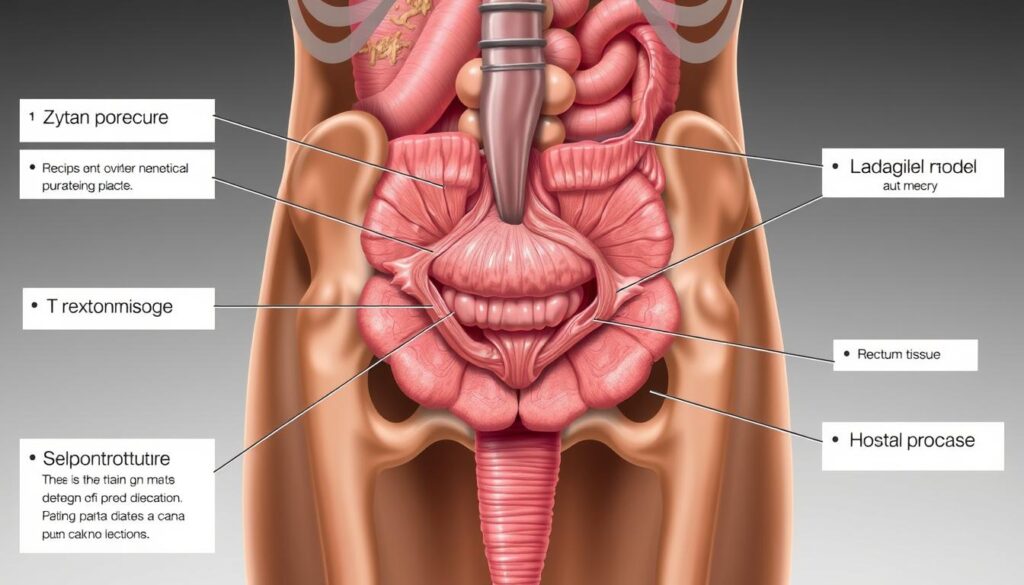
Rectal prolapse happens when the rectum slips outside the anus. This condition can cause discomfort and potential issues. People over 50 face a higher risk1.
About 0.5% of people have rectal prolapse2. Women are six times more likely to develop it than men2. Understanding this condition is key for proper management.
Rectal prolapse can lead to serious problems. Many patients experience fecal incontinence. However, modern treatments offer hope for managing this condition3.
Effective treatments are available for rectal prolapse. Abdominal rectopexy is often recommended for healthy adults. This surgery has a 97% long-term success rate3.
Key Takeaways
- Rectal prolapse primarily affects individuals over 50
- Women are more likely to experience this condition
- Fecal incontinence is a common associated symptom
- Surgical treatments have high success rates
- Early diagnosis and treatment are crucial
Understanding Rectal Prolapse: Symptoms and Risk Factors
Rectal prolapse can significantly impact your life quality. Knowing its signs and risk factors helps with early detection and management4.
Early symptom recognition allows for timely medical help. This condition affects about 2.5 out of 1,000 people. Some groups are more at risk4.
Common Signs and Symptoms
The main rectal prolapse symptoms include:
- A reddish lump protruding from the anus
- Fecal incontinence
- Chronic constipation or loose stools5
- Rectal bleeding or mucus discharge
- Sensation of incomplete bowel movements
- Anal itching and irritation6
Who’s at Risk?
Some people are more likely to develop rectal prolapse. Key risk factors include:
- Age: More common after 50 years old4
- Female gender5
- Chronic constipation
- Pelvic floor muscle weakness
- Frequent straining during bowel movements6
“Early recognition of rectal prolapse symptoms can lead to more effective treatment and better patient outcomes.”
Diagnosing rectal prolapse usually involves a thorough physical exam. Additional tests may be needed to rule out other conditions6.
If you have ongoing symptoms, see a doctor. They can provide an accurate diagnosis and personalized treatment plan.
Common Causes and Complications of Rectal Prolapse
Rectal prolapse affects people of various ages, with some groups at higher risk. It’s uncommon, occurring in about 2.5 out of 100,000 people yearly7. Women make up 80 to 90 percent of adult cases7.
Several factors contribute to rectal prolapse. These include chronic constipation, prolonged straining during bowel movements, and weakened pelvic floor muscles.
Neurological disorders and previous surgical procedures can also play a role. Knowing these causes can help you spot potential risks early on.
- Chronic constipation
- Prolonged straining during bowel movements
- Weakened pelvic floor muscles
- Neurological disorders
- Previous surgical procedures
Rectal prolapse can lead to serious issues affecting your daily life. These may include fecal incontinence, rectal ulcers, and difficulty controlling bowel movements8.
Recognizing early signs and seeking medical advice can prevent long-term complications.
In children, rectal prolapse can stem from different underlying conditions. These may include cystic fibrosis, parasitic infections, malnutrition, and chronic constipation.
- Cystic fibrosis
- Parasitic infections
- Malnutrition
- Chronic constipation
Age impacts rectal prolapse risk significantly. Adults over 50 are more likely to develop this condition78. Children under 4 are also at risk.
However, cases in young children often improve with proper treatment of the underlying cause7. Early intervention is key to managing rectal prolapse effectively.
Treatment Options and Surgical Approaches
Rectal prolapse treatment offers various options. Your condition, health, and symptoms determine the best approach. A personalized strategy is crucial for effective rectal prolapse management.
Treatment typically starts with conservative methods. These are tried before considering surgical solutions. Your doctor will assess your needs to choose the best strategy.
Conservative Management
Initial rectal prolapse management may include:
- Dietary modifications to prevent constipation
- Pelvic floor exercises
- Stool softeners
- Manual reduction techniques
Surgical Solutions
Surgery becomes necessary when conservative treatments fail. The surgical approach varies based on patient characteristics9.
| Surgical Procedure | Approach | Recurrence Rate |
|---|---|---|
| Laparoscopic Rectopexy | Abdominal | 0-5% |
| Delorme Procedure | Perineal | 7-22% |
| Altemeier Operation | Perineal | Up to 50% |
Laparoscopic surgery uses small abdominal cuts and special tools10. Patients usually resume normal activities within 4 to 6 weeks after surgery10.
The goal of rectal prolapse treatment is to restore normal rectal function and improve patient quality of life.
Rectal prolapse surgery has a low recurrence rate of 2-5%10. Your surgeon will suggest the best procedure for you. They’ll consider your age, health, and prolapse severity9.
Conclusion
Rectal prolapse needs a proactive health approach. Surgical treatments have shown great success. Most patients see positive results through specialized medical procedures11.
Prevention focuses on understanding personal risk factors. Women over 50 face six times higher risk than men12. Early symptom recognition and professional advice can improve treatment outcomes13.
Care goes beyond surgery. Good bowel habits and managing health conditions are crucial. Surgical procedures have varying recurrence rates, but proper aftercare minimizes complications13.
Your journey is unique. Stay informed and work with medical professionals. Prioritize your health to manage rectal prolapse effectively. This approach can greatly improve your overall well-being.
FAQ
What is rectal prolapse?
Rectal prolapse happens when your rectum slips outside the anus. It’s more common in older women. Medical help is often needed to avoid long-term problems.
What are the main symptoms of rectal prolapse?
Key signs include a reddish lump outside the anus. You might also have trouble controlling bowel movements. Constipation, loose stools, and bleeding can occur too.
Some people feel like they can’t fully empty their bowels. These symptoms can be uncomfortable and affect daily life.
Who is most at risk for rectal prolapse?
Women over 50 face a higher risk. Chronic constipation and multiple childbirths increase the chances. Surprisingly, one-third of affected women have never had children.
What causes rectal prolapse?
The exact cause isn’t clear. Chronic constipation and straining during bowel movements are big factors. In kids, it might link to cystic fibrosis, parasites, or poor nutrition.
How is rectal prolapse diagnosed?
Doctors usually start with a physical exam. They may order more tests to rule out other issues. Your symptoms and medical history play a key role.
What are the potential complications of untreated rectal prolapse?
Untreated rectal prolapse can lead to serious issues. Many patients (50-75%) struggle with fecal incontinence. Chronic constipation and rectal ulcers may develop.
In severe cases, the prolapsed rectum might get stuck outside the body. This is a medical emergency requiring immediate attention.
What treatment options are available?
Treatment ranges from simple changes to surgery. Doctors may suggest stool softeners or treating underlying conditions. Surgical options include rectopexy and Altemeier or Delorme procedures.
Is rectal prolapse different in children and adults?
Yes, it’s quite different. In kids, it might get better on its own. This happens if the underlying cause is treated.
Adults usually need medical help. Without treatment, the condition won’t improve in grown-ups.
Can rectal prolapse be prevented?
You can lower your risk with good habits. Avoid straining during bowel movements. Stay active and treat underlying health issues.
Regular check-ups help catch problems early. Your doctor can guide you on staying healthy.
What is the success rate of rectal prolapse surgery?
Rectopexy, a common surgery, has a high success rate. About 97% of patients see long-term improvement. The best approach depends on your health and condition.
Source Links
- Rectal prolapse – Symptoms and causes – https://www.mayoclinic.org/diseases-conditions/rectal-prolapse/symptoms-causes/syc-20352837
- Rectal Prolapse Expanded Version | ASCRS – https://fascrs.org/patients/diseases-and-conditions/a-z/rectal-prolapse-expanded-version
- Rectal Prolapse: Symptoms, Causes & Treatment – https://my.clevelandclinic.org/health/diseases/14615-rectal-prolapse
- What Is Rectal Prolapse? – https://www.webmd.com/digestive-disorders/what-is-rectal-prolapse
- Rectal Prolapse: Symptoms, Surgery, Causes, and More – https://www.healthline.com/health/rectal-prolapse
- Rectal Prolapse – https://www.urmc.rochester.edu/conditions-and-treatments/rectal-prolapse
- Rectal Prolapse – NIDDK – https://www.niddk.nih.gov/health-information/digestive-diseases/anatomic-problems-lower-gi-tract/rectal-prolapse
- Rectal Prolapse – https://www.hopkinsmedicine.org/health/conditions-and-diseases/rectal-prolapse
- Rectal prolapse – Surgical Treatment – https://www.ncbi.nlm.nih.gov/books/NBK6929/
- Rectal prolapse surgery – Mayo Clinic – https://www.mayoclinic.org/tests-procedures/rectal-prolapse-surgery/about/pac-20384704
- Rectal Prolapse: A 10-Year Experience – https://pmc.ncbi.nlm.nih.gov/articles/PMC3096348/
- Rectal prolapse: Causes, symptoms, and treatments – https://www.medicalnewstoday.com/articles/319977
- PDF – https://www.bu.edu.eg/portal/uploads/discussed_thesis/10666287/10666287_E.pdf

