
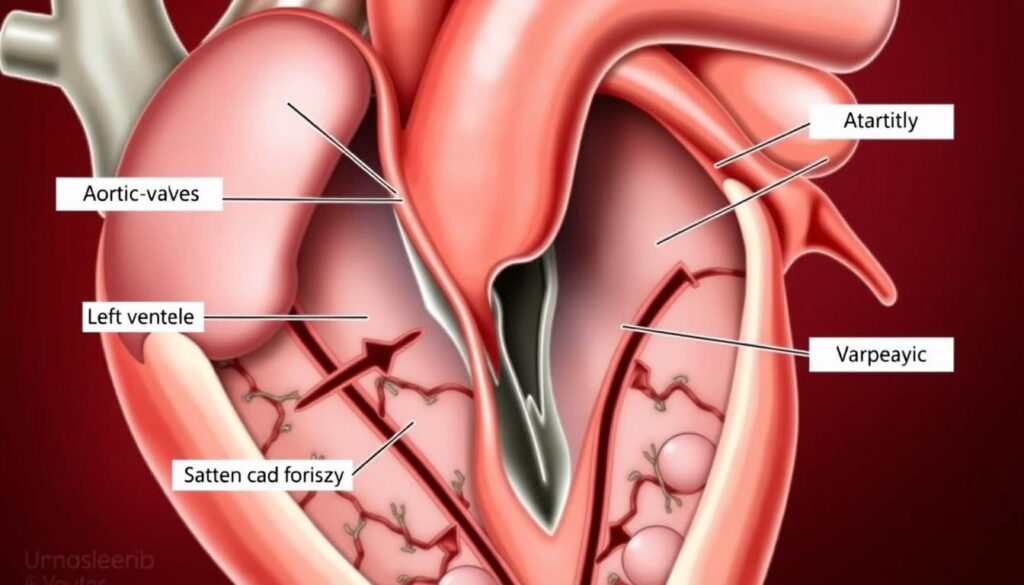
Aortic valve stenosis is a serious heart valve disease. It narrows the aortic valve, limiting blood flow from your heart. This condition becomes more common as you age1.
About 6% of people over 75 have aortic stenosis1. Learning about this condition can help you manage your heart health better2.
Aortic stenosis can cause breathing problems and chest pain. In severe cases, it may lead to fainting or sudden death1.
The disease develops slowly over time. You might not notice symptoms until the valve narrows significantly2.
Key Takeaways
- Aortic valve stenosis is a serious heart valve disease affecting older adults
- Symptoms may not appear until the condition becomes advanced
- The prevalence increases with age, especially after 60
- Early detection and monitoring are crucial for management
- Multiple treatment options are available, including surgical interventions
What is Aortic Valve Stenosis?
Aortic valve stenosis is a serious heart problem. It affects blood flow through your heart. The aortic valve narrows, which can greatly impact your heart health34.
Understanding the Condition
Think of your heart’s aortic valve as a vital gateway. In aortic stenosis, this valve gets narrow over time. This limits blood flow from your heart to your body4.
- Affects approximately 2.5 million people in the U.S4.
- More common in individuals over 65 years old3
- Occurs more frequently in men than women3
How Valve Narrowing Impacts Your Heart
A heart murmur often signals aortic stenosis. It shows the valve isn’t working right3.
As the valve narrows, your heart works harder to pump blood. This can lead to various health issues4.
| Condition Stage | Characteristics |
|---|---|
| Mild | Minimal valve restriction |
| Moderate | Noticeable blood flow limitation |
| Severe | Significant heart strain |
| Critical | Immediate medical intervention required |
“Understanding aortic valve stenosis is the first step towards managing your heart health effectively.”
Doctors use tests like the transthoracic echocardiogram (TTE) to check this condition3.
Finding and treating aortic stenosis early can improve your life quality. It can also prevent heart problems4.
Causes of Aortic Valve Stenosis
Aortic valve stenosis has many causes. Understanding these can help you manage your heart health better. Let’s explore the factors behind this complex condition.
Age-Related Factors
As you age, your aortic valve can become calcified. This leads to narrowing and reduced functionality. Aortic stenosis usually develops in older adults, right at the valve.
Risk factors include high blood pressure, abnormal lipid levels, diabetes, and chronic kidney disease.
- High blood pressure
- Abnormal lipid levels
- Diabetes
- Chronic kidney disease
Congenital Conditions
Some people are born with heart valve differences. These increase their risk of aortic valve stenosis. The bicuspid aortic valve is the most common defect.
In this condition, only two leaflets develop instead of three5. It can lead to earlier onset of stenosis compared to normal trileaflet valves.
Other Contributing Factors
Several other factors can contribute to aortic valve stenosis:
- Rheumatic fever: Can cause significant valve scarring
- Genetic predisposition
- Chronic inflammation
“Early detection and understanding of risk factors are crucial in managing aortic valve stenosis.”
People with normal trileaflet valves usually don’t experience valve narrowing until their 70s or 80s5. Those with congenital abnormalities may develop stenosis much earlier.
Symptoms and Diagnosis
Early recognition of aortic valve stenosis symptoms is vital for heart health. This condition develops slowly, so knowing the warning signs is crucial6.
Common Symptoms to Watch For
Aortic valve stenosis can show through several distinct signs. Patients often experience:
- Shortness of breath during physical activities
- Chest pain (angina) when exercising
- Dizziness or fainting spells
- Unusual heart murmur detected during medical examination
These symptoms often worsen during physical exertion7. You might struggle with daily activities or feel unusually tired after light exercise6.
Diagnostic Approaches
Doctors use advanced techniques to confirm aortic valve stenosis. Echocardiography is the main diagnostic tool. It helps assess heart structure and function6.
- Transthoracic echocardiography
- Cardiac CT scans
- Cardiac MRI
- Cardiac catheterization
Catching aortic valve stenosis early is crucial for effective management. If you notice these symptoms, especially over 65, see your doctor7.
“Understanding your symptoms can be the first step towards effective treatment and improved heart health.”
Treatment Options for Aortic Valve Stenosis
Aortic valve stenosis treatment varies based on its severity. Mild cases need monitoring, while advanced stages require stronger interventions. Your healthcare team will guide you through the best management approach.
Lifestyle Changes and Medications
Lifestyle changes are crucial in managing heart health. Lowering blood pressure and cholesterol while maintaining a healthy weight can slow disease progression.
Medications can’t reverse aortic valve stenosis. However, they help manage symptoms and support heart function.
Surgical Procedures
Severe cases require aortic valve replacement. Two main options exist: traditional open-heart surgery and transcatheter aortic valve replacement (TAVR).
TAVR is a minimally invasive procedure offering faster recovery than open-heart surgery. Your health profile determines the choice between TAVR and surgical replacement.
Ongoing Care and Management
Lifetime follow-up with a cardiologist is vital after valve replacement. Regular check-ups and echocardiograms ensure proper valve function and heart health89.
FAQ
What exactly is aortic valve stenosis?
Aortic valve stenosis is a heart condition that narrows the aortic valve opening. It restricts blood flow from the left ventricle to the aorta. This makes the heart work harder to pump blood, potentially causing serious complications.
The valve becomes stiff and calcified. This reduces its ability to open and close properly.
Who is most at risk for developing aortic valve stenosis?
Your risk increases significantly with age, especially after 75. People with high blood pressure, diabetes, or chronic kidney disease are more likely to develop it. Abnormal lipid levels and congenital heart valve issues also raise the risk.
Genetic factors can lead to earlier onset of the condition.
What are the warning signs of aortic valve stenosis?
Key symptoms include chest pain, shortness of breath, and dizziness. Fainting, rapid heartbeat, and reduced ability to perform daily activities are also signs. Many people don’t notice symptoms until the condition becomes severe.
If you’re experiencing these signs, especially if you’re over 60, consult your doctor immediately.
How is aortic valve stenosis diagnosed?
Transthoracic echocardiography is the main diagnostic tool. It assesses heart size, function, and calculates valve area. Additional tests may include cardiac CT, MRI, or catheterization.
Your doctor will perform a physical exam, listen for heart murmurs, and review your medical history.
What are the treatment options for aortic valve stenosis?
Treatment depends on the severity of your condition. Mild cases might only need regular monitoring. Severe or symptomatic cases typically require valve replacement.
Options include open-heart surgery, minimally invasive techniques, and transcatheter aortic valve replacement (TAVR). TAVR inserts a new valve through small catheters, usually via the groin arteries.
Can aortic valve stenosis be prevented?
You can’t completely prevent age-related aortic valve stenosis. However, you can reduce your risk by maintaining a heart-healthy lifestyle. This includes managing conditions like high blood pressure and diabetes.
Eat a balanced diet, exercise regularly, and avoid smoking. Get regular check-ups with your healthcare provider.
Is aortic valve stenosis a life-threatening condition?
Untreated aortic valve stenosis can be serious and potentially life-threatening. In severe cases, it can lead to heart failure and sudden death. However, early detection and treatment can help manage the condition effectively.
How does aortic valve stenosis affect daily life?
The impact varies depending on the severity of your condition. Early stages might only cause mild limitations. As it progresses, you may become easily fatigued and short of breath during activities.
Working closely with your healthcare team can help manage symptoms and maintain your quality of life.
Source Links
- Aortic valve stenosis – Symptoms and causes – https://www.mayoclinic.org/diseases-conditions/aortic-stenosis/symptoms-causes/syc-20353139
- Aortic Stenosis Overview – https://www.heart.org/en/health-topics/heart-valve-problems-and-disease/heart-valve-problems-and-causes/problem-aortic-valve-stenosis
- Aortic stenosis: MedlinePlus Medical Encyclopedia – https://medlineplus.gov/ency/article/000178.htm
- Aortic Valve Stenosis Causes, Symptoms, Treatments – https://www.upmc.com/services/heart-vascular/conditions/aortic-stenosis
- Congenital Aortic Stenosis | Symptoms, Diagnosis and Treatment – https://www.cincinnatichildrens.org/health/a/avs
- Aortic stenosis – https://www.healthdirect.gov.au/aortic-stenosis
- Aortic Valve Stenosis: Causes, Symptoms, and Diagnosis – https://www.healthline.com/health/aortic-stenosis
- Managing Aortic Stenosis Symptoms – https://www.heart.org/en/health-topics/heart-valve-problems-and-disease/heart-valve-disease-risks-signs-and-symptoms/managing-aortic-stenosis-symptoms
- Aortic valve repair and aortic valve replacement – https://www.mayoclinic.org/tests-procedures/aortic-valve-repair-aortic-valve-replacement/about/pac-20385093

