
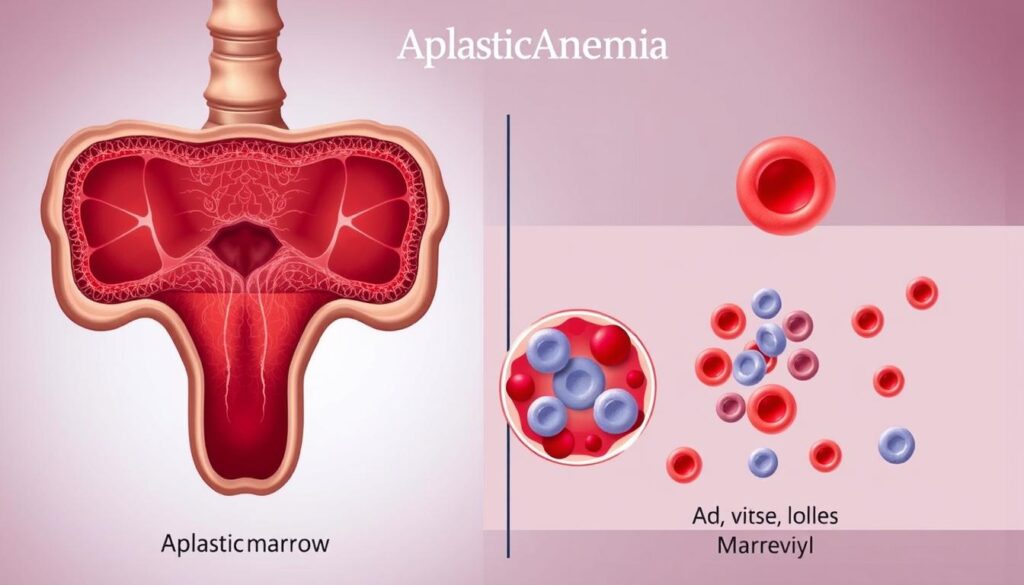
Aplastic anemia is a rare blood disorder that affects bone marrow. It hinders the production of enough blood cells. This condition can seriously impact your body’s normal functioning1.
The disorder affects many blood cell types. It can weaken your immune system and overall health2. In the United States, 300 to 900 people are diagnosed yearly3.
Aplastic anemia can develop at any age. It’s more common in young adults and older people2. Early detection is key for managing this hematologic disease effectively.
Various factors can cause aplastic anemia. These include medication exposure, toxic chemicals, radiation, and autoimmune disorders1.
Key Takeaways
- Aplastic anemia is a rare Blood Disorder affecting blood cell production
- Diagnosis occurs most frequently in young adults and older individuals
- Multiple factors can trigger Bone Marrow Failure
- Early detection is critical for successful treatment
- Treatment options include transfusions and stem cell transplants
What is Aplastic Anemia and Its Impact on Your Health
Aplastic anemia is a serious blood disorder that affects your overall health. It’s important to understand this condition for proper care. Recognizing its impact can help you seek timely medical attention4.
Your bone marrow is crucial for producing essential blood cells. When this process fails, it can have significant consequences5.
Understanding Bone Marrow Function
Bone marrow is a spongy tissue inside your bones. It creates vital blood components. In Acquired Aplastic Anemia, this system becomes impaired4.
Types of Blood Cells Affected
- Red blood cells (responsible for oxygen transport)
- White blood cells (crucial for immune defense)
- Platelets (essential for blood clotting)
When these blood cell types decrease, your body struggles to function normally5.
Common Signs and Symptoms
Knowing aplastic anemia symptoms can lead to faster medical help. Stem Cell Transplantation and Immunosuppressive Therapy are potential treatment options4.
| Symptom Category | Specific Symptoms |
|---|---|
| Fatigue-Related | Shortness of breath, dizziness, pale skin |
| Bleeding Indicators | Easy bruising, nosebleeds, prolonged bleeding |
| Infection Signs | Frequent infections, fever, oral thrush |
Your doctor can perform tests to confirm aplastic anemia. Blood work and bone marrow biopsy are common diagnostic tools5.
Early detection and proper medical management are key to addressing the challenges of aplastic anemia.
Recognizing symptoms and seeking medical advice is crucial. This approach can help you manage this complex blood disorder effectively45.
Common Causes and Risk Factors of Aplastic Anemia
Aplastic anemia is a complex blood disorder with various origins. It mainly occurs when your immune system attacks bone marrow stem cells. This attack disrupts normal blood cell production6.
Knowing the potential causes helps you manage risk factors better. Your risk of Severe Aplastic Anemia rises with certain environmental and medical triggers.
- Toxic chemical exposure (pesticides, benzene)
- High-dose radiation treatments
- Certain medications for autoimmune disorders
- Viral infections like hepatitis
- Pregnancy-related complications
Surprisingly, about 75 out of 100 cases of acquired aplastic anemia have no clear cause. Doctors call these idiopathic cases7. This makes diagnosis tricky for healthcare pros.
Some individuals might also develop Paroxysmal Nocturnal Hemoglobinuria, a rare disorder associated with aplastic anemia.
Congenital Aplastic Anemia is usually found in childhood. Genetic factors play a big role in these inherited forms. They can stem from specific genetic syndromes like Fanconi anemia7.
Your personal risk depends on many things. These include genetic makeup, environmental exposures, and overall health. A hematologist can help you understand your risk profile and prevention strategies.
Conclusion
Knowledge about aplastic anemia empowers your medical journey. Survival rates vary across age groups, with patients aged 0-18 having the best outcomes8. Immunosuppressive therapy is the main treatment for about 63% of patients8.
Early detection and personalized treatment are vital for hematologic diseases. Stem cell transplantation can be a game-changer for severe cases. The medical research on aplastic anemia offers hope through advanced therapies9.
Your healthcare team will consider many factors when creating your treatment plan. Survival rates range from 38.1% to 90.7% based on age and disease severity8. Close monitoring and open communication with specialists can improve your long-term outlook.
Medical advances provide effective ways to manage this complex blood disorder. Stay informed and work closely with your medical team. Take an active role in your healthcare journey for the best results.
FAQ
What is aplastic anemia?
Aplastic anemia is a rare blood disorder where bone marrow fails to make enough blood cells. It happens when stem cells in the bone marrow are damaged. This condition can affect people of any age and may become life-threatening without treatment.
What are the main symptoms of aplastic anemia?
Common symptoms include fatigue, shortness of breath, and rapid or irregular heart rate. Pale skin, frequent infections, and easy bruising are also signs. Some people might experience nosebleeds, bleeding gums, and prolonged bleeding from cuts.
Other symptoms can include skin rash, dizziness, headache, and fever. The severity of symptoms can vary among individuals.
What causes aplastic anemia?
The most common cause is an autoimmune response attacking bone marrow stem cells. Other causes include radiation, chemotherapy, and exposure to toxic chemicals. Certain medications, viral infections, and autoimmune disorders can also trigger it.
In some cases, pregnancy may lead to aplastic anemia. Sometimes, the cause remains unknown, called idiopathic aplastic anemia.
How is aplastic anemia diagnosed?
Diagnosis involves a thorough medical evaluation, including blood tests to check cell counts. A bone marrow biopsy is done to examine the marrow’s condition. Doctors also run tests to rule out other potential causes.
They look for significantly reduced blood cell production and examine the bone marrow’s appearance.
What are the treatment options for aplastic anemia?
Treatment options include blood transfusions, antibiotics, and medications to boost bone marrow production. Immunosuppressive therapy and stem cell transplantation may also be considered. The best treatment depends on the condition’s severity, age, overall health, and underlying cause.
Is aplastic anemia curable?
Stem cell transplantation is currently the only potential cure for aplastic anemia. Other treatments can effectively manage symptoms and improve quality of life. The outlook varies based on the condition’s severity, patient’s age, and how quickly treatment starts.
Who is at risk for developing aplastic anemia?
Risk factors include high-dose radiation or chemotherapy and exposure to toxic chemicals. Certain prescription drugs, underlying blood diseases, and autoimmune disorders can increase risk. Serious infections and inherited conditions like Fanconi’s anemia also raise the chances of developing aplastic anemia.
Can aplastic anemia be prevented?
While not always preventable, you can lower your risk by avoiding toxic chemicals. Limit radiation exposure, maintain a healthy lifestyle, and treat underlying conditions promptly. Regular check-ups can help catch potential issues early.
Source Links
- Aplastic anemia – https://www.mountsinai.org/health-library/diseases-conditions/aplastic-anemia
- Aplastic Anemia – https://www.aamds.org/aplastic-anemia
- Aplastic Anemia: What You Need to Know – https://www.webmd.com/a-to-z-guides/aplastic-anemia
- Aplastic Anemia – https://www.hopkinsmedicine.org/health/conditions-and-diseases/aplastic-anemia
- Aplastic Anemia | MedlinePlus – https://medlineplus.gov/aplasticanemia.html
- Aplastic Anemia Signs & Symptoms – https://www.rush.edu/conditions/aplastic-anemia
- Aplastic Anemia Causes – https://www.aamds.org/aplastic-anemia/causes
- Incidence and outcome of acquired aplastic anemia: real-world data from patients diagnosed in Sweden from 2000–2011 – https://www.haematologica.org/content/102/10/1683
- Aplastic Anemia: Practice Essentials, Background, Etiology – https://emedicine.medscape.com/article/198759-overview

