
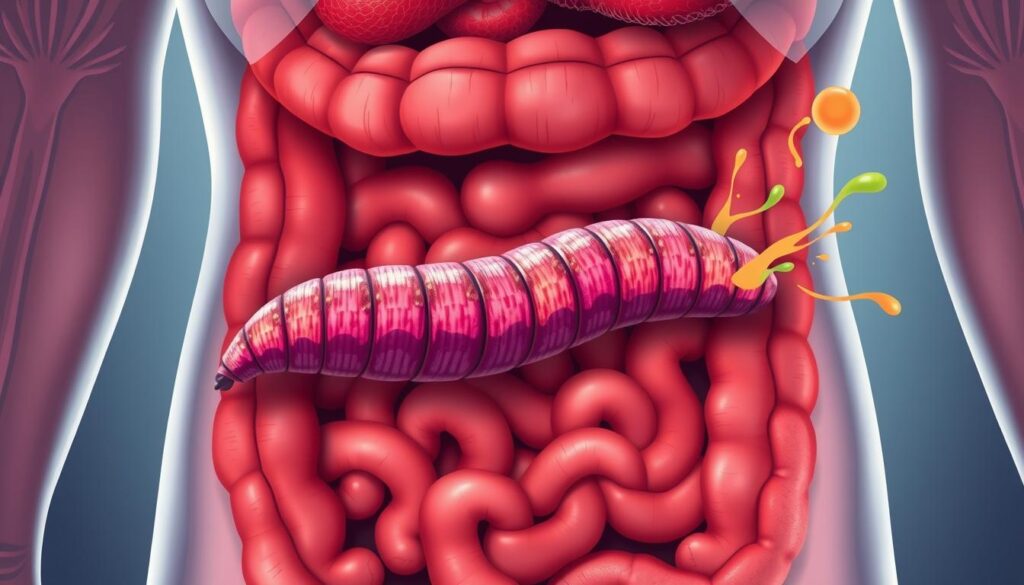
Ascariasis is a common parasitic disease caused by intestinal worms. It affects millions worldwide and can develop quietly. If left untreated, it may lead to serious health problems1.
Knowing about this helminth infection can help prevent complications2. The infection spreads through tiny eggs in contaminated areas. Kids are at higher risk, especially those who play in dirty places3.
Tropical and subtropical regions see more cases of this parasitic disease2. Ascariasis worms can grow up to 13 inches long and be as thick as a pencil3.
A female worm can lay 200,000 eggs daily, spreading the infection quickly3. Good hygiene habits can greatly reduce the risk of getting infected.
Key Takeaways
- Ascariasis is a common intestinal worm infection globally
- Children are most vulnerable to roundworm infections
- Proper hygiene can significantly reduce transmission risks
- Symptoms can range from mild to severe
- Professional medical diagnosis is essential for treatment
What is Ascariasis and How Does It Spread?
Ascariasis is a common soil-transmitted disease affecting millions worldwide. It’s caused by the Ascaris lumbricoides roundworm, a major public health issue4.
This infection spreads through various ways, making it hard to control. Globally, 772-892 million people are infected with this parasitic worm4.
Knowing how it spreads is key to stopping it.
Life Cycle of Roundworms in Human Body
The Ascaris lumbricoides roundworm has a complex life cycle inside humans:
- Eggs are ingested from contaminated soil
- Larvae hatch in the small intestine
- Larvae migrate through the bloodstream to the lungs
- Mature in the lungs for 10-14 days
- Travel to the throat, get coughed up, and swallowed
- Return to intestines to develop into adult worms
Common Transmission Routes
Transmission happens in several ways:
- Hand-to-mouth contact with contaminated soil
- Consuming unwashed fruits and vegetables
- Drinking contaminated water
- Walking barefoot in contaminated areas
High-Risk Populations and Regions
Some groups are more likely to get ascariasis5:
| Risk Group | Characteristics |
|---|---|
| Children | More severely affected, higher infection rates |
| Geographic Regions | Tropical and subtropical areas of Asia, sub-Saharan Africa, Americas |
| Sanitation Conditions | Areas with poor hygiene and limited sanitation |
Prevention is key: Regular handwashing and improved sanitation can significantly reduce infection risks4.
Recognizing Symptoms and Health Complications
Ascariasis is a common parasitic disease that affects children’s health. Kids are more likely to get this worm infection. The signs can change based on how long the infection has been present6.
The infection has two main stages. Each stage shows different symptoms.
- Lung Stage Symptoms:
- Persistent cough
- Shortness of breath
- Wheezing
- Potential pneumonia-like conditions
- Intestinal Stage Symptoms:
- Abdominal pain
- Nausea
- Vomiting
- Diarrhea
- Possible bloody stools
Kids under 10 face the highest risk of severe problems from intestinal worms6. Bad infections can cause serious health issues.
| Potential Complications | Impact on Health |
|---|---|
| Intestinal Blockage | Severe digestive disruption |
| Malnutrition | Stunted growth and development |
| Organ Duct Blockages | Potential liver or pancreatic complications |
“Early recognition of symptoms is crucial for effective treatment and preventing long-term health complications.” – Pediatric Infectious Disease Specialist
Doctors often check stool samples under a microscope to find Ascaris eggs or worms. Sometimes, worms might be seen in vomit or poop7.
Conclusion
Addressing ascariasis demands a holistic approach to prevention and treatment. Protect yourself and your community by understanding key strategies against this neglected tropical disease8. Effective prevention includes better sanitation, strict hygiene, and targeted medical interventions through comprehensive health strategies.
Your role starts with personal awareness. High-risk areas have poor sanitation and soil contamination8. Wash produce thoroughly and avoid contaminated soil to reduce infection risk. Roundworms can live in humans for up to two years, making prevention crucial8.
Public health initiatives are vital in managing ascariasis. Community deworming programs and improved sanitation are essential tools. Education about transmission routes helps break the infection cycle.
Supporting these efforts protects vulnerable populations, especially children in high-risk regions8. Your actions, combined with public health strategies, can control this disease. Stay informed, practice good hygiene, and support community health initiatives.
FAQ
What is Ascariasis?
Ascariasis is a common parasitic infection caused by a type of roundworm. It affects millions worldwide, mainly in tropical regions. The infection occurs when you swallow microscopic Ascaris eggs from contaminated soil.
How Do You Get Infected with Ascariasis?
You can get Ascaris roundworms through contact with contaminated soil or food. The eggs enter your body and hatch in your small intestine. Larvae then travel through your bloodstream and lungs before returning to your intestines.
What Are the Common Symptoms of Ascariasis?
Symptoms vary depending on the infection stage. During the lung stage, you might have pneumonia-like symptoms like coughing and wheezing. Intestinal symptoms can include abdominal pain, nausea, and diarrhea.
In severe cases, you might experience intestinal blockage or malnutrition. Rarely, you may see worms in your vomit or stool.
Who Is Most at Risk for Ascariasis?
Children under 10 are most vulnerable to Ascariasis. People in areas with poor sanitation are at highest risk. This includes warm, humid climates in Asia, Africa, and the Americas.
How Is Ascariasis Diagnosed?
Diagnosis usually involves examining stool samples under a microscope to find Ascaris eggs. Doctors might also spot adult worms passed in stool or coughed up. Additional tests may be done to check for complications.
What Treatment Options Are Available?
Treatment involves anti-parasitic drugs that typically last 1-3 days. These medications remove roundworms from your digestive system. Your doctor will choose the best treatment based on your infection’s severity.
How Can I Prevent Ascariasis?
Prevent Ascariasis by practicing good hygiene and washing fruits and vegetables thoroughly. Use proper sanitation facilities and avoid contaminated soil or water. Wash your hands often and wear shoes in risky areas.
Maintain clean water sources and follow health guidelines in high-risk regions. These steps can greatly reduce your risk of infection.
Source Links
- Ascariasis-Ascariasis – Symptoms & causes – Mayo Clinic – https://www.mayoclinic.org/diseases-conditions/ascariasis/symptoms-causes/syc-20369593
- Ascariasis Roundworm Infections – https://www.healthline.com/health/ascariasis
- What Is Ascariasis? – https://my.clevelandclinic.org/health/diseases/14071-ascariasis
- About Ascariasis – https://www.cdc.gov/sth/about/ascariasis.html
- Ascariasis – https://www.mountsinai.org/health-library/diseases-conditions/ascariasis
- What Is Ascariasis? – https://www.webmd.com/a-to-z-guides/ascariasis-facts
- Ascariasis Clinical Presentation: History, Physical, Complications – https://emedicine.medscape.com/article/212510-clinical
- Autochthonous Ascariasis, Mississippi, USA – https://wwwnc.cdc.gov/eid/article/30/4/24-0176_article

