
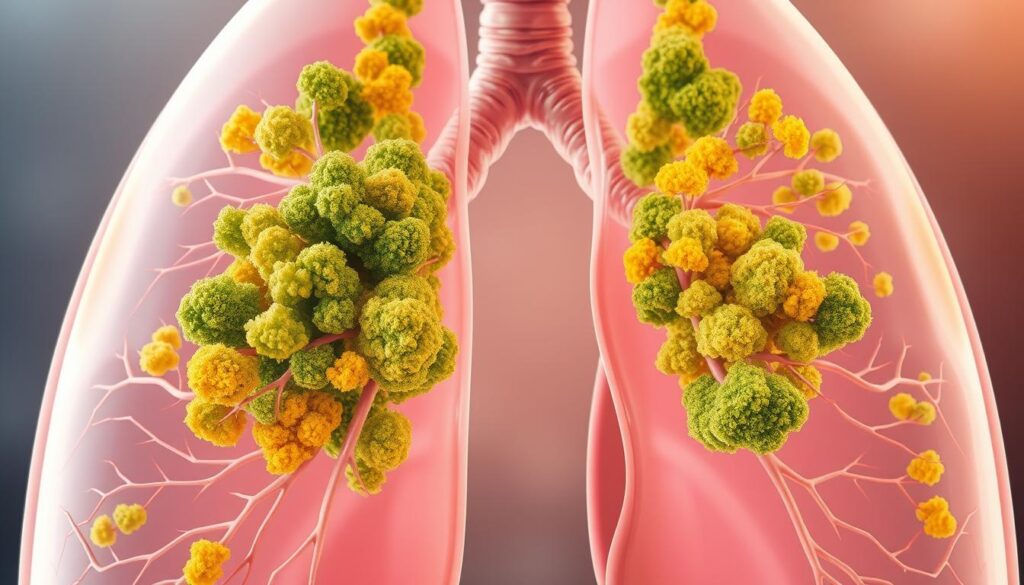
Aspergillosis is a fungal infection that affects your lungs. It’s caused by Aspergillus mold and can seriously impact your health1. While most Aspergillus types are harmless, some can trigger severe conditions in people with weak immune systems2.
This infection mainly targets the lungs and comes in various forms. Those with weak immunity, chronic lung diseases, or asthma face higher risks2. You can get infected by breathing in Aspergillus spores found in compost, air vents, and dust1.
Knowing the risks and symptoms of aspergillosis is vital for quick detection. The infection can range from mild allergic reactions to life-threatening conditions2. Early diagnosis and proper treatment are key to managing this fungal infection effectively.
Key Takeaways
- Aspergillosis is a fungal respiratory infection caused by Aspergillus mold
- Individuals with weakened immune systems are most vulnerable
- Symptoms can vary from mild allergic reactions to severe lung damage
- Early detection and proper medical intervention are critical
- Prevention includes reducing mold exposure and maintaining good respiratory health
What is Aspergillosis and Its Causes
Aspergillosis is a fungal infection caused by Aspergillus, a common mold3. Most people breathe in these spores daily without health issues4. The mold is found in many environments.
Types of Aspergillus Infections
The infection comes in several forms, affecting different groups:
- Allergic bronchopulmonary aspergillosis (ABPA): Mainly affects people with asthma or cystic fibrosis4
- Invasive aspergillosis: A severe form that harms body tissues, often spreading beyond lungs3
- Chronic pulmonary aspergillosis: Develops in patients with underlying lung conditions
Risk Factors and Environmental Sources
Aspergillus mold grows in many outdoor places, such as:
- Decaying leaves
- Compost piles
- Plants and trees
- Grain crops
Those at highest risk include people with weakened immune systems, like:
- Cancer patients undergoing chemotherapy
- Bone marrow transplant recipients
- People with AIDS
- Patients on long-term corticosteroid therapy
How Infection Develops in the Body
Your immune system usually fights off inhaled Aspergillus spores. People with weak immune systems can’t combat these fungi well.
This allows the spores to invade lung tissues. They may spread to other organs3.
Early detection and proper management are crucial for preventing serious complications.
| Infection Type | Primary Affected Group | Potential Complications |
|---|---|---|
| Allergic Bronchopulmonary | Asthma/Cystic Fibrosis Patients | Worsening Respiratory Symptoms |
| Invasive Aspergillosis | Immunocompromised Individuals | Potential Organ Spread |
| Chronic Pulmonary | Patients with Lung Diseases | Progressive Lung Damage |
Common Signs and Symptoms Across Different Forms
Aspergillosis causes various respiratory symptoms depending on the infection type. These symptoms are usually the most noticeable warning signs. Aspergillus infections can manifest differently in each case5.
- Persistent cough, sometimes accompanied by hemoptysis (coughing up blood)
- Shortness of breath that gradually worsens
- Wheezing and chest discomfort
- Potential fever not responding to standard antibiotics6
Aspergillosis comes in different forms, each with unique challenges. Allergic bronchopulmonary aspergillosis mainly affects people with asthma or cystic fibrosis7. It can cause more severe respiratory symptoms.
Invasive aspergillosis is the most serious form. The infection can spread beyond the lungs and lead to life-threatening complications5.
“Understanding your symptoms is the first step in managing aspergillosis effectively.”
People with weak immune systems or existing lung conditions face higher risks. Watch out for persistent cough, shortness of breath, and wheezing. Spotting these signs early can help you get medical help quickly6.
Treatment Options and Medical Interventions
Aspergillosis treatment requires a tailored approach. Your doctor will create a plan based on your infection type and severity. This ensures managing aspergillosis effectively.
Antifungal Medication Strategies
Antifungal drugs are key in treating various aspergillosis forms. Over 3,000,000 chronic pulmonary aspergillosis cases occur yearly worldwide8. Invasive aspergillosis affects about 250,000 people annually.
- Voriconazole and isavuconazole are primary treatments for invasive aspergillosis
- Itraconazole is often used for long-term management of chronic pulmonary aspergillosis
- Liposomal amphotericin B provides an alternative treatment option
Surgical Treatment Approaches
Surgery may be needed for aspergilloma or severe lung complications. Invasive aspergillosis has a 30-40% mortality rate8. This highlights the need for quick, aggressive treatment.
Management Strategies for Different Types
Each aspergillosis type needs a specific approach. Invasive pulmonary aspergillosis in COPD patients poses unique challenges9. Diagnosis often combines multiple tests.
- Galactomannan detection
- Bronchoalveolar lavage fluid analysis
- Blood biomarker screening
Early detection and targeted treatment are critical in managing aspergillosis effectively.
Your medical team considers many factors when creating a treatment plan. These include immune status, underlying conditions, and infection characteristics. This approach helps manage invasive aspergillosis or chronic pulmonary aspergillosis effectively.
Conclusion
Protecting your respiratory health requires understanding aspergillosis prevention. Less than 20 out of 200 aspergilli species threaten human health10. Your awareness can greatly impact managing this fungal infection, especially with a weak immune system.
Fungal infection awareness is vital due to high mortality rates of invasive aspergillosis. Some patient groups face up to 90% mortality rates10. Aspergillus fumigatus causes 60-90% of all aspergillosis cases11.
Know your risk factors and take preventive steps to defend against aspergillosis. High-risk individuals include those undergoing chemotherapy or stem cell transplantation. Minimize exposure by avoiding damp areas, using air purifiers, and practicing good respiratory hygiene.
Medical research is advancing our understanding of this condition. New targeted treatments and prevention strategies are being developed. Stay informed and work with your healthcare providers to manage your respiratory health effectively.
FAQ
What exactly is aspergillosis?
Aspergillosis is a fungal infection caused by Aspergillus mold. It mainly affects the respiratory system. The infection can range from mild allergic reactions to severe invasive cases in people with weak immune systems.
How do people get infected with Aspergillus?
You can get infected by breathing in Aspergillus spores from the environment. These spores are found in decaying leaves, compost, plants, and grain crops. Infection happens when your immune system can’t fight off these tiny fungal spores.
What are the main types of aspergillosis?
There are several types of aspergillosis. These include allergic bronchopulmonary aspergillosis, chronic pulmonary aspergillosis, and invasive aspergillosis. Each type affects the respiratory system differently. Symptoms can range from mild allergic reactions to serious lung problems.
Who is most at risk for developing aspergillosis?
People with weak immune systems or chronic lung diseases are at highest risk. This includes those with asthma or on long-term steroid treatments. Chemotherapy patients, organ transplant recipients, and people with HIV/AIDS are also vulnerable.
What are the common symptoms of aspergillosis?
Common symptoms include coughing, wheezing, and shortness of breath. You might also experience fever, fatigue, and weight loss. Severe cases can cause chest pain and sinus congestion. The infection may spread to other organs in some cases.
How is aspergillosis treated?
Treatment depends on the type and severity of the infection. Doctors often use antifungal medications and corticosteroids for allergic forms. Some cases may need surgery. Invasive aspergillosis usually requires strong intravenous antifungal treatment.
Can aspergillosis be prevented?
Complete prevention is tough, but you can lower your risk. Avoid areas with lots of mold. Wear protective masks in high-risk places. Manage your health conditions and keep your immune system strong.
Is aspergillosis contagious?
No, aspergillosis doesn’t spread directly from person to person. You get infected by breathing in fungal spores from the environment. It’s not transmitted through human contact.
How serious can aspergillosis become?
Aspergillosis can range from mild allergies to life-threatening infections. For people with weak immune systems, it can be very dangerous. The infection may spread beyond the lungs to other organs. Without treatment, severe cases can be fatal.
Source Links
- Aspergillosis – Infections – Merck Manual Consumer Version – https://www.merckmanuals.com/home/infections/fungal-infections/aspergillosis
- Aspergillosis: Symptoms, treatment, and when to seek help – https://www.medicalnewstoday.com/articles/aspergillosis
- Aspergillosis-Aspergillosis – Symptoms & causes – Mayo Clinic – https://www.mayoclinic.org/diseases-conditions/aspergillosis/symptoms-causes/syc-20369619
- Aspergillosis: MedlinePlus – https://medlineplus.gov/aspergillosis.html
- Aspergillosis Basics – https://www.cdc.gov/aspergillosis/about/index.html
- PDF – https://www.thoracic.org/patients/patient-resources/resources/aspergillosis.pdf
- Aspergillosis – https://www.pasteur.fr/en/medical-center/disease-sheets/aspergillosis
- Treatment of Aspergillosis – PMC – https://pmc.ncbi.nlm.nih.gov/articles/PMC6162797/
- Medical Care, Surgical Care, Consultations – https://emedicine.medscape.com/article/296052-treatment
- Pathogenesis of Aspergillus fumigatus in Invasive Aspergillosis – https://pmc.ncbi.nlm.nih.gov/articles/PMC2708386/
- Aspergillosis: an Update on Clinical Spectrum, Diagnostic Schemes, and Management – https://pmc.ncbi.nlm.nih.gov/articles/PMC10157594/

