
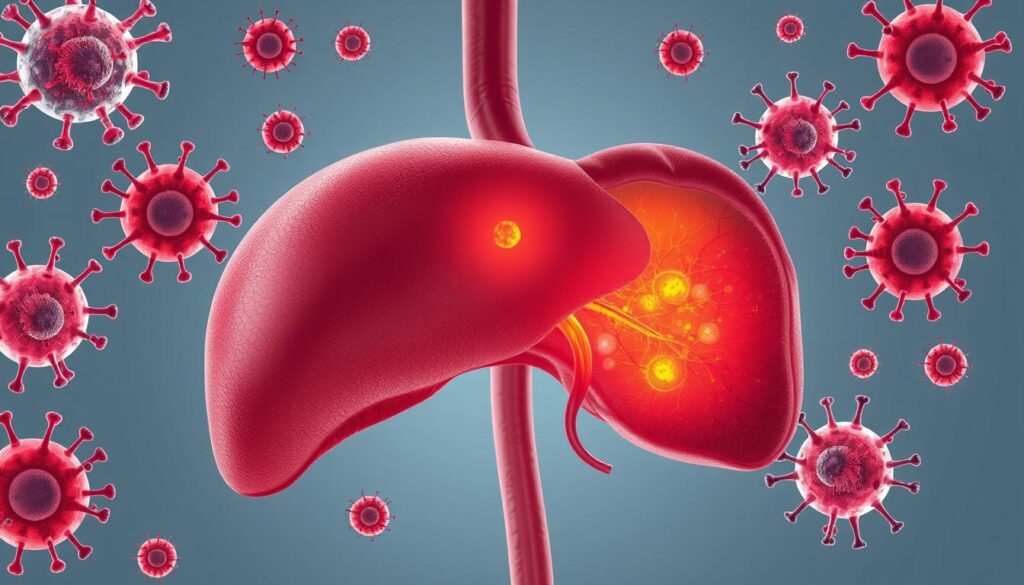
Autoimmune hepatitis is a rare chronic liver disease. It occurs when your immune system attacks healthy liver cells. This attack causes inflammation and can lead to long-term liver damage1.
Early detection of this condition can be tricky. Many people don’t show symptoms at first. Some only find out when liver problems appear2.
Genes play a big role in this disease. Some genetic markers make you more likely to get it. Scientists are looking into what environmental factors might trigger it2.
Several factors can increase your risk of autoimmune hepatitis. Women are more likely to get it. A family history of autoimmune disorders also raises your risk1.
Key Takeaways
- Autoimmune hepatitis is a rare chronic liver condition
- Genetic factors significantly contribute to disease development
- Many patients may have no initial symptoms
- Women are more likely to be affected
- Early detection and management are crucial
What is Autoimmune Hepatitis
Autoimmune hepatitis is a rare liver condition. Your immune system attacks your liver cells by mistake. This causes inflammation and possible damage to your liver3.
The disorder can greatly affect your liver’s health. It can also impact your overall well-being.
Understanding the Types of Autoimmune Hepatitis
There are two main types of autoimmune hepatitis. Each type has its own unique features:
- Type 1 Autoimmune Hepatitis:
- Type 2 Autoimmune Hepatitis:
Risk Factors and Prevalence
Key risk factors for autoimmune hepatitis include:
Impact on Liver Function
Untreated autoimmune hepatitis can cause serious liver problems. Ongoing inflammation may lead to scarring. This can progress to cirrhosis and liver failure4.
Monitoring liver enzymes is crucial. It helps manage the condition and prevent long-term damage.
Early detection and appropriate immunosuppressive therapy can significantly improve patient outcomes and quality of life.
Early Warning Signs and Symptoms of Liver Inflammation
Spotting early signs of autoimmune hepatitis is vital for quick treatment. Liver inflammation often shows up through subtle yet important symptoms. Don’t ignore these warning signs.
This condition affects women more, with 70% of cases in females aged 15 to 40. Common symptoms include extreme tiredness, yellowing skin, and abdominal pain.
- Extreme fatigue that doesn’t improve with rest
- Jaundice – yellowing of the skin and eyes
- Abdominal pain and discomfort
- Joint pain resembling mild flu-like symptoms
As liver inflammation worsens, you might notice more serious signs. These can include dark urine, pale stools, and loss of appetite.
- Dark urine
- Pale stools
- Loss of appetite
- Fluid buildup in the abdomen
“Early detection is key in managing autoimmune hepatitis and preventing long-term liver damage.”
Some people may experience skin itching and spider-like blood vessels. Women might notice changes in their menstrual cycle6.
About 10-20% of cases can show up with sudden hepatitis-like symptoms7. If you have ongoing tiredness, yellowing skin, or unexplained liver issues, see your doctor8.
Autoimmune Hepatitis: Diagnosis and Treatment Options
Autoimmune hepatitis is a complex condition requiring comprehensive medical assessments. Your healthcare journey starts with tests to evaluate your liver’s health. These assessments provide a clear picture of your condition.
Diagnostic Tests and Procedures
Diagnosing autoimmune hepatitis involves multiple steps. Doctors use liver function tests to check for inflammation9. These tests measure key enzymes like ALT and AST, often highly elevated in patients9.
- Blood tests to detect specific autoantibodies
- Comprehensive imaging studies
- Detailed liver biopsy procedures
Medication and Immunosuppressive Therapy
Treatment usually begins with corticosteroids to manage inflammation10. These medications suppress your immune system’s attack on the liver. Many patients achieve remission through carefully managed medication protocols10.
| Medication | Primary Purpose | Potential Side Effects |
|---|---|---|
| Prednisone | Reduce Inflammation | Weight Gain, Diabetes |
| Azathioprine | Immunosuppression | Low White Blood Cell Count |
Monitoring Disease Progression
Regular medical monitoring is vital for managing autoimmune hepatitis. Your healthcare team will conduct routine blood tests to track your condition. They may also perform liver biopsies to assess the disease’s development10.
The goal is to adjust treatments and prevent potential complications. This ongoing care ensures the best possible outcomes for patients.
“Early detection and consistent management are key to controlling autoimmune hepatitis” – Hepatology Experts
Conclusion
Managing autoimmune hepatitis is a journey that requires dedication and proactive healthcare. Understanding your condition empowers you to take control of your liver health11. With proper treatment, about 80% of patients can achieve remission12, offering hope for effective management clinical insights.
Early diagnosis is crucial to prevent severe liver damage. Women face a higher risk of chronic hepatitis13. The disease affects 1-2 per 100,000 individuals across different populations13.
Genetic factors play a key role in disease susceptibility. This suggests the need for personalized treatment approaches11. Ongoing research continues to improve our understanding of autoimmune liver conditions.
Modern medical interventions offer promising outcomes for patients. Your commitment to working with healthcare professionals is vital. Understanding your genetic profile and staying proactive can greatly improve your long-term liver health12.
FAQ
What is autoimmune hepatitis?
Autoimmune hepatitis is a chronic liver disease. Your immune system attacks liver cells, causing inflammation and damage. There are two types: type 1 and type 2.
Type 1 affects people of any age. Type 2 mainly affects young girls. The exact cause remains unknown, but genetics and environment play a role.
What are the primary symptoms of autoimmune hepatitis?
Early signs include extreme fatigue, jaundice, and abdominal pain. You might also experience joint pain and mild flu-like symptoms. As the disease progresses, urine darkens and stools pale.
Other symptoms include loss of appetite and fluid buildup in the abdomen. Some people may not show symptoms initially. Regular check-ups are crucial for early detection.
Who is most at risk for developing autoimmune hepatitis?
Women face a higher risk of autoimmune hepatitis. Those with genetic predisposition or other autoimmune disorders are also more susceptible. Type 1 can affect any age group.
Type 2 typically impacts young girls aged 2-14. A family history of autoimmune diseases increases your chances of developing this condition.
How is autoimmune hepatitis diagnosed?
Diagnosis involves blood tests, imaging studies, and a liver biopsy. Blood tests check liver function and look for specific autoimmune antibodies. Imaging tests assess your liver’s condition.
A liver biopsy is often necessary for a definitive diagnosis. This combination of tests helps doctors accurately identify the condition.
What are the treatment options for autoimmune hepatitis?
Treatment typically involves immunosuppressive therapy using corticosteroids and other drugs. The goal is to control inflammation and prevent further liver damage. Achieving remission can take 6 months to several years.
Severe cases might require lifelong treatment or a liver transplant. Regular monitoring of liver function is essential for effective management.
Can autoimmune hepatitis be cured?
While there’s no permanent cure, many patients achieve remission with proper treatment. The condition is chronic and requires ongoing management. Early diagnosis and consistent treatment help control symptoms.
With proper care, you can prevent liver damage and maintain good liver health. Ongoing research continues to improve understanding and potential future therapies.
What complications can arise if autoimmune hepatitis is left untreated?
Untreated autoimmune hepatitis can lead to serious complications like cirrhosis and liver failure. Ongoing inflammation can cause progressive damage to your liver. This reduces its ability to function properly.
In severe cases, you may need a liver transplant. Early treatment is crucial to prevent these life-threatening conditions.
Source Links
- Autoimmune Hepatitis: Symptoms & Causes | NewYork-Presbyterian – https://www.nyp.org/digestive/liver-diseases/autoimmune-hepatitis
- Symptoms & Causes of Autoimmune Hepatitis – NIDDK – https://www.niddk.nih.gov/health-information/liver-disease/autoimmune-hepatitis/symptoms-causes
- Autoimmune hepatitis – Symptoms and causes – https://www.mayoclinic.org/diseases-conditions/autoimmune-hepatitis/symptoms-causes/syc-20352153
- Autoimmune Hepatitis – https://www.hopkinsmedicine.org/health/conditions-and-diseases/hepatitis/autoimmune-hepatitis
- Autoimmune Hepatitis – https://my.clevelandclinic.org/health/diseases/17867-autoimmune-hepatitis
- Liver problems – Symptoms and causes – https://www.mayoclinic.org/diseases-conditions/liver-problems/symptoms-causes/syc-20374502
- Autoimmune Hepatitis: Symptoms & Treatments – https://liverfoundation.org/liver-diseases/autoimmune-liver-diseases/autoimmune-hepatitis-aih/
- Autoimmune Hepatitis | Causes, Symptoms, Diagnosis & Treatment – https://www.cincinnatichildrens.org/health/a/autoimmune-hepatitis
- Diagnosis of Autoimmune Hepatitis – NIDDK – https://www.niddk.nih.gov/health-information/liver-disease/autoimmune-hepatitis/diagnosis
- Treatment for Autoimmune Hepatitis – NIDDK – https://www.niddk.nih.gov/health-information/liver-disease/autoimmune-hepatitis/treatment
- Autoimmune Hepatitis| Cleveland Clinic – https://my.clevelandclinic.org/departments/digestive/medical-professionals/hepatology/autoimmune-hepatitis
- Autoimmune hepatitis: current challenges and future prospects – https://pmc.ncbi.nlm.nih.gov/articles/PMC5261603/
- Autoimmune Hepatitis: A Review of Current Diagnosis and Treatment – https://pmc.ncbi.nlm.nih.gov/articles/PMC3132488/

