
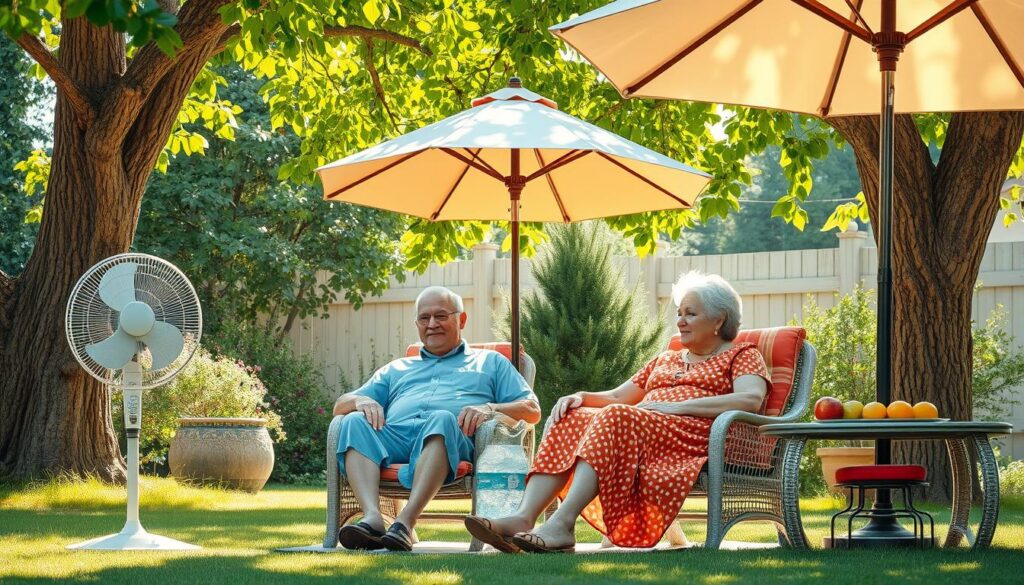
Seniors face unique challenges in managing heat-related health risks as temperatures climb. Older adults are more vulnerable to heat illness due to their body’s reduced temperature regulation abilities12. Hot weather demands special attention to your health and safety.
The risks for seniors are significant. Over 80 percent of heat-related deaths in the U.S. affect adults over 603. Chronic conditions, medications, and physical changes make senior heat safety crucial12.
Age impacts temperature regulation in older adults. Older bodies retain more heat and struggle to cool down effectively3.
Factors like heart diseases, medications, and living situations can increase heat illness risks1. Understanding these factors is key to preventing heat-related health problems in seniors.
Key Takeaways
- Seniors are at higher risk for heat-related health complications
- Medications can impact body temperature regulation
- Chronic health conditions increase heat sensitivity
- Proactive prevention is crucial for senior safety
- Regular monitoring can prevent serious heat-related issues
The Importance of Heat Awareness for Seniors
Understanding heat sensitivity in elderly populations is crucial as temperatures rise. Seniors face unique challenges in extreme heat. Their health and safety depend on awareness and prevention4.
Why Older Adults Are More Vulnerable
Age-related changes make seniors susceptible to heat-related health risks. Physiological shifts impact how their bodies respond to temperature changes5.
- Reduced ability to regulate body temperature
- Decreased sweat gland function
- Changes in blood circulation
- Potential chronic medical conditions
Heat waves pose dramatically higher health risks for older adults. Over 80% of heat-related deaths occur in individuals over 60 years old4.
Recognizing Heat Stress Signs
Knowing heat stress signs can save lives. Watch for these critical symptoms of potential heat-related health issues:
| Symptom | Potential Severity |
|---|---|
| Sudden dizziness | Moderate risk |
| Confusion | High risk |
| Rapid pulse | Urgent concern |
| Excessive sweating | Early warning sign |
“Awareness is the first step in preventing heat-related health emergencies for seniors.” – National Senior Health Association
Quick response can significantly reduce heat exposure risks. Stay informed and prepared. Prioritize senior safety during hot weather6.
Common Heat-Related Health Risks
Hot weather poses unique challenges for older adults. Knowing these risks helps protect you and your loved ones. Stay safe during scorching temperatures7.
Heat Exhaustion: Early Warning Signs
Heat exhaustion occurs when your body struggles to maintain its core temperature. Watch for these key symptoms:
- Excessive sweating
- Dizziness and weakness
- Nausea
- Thirst
- Uncoordinated movements
Understanding Heat Stroke Prevention
Heat stroke is a severe medical emergency. Body temperature can quickly rise above 104°F7. Recognize these warning signs:
- Fainting or sudden confusion
- Dry, flushed skin
- Rapid or weak pulse
- Lack of sweating
Dehydration in Elderly: A Silent Threat
Older adults face higher dehydration risks. This is due to decreased thirst sensation and body changes7. Dehydration can seriously impact overall health and functionality.
| Risk Factor | Impact on Seniors |
|---|---|
| Reduced Sweating | Decreased body cooling ability |
| Medication Side Effects | Increased heat sensitivity |
| Chronic Conditions | Higher vulnerability to heat stress |
Immediate medical attention is crucial when experiencing heat-related symptoms7.
Stay informed and proactive to reduce heat-related health risks8. Heat-related deaths in people over 65 have risen sharply recently. Awareness and prevention are vital8.
Identifying Risk Factors in Older Adults
Seniors face unique risks during hot weather. Pre-existing conditions and medications can increase their chances of heat-related health problems. Understanding these factors is key to keeping older adults safe.
Seniors are more likely to suffer from heat-related health issues. Several key factors contribute to this increased risk.
- Cardiovascular diseases
- Respiratory problems
- Kidney disorders
- Obesity and weight management challenges
Pre-existing Health Conditions
Chronic health conditions make older adults more vulnerable to heat. Many seniors with heart or lung problems don’t realize they’re at risk.
Studies show 31% of people with heart conditions underestimate heat dangers. Similarly, 28% with lung issues don’t recognize their increased risk9.
Medications That Increase Risk
Some medications can affect a senior’s ability to handle heat. Older adults often take multiple prescriptions, raising their risk of heat-related problems6.
| Medication Type | Heat Risk Impact |
|---|---|
| Diuretics | Increases dehydration risk |
| Sedatives | Reduces body’s heat response |
| Blood Pressure Medications | Impairs temperature regulation |
Other risk factors include living without air conditioning and being overweight. Drinking alcohol during hot weather can also be dangerous10.
In the U.S., extreme heat claims over 600 lives annually. Older adults are the most at-risk group10.
Awareness and proactive management are key to preventing heat-related health risks in seniors.
Knowing these risks helps protect seniors during hot weather. Take precautions and seek medical advice when needed to stay safe.
Recommended Hydration Strategies
Proper hydration is vital for seniors in hot weather. As we age, our bodies change how they regulate temperature. This makes senior hydration tips crucial11.
Seniors need to pay close attention to their fluid intake. The standard daily water goal is 64 ounces. However, needs may vary based on health and environment12.
Daily Water Intake Guidelines
- Drink at least eight 8-ounce cups of water daily12
- Consume water-rich foods to supplement fluid intake12
- Increase water consumption during hot weather
- Consider electrolyte drinks for additional hydration13
Recognizing Dehydration Warning Signs
| Early Dehydration Signs | Severe Dehydration Symptoms |
|---|---|
| Feeling thirsty | Confusion |
| Dark yellow urine | Dizziness |
| Dry mouth | Rapid heartbeat |
“Sensitivity to thirst decreases with age, making hydration monitoring critical for seniors”12
Older adults with chronic conditions or taking medications should consult their healthcare provider about specific hydration needs11. Some may need personalized fluid intake plans. This helps prevent dehydration risks.
Tips for Staying Cool During Hot Weather
Heat protection becomes vital as you age. Senior cooling tips can greatly improve your comfort and health. Creating a cool home and wearing suitable clothing prevents heat-related health risks.
Older adults are more prone to heat-related illnesses. Over 600 Americans die yearly from issues caused by excessive heat. Taking steps to stay cool is crucial for your well-being.
Creating a Cool Living Space
Your home should shield you from heat. Here are tips for a comfortable environment:
- Keep window shades and curtains closed during peak sunlight hours
- Use fans to circulate air and create a cooling effect
- Limit use of heat-generating appliances like ovens
- Open windows during cooler evening hours
Dress Appropriately for the Heat
Clothing plays a key role in temperature control. Choose light, loose-fitting clothes made from breathable fabrics like cotton14. This helps your body stay cool and prevents heat absorption.
Utilizing Air Conditioning for Elderly
Air conditioning is essential for older adults. If your home lacks it, try these options:
- Visit air-conditioned public spaces like libraries or senior centers
- Use cool cloths or take refreshing showers
- Stay hydrated with non-alcoholic beverages
“Your safety during hot weather depends on preparation and smart choices.”
Federal programs like LIHEAP can help cover air conditioning costs for low-income seniors14. Don’t hesitate to seek help for your comfort and health.
Safe Outdoor Activities for Seniors
Seniors need careful planning for outdoor safety in warm weather. Your health matters most when choosing outdoor exercises. Explore safe options to stay active and comfortable.
Outdoor activities can be fun and good for you. But seniors must be careful with heat-safe exercises. Pay attention to timing and how hard you work out.
Best Times for Outdoor Exercise
Picking the right time for outdoor activities is key. Seniors should exercise during cooler parts of the day:
- Early morning (before 10 AM)
- Late evening (after 4 PM)
These times help avoid too much heat. They also lower risks from extreme temperatures.
Recommended Low-Impact Activities
Seniors can enjoy several cool-down activities:
- Walking in shaded areas
- Water aerobics
- Gentle stretching
- Tai Chi classes15
“Safety comes first when enjoying outdoor activities in warm weather”
Remember these key safety tips for outdoor exercise:
- Wear light-colored, loose-fitting clothing15
- Use sunscreen protection
- Stay hydrated
- Carry identification with emergency contacts16
Listen to your body while exercising outdoors. Stop right away if you feel dizzy or sweat too much. Also, stop if your pulse gets too fast15.
The Role of Caregivers in Heat Safety
Hot weather demands extra care for older adults. Caregivers are vital in shielding seniors from heat-related health risks. Understanding seniors’ unique challenges helps prevent dangerous heat-related conditions.
Monitoring Loved Ones for Signs of Distress
Spotting heat distress in seniors is crucial for caregivers. Older adults are more sensitive to temperature changes17. Look out for these warning signs:
- Excessive sweating
- Muscle cramps
- Dizziness and weakness
- Rapid heartbeat
- Confusion or disorientation
Emergency Heat Response Preparation
Create a solid plan to protect your loved ones during extreme heat. Good preparation can stop heat-related illnesses before they start18.
| Preparation Strategy | Recommended Actions |
|---|---|
| Hydration | Ensure constant access to clean water |
| Cooling Resources | Stock battery-powered fans and cold packs |
| Emergency Contacts | Keep list of medical professionals and cooling centers |
*”Prevention is always better than cure when protecting seniors from heat-related risks.”*
Keep an eye on local weather reports. Be ready to act fast if your loved one shows signs of heat exhaustion. Regular check-ins and watchful care can be lifesaving during hot spells19.
Community Resources for Heat Relief
Seniors need to stay cool during extreme heat. Many communities offer heat relief programs for older adults. These programs protect seniors from dangerous temperatures20.
Local governments have strategies to support elderly residents during heat waves. They create senior cooling centers and provide transportation services21.
Discovering Local Cooling Centers
Senior cooling centers are spaces where older adults can escape extreme heat. These facilities include air-conditioned community buildings and public libraries.
They also have senior community centers and municipal recreation centers.
- Air-conditioned community buildings
- Public libraries
- Senior community centers
- Municipal recreation centers
Transportation Assistance for Seniors
Many communities offer transportation services to help seniors reach cooling centers. These programs ensure vulnerable populations can access heat relief resources20.
“Protecting our seniors during extreme heat is a community responsibility.” – Public Health Expert
Seniors can contact the Eldercare Locator at 800-677-1116 for local resources. This national service connects older adults with heat relief programs.
It also helps seniors find transportation assistance2120.
Source: Community Health Research21Source: CDC Climate-Ready Cities Initiative
Seasonal Preparations for Heat Waves
Preparing for heat waves is vital for your safety. An emergency heat plan can protect you during extreme temperatures. Find cool spots nearby, like libraries or cooling centers22. Make sure your home has working air conditioning or fans23.
Create a list of emergency contacts for your heat wave plan. Include family, neighbors, and healthcare providers who can check on you. Older adults are more at risk during intense heat23.
Learn to spot early signs of heat stress. These include dizziness, confusion, and unusual fatigue. These symptoms could increase your risk of falls23.
Talk to your doctor about how heat affects your medications. Keep water handy and stay hydrated. Local officials often suggest checking on vulnerable people during heat waves22.
Getting ready is key to staying safe in heat waves. Watch weather forecasts and keep emergency supplies ready. Don’t hesitate to ask for help if the heat becomes too much.
FAQ
Why are older adults more susceptible to heat-related illnesses?
Aging bodies struggle to regulate temperature effectively. Age-related changes and certain medications increase vulnerability to heat stress. Your ability to sweat and adjust to temperature changes decreases, raising health risks.
What are the early signs of heat exhaustion I should watch for?
Look out for thirst, dizziness, weakness, and uncoordination. Nausea and profuse sweating are also warning signs. If you notice these symptoms, cool down quickly and drink fluids.
Move to a cooler place immediately. Ignoring these signs could lead to more severe heat-related illnesses.
How much water should I drink during hot weather?
Drink plenty of fluids all day, even if you’re not thirsty. Water, fruit juices, and electrolyte drinks are good choices. If you’re on a fluid-restricted diet, ask your doctor about hot weather intake.
What medications might increase my risk of heat-related illness?
Diuretics, sedatives, and some heart medicines can affect your body’s cooling ability. Taking multiple prescriptions increases your risk. Always talk to your doctor about heat sensitivity and your medications.
How can I stay cool if I don’t have air conditioning?
Visit cool public spaces like libraries or malls. Use fans and keep curtains closed during hot hours. Wear light, loose-fitting clothes and take cool showers.
Many communities offer cooling centers for seniors during heat waves. These places provide a safe, air-conditioned environment.
When should I seek medical attention for heat-related symptoms?
Get help right away if you faint, feel confused, or have dry, flushed skin. A rapid pulse could signal heat stroke, which is a medical emergency. Body temperatures above 104°F need urgent medical care.
How can caregivers help protect seniors during hot weather?
Caregivers should check on seniors twice daily during heat waves. Ensure they have cool spaces, enough water, and know about heat safety. Learn heat illness symptoms and when to call for help.
Creating a communication plan is also important. This helps everyone stay informed and react quickly if needed.
Are there community resources to help seniors during heat waves?
Yes! Many communities offer cooling centers and transportation help. The Eldercare Locator (800-677-1116) can find local resources for you. These services provide cool spaces and keep seniors safe in extreme heat.
Source Links
- Hot Weather Safety for Older Adults – https://www.nia.nih.gov/health/safety/hot-weather-safety-older-adults
- Heat and Older Adults (Aged 65+) – https://www.cdc.gov/heat-health/risk-factors/heat-and-older-adults-aged-65.html
- The Effects of Heat on Older Adults – https://magazine.hms.harvard.edu/articles/effects-heat-older-adults
- Fun in the Sun? Keep Signs of Heat-Related Illness in Mind this Summer – Alliance for Aging Research – https://www.agingresearch.org/blog/fun-in-the-sun-keep-signs-of-heat-related-illness-in-mind-this-summer/
- How Well Do Older Adults Cope with Heat Waves? – https://climateaging.bctr.cornell.edu/post/how-well-do-older-adults-cope-with-heat-waves
- Heat-Related Illness in the Elderly – https://www.cdhub360.com/articles/heat-related-illness-elderly-0
- Heat-related health dangers for older adults soar during the summer – https://www.nih.gov/news-events/news-releases/heat-related-health-dangers-older-adults-soar-during-summer
- Heat and health – https://www.who.int/news-room/fact-sheets/detail/climate-change-heat-and-health
- Frontiers | Factors associated with older adults’ perception of health risks of hot and cold weather event exposure: A scoping review – https://www.frontiersin.org/journals/public-health/articles/10.3389/fpubh.2022.939859/full
- Older Adults Among Those at Highest Risk for Heat-Related Illness – https://aging.ny.gov/news/older-adults-among-those-highest-risk-heat-related-illness
- Seniors, stay hydrated in hot weather! – https://www.ucihealth.org/blog/2023/06/senior-hydration
- Hydration is key to preventing heat-related illnesses and heat-related deaths – https://directorsblog.health.azdhs.gov/hydration-is-key-to-preventing-heat-related-illnesses-and-heat-related-deaths/
- Hydration and Heat-Related Illness Prevention: Staying Cool and Safe – Community Health Net – https://www.community-healthnet.com/posts/hydration-and-heat-related-illness-prevention-staying-cool-and-safe/
- Tip Sheet: Hot Weather Safety Tips for Older Adults – https://www.healthinaging.org/tools-and-tips/tip-sheet-hot-weather-safety-tips-older-adults
- Safe Outdoor Activities for the Elderly During the Heat of Summer – https://www.elderberryhealthcare.com/safe-outdoor-activities-for-the-elderly-during-the-heat-of-summer/
- Safety Tips for Exercising Outdoors for Older Adults – https://www.nia.nih.gov/health/exercise-and-physical-activity/safety-tips-exercising-outdoors-older-adults
- What Temperature is Dangerous for Elderly Health? | LSS – https://www.lssliving.org/news/resources/dangerous-temperatures-elderly/
- FCHP – Caregiver Connection – Managing the challenges of summer – https://fallonhealth.org/en/caregivers/Caregiver-Connection/Managing-the-challenges-of-summer
- How to Protect the Elderly in the Heat – https://caregiver.com/articles/protect-elderly-heat/
- Older persons and Heat Risk: Taking Action to Save Lives | Global Heat Health Information Network – https://ghhin.org/news/older-persons-and-heat-risk-taking-action-to-save-lives/
- Extreme Heat Adaptation – https://www.atsdr.cdc.gov/place-health/share/extreme-heat-adaptation.html
- During a Heat Wave – https://www.weather.gov/safety/heat-during
- Beat the heat- caring for older adults during heatwaves – https://www.injurymatters.org.au/stay-on-your-feet/beat-the-heat-this-summer/

