
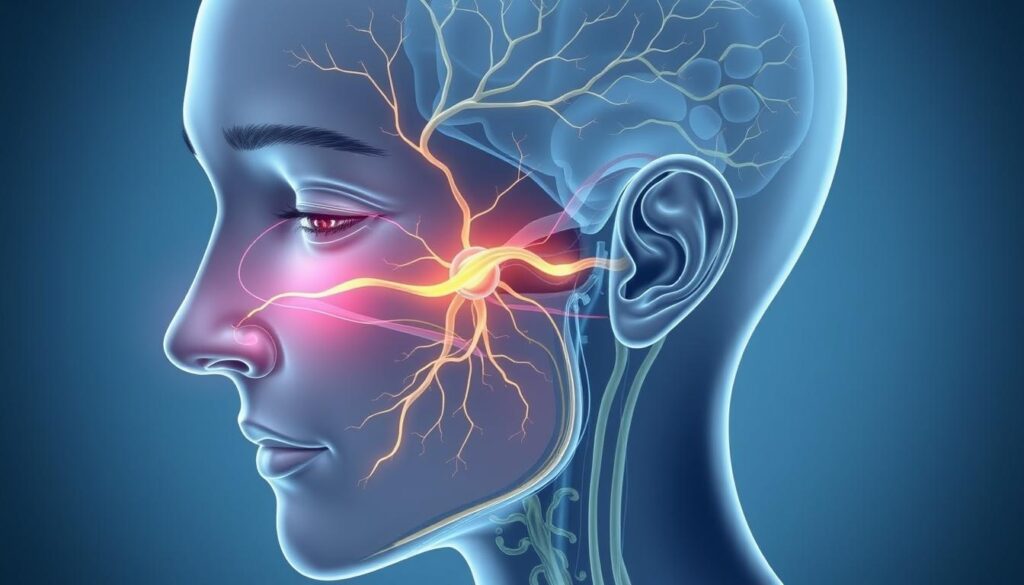
Bell’s palsy is a nerve disorder that suddenly disrupts facial muscles. It typically affects one side of the face, causing unexpected challenges. This condition can make simple expressions feel impossible1.
Bell’s palsy can impact anyone, but it’s less common in very young and older people2. The facial nerve becomes inflamed, leading to muscle weakness. This can cause mild discomfort or more significant challenges1.
Most people with Bell’s palsy see significant improvement within weeks or months1. Medical professionals can help you navigate this disorder. They offer treatments and strategies to support your recovery2.
Key Takeaways
- Bell’s palsy is a sudden facial nerve disorder causing muscle weakness
- Symptoms typically improve within weeks to months
- The condition affects both men and women equally
- Medical attention can help manage and treat symptoms
- Most patients recover full facial strength with proper care
What is Bell’s Palsy?
Bell’s palsy is a peripheral nerve disease that suddenly affects facial muscles. It causes temporary facial weakness or paralysis without warning. This condition can create unexpected challenges in daily life3.
Bell’s palsy has unique characteristics worth recognizing. The lifetime risk of developing this condition is about 1 in 60. It’s more common than many people think4.
Understanding the Condition
Bell’s palsy causes sudden weakness on one side of the face. It affects about 20 out of 100,000 people each year. The condition peaks between ages 15 and 404.
Symptoms to Watch For
- Drooping eyelid
- Difficulty smiling
- One-sided mouth drooping
- Increased sound sensitivity
- Potential taste changes
When to Seek Medical Help
Quick medical attention is vital for Bell’s palsy. Most people recover within six months without treatment. However, early intervention can boost recovery outcomes3.
For 85% of patients, significant improvement happens within three weeks4.
“Early diagnosis and treatment can significantly impact your recovery journey.”
Doctors diagnose Bell’s palsy by ruling out other possible causes. The condition often links to viral infections. Herpes simplex virus is found in up to 50% of cases4.
71% of individuals fully recover their facial muscle function. Children have an even higher spontaneous recovery rate of over 90%4.
Causes of Bell’s Palsy
Bell’s palsy is a complex condition with no single known cause. Several factors contribute to facial nerve inflammation. Understanding these causes can help you manage the condition better.
Viral Infections: The Primary Culprit
Viral infections are key in developing Bell’s palsy. Common viral triggers include:
- Herpes simplex virus
- Herpes zoster virus
- Epstein-Barr virus
- Cytomegalovirus
- Influenza B
Risk Factors and Contributing Elements
Certain factors can increase your chance of getting Bell’s palsy. These include5:
- Pregnancy
- Diabetes
- High blood pressure
- Obesity
- Weakened immune system
Genetic and Environmental Considerations
Some people may be genetically prone to viral infections that cause facial nerve inflammation. Recurrent cases often run in families6.
Stress and exposure to respiratory infections can also trigger Bell’s palsy5. These environmental factors play a role in its development.
“Understanding your risk factors is the first step in managing Bell’s palsy effectively.”
Viral infections are the main cause of Bell’s palsy. They lead to inflammation and temporary facial nerve problems5.
Treatment Options for Bell’s Palsy
Bell’s Palsy can be tough, but many treatments can help manage symptoms and support recovery. The right approach can make a big difference in your healing journey.
Understanding these options is crucial for effective management of Bell’s Palsy. Let’s explore some key treatments that can aid your recovery process.
Medications for Symptom Relief
Medications are vital in managing Bell’s Palsy symptoms. Corticosteroids, like Prednisone, are often the first line of defense. They can boost your chances of full recovery when started early.
Most patients see good results with early steroid treatment. Prednisolone can increase complete recovery rates to 82%.
- Prednisolone can increase complete recovery rates to 82%
- Pain relief medications like aspirin or ibuprofen help manage discomfort
- Antiviral drugs may be prescribed, though their standalone effectiveness is limited7
Physical Therapy Benefits
Facial nerve stimulation is key to recovery. Physical therapy helps prevent permanent muscle damage and supports facial muscle function7. Your therapy might include:
- Targeted facial exercises
- Electrical stimulation techniques
- Massage and muscle relaxation methods
Home Remedies You Can Try
| Home Treatment | Purpose |
|---|---|
| Warm compresses | Relax facial muscles |
| Eye protection | Prevent corneal damage |
| Facial exercises | Maintain muscle tone |
Remember, most people with Bell’s Palsy recover fully, with or without extensive treatment78. Patience and a comprehensive approach are key to your recovery.
“The right treatment can significantly improve your chances of a complete recovery” – Facial Nerve Specialists
Living with Bell’s Palsy
Bell’s palsy can be tough, but knowing your recovery path helps manage symptoms better. It affects all races and sexes equally9. Most people fully recover within three to six months10.
Your facial muscle rehab needs patience and steady care. The journey may seem long, but stay positive and focused on healing.
Coping Strategies for Daily Life
Your routine might feel off, but practical tips can help. Protect your affected eye with artificial tears. Use gentle facial massages to support nerve function10.
Learn special ways to eat, speak, and control facial movements. Consider seeing a physical therapist who knows about facial nerve rehabilitation.
Emotional Support Resources
Bell’s palsy can affect your social life and emotions10. Join support groups and connect with others facing similar issues. Remember, most people recover fully9.
A small number may have recurring symptoms. Stay upbeat and proactive to support your recovery journey9.
Long-Term Outlook and Recovery
Recovery usually starts within two weeks to six months11. Regular check-ups are key to track progress and spot any problems. Most regain full facial strength.
Keep up with eye care and follow treatments to get the best results11. Your dedication will pay off in your healing process.
FAQ
What is Bell’s Palsy?
Bell’s Palsy is a sudden facial muscle weakness or paralysis. It affects one side of your face, causing inflammation of the facial nerve. This leads to drooping and difficulty making expressions.
What are the main symptoms of Bell’s Palsy?
Key symptoms include facial drooping and difficulty closing one eye. You might have a one-sided smile and pain around the jaw or ear. Increased sound sensitivity, headache, and loss of taste are also common.
Changes in tear and saliva production may occur. Sudden weakness or paralysis on one side of your face is typical.
What causes Bell’s Palsy?
The exact cause is unknown, but Bell’s Palsy is often linked to viral infections. These include herpes simplex, herpes zoster, Epstein-Barr virus, and influenza B.
Risk factors include pregnancy, upper respiratory infections, and diabetes. High blood pressure and obesity may also increase your risk.
How is Bell’s Palsy treated?
Treatment focuses on managing symptoms and protecting the affected eye. Steroids may be used to reduce inflammation, along with antiviral drugs.
Pain relief medications, eye drops, and ointments are often prescribed. Physical therapy and facial exercises can help stimulate the facial nerve.
How long does Bell’s Palsy typically last?
Most people recover fully within 2 weeks to 6 months. Protecting your affected eye is crucial during this time. Follow prescribed treatments and stay patient throughout your recovery.
Can Bell’s Palsy recur?
Yes, some individuals may experience recurring episodes of Bell’s Palsy. A genetic component might exist, as some families report repeated attacks. Regular medical follow-ups can help monitor potential recurrences.
When should I seek medical attention?
Seek immediate medical help if you experience any type of facial paralysis. This could indicate a more serious condition like a stroke. Always get a professional medical evaluation for these symptoms.
Are there any long-term complications?
In rare cases, irreversible nerve damage or synkinesis may occur. Partial blindness in the affected eye is also possible. Most people recover completely, but some may have lingering mild symptoms.
Can alternative therapies help with Bell’s Palsy?
Some people try acupuncture, electrical stimulation, or vitamin therapy. However, these methods aren’t scientifically proven effective. Always consult your healthcare provider before trying alternative treatments.
How can I support my recovery at home?
Protect your eye from drying out and practice gentle facial exercises. Apply moist heat for pain relief and follow your doctor’s treatment plan.
Maintain a positive attitude and seek emotional support from family and friends. This can be crucial during your recovery process.
Source Links
- Bell’s palsy – Symptoms and causes – https://www.mayoclinic.org/diseases-conditions/bells-palsy/symptoms-causes/syc-20370028
- Bell’s Palsy – https://www.hopkinsmedicine.org/health/conditions-and-diseases/bells-palsy
- Bell’s palsy – https://www.healthdirect.gov.au/bells-palsy
- Bell’s palsy – PMC – https://pmc.ncbi.nlm.nih.gov/articles/PMC3980711/
- Bell’s Palsy | UVA Health – https://uvahealth.com/services/eye-care/bells-palsy
- Bell’s Palsy – https://www.ninds.nih.gov/health-information/disorders/bells-palsy
- Bell’s palsy – Diagnosis and treatment – https://www.mayoclinic.org/diseases-conditions/bells-palsy/diagnosis-treatment/drc-20370034
- The Most Common Treatments for Bell’s Palsy | Otolaryngology – https://ohns.ucsf.edu/facialnerve/most-common-treatments-bells-palsy
- Patient education: Bell’s palsy (Beyond the Basics) – https://www.uptodate.com/contents/bells-palsy-beyond-the-basics/print
- A Detailed Account of Severe Bell’s Palsy: An Autobiographical Case Report – https://pmc.ncbi.nlm.nih.gov/articles/PMC8702389/
- No title found – https://www.urmc.rochester.edu/encyclopedia/content?contenttypeid=85&contentid=p00774

