
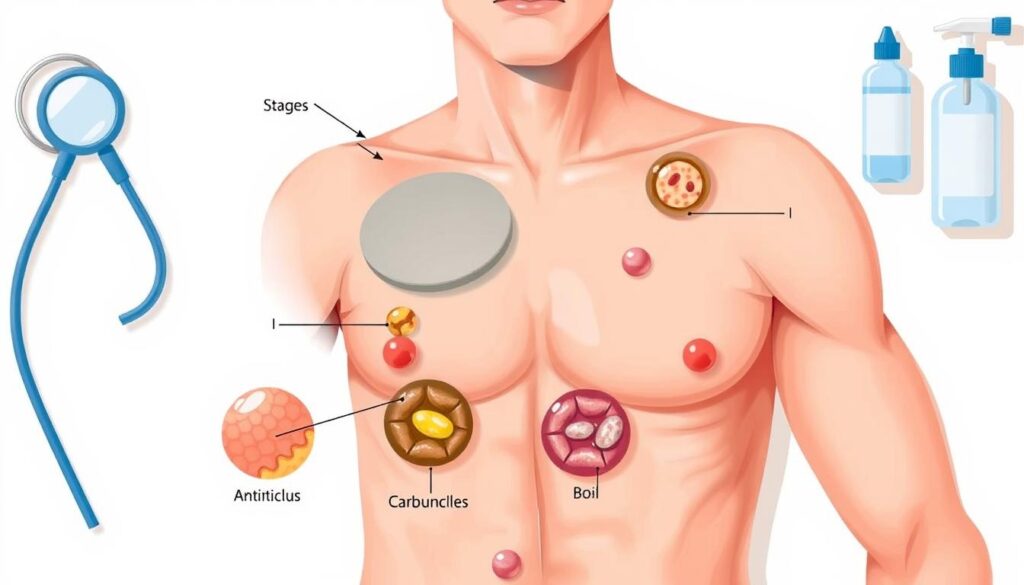
Boils and carbuncles are painful skin infections. They’re caused by bacteria entering hair follicles, forming pus-filled abscesses1. Knowing their nature and treatment is key for effective management.
A red, swollen bump on your skin might be a boil or carbuncle. These infections occur when harmful microbes enter through small skin breaks2. They can appear anywhere and vary in size and complexity.
Boils start as tender, red bumps that fill with pus over time. Some heal on their own, while others need medical care. Teens and young adults are most at risk for these infections2.
Certain factors can increase your chances of getting boils. These include diabetes, weak immunity, and existing skin problems1. Good hygiene is crucial in preventing the spread of infection.
Key Takeaways
- Boils are bacterial skin infections caused by staphylococcus aureus
- Young adults are more prone to developing these skin abscesses
- Proper hygiene can help prevent infection spread
- Some boils heal naturally, while others need medical intervention
- Underlying health conditions can increase infection risk
What Are Boils and Carbuncles: Essential Facts
Boils and carbuncles are painful skin swellings caused by bacteria. They invade hair follicles and surrounding tissue. Recognizing these conditions helps address them effectively3.
Common Locations of Skin Infections
Staphylococcus aureus bacteria often cause these painful skin infections. They appear in areas with high friction or moisture.
- Neck
- Face
- Armpits
- Arms
- Buttocks
- Around the anus
Risk Factors and Causes
Certain factors increase your chances of getting boils and carbuncles. Teenagers and young adults are more likely to develop them. Males are affected more frequently3.
Key risk factors include:
- Obesity
- Weakened immune system
- Existing skin conditions
- Being a carrier of staphylococcal bacteria4
Signs and Symptoms to Watch For
Spotting early signs of boils and carbuncles helps you get timely treatment. Look out for these typical symptoms:
| Condition | Characteristics |
|---|---|
| Boils | Red, tender lumps with pus-filled centers |
| Carbuncles | Larger infections, up to 10 cm in size, multiple pus-filled lumps |
Most boils burst and heal within 3 weeks without scarring3. Monitor the infection closely. Seek medical help if symptoms worsen or persist.
Early detection and proper care are key to managing skin infections effectively.
Professional Medical Treatment Options
Pus-filled lesions require expert medical care for effective treatment. Doctors use specialized techniques to address boils and carbuncles5.
The main treatment involves precise drainage procedures. Your doctor will use one of two methods:
- Needle and syringe extraction
- Small surgical incision for complete pus removal
Antibiotics are crucial in managing these skin infections. Doctors choose specific antibiotics based on several factors:
- Severity of the infection
- Bacterial strain identification
- Patient’s overall health condition6
“Proper medical intervention can prevent potential complications and reduce recovery time.”
For Staphylococcus aureus carriers, doctors may suggest extra preventive steps. These can include targeted antibiotics and special nasal creams to lower future infection risks5.
| Treatment Approach | Recommended For |
|---|---|
| Drainage Procedure | Large, painful boils |
| Oral Antibiotics | Severe or recurring infections |
| Laboratory Testing | Identifying specific bacterial strains |
Your doctor will choose the best treatment plan for you. They’ll consider your unique situation to create an effective strategy6.
Home Care and Prevention Strategies for Boils and Carbuncles
Boils and carbuncles need careful handling to avoid complications and promote healing. Proper home care techniques can help you tackle these skin infections effectively.
Proper Wound Care Techniques
Warm compresses are your best tool for dealing with boils. Apply them to the affected area for 10-15 minutes, 3-4 times daily. This helps draw out the infection and encourages natural drainage7.
Here are key wound care steps to follow:
- Keep the area clean and dry
- Use sterile gauze to cover the boil
- Wash your hands thoroughly before and after treating the boil
- Never attempt to squeeze or pop the boil7
Hygiene Measures and Prevention
Preventing skin infections is crucial. Follow these hygiene steps to lower your risk8:
- Maintain regular handwashing
- Keep skin clean and dry
- Avoid sharing personal items
- Treat cuts and scrapes immediately
Early intervention and proper hygiene can significantly reduce the risk of developing boils and carbuncles.
When to Seek Medical Attention
Contact a healthcare provider if you notice any of these issues:
| Warning Sign | Action Required |
|---|---|
| Boil larger than a baseball | Immediate medical consultation |
| Persistent or recurring boils | Professional evaluation |
| Fever or red streaks | Urgent medical care |
People with diabetes or weakened immune systems need extra caution8. Always put your health first and ask a doctor if you’re unsure.
Conclusion
Understanding boils and carbuncles is key to managing these painful skin infections. Most people recover fully with proper treatment9. However, it’s vital to know when to seek professional medical help.
Boils usually heal within weeks with good care. Larger or severe cases may need extra medical attention9. Balance home remedies and professional advice when treating skin infections.
Prevention is crucial in managing boils and carbuncles. Regular hand washing and good hygiene can lower your risk significantly9. Keep wounds clean to avoid these uncomfortable skin conditions.
Consult a doctor if you have recurring boils or underlying health issues. People with weakened immune systems should be extra careful about skin infection complications10.
Early detection and proper treatment can help manage and prevent these infections effectively. Stay informed and proactive about your skin health. This approach can reduce the impact of boils and carbuncles on your life.
Prioritize good hygiene and seek medical advice when needed. Take steps to protect your skin from potential infections. Your skin’s health is in your hands.
FAQ
What are boils and carbuncles?
Boils and carbuncles are painful skin infections caused by bacteria. Boils affect a single hair follicle, while carbuncles involve multiple follicles. They appear as red, swollen bumps filled with pus in various hairy body areas.
Where do boils and carbuncles commonly occur?
These infections develop in areas with friction, sweat, or hair follicles. Common spots include the neck, face, armpits, arms, buttocks, and around the anus. They’re more likely in areas prone to moisture and skin-to-skin contact.
What are the risk factors for developing boils and carbuncles?
Key risk factors include obesity, weakened immune system, and existing skin conditions. Being a carrier of staphylococcal bacteria also increases the risk. Poor hygiene and close contact with infected individuals can contribute to their development.
What are the signs and symptoms of boils and carbuncles?
Typical symptoms include red, tender lumps on the skin with swollen, inflamed surrounding areas. Carbuncles are larger, potentially growing up to 3-10 centimeters. They may form multiple pus-filled lumps on the surface and can be painful.
How are boils and carbuncles treated medically?
Medical treatment may include incision and drainage for larger infections. Antibiotics like flucloxacillin might be prescribed for severe or recurrent cases. Sometimes, lab testing of the pus helps determine the most effective antibiotic treatment.
What home care can I use for boils?
For small boils, apply warm compresses for 30 minutes, 3-4 times daily. This promotes natural drainage and relieves pain. Never squeeze or lance the boil yourself, as it can spread the infection.
Maintain proper hygiene by washing hands thoroughly. Launder items that have touched the infected area to prevent spread.
When should I see a doctor about a boil or carbuncle?
Seek medical attention if the boil is large, extremely painful, or recurrent. Also consult a doctor if you have fever or chills. If you have artificial heart valves, joints, or other implants, these infections can be more serious.
How can I prevent boils and carbuncles?
Prevention strategies include maintaining good personal hygiene and addressing underlying skin conditions. Keep skin clean and dry, and avoid close contact with infected individuals. Your doctor might recommend specific treatments if you frequently carry staphylococcal bacteria.
Source Links
- Boils and carbuncles-Boils and carbuncles – Symptoms & causes – Mayo Clinic – https://www.mayoclinic.org/diseases-conditions/boils-and-carbuncles/symptoms-causes/syc-20353770
- Boils, carbuncles and furunculosis – https://patient.info/skin-conditions/boils-carbuncles-and-furunculosis
- Boils and carbuncles – Overview – https://www2.hse.ie/conditions/boils-carbuncles/
- Boils and carbuncles – https://patient.info/doctor/boils-and-carbuncles
- Carbuncle – https://www.mountsinai.org/health-library/diseases-conditions/carbuncle
- Boils and carbuncles – https://www.beaconhealthsystem.org/library/diseases-and-conditions/boils-and-carbuncles?content_id=CON-20193986
- 10 Ways to Get Rid of Your Boils at Home – https://www.healthline.com/health/home-remedies-for-boils
- Folliculitis, Boils and Carbuncles – https://www.hopkinsmedicine.org/health/conditions-and-diseases/folliculitis-boils-and-carbuncles
- Boils and Carbuncles: Symptoms, Causes, and Treatment | Metropolis Healthcare – https://www.metropolisindia.com/blog/preventive-healthcare/boils-and-carbuncles-symptoms-causes-and-effective-treatment-methods
- Carbuncle: Symptoms, causes, treatment, and more – https://www.medicalnewstoday.com/articles/185421

