
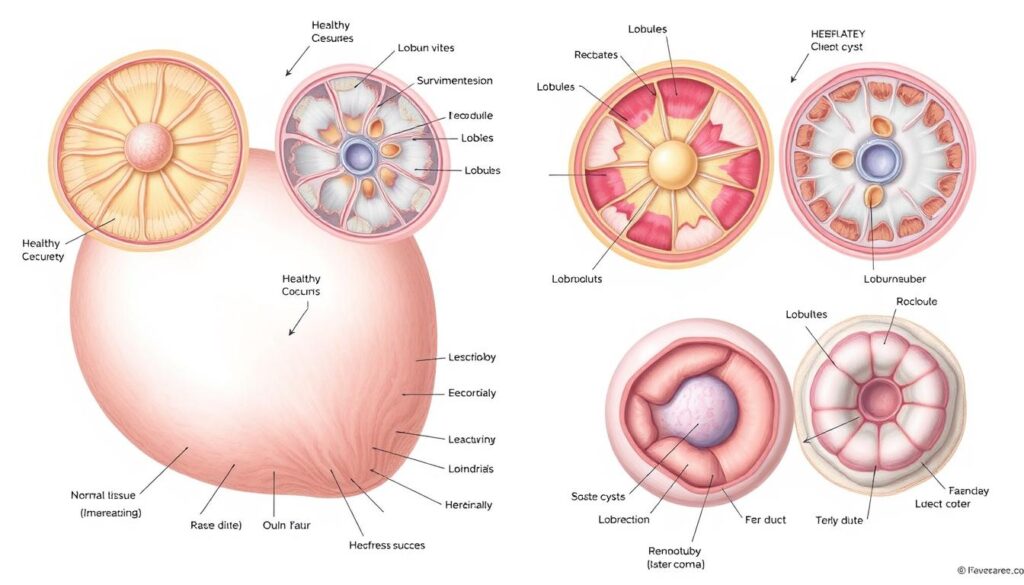
Breast cysts are fluid-filled sacs in breast tissue. They can vary in size and feel, often causing worry. These lumps usually appear in women under 50, before menopause, in one or both breasts1.
Hormonal changes during menstrual cycles cause most breast cysts. They can lead to temporary swelling and discomfort. About 90% of these cysts have thin walls and smooth borders12.
Breast cysts are typically harmless. They don’t increase your risk of breast cancer. Only a small number need medical attention12.
Key Takeaways
- Breast cysts are common fluid-filled sacs in breast tissue
- Most cysts are benign and related to hormonal changes
- Regular breast self-examination is important
- Cysts can occur in women before and after menopause
- Professional medical evaluation is recommended for persistent lumps
What Are Breast Cysts and Their Common Symptoms
Breast cysts are fluid-filled sacs in breast tissue. They’re benign growths that often worry women during self-exams. Understanding these cysts can ease anxiety and encourage regular screenings3.
About 7% of women develop breast cysts in their lifetime. These typically occur before menopause. Women aged 30 to 50 are most likely to experience them34.
Physical Characteristics of Breast Cysts
Breast cysts have unique physical traits:
- Round or oval in shape
- Smooth edges similar to water balloons
- Can develop in one or both breasts3
- Most are only a few millimeters in diameter4
Common Signs and Warning Symptoms
Knowing breast cyst symptoms helps manage breast pain effectively:
- Movable lumps under the skin
- Potential nipple discharge
- Breast tenderness before menstruation
- Changes in lump size during menstrual cycle
Risk Factors and Age-Related Considerations
| Age Group | Cyst Characteristics |
|---|---|
| 30-50 years | High probability of cyst development4 |
| Postmenopausal | Rare cyst occurrence with low estrogen levels3 |
Oral contraceptives may help reduce cyst recurrence. They work by balancing hormone levels. Breast cysts are usually benign but can complicate cancer screenings34.
Remember, most breast cysts don’t need treatment. However, a healthcare professional should monitor them.
Breast Cysts: Types and Formation
Breast cysts are fluid-filled sacs in breast tissue. They come in different types and can affect your health. Let’s explore these fascinating structures56.
Breast cysts typically fall into three primary categories:
- Simple Cysts: Fluid-filled sacs with thin walls and smooth borders. They account for approximately 95% of cysts seen during screening mammograms5.
- Complicated Cysts: These have irregular borders or cloudy fluid, with a minimal cancer risk.
- Complex Cysts: Contain both fluid and solid components, indicating a higher potential cancer risk.
Cysts can be tiny or large. Microcysts are only visible through imaging. Macrocysts can grow up to two inches across7.
These structures are incredibly common. Up to 90% of people experience them during their lifetime7.
| Cyst Type | Characteristics | Cancer Risk |
|---|---|---|
| Simple Cysts | Smooth, thin-walled | Very Low |
| Complicated Cysts | Irregular borders | Low |
| Complex Cysts | Fluid and solid components | Higher Risk |
Breast cysts are most common in women aged 35 to 50. Hormonal changes can influence their development56.
“Understanding your breast health means recognizing the nuanced nature of breast cysts and their formation.”
The exact cause of cysts remains unclear. They’re a natural part of breast tissue changes. Cysts can be painless or tender.
Some may cause slight discomfort or nipple discharge7. Regular check-ups help monitor these common breast structures.
Diagnostic Methods and Treatment Approaches
Detecting and managing breast cysts requires advanced medical imaging and precise diagnostic techniques. Your healthcare provider will use multiple methods to evaluate these common breast conditions. They’ll employ a comprehensive approach to treat breast cysts effectively.
Imaging Tests for Detection
Breast diagnostic imaging is crucial for identifying and understanding breast cysts. Mammography can detect large cysts and clusters of small cysts. However, it may struggle with identifying microcysts8.
Breast ultrasound is a more precise tool. It effectively differentiates between fluid-filled and solid breast lumps8.
- Mammography for overall breast screening
- Ultrasound for detailed cyst evaluation9
- Identifying cyst characteristics and potential risks
Fine-Needle Aspiration Procedure
Fine-needle aspiration is a critical diagnostic method for breast cysts. A special needle is inserted into the breast lump to remove fluid. Ultrasound often guides this procedure for precision89.
This technique helps determine the cyst’s nature. It can also provide immediate relief from discomfort.
Treatment Options and Management
Treatment for breast cysts varies based on their characteristics and symptoms. Many simple cysts resolve on their own. Some may require additional interventions.
| Treatment Approach | Recommended For |
|---|---|
| Fine-Needle Aspiration | Fluid-filled cysts causing discomfort |
| Hormone Therapy | Recurrent cysts with severe symptoms8 |
| Surgical Removal | Persistent or complicated cysts8 |
Managing breast cysts effectively requires a personalized approach tailored to your specific medical needs.
Lifestyle changes can help manage breast cysts. Try wearing supportive bras and applying warm compresses. Consider avoiding caffeine8. Always consult your doctor for personalized advice on breast cyst management.
Conclusion
Understanding breast cysts is key for your health and peace of mind. Breast self-exams and screenings are crucial for early detection10. Your proactive approach can make a big difference in addressing breast changes quickly11.
Regular self-exams help you know your breast tissue well. Women aged 30-50 are most likely to get breast cysts10. Most cysts are small and may go away on their own.
Lifestyle choices can affect breast health. Maintain a healthy weight, limit caffeine and alcohol, and stay active11. Early detection through tests improves treatment outcomes10.
Regular check-ups and understanding your body empower you to manage breast health. Stay informed and proactive about your well-being. Prioritize consistent breast cancer screenings and self-exams.
FAQ
What exactly are breast cysts?
Breast cysts are fluid-filled sacs in breast tissue. They range from tiny to a few inches across. These lumps resemble grapes or water balloons with smooth edges.
Most breast cysts are benign and harmless. They often result from hormonal changes during your menstrual cycle.
Are breast cysts dangerous?
Most breast cysts pose no danger. They don’t increase your risk of breast cancer. However, complex cysts need extra medical evaluation.
These complex cysts contain both fluid and solid parts. They have a slightly higher risk, about 20%, of being problematic.
What symptoms should I watch for with breast cysts?
Watch for a smooth, movable lump in your breast. Breast tenderness or pain, especially before menstruation, is common.
You might notice nipple discharge. It can be clear, yellow, straw-colored, or dark brown. Cyst size and tenderness may change throughout your cycle.
How are breast cysts diagnosed?
Doctors use breast exams and imaging tests like mammograms and ultrasounds. Ultrasound is great for telling fluid-filled cysts from solid masses.
Sometimes, a fine-needle aspiration is needed. If the fluid is clear and the lump vanishes after aspiration, you’re usually in the clear.
What treatment options are available for breast cysts?
Many simple cysts go away on their own. For bothersome cysts, doctors may drain fluid with fine-needle aspiration.
Hormone therapy can help regulate menstrual cycles in severe cases. Surgery is rare, used only for recurring or complicated cysts.
New treatments like Minimally Invasive Lump Removal (MILR) offer less invasive options.
Who is most likely to develop breast cysts?
Premenopausal women under 50 are most at risk. Postmenopausal women on hormone therapy can also develop cysts.
Hormonal changes, especially in estrogen levels, play a big role in cyst formation.
Can breast cysts be prevented?
You can’t totally prevent breast cysts, but you can lower your risk. Maintain a healthy lifestyle and manage stress.
Eat a balanced diet and limit caffeine. Do regular breast self-exams to know your breast tissue well.
How often should I get checked for breast cysts?
Do monthly breast self-exams. Have regular clinical breast exams and mammograms as your doctor advises.
Women over 40 usually need yearly mammograms. Those with higher risk factors may need more frequent checks.
Source Links
- Breast cysts – Symptoms and causes – https://www.mayoclinic.org/diseases-conditions/breast-cysts/symptoms-causes/syc-20370284
- Understanding Breast Cysts: Causes, Diagnosis, and Treatment Options – Bedford Breast Center – https://www.bedfordbreastcenter.com/blog/understanding-breast-cysts-causes-diagnosis-and-treatment-options/
- Breast Cysts, Causes and Symptoms | Tampa General Hospital – https://www.tgh.org/institutes-and-services/conditions/breast-cysts
- Breast cysts – https://www.healthdirect.gov.au/breast-cysts
- Breast Cysts | Benign Breast Conditions – https://www.beaumont.org/services/womens-services/breast-care-services/breast-fibroids-cysts-and-calcifications
- Breast cysts – https://www.thewomens.org.au/health-information/breast-health/breast-cysts
- What Are Breast Cysts? – https://www.health.com/mind-body/breast-cysts
- Breast cysts – Diagnosis and treatment – https://www.mayoclinic.org/diseases-conditions/breast-cysts/diagnosis-treatment/drc-20370290
- Fibrocystic breasts – Diagnosis and treatment – https://www.mayoclinic.org/diseases-conditions/fibrocystic-breasts/diagnosis-treatment/drc-20350442
- Unlock the Truth: Breast Cysts vs Breast Cancer – https://nhcancerclinics.com/blog/how-to-differentiate-between-breast-cysts-and-breast-cancer/
- Breast Cyst: Symptoms, Causes and Treatment – https://www.carehospitals.com/symptoms/breast-cyst

