
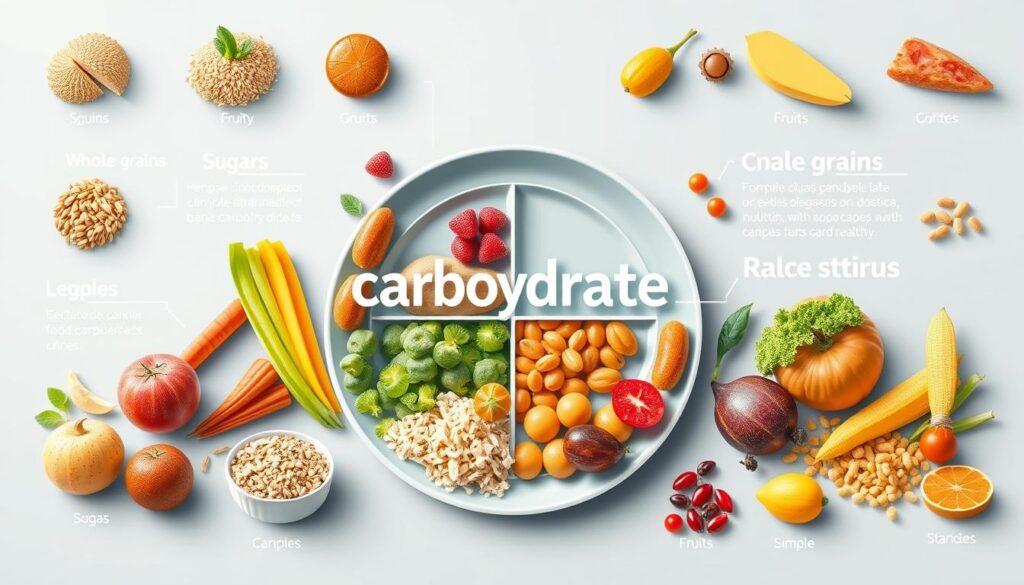
Carbohydrates are your body’s main energy source. They play a crucial role in your overall health and wellness. Your body breaks down carbs into glucose, which fuels your daily activities1.
Carbs come in three forms: sugars, starch, and fiber1. Some carbs break down slowly, helping maintain stable energy levels. The glycemic index shows how different carbs affect your blood sugar.
Choosing the right carbs isn’t just about counting calories. It’s about picking foods that give you essential nutrients. Healthy carb-rich foods include whole grains, legumes, fruits, and vegetables1.
For people with insulin resistance, understanding carb intake is crucial. How your body processes carbs can greatly impact your health and energy. Balancing your carb intake is key to maintaining good health.
Key Takeaways
- Carbohydrates are essential macronutrients for energy
- Not all carbs are created equal – choose low glycemic index foods
- Whole grains and fiber provide more nutritional benefits
- Understanding carbohydrates helps manage blood sugar
- Balance is key in carbohydrate consumption
What Are Carbohydrates in Diet and Their Role
Carbohydrates are vital macronutrients in your diet and overall health. They’re organic molecules found in various foods, serving as your body’s primary energy source2. Grasping carbohydrates can help you make wiser dietary choices.
Carbohydrates should make up 45% to 65% of your total daily calories2. For a 2,000-calorie diet, this means about 225-325 grams of carbs daily2.
“Carbohydrates are not just about energy – they’re about nourishing your body with essential nutrients.”
Different types of carbohydrates affect your body in unique ways:
- Simple Carbs: Quick energy sources that digest rapidly
- Complex Carbs: Slower-digesting nutrients that provide sustained energy
- Dietary Fiber: Supports digestive health and helps manage weight
Carb counting is key to understanding your nutritional intake. The glycemic index helps categorize foods based on their blood sugar impact2.
Healthy options like whole grains, legumes, and low-fat dairy offer lower glycemic impact2. These choices can help maintain steady energy levels throughout the day.
| Carbohydrate Type | Nutritional Impact | Recommended Intake |
|---|---|---|
| Whole Grains | Slow energy release | 45-65% of daily calories |
| Fruits | Natural sugars and fiber | 2-4 servings daily |
| Vegetables | Low-calorie nutrients | 3-5 servings daily |
Not all carbohydrates are equal in nutritional value. Healthy carbs from whole foods provide essential nutrients, minerals, and fiber3.
On the other hand, refined carbs like white bread and sodas can lead to weight gain. They may also increase potential health risks3.
Types of Carbohydrates and Their Impact
Carbs are vital nutrients in your diet. They come in different types, each affecting your health uniquely. Knowing these types helps you make better food choices.
Your body processes carbs differently. The three main types are sugars, starches, and fiber.
Simple Carbohydrates: Quick Energy Sources
Simple carbs, or sugars, come in two forms:
- Natural sugars found in fruits, vegetables, and milk4
- Added sugars in processed foods and sweets
Natural sugars offer nutrients, but added sugars can harm health. The American Heart Association suggests limiting added sugar intake.
Women should aim for 25 grams per day. Men should stick to 36 grams daily5.
Complex Carbohydrates: Sustained Energy
Complex carbs include starches found in:
- Whole grains
- Vegetables
- Legumes
- Bread, pasta, and cereals4
The FDA suggests getting 45-65% of daily calories from carbs6. Whole grains are great for steady energy and overall health.
Dietary Fiber: Digestive Health Champion
Fiber is a complex carb crucial for digestive health. Adults should eat 25-30 grams of fiber daily5.
You can find fiber in:
- Fruits
- Vegetables
- Nuts and seeds
- Whole grains4
| Carbohydrate Type | Health Impact | Daily Recommended Intake |
|---|---|---|
| Simple Carbohydrates | Quick energy, potential health risks if excessive | Limit to 25-36g added sugars |
| Complex Carbohydrates | Sustained energy, nutrient-rich | 45-65% of daily calories |
| Dietary Fiber | Digestive health, disease prevention | 25-30g daily |
Tip: Focus on consuming whole grains and natural carbohydrate sources to optimize your sugar intake and fiber intake for better overall health.
Making Smart Carbohydrate Choices
Picking the right carbs is key for your health. Focus on quality over quantity. Smart carbs offer vital nutrients and keep your energy steady all day.
Be strategic with Low-Carb Diets. Here are some tips for choosing the best carbs:
- Opt for whole grains like quinoa, brown rice, and whole wheat bread7
- Limit added Sugar Intake to less than 10% of daily calories7
- Choose nutrient-dense options that provide fiber and essential minerals8
Watch your portion sizes to manage carb intake. Here’s a guide for smart servings:
| Food Item | Recommended Portion |
|---|---|
| Cooked Pasta/Rice | 1/3 cup |
| Milk | 1 cup |
| Starchy Vegetables | 1/2 cup |
Whole foods like veggies, legumes, and fruits help you feel full. They also give you lasting energy. The goal is to make informed choices for your health.
Your diet is a bank account. Good food choices are good investments. – Bethenny Frankel
Smart carb choices boost your nutrition. They also help manage your blood sugar better9.
Conclusion
Knowing about carbs is crucial for a balanced diet. Your body needs a smart approach to carb intake10. Experts suggest 45-65% of daily calories from carbs for optimal energy and nutrition10.
Not all carbs are the same. Refined grains and sugary drinks can raise health risks11. Choose whole foods that offer key nutrients and support your health11.
Your food choices greatly affect your well-being. Try to eat 25 grams of fiber daily10. Watch out for added sugars too. Smart choices help manage weight and boost energy11.
Everyone’s needs are different. Talk to a nutrition expert. They can help create a carb plan that fits your goals and lifestyle.
FAQ
What are carbohydrates and why are they important?
Carbohydrates are vital macronutrients that fuel your body. They’re found in fruits, vegetables, grains, and legumes. Carbs break down into glucose, providing energy for daily activities and bodily functions.
What’s the difference between simple and complex carbohydrates?
Simple carbs digest quickly, causing rapid blood sugar spikes. They’re often found in processed foods and added sugars. Complex carbs digest slowly, offering sustained energy and more nutrients.
Complex carbs are in whole grains, vegetables, and legumes. They provide better nutritional benefits and steady energy release.
How many carbohydrates should I eat daily?
Dietary Guidelines suggest carbs should make up 45% to 65% of daily calories. Individual needs vary based on age, activity level, health, and fitness goals.
Are all carbohydrates bad for my health?
No, not all carbs are bad. Whole, unprocessed carbs provide essential nutrients, fiber, and energy. Focus on complex carbs from whole grains, fruits, vegetables, and legumes.
Limit added sugars and refined carbohydrates in your diet.
What is the glycemic index, and why does it matter?
The glycemic index (GI) ranks carb-containing foods based on blood sugar impact. Low GI foods digest slowly, maintaining stable blood sugar and providing sustained energy.
This can be crucial for managing conditions like insulin resistance.
How can I make smarter carbohydrate choices?
Pick whole, unprocessed foods rich in fiber and nutrients. Choose whole grains like brown rice and quinoa. Add plenty of vegetables and legumes to your meals.
Watch your portion sizes and consider the nutritional value of carb sources. Limit added sugars in your diet.
Can I follow a low-carb diet?
Low-carb diets can work for some, but they’re not for everyone. If considering this approach, focus on non-starchy veggies and moderate fruits.
Include whole grains and legumes in your meals. Always consult a healthcare professional before major dietary changes.
What role do carbohydrates play in weight management?
Mindful carb consumption can support weight management. Complex carbs and fiber help you feel full longer. This may reduce overall calorie intake.
Choose high-quality, nutrient-dense carbs and maintain appropriate portion sizes for best results.
Source Links
- Carbohydrates – https://www.healthdirect.gov.au/carbohydrates
- Choose your carbs wisely – https://www.mayoclinic.org/healthy-lifestyle/nutrition-and-healthy-eating/in-depth/carbohydrates/art-20045705
- Carbohydrates – https://nutritionsource.hsph.harvard.edu/carbohydrates/
- Carbohydrates: MedlinePlus – https://medlineplus.gov/carbohydrates.html
- Carbohydrates: Getting the Most Out Of Fiber, Starches & Sugars – https://my.clevelandclinic.org/health/articles/15416-carbohydrates
- Carbohydrates: Types, functions, and more – https://www.medicalnewstoday.com/articles/161547
- 7 smart ways to control carbs + 1 cool recipe – https://www.novanthealth.org/healthy-headlines/7-smart-ways-to-control-carbs
- What are Smart Carbs? — Healthy For Life Meals | Fresh & Healthy Meal Plan Delivery – https://www.healthyforlifemeals.com/blog/what-are-smart-carbs
- How to Eat Less Carbs – Albertsons – https://health-wellness.albertsons.com/how-to-eat-less-carbs/
- Carbohydrates – PMC – https://pmc.ncbi.nlm.nih.gov/articles/PMC4224210/
- Dietary carbohydrates: role of quality and quantity in chronic disease – https://pmc.ncbi.nlm.nih.gov/articles/PMC5996878/

