
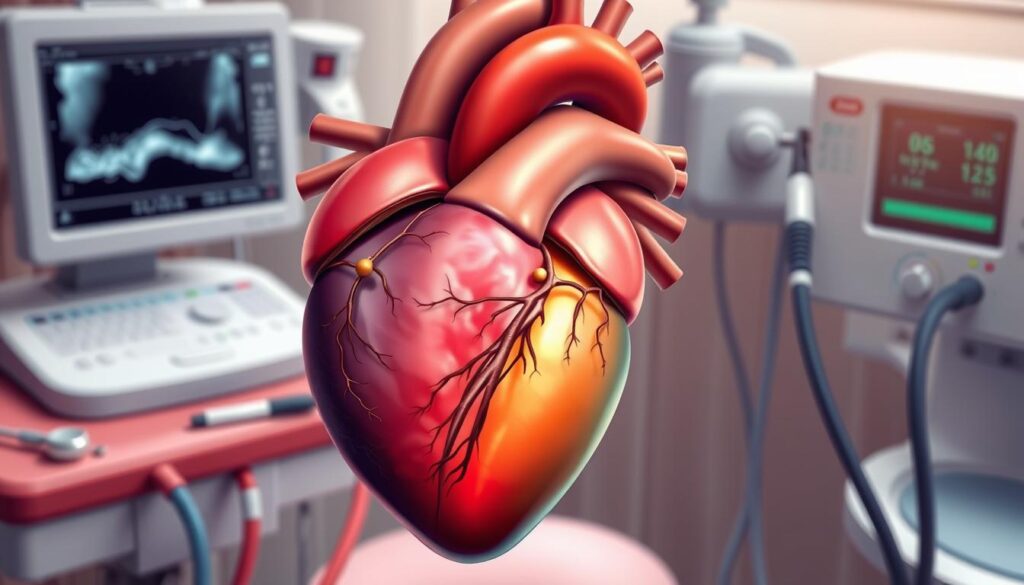
Cardiomyopathy is a complex heart muscle disease affecting cardiovascular health. It hinders your heart’s ability to pump blood effectively. This condition can lead to heart failure if left untreated.
Your heart’s function relies on its muscle strength and efficiency. Cardiomyopathy can cause shortness of breath, chest pain, and rapid heartbeats. These symptoms might signal a developing cardiac arrhythmia requiring medical attention.
Early stages of cardiomyopathy may have minimal symptoms. Regular cardiac check-ups are vital for early detection. Monitoring your ejection fraction can reveal your heart’s pumping capacity.
Key Takeaways
- Cardiomyopathy affects heart muscle’s ability to pump blood effectively
- Early detection is critical for managing heart muscle disease
- Symptoms can range from mild to severe
- Regular cardiac screenings are essential
- Treatment options vary based on disease progression
What is Cardiomyopathy: Types and Causes
Cardiomyopathy is a group of heart muscle diseases that affect your cardiovascular health. It’s important to know the types and causes for early detection and treatment.
Understanding Heart Muscle Disease
Cardiomyopathy affects up to 1 in 500 adults3. There are several distinct types that can impact your heart’s function.
- Dilated cardiomyopathy: Most frequent form, occurring most often in adults aged 20 to 604
- Hypertrophic cardiomyopathy: A rare inherited condition affecting men and women of all ages4
- Restrictive cardiomyopathy: The least common type in the United States4
- Arrhythmogenic cardiomyopathy: Typically affecting teens and young adults4
Common Causes and Risk Factors
Cardiomyopathy can come from both acquired and inherited factors. Your risk goes up with certain conditions.
- Alcohol abuse
- Hypertension
- Viral infections
- Certain medications
- Genetic predispositions
“Understanding your heart’s health is the first step in preventing serious cardiovascular complications.”
This condition is a top cause of heart failure. It’s also the main reason for heart transplants3. Many people don’t know they have it, so regular heart check-ups are crucial.
Warning signs include shortness of breath, chest pain, dizziness, and swelling in arms and legs43. If you notice these symptoms, see a doctor right away.
Recognizing the Signs of Heart Muscle Disease
Heart muscle disease affects 1 in 250 people worldwide. Early detection is crucial for effective treatment. Your body may send subtle warnings about your heart’s health.
- Shortness of breath during physical activities
- Unexplained fatigue
- Swelling in extremities
- Dizziness or fainting spells
- Irregular heartbeats or cardiac arrhythmia
Doctors use various tests to identify heart muscle conditions. An echocardiogram helps assess heart function5. This non-invasive test can detect potential heart failure and structural changes.
| Diagnostic Test | Purpose |
|---|---|
| Blood Tests | Check heart muscle enzymes and inflammation markers |
| Electrocardiogram (EKG) | Evaluate electrical heart activity |
| Genetic Testing | Identify inherited heart conditions |
Genetic factors can play a role in heart muscle diseases5. If your family has a history of heart issues, seek expert help. Consult a specialized cardiac team for thorough screening.
Early detection can make a significant difference in managing heart muscle diseases and preventing potential complications.
Conclusion
Cardiomyopathy is a serious heart muscle disease that needs proactive care. Dilated cardiomyopathy affects about 60% of cases6. Knowing your risks and genes can help create an effective treatment plan6.
Early detection is key in managing heart failure linked to cardiomyopathy. About 40% of dilated cardiomyopathy patients may develop left ventricular reverse remodeling7. This can greatly affect long-term outlook.
Medical research keeps finding new ways to understand and treat different types of cardiomyopathy. Your lifestyle choices play a big role in managing heart muscle disease. Regular check-ups, following treatments, and eating heart-healthy foods can help reduce risks.
Staying active in appropriate ways is also important. Genes cause about 30-40% of dilated cardiomyopathy cases6. This makes personalized medical advice crucial.
Stay informed and work closely with your doctors to manage cardiomyopathy well. This can improve your overall heart health. New research keeps enhancing our knowledge and treatment options for this complex condition.
FAQ
What exactly is cardiomyopathy?
Cardiomyopathy affects the heart muscle, making it harder to pump blood. It can lead to heart failure and other serious conditions. There are several types, each impacting heart performance differently.
What are the main symptoms of cardiomyopathy?
Symptoms include shortness of breath, fatigue, dizziness, and chest pain. You might also experience irregular heartbeats and swelling in legs or abdomen. Early stages may not show symptoms, so regular check-ups are important.
If you notice ongoing heart trouble signs, consult a healthcare professional. They can provide a thorough evaluation of your condition.
What causes cardiomyopathy?
Cardiomyopathy can be acquired or inherited. Causes include high blood pressure, heart attacks, and viral infections like COVID-19. Metabolic disorders, nutritional deficiencies, and pregnancy complications can also lead to it.
Genetic factors play a role, especially with family history of heart disease. Risk factors include obesity, alcohol misuse, and diabetes.
How is cardiomyopathy diagnosed?
Diagnosis involves a thorough medical history review and physical examination. Tests may include blood work, chest X-rays, and electrocardiograms (EKG). Doctors might also use echocardiograms, stress tests, and cardiac catheterization.
For inherited forms, genetic testing could be recommended for you and family members. This helps understand potential risks.
What are the treatment options for cardiomyopathy?
Treatment depends on the type and severity of your condition. Options include medications to manage symptoms and improve heart function. Surgically implanted devices like pacemakers or defibrillators may be used.
In severe cases, heart transplantation might be necessary. Lifestyle changes are crucial, including a heart-healthy diet and regular exercise.
Can cardiomyopathy be prevented?
Not all forms of cardiomyopathy can be prevented. However, you can reduce your risk with a healthy lifestyle. This includes regular exercise, a balanced diet, and managing chronic conditions.
Avoid excessive alcohol and manage stress. Regular check-ups can help detect early signs and slow disease progression.
Is cardiomyopathy a genetic condition?
Some types of cardiomyopathy are inherited. If your family has a history of heart muscle disease, you might be at risk. Genetic testing can identify potential markers.
Not all cardiomyopathy is genetic. Many cases result from health conditions, lifestyle factors, or environmental influences.
How serious is cardiomyopathy?
Cardiomyopathy can seriously impact your heart’s ability to pump blood. If untreated, it may lead to heart failure and life-threatening complications. However, early detection and proper management can help.
With medical care and lifestyle changes, many people maintain a good quality of life. Regular monitoring and following your doctor’s advice are key.
Source Links
- Cardiomyopathy – Symptoms and causes – https://www.mayoclinic.org/diseases-conditions/cardiomyopathy/symptoms-causes/syc-20370709
- Symptoms and Diagnosis of Cardiomyopathy – https://www.heart.org/en/health-topics/cardiomyopathy/symptoms-and-diagnosis-of-cardiomyopathy
- Cardiomyopathy – https://www.texasheart.org/heart-health/heart-information-center/topics/cardiomyopathy/
- Cardiomyopathy – https://www.hopkinsmedicine.org/health/conditions-and-diseases/cardiomyopathy
- Cardiomyopathy – https://stanfordhealthcare.org/medical-conditions/blood-heart-circulation/cardiomyopathy.html
- Cardiomyopathies: Evolution of pathogenesis concepts and potential for new therapies – https://pmc.ncbi.nlm.nih.gov/articles/PMC4072838/
- Cardiomyopathies: An Overview – PMC – https://pmc.ncbi.nlm.nih.gov/articles/PMC8303989/

