
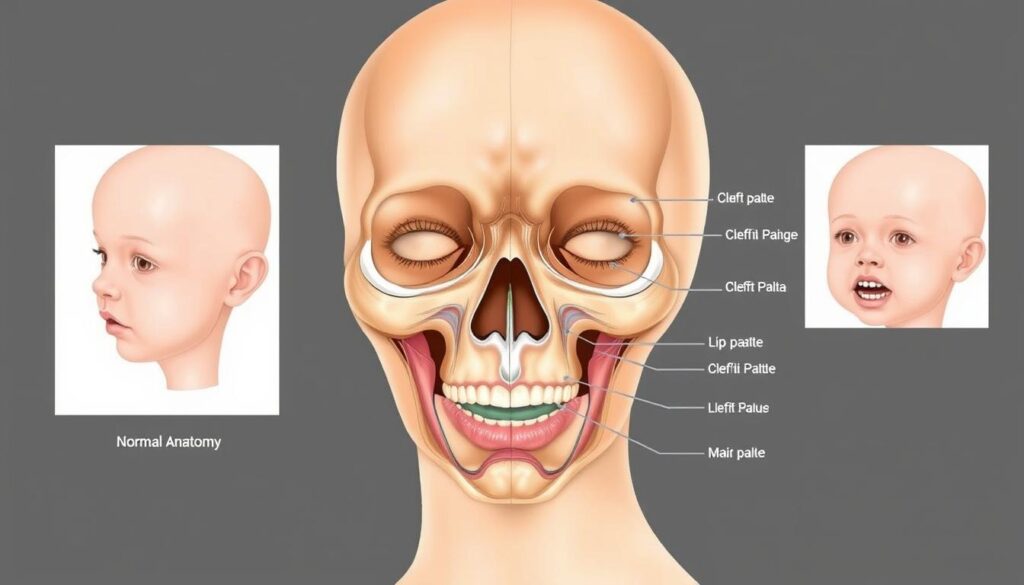
Cleft lip and palate are common orofacial clefts affecting thousands of families worldwide12. These facial deformities happen when a baby’s face doesn’t fully form during pregnancy2. Learning about these conditions can help you face challenges and find support.
About one in 700 babies globally are born with a cleft1. In the U.S., it affects 1 in every 1,600 newborns2. Boys are more likely to have cleft lip with or without cleft palate.
Girls tend to have cleft palate more often2. The condition varies across different populations. Early diagnosis and treatment are important for the best outcomes.
Key Takeaways
- Cleft lip and palate are common craniofacial abnormalities
- Approximately 1 in 700 babies worldwide are affected
- Condition varies by gender and ethnic background
- Early diagnosis and intervention are crucial
- Comprehensive medical support is available
What is Cleft Lip and Palate?
Cleft lip and palate are birth defects affecting many newborns worldwide. They present unique challenges and treatment opportunities. A cleft lip is an opening in the upper lip3.
A cleft palate is when the roof of the mouth doesn’t close fully. These conditions can occur separately or together3.
Understanding the Condition
Cleft lip, with or without cleft palate, is more common in males. Females are more likely to have cleft palate alone3.
In the United States, Native American and Asian populations have higher rates of these conditions3.
Types of Cleft Lip and Palate
- Unilateral Incomplete Cleft
- Unilateral Complete Cleft
- Bilateral Complete Cleft
- Microform Cleft
Cleft lip and palate can greatly impact dental health. Children may have missing, misshapen, or poorly positioned teeth. Special dental care is often needed4.
Orthodontic treatment usually includes palate expansion around age 6 or 74.
Causes and Risk Factors
Fixing facial clefts starts with knowing their causes. Both genes and environment play important roles in cleft development3.
- Family history of cleft conditions
- Exposure to tobacco during pregnancy
- Alcohol consumption
- Certain medication interactions
- Insufficient folate intake
Early detection and comprehensive care can significantly improve outcomes for children with cleft lip and palate.
Advanced maxillofacial surgery helps children improve function and appearance3. Parents can get genetic counseling to learn about future pregnancy risks3.
Diagnosis and Treatment Options
Early detection of cleft lip and palate is crucial. Specialized treatment follows diagnosis. This approach helps families navigate the journey with confidence.
Cleft Lip and Palate Diagnosis
Cleft conditions can be detected as early as the 13th week of pregnancy. Prenatal ultrasounds are used for this purpose. Most cases are identified right after birth.
Minimal additional testing is usually required. If a genetic syndrome is suspected, healthcare professionals may recommend genetic counseling. They might also suggest amniocentesis in some cases.
Surgical Procedures for Repair
Treatment involves a multidisciplinary healthcare team. They provide comprehensive care. Surgical interventions follow a planned timeline:
- Cleft lip repair: Typically performed between 3-6 months of age5
- Cleft palate repair: Usually completed between 9-18 months5
- Follow-up surgeries: Can continue from ages 2 to late teens5
Non-Surgical Interventions and Therapies
Cleft lip and palate treatment goes beyond surgery. Additional interventions may include:
- Speech therapy
- Dental care and monitoring
- Hearing assessments
- Psychological support
Some children need specialized treatments. These may include:
- Palatal lengthening surgery around ages 4-56
- Alveolar bone grafts between ages 8-106
- Potential nose and jaw surgeries in older teens6
Early intervention and comprehensive care can significantly improve outcomes for children with cleft lip and palate.
Regular screening throughout childhood is important. Lifelong monitoring may be needed. These steps ensure the best possible health and developmental outcomes.
Long-Term Care and Support
Raising a child with craniofacial abnormalities needs comprehensive care. This journey involves specialized interventions for physical, emotional, and social needs. Your child’s path requires compassionate support throughout their development.
Children with cleft lip and palate need ongoing medical attention. Surgical procedures are scheduled at specific ages to support growth7. Cleft lip repair usually happens around 3 months.
Palate repair is typically done between 6 to 12 months7. These timelines help ensure optimal development for your child.
Developmental Considerations
Your child’s needs go beyond initial surgeries. Cleft Palate Speech Therapy is crucial for addressing communication challenges. Regular check-ups help spot and tackle potential issues early.
- Dental and orthodontic assessments
- Hearing evaluations
- Speech and language development tracking
- Potential additional surgical interventions
Emotional and Psychological Support
The psychological impact on children with craniofacial abnormalities is significant. They might face social challenges or self-image concerns. Professional counseling and support groups can boost confidence and resilience.
Family Resources
You’re not alone on this journey. Many organizations offer comprehensive support for families. The Mayo Clinic’s specialized Cleft and Craniofacial clinic provides integrated care approaches8.
| Support Resource | Services Offered |
|---|---|
| Genetic Counseling | Hereditary risk assessment |
| Support Groups | Emotional connection and shared experiences |
| Educational Materials | Comprehensive information for families |
“Each child’s journey is unique, and with proper support, they can thrive and reach their full potential.”
Regular follow-ups with your cleft team are vital. They ensure ongoing monitoring of your child’s progress. These check-ups help create personalized care strategies for your child’s changing needs7.
Living with Cleft Lip and Palate
Raising a child with orofacial clefts needs special support. You’ll face unique challenges in nutrition, speech, and emotional growth. With proper care, children can thrive and lead happy lives910.
Nutrition and Feeding Strategies
Feeding babies with cleft lip and palate requires special methods. Special bottles help ensure good nutrition. Work with pediatric experts to support your child’s early growth9.
Speech and Language Development
Speech therapy is key for cleft lip and palate treatment. Many kids need help to improve their speaking skills. Regular check-ups with speech experts can catch issues early10.
Connecting with Support Networks
Join groups like the Children’s Craniofacial Association for help and advice. These communities connect you with families on similar paths. They can guide you through the challenges of orofacial clefts10.
FAQ
What exactly is a cleft lip and palate?
A cleft lip and palate is a birth defect. It occurs when a baby’s face and mouth tissues don’t fully join during development. This creates an opening in the upper lip or roof of the mouth.
These conditions can happen separately or together. They affect about 1 in 700 babies in the United States.
Are cleft lip and palate genetic?
Cleft lip and palate have multiple causes. Genetics play a big role, but other factors contribute too. These include family history and environmental influences during pregnancy.
Exposure to tobacco, alcohol, or certain medications can increase risk. Vitamin deficiencies, like folate, may also play a part.
At what age are cleft lip and palate typically repaired?
Doctors usually repair cleft lips between 3-6 months of age. Cleft palate repairs happen around 9-12 months. Your child might need several surgeries as they grow.
A team of specialists will work together to provide comprehensive care.
How does a cleft lip and palate affect feeding?
Feeding can be tough for babies with cleft palate. Special bottles or techniques help ensure proper nutrition. Specialized devices can shape the nose and lip before surgery.
These tools make feeding easier and improve surgical outcomes.
Will my child have speech problems?
Speech issues are common in children with cleft lip and palate. Many kids need speech therapy to develop clear pronunciation. Regular assessments and early intervention can greatly improve communication skills.
What long-term support is available for families?
Many resources exist for families dealing with cleft lip and palate. Support groups, genetic counseling, and educational materials are available. Your child will need ongoing care throughout their life.
This includes speech therapy, dental treatments, and possible additional surgeries. Emotional support is crucial for both child and family.
Are there potential psychological impacts?
Kids with cleft lip and palate might face social challenges. They may feel self-conscious about their appearance. Consistent emotional support and access to resources can boost confidence.
Connecting with support groups helps children develop a positive self-image.
How common are cleft lip and palate?
These conditions affect 1 in 500 to 700 babies yearly in the U.S. Prevalence varies among ethnic groups. They’re most common in Native Americans and Asians, least common in African Americans.
Cleft lip is slightly more frequent in males. Isolated cleft palate occurs more often in females.
Source Links
- What is Cleft Lip & Palate? – https://www.clapa.com/what-is-cleft-lip-palate/
- Cleft lip and cleft palate – https://www.marchofdimes.org/find-support/topics/birth/cleft-lip-and-cleft-palate
- Cleft lip and cleft palate – Symptoms and causes – https://www.mayoclinic.org/diseases-conditions/cleft-palate/symptoms-causes/syc-20370985
- Cleft Lip and Cleft Palate: What You Need To Know – https://my.clevelandclinic.org/health/diseases/10947-cleft-lip-cleft-palate
- Cleft lip and cleft palate – Diagnosis and treatment – https://www.mayoclinic.org/diseases-conditions/cleft-palate/diagnosis-treatment/drc-20370990
- Cleft Lip and Cleft Palate Diagnosis and Treatment at OHSU – https://www.ohsu.edu/doernbecher/cleft-lip-and-cleft-palate-diagnosis-and-treatment
- Cleft lip and palate – Treatment – https://www.nhs.uk/conditions/cleft-lip-and-palate/treatment/
- Cleft Lip & Palate – https://www.nidcr.nih.gov/health-info/cleft-lip-palate
- Caring for Babies Born with Cleft Lip or Cleft Palate: AAP Report Explained – https://www.healthychildren.org/English/health-issues/conditions/Cleft-Craniofacial/Pages/Cleft-Lip-and-Palate-Parent-FAQs.aspx
- Cleft Lip/Cleft Palate – https://www.cdc.gov/birth-defects/about/cleft-lip-cleft-palate.html

