
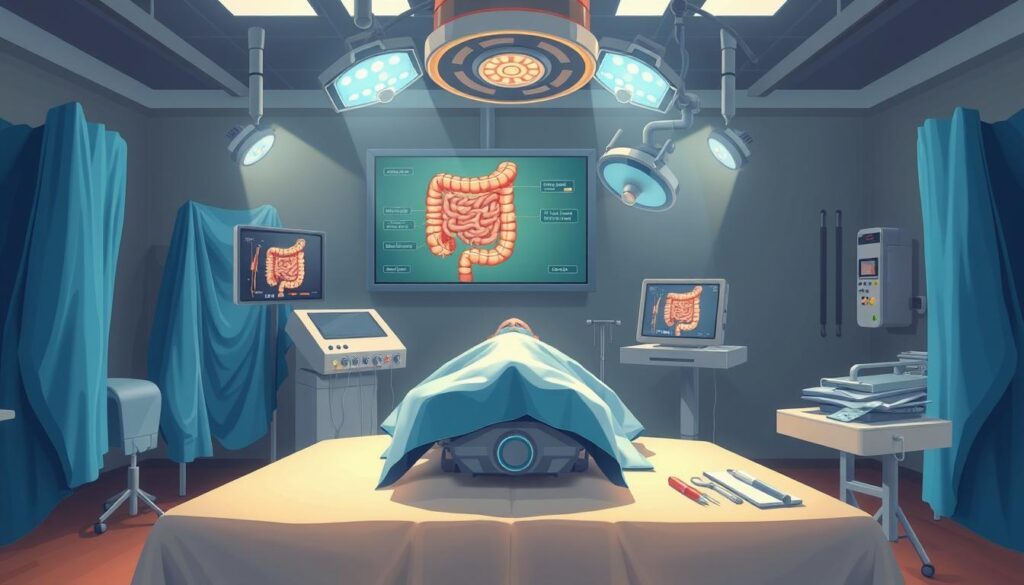
Colectomy is a serious intestinal surgery that removes part or all of the colon. It treats various medical conditions and helps patients regain their health1.
Different colectomy techniques exist for specific medical needs. These range from partial removal to total colon extraction1. Colectomy addresses conditions like cancer, inflammatory diseases, and intestinal blockages2.
Surgical methods include open and laparoscopic approaches. You might have a hemicolectomy, subtotal colectomy, or total abdominal colectomy2. Your doctors will choose the best method for you.
Recovering from colectomy takes time and care. Hospital stays usually last two to seven days2. Most people return to work within 2-3 weeks after surgery1.
Key Takeaways
- Colectomy is a surgical procedure to remove part or all of the colon
- Multiple surgical techniques exist for different medical conditions
- Recovery time varies based on the specific type of surgery
- Post-surgical care includes diet modifications and potential lifestyle adjustments
- Follow medical advice closely during the recovery process
What is Colectomy and Its Purpose
Colectomy is a crucial colorectal surgery that removes part or all of the colon. It addresses various complex gastrointestinal issues. This abdominal surgery requires understanding the colon’s essential functions and potential medical challenges.
Your colon plays a vital role in the digestive system. It processes waste and prepares it for elimination. When medical conditions compromise this organ, surgeons may recommend a colectomy.
Understanding the Colon’s Function
The colon serves several crucial functions in your body:
- Water absorption from digestive waste
- Solidifying waste materials
- Preparing waste for elimination
- Supporting healthy gut bacteria
Common Reasons for Colectomy Surgery
Doctors might recommend a colectomy for various serious medical conditions, including:
- Colon cancer3
- Uncontrolled bleeding3
- Bowel obstruction3
- Inflammatory bowel diseases4
- Diverticulitis5
Different Types of Colon Removal Procedures
Colectomy procedures vary depending on your specific medical condition3:
- Total colectomy: Removal of entire colon
- Partial colectomy: Removing only affected colon sections
- Hemicolectomy: Removing right or left colon side
- Proctocolectomy: Removing colon and rectum
“Each colectomy procedure is uniquely tailored to address specific patient needs and medical conditions.”
Surgical approaches can include open surgery or minimally invasive laparoscopic techniques. These methods can reduce recovery time and postoperative complications5.
Preparing for Your Colectomy Procedure
Careful planning is key for a successful colectomy. Your surgical team will guide you through important steps. Understanding this process can ease anxiety and set you up for success6.
Before your colectomy, you’ll need to prepare your body. Take specific actions as directed by your doctor.
- Stop taking certain medications, especially blood thinners like Aspirin and Motrin6
- Avoid herbal supplements for at least one week prior to surgery6
- Continue medications for high blood pressure and heart conditions6
Nutrition is crucial for your recovery. Your doctor may suggest nutritional supplements like Impact®, Boost®, or Ensure®. These can help strengthen your body before the procedure6.
“Proper preparation can significantly improve surgical outcomes and recovery,” says leading surgical experts.
Follow specific hygiene instructions before surgery. Use Hibiclens® soap and don’t shave the surgical area6. Your team will guide you on bowel preparation for a successful proctocolectomy7.
Arrive at the hospital two hours before your scheduled surgery time6. Expect a 5-7 day hospital stay. Prepare for possible lifestyle changes during recovery7.
Do deep breathing exercises 10 times every hour while awake. This practice helps before and after surgery. It can prevent complications and support your body’s healing6.
Conclusion
Colectomy recovery demands patience and careful attention. Bowel surgery aftercare involves understanding potential outcomes and preparing for healing. Patient satisfaction rates after surgery vary from 39% to 100%8.
Monitoring your health during recovery is crucial. Up to 41% of patients may experience abdominal pain8. Male patients face a higher risk of surgical complications9.
Your medical team will provide specific aftercare instructions. Attend follow-up appointments and report any unusual symptoms. Successful aftercare relies on understanding challenges and communicating with healthcare professionals10.
Each recovery journey is unique. Some patients return home within 24 hours10. Others might need extended care. Stay positive and follow medical guidance.
Focus on gradually returning to normal activities. Your dedication to proper aftercare will contribute to a smoother recovery process.
FAQ
What exactly is a colectomy?
A colectomy is a surgery to remove all or part of the colon. Surgeons can perform a total colectomy or a partial colectomy.
A total colectomy removes the entire colon. A partial colectomy takes out only a portion of it.
Why might I need a colectomy?
You may need a colectomy for several medical conditions. These include colon cancer, severe inflammatory bowel disease, and precancerous conditions.
Other reasons are bowel obstruction, diverticulitis, and uncontrolled intestinal bleeding.
What are the different types of colectomy procedures?
There are several types of colectomy procedures. Total colectomy removes the full colon. Partial colectomy takes out part of the colon.
Hemicolectomy removes the right or left side of the colon. Proctocolectomy removes both the colon and rectum.
How do I prepare for a colectomy?
Preparation involves stopping certain medications and fasting before surgery. You’ll also drink a bowel-cleansing solution and possibly take antibiotics.
Discuss the potential need for an ostomy with your surgical team. This could be temporary or permanent.
What surgical techniques are used for colectomy?
Colectomy can be done using two main techniques. Open surgery uses a larger incision. Laparoscopic surgery is minimally invasive with smaller incisions.
How long is the recovery process?
Recovery time varies but typically takes several weeks. Most patients can return to normal activities within a few weeks to months.
Follow your healthcare provider’s guidance during recovery. They’ll help you understand what to expect.
What potential complications should I be aware of?
Potential complications include infection, bleeding, and anastomotic leaks. You may also need an ostomy.
Contact your doctor if you have fever, increased pain, or signs of infection during recovery.
Will I need to make lifestyle changes after a colectomy?
You may need to adjust your diet and lifestyle during recovery. Your healthcare team will give you specific instructions.
These may include incision care, dietary changes, and activity restrictions. Follow these to support your healing process.
What is an ostomy, and might I need one?
An ostomy creates an opening on the abdomen for waste to exit the body. You might need a temporary or permanent ostomy after your colectomy.
The two types are ileostomy and colostomy. Your doctor will explain if you need one.
How can I ensure the best possible recovery?
Follow your doctor’s instructions carefully. Attend all follow-up appointments and maintain a healthy lifestyle. Manage your diet as recommended.
Don’t hesitate to ask questions or report concerns during recovery. Your healthcare team is there to help you.
Source Links
- Surgical Procedures: Colectomy | OncoLink – https://www.oncolink.org/cancers/gastrointestinal/colon-cancer/treatments/colectomy
- Colectomy: Colon Resection Surgery Procedure & Side Effects – https://www.cancercenter.com/cancer-types/colorectal-cancer/treatments/surgery/colectomy
- Colectomy – Mayo Clinic – https://www.mayoclinic.org/tests-procedures/colectomy/about/pac-20384631
- Colectomy – https://www.hopkinsmedicine.org/health/treatment-tests-and-therapies/colectomy
- Colectomy (Colon Resection Surgery): Definition & Procedure – https://my.clevelandclinic.org/health/treatments/4671-colectomy-bowel-resection-surgery
- How to prepare for Colorectal Surgery – https://colonsurgeonhouston.com/blog/how-to-prepare-for-colorectal-surgery
- Total Colectomy: What to Expect – https://www.massgeneral.org/children/colectomy
- Outcome of Colectomy for Slow Transit Constipation – https://pmc.ncbi.nlm.nih.gov/articles/PMC1420916/
- Complications in colorectal surgery: risk factors and preventive strategies – Patient Safety in Surgery – https://pssjournal.biomedcentral.com/articles/10.1186/1754-9493-4-5
- Outpatient colectomy—a dream or reality? – https://pmc.ncbi.nlm.nih.gov/articles/PMC8682818/

