
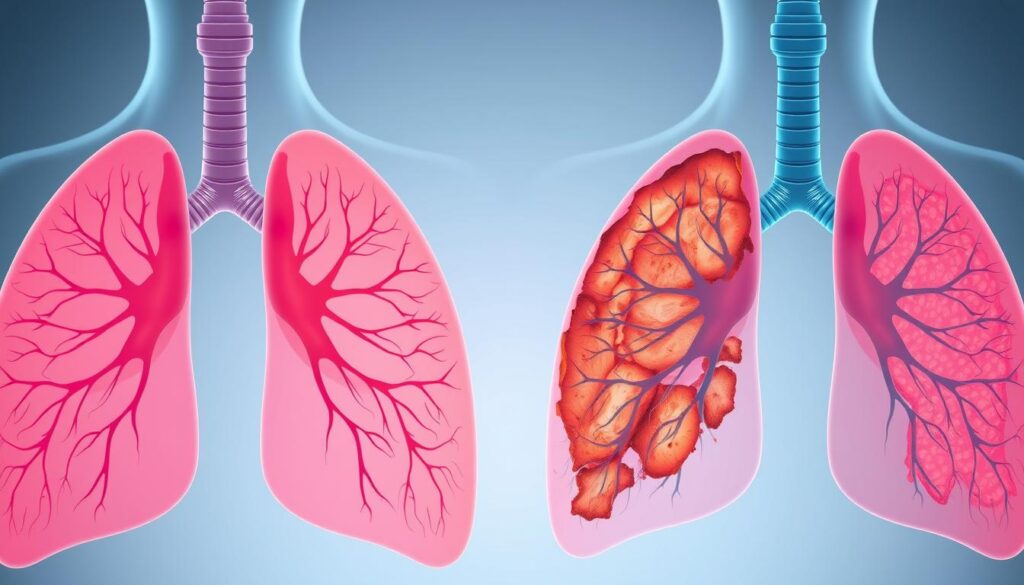
Chronic obstructive pulmonary disease (COPD) is a serious lung condition affecting millions worldwide. It makes breathing harder over time, impacting respiratory health significantly1. COPD causes 3.5 million deaths yearly, about 5% of all global deaths1.
This respiratory illness develops slowly, often due to long-term exposure to harmful irritants. Cigarette smoke is the main cause, responsible for over 70% of COPD cases in wealthy nations2. It damages lungs, causing inflammation and scarring that limits airflow2.
Knowing about COPD is vital for managing lung health. Though incurable, proper treatment can help control symptoms and boost life quality. Nearly 90% of COPD deaths under age 70 happen in poorer countries1.
Key Takeaways
- COPD is a progressive lung disease affecting millions globally
- Cigarette smoke is the primary cause of respiratory illness
- Proper management can improve breathing and quality of life
- COPD significantly impacts low- and middle-income countries
- Early detection and lifestyle changes are crucial for lung health
What is COPD and How Does It Affect You?
Chronic Obstructive Pulmonary Disease (COPD) is a complex lung condition affecting millions worldwide. It’s a group of progressive lung diseases that gradually compromise normal breathing3.
Lung health is crucial for overall wellness. COPD mainly includes emphysema and chronic bronchitis, which impact lung function4. These conditions cause airway obstruction, making breathing increasingly difficult.
Understanding Chronic Obstructive Pulmonary Disease
COPD develops through several key mechanisms:
- Damage to air sacs (alveoli) in the lungs
- Inflammation of bronchial tubes
- Increased mucus production
- Reduced oxygen exchange capacity
People aged 40 and older face a higher risk of developing COPD3. Interestingly, 75% of cases occur in smokers.
However, 1 in 4 COPD patients have never smoked3.
The Importance of Lung Health
“Maintaining lung health is your first defense against respiratory diseases.”
Protecting your lungs involves several proactive strategies:
- Quit smoking
- Avoid secondhand smoke
- Stay current with vaccinations
- Minimize exposure to environmental pollutants3
Early detection of COPD can significantly improve your quality of life and disease management4. Understanding risks and taking preventive measures supports respiratory health.
Causes of COPD: What You Should Know
Chronic Obstructive Pulmonary Disease (COPD) has several underlying causes. Knowing these can help protect your lung health. Factors range from lifestyle choices to environmental exposures.
Smoking and Its Impact on Your Lungs
Tobacco smoke is the main cause of COPD. It’s responsible for 75% of all cases. Smoking is linked to 8 out of 10 COPD deaths.
Surprisingly, 39% of adults with COPD keep smoking after diagnosis. Quitting can slow the disease’s progress.
- Smoking damages lung tissues irreversibly
- Secondhand smoke increases COPD risk
- Quitting smoking can slow disease progression
Environmental Factors That Contribute to COPD
Air pollution and work exposures play big roles in COPD. They cause 10-20% of breathing problems and lung issues. Long-term exposure to particles and chemical fumes raises your risk.
“The air you breathe can be as harmful as the cigarettes you might smoke” – Respiratory Health Expert
Genetic Factors and Deficiency Conditions
Alpha-1 antitrypsin deficiency is a key genetic factor in COPD. It’s the most common genetic form of emphysema. This rare disorder can cause COPD even in non-smokers5.
| Risk Factor | COPD Impact |
|---|---|
| Smoking | 75% of cases |
| Occupational Exposure | 10-20% of respiratory impairment |
| Genetic Deficiency | Rare but significant risk |
Knowing these causes helps you make smart choices about your lung health. You can take steps to lower your COPD risk.
Recognizing the Symptoms of COPD
Early signs of Chronic Obstructive Pulmonary Disease (COPD) are crucial for timely management. Early detection of COPD can greatly improve your long-term health. Spotting symptoms early helps you get the care you need.
Early Warning Signs to Look Out For
COPD symptoms often sneak up slowly. They can be easy to miss at first. Keep an eye out for these key signs:
- Persistent shortness of breath, especially during physical activities
- Chronic cough that produces mucus
- Frequent wheezing
- Chest tightness
COPD is more common in people over 406. Current or former smokers have a higher risk of these symptoms6.
How COPD Progresses Over Time
COPD is a slow, progressive disease6. As lung damage builds up, breathing gets harder. You might notice more respiratory infections and less stamina.
When to Seek Medical Help
Don’t delay seeing a doctor if you have ongoing breathing issues. Seek help for increased mucus or worsening symptoms. Quick action can make a big difference.
- Persistent breathing difficulties
- Increased mucus production
- Worsening symptoms despite self-care
Early diagnosis allows for timely treatment and can prevent further lung damage6.
COPD affects nearly 16 million Americans7. Many more remain undiagnosed. If you notice any symptoms, reach out for help right away.
Treatment Options for COPD: Taking Control
COPD management requires a multi-faceted approach to improve your life quality. There’s no complete cure, but you can control symptoms and slow disease progression. Your healthcare team will create a plan tailored to your specific medical needs8.
Quitting smoking is the most crucial step in COPD management. It’s the best way to prevent your condition from getting worse9. Bronchodilators help relax and open your airways.
Long-acting bronchodilator inhalers can last up to 12 hours. They’re typically used once or twice daily9. Inhalers like salmeterol and formoterol can provide extended relief9.
Oxygen therapy is vital for managing advanced COPD. It can improve life quality and potentially extend lifespan for patients with low blood oxygen10. Long-term oxygen treatment should be used for at least 15 hours daily when recommended9.
Pulmonary rehabilitation programs can significantly help COPD patients. They offer group sessions with physical training and educational support9. Inhaled corticosteroids may reduce airway inflammation, especially during frequent flare-ups10.
During severe flare-ups, your doctor might prescribe steroid tablets or antibiotics9. Each treatment approach is unique to the individual. Regular check-ups with your healthcare provider are essential to adjust your management strategy8.
FAQ
What exactly is COPD?
COPD is a progressive lung disease that blocks airflow and makes breathing difficult. It includes emphysema and chronic bronchitis. These conditions damage air sacs and inflame bronchial tubes, causing breathing problems.
What are the main causes of COPD?
Smoking is the primary cause of COPD, responsible for over 70% of cases in high-income countries. Long-term exposure to secondhand smoke and air pollution also contribute.
Occupational hazards like dust and chemicals can cause COPD. Genetic factors, such as alpha-1 antitrypsin deficiency, play a role too.
What are the early symptoms of COPD?
Early COPD symptoms include a persistent cough with mucus and shortness of breath during activities. Wheezing and chest tightness are also common signs.
As COPD progresses, you might experience fatigue, weight loss, and frequent respiratory infections.
Is COPD curable?
COPD isn’t curable, but it’s manageable. Proper treatment and lifestyle changes can control symptoms and slow disease progression.
Key strategies include quitting smoking, taking medication, and avoiding respiratory irritants. Pulmonary rehabilitation can also improve your quality of life.
How is COPD diagnosed?
Doctors diagnose COPD through medical history review, physical exams, and lung function tests. Spirometry is a common test used.
Imaging tests like chest X-rays or CT scans help confirm the diagnosis. Your doctor will assess symptoms and risk factors too.
What treatments are available for COPD?
COPD treatments include bronchodilator inhalers to open airways and inhaled corticosteroids to reduce inflammation. Oxygen therapy and pulmonary rehabilitation programs are also helpful.
During flare-ups, your doctor might prescribe oral steroids or antibiotics. Quitting smoking and avoiding irritants are crucial for managing COPD.
Can young people develop COPD?
COPD mainly affects older adults, but young people can develop it too. Genetic factors, childhood asthma, and frequent infections can cause COPD in younger individuals.
Exposure to lung irritants can also lead to early COPD. Genetic conditions like alpha-1 antitrypsin deficiency may cause COPD at a young age.
How can I prevent COPD?
To prevent COPD, quit smoking and avoid secondhand smoke. Protect yourself from air pollution and workplace respiratory hazards.
Maintain good lung health through regular exercise. Get vaccinated against respiratory infections like flu and pneumonia.
Source Links
- Chronic obstructive pulmonary disease (COPD) – https://www.who.int/news-room/fact-sheets/detail/chronic-obstructive-pulmonary-disease-(copd)
- COPD – Symptoms and causes – https://www.mayoclinic.org/diseases-conditions/copd/symptoms-causes/syc-20353679
- What Causes COPD – https://www.lung.org/lung-health-diseases/lung-disease-lookup/copd/what-causes-copd
- Chronic obstructive pulmonary disease (COPD) – https://www.nhs.uk/conditions/chronic-obstructive-pulmonary-disease-copd/
- Chronic Obstructive Pulmonary Disease (COPD) – https://www.health.ny.gov/diseases/chronic/copd/fact_sheet.htm
- Know the Warning Signs of COPD | Deborah Heart & Lung Center – https://demanddeborah.org/articles/know-the-warning-signs-of-copd/
- Recognize the signs of COPD – https://www.uclahealth.org/news/article/recognize-the-signs-of-copd
- Treating COPD – https://www.lung.org/lung-health-diseases/lung-disease-lookup/copd/treating
- Chronic obstructive pulmonary disease (COPD) – Treatment – https://www.nhs.uk/conditions/chronic-obstructive-pulmonary-disease-copd/treatment/
- COPD – Diagnosis and treatment – https://www.mayoclinic.org/diseases-conditions/copd/diagnosis-treatment/drc-20353685

