
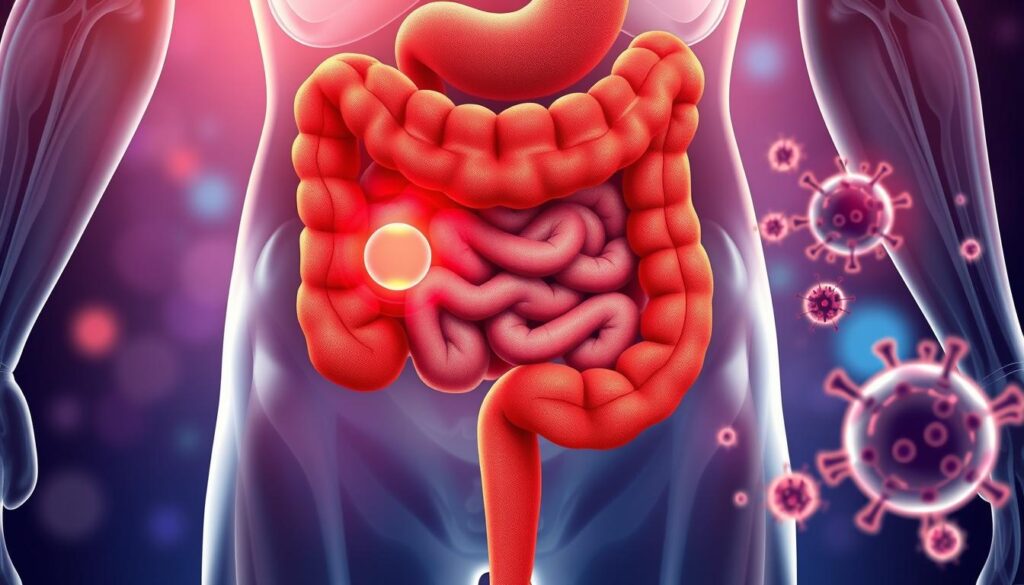
Crohn’s disease is a complex autoimmune disorder affecting millions of Americans. It causes significant challenges, disrupting daily life unexpectedly. Understanding this condition can help manage symptoms and improve overall well-being1.
This chronic illness inflames the digestive tract, from mouth to anus. The small and large intestines are most commonly affected. Crohn’s symptoms vary widely between individuals, making it unpredictable1.
While there’s no cure, modern medicine offers hope. Treatment aims to reduce inflammation and ease symptoms. It also focuses on preventing complications1.
Your proactive approach can greatly improve your quality of life. Working closely with healthcare professionals is key to managing this complex disease effectively.
Key Takeaways
- Crohn’s disease is a chronic inflammatory bowel disease affecting the digestive system
- Symptoms can vary widely and impact different parts of the digestive tract
- Medical treatments aim to manage inflammation and improve patient comfort
- Lifestyle modifications can help control disease progression
- Regular medical consultation is crucial for effective management
What is Crohn’s Disease and Its Symptoms?
Crohn’s disease is a complex inflammatory bowel condition. It affects millions worldwide, causing significant challenges in daily life. This chronic disorder can dramatically impact your digestive health2.
Understanding the Basics
Crohn’s disease is an inflammatory bowel disease. It can impact any part of your digestive tract. Most often, it affects the small intestine and the start of the large intestine2.
Common Gastrointestinal Symptoms
Crohn’s disease can cause various challenging symptoms:
- Persistent diarrhea (usually non-bloody)
- Severe abdominal pain and cramping
- Rectal bleeding
- Unexpected weight loss
- Fatigue
- Reduced appetite
Unique Characteristics of Crohn’s Disease
Crohn’s disease can affect all layers of the intestinal walls. It causes significant damage in patches2. Symptoms can range from mild to severe, depending on the affected area3.
Living with Crohn’s disease is challenging, but with proper management, most people can control their symptoms and maintain an active lifestyle2.
Potential Complications
Without proper treatment, Crohn’s disease can lead to serious complications such as:
- Malnutrition
- Intestinal obstructions
- Fistulas
- Abscesses
Persistent gastrointestinal symptoms need medical attention. Consult a healthcare professional for accurate diagnosis and effective management3.
The Causes of Crohn’s Disease
Crohn’s disease is a complex inflammatory bowel disease with challenging underlying causes. Medical researchers are still investigating its origins. Several key factors contribute to Crohn’s disease development4.
Genetic Predisposition
Family history plays a big role in Crohn’s disease risk. About 20% of patients have a first-degree relative with the condition5. This genetic link suggests inherited traits may increase your chances of getting Crohn’s.
Environmental Triggers
Environmental factors can greatly impact Crohn’s disease progression. Smoking is a major trigger for the condition. Smokers are twice as likely to develop Crohn’s and have worse symptoms5.
- Potential environmental influences include:
- Smoking
- Previous stomach infections
- Gut bacteria imbalances
Immune System Responses
The immune system is central to Crohn’s disease development. It mistakenly attacks healthy cells in the digestive tract. This error leads to chronic inflammation4.
The abnormal immune response can cause ongoing digestive problems. Medical research confirms this connection.
“Understanding the complex interplay of genetic and environmental factors is crucial in managing Crohn’s disease.”
Researchers are still exploring the intricate mechanisms behind Crohn’s disease. Knowing these potential causes can help you manage your symptoms better. Work closely with healthcare professionals for the best results5.
Effective Treatment Options for Crohn’s Disease
Crohn’s disease management requires a personalized approach. Your treatment plan aims to reduce inflammation and control symptoms. It also helps prevent possible complications6.
Medical treatments for Crohn’s disease include biologic therapy targeting specific immune proteins. Doctors may prescribe corticosteroids like prednisone for quick symptom relief. These drugs can also help induce remission6.
Immune suppressors such as azathioprine and methotrexate can help manage inflammation. They work by modulating your body’s immune response6.
Surgery may be needed if other treatments don’t work. About half of Crohn’s patients will need surgery at some point. Between 30% and 55% require surgery within 10 years of diagnosis7.
Surgical options include small or large bowel resection. In severe cases, proctocolectomy with ileostomy may be necessary7.
Your care will involve regular medical check-ups and possible nutrition therapy. Lifestyle changes may also be recommended. Stay informed and work closely with your healthcare team.
A positive outlook can greatly improve your quality of life. Remember, you’re not alone in managing this chronic condition.
FAQ
What exactly is Crohn’s disease?
Crohn’s disease is a chronic inflammatory bowel condition. It causes inflammation in your digestive tract, from mouth to anus. The disease mainly affects the small intestine and the start of the large intestine.
Crohn’s can spread into deeper layers of the bowel. This can lead to various complications, unlike other digestive disorders.
What are the most common symptoms of Crohn’s disease?
The main symptoms include abdominal pain, diarrhea, fatigue, and weight loss. Some people might experience inflammation in other body parts too.
Symptoms can vary in severity. They may come and go in periods of remission and flare-ups.
What causes Crohn’s disease?
The exact cause is unknown, but research suggests a mix of factors. These include genetic predisposition and environmental triggers like smoking.
An abnormal immune response may play a role. In this case, your immune system attacks healthy digestive tract cells.
Who is most at risk for developing Crohn’s disease?
Risk factors include age, ethnicity, family history, and smoking. Most people are diagnosed before 30.
Whites, especially Ashkenazi Jews, have a higher risk. While you can’t control genetic factors, avoiding smoking can help reduce risk.
Is there a cure for Crohn’s disease?
Currently, there’s no complete cure for Crohn’s disease. However, various treatments can help manage symptoms and reduce inflammation.
These include anti-inflammatory drugs, immune system suppressants, antibiotics, and biologic therapies. These treatments can improve your quality of life.
How can I manage Crohn’s disease symptoms?
Management strategies include medical treatments and dietary changes. Eating smaller meals, staying hydrated, and managing stress can help.
Regular check-ups with a gastroenterologist are important. Maintaining a healthy lifestyle and joining support groups can also be beneficial.
Can diet impact Crohn’s disease?
Diet doesn’t cause Crohn’s, but certain foods can trigger or worsen symptoms. Many patients find relief by limiting dairy and avoiding trigger foods.
Eating smaller meals and staying hydrated can help. Working with a nutritionist can help create a personalized diet plan.
What complications can arise from Crohn’s disease?
Potential complications include bowel obstruction, ulcers, fistulas, and malnutrition. Chronic inflammation can narrow the intestines and create abnormal tissue connections.
It can also affect your body’s ability to absorb nutrients. Regular medical monitoring is crucial to prevent and manage these issues.
Source Links
- Crohn’s Disease | MedlinePlus – https://medlineplus.gov/crohnsdisease.html
- Crohn’s Disease Basics – https://www.cdc.gov/inflammatory-bowel-disease/about/crohns-disease-basics.html
- Crohn’s Disease Symptoms and Treatment | UPMC – https://www.upmc.com/services/digestive-disorders-center/services/ibd/conditions/crohns-disease
- Crohn’s disease – https://www.nhs.uk/conditions/crohns-disease/
- Crohn’s disease symptoms and treatments – https://www.nhsinform.scot/illnesses-and-conditions/stomach-liver-and-gastrointestinal-tract/inflammatory-bowel-disease-ibd/crohns-disease/
- Crohn’s disease – Diagnosis and treatment – https://www.mayoclinic.org/diseases-conditions/crohns-disease/diagnosis-treatment/drc-20353309
- Treatment for Crohn’s Disease – NIDDK – https://www.niddk.nih.gov/health-information/digestive-diseases/crohns-disease/treatment

