
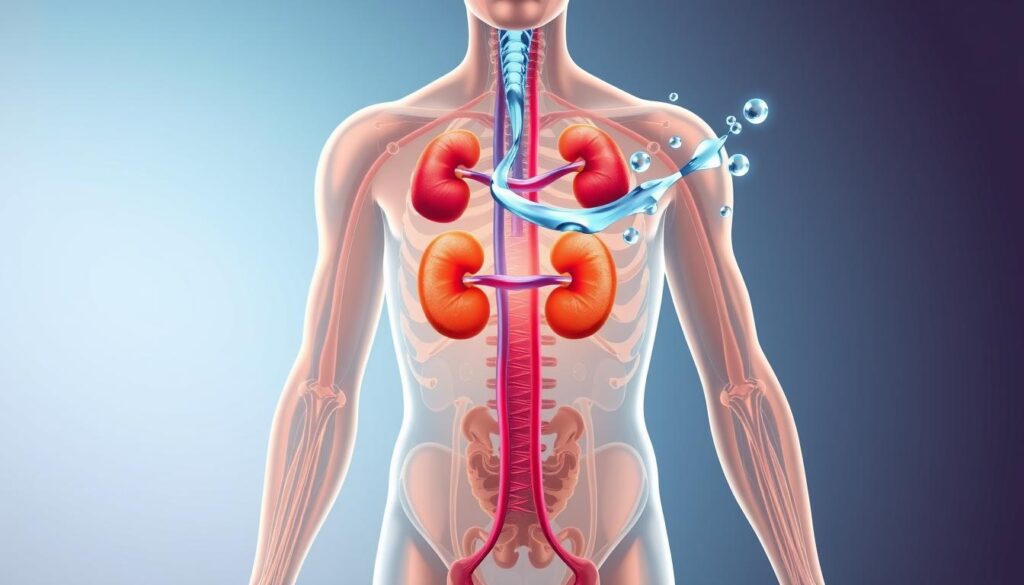
Diabetes Insipidus is a rare condition that messes with your body’s fluid balance. It causes intense thirst and excessive urination. This disorder doesn’t affect blood sugar like diabetes mellitus does1.
Instead, it impacts how your body handles water. Your antidiuretic hormone (vasopressin) doesn’t work right with this condition. This leads to big problems keeping your body hydrated2.
Central Diabetes Insipidus can come from different sources. These include head injuries, genetic issues, or brain infections1. The main problem is controlling water retention. If not treated, it can cause serious dehydration2.
Spotting symptoms early is vital. You might feel super thirsty and pee a lot. Your urine might also be very watery1. These signs can be scary, but don’t worry.
With the right medical help, most people can manage this condition well. Proper treatment can make a big difference in your life.
Key Takeaways
- Diabetes Insipidus is a rare disorder affecting fluid balance
- It differs from diabetes mellitus in core mechanisms
- Symptoms include extreme thirst and frequent urination
- Multiple causes exist, including genetic and injury-related factors
- Proper medical management can control the condition
What is Diabetes Insipidus?
Diabetes insipidus is a rare condition affecting your body’s fluid balance. It impacts how your body manages water, not blood sugar. This disorder causes unusual urination and thirst patterns, disrupting daily life3.
Understanding the Disorder
Diabetes insipidus involves the pituitary gland and hypothalamus. These systems regulate fluid balance and antidiuretic hormone (ADH) production4.
How Diabetes Insipidus Differs from Other Diabetes
- Not related to blood sugar levels
- Involves excessive urination
- Impacts water regulation
- Distinct from diabetes mellitus
Common Symptoms to Watch For
The primary signs of diabetes insipidus include:
- Excessive urination (up to 20 quarts daily)4
- Intense thirst
- Frequent need to drink liquids
- Light-colored urine3
“Understanding your body’s unique signals is the first step in managing diabetes insipidus.”
This condition affects about 1 in 25,000 people worldwide. Your risk increases with family history, brain surgery, or major head injury3.
Complications can be serious, including dehydration and electrolyte imbalances. Untreated cases might lead to seizures or permanent brain damage3.
Causes of Diabetes Insipidus
Diabetes insipidus disrupts normal fluid regulation in the body. This rare disorder has different types, each with unique causes5. Let’s explore the various factors behind ADH deficiency and kidney resistance.
Central Diabetes Insipidus
Central diabetes insipidus happens when the hypothalamus can’t make enough antidiuretic hormone (ADH). It’s often caused by damage to the pituitary gland or hypothalamus6.
Possible causes include brain tumors, severe head injuries, and brain surgery complications. Meningitis and encephalitis can also lead to this condition.
About one-third of central diabetes insipidus cases remain unexplained. These might be linked to immune system issues6.
Nephrogenic Diabetes Insipidus
In nephrogenic diabetes insipidus, the kidneys don’t respond to ADH properly. The pituitary gland makes enough hormone, but the kidneys can’t use it6.
Common causes are long-term lithium use, hypercalcemia, and hypokalemia. Chronic kidney infections can also trigger this condition.
Genetic factors play a role too. The AVPR2 gene mutation causes 90% of congenital cases6.
Dipsogenic Diabetes Insipidus
Dipsogenic diabetes insipidus affects thirst regulation in the hypothalamus. It leads to excessive drinking and frequent urination5. Mental health issues and brain problems can trigger this type.
“Understanding the root causes is the first step in managing diabetes insipidus effectively.”
Diabetes insipidus is rare, affecting about 1 in 25,000 people worldwide5. Each type needs special medical care to manage fluid balance.
Diagnosis and Tests for Diabetes Insipidus
Diagnosing diabetes insipidus requires a thorough approach. Your doctor will evaluate you carefully to find the cause. They’ll determine the specific type of this complex condition.
Medical History and Initial Assessment
Your doctor will review your medical history and examine you. They’ll focus on your symptoms, including:
- Excessive thirst
- Frequent urination
- Dehydration signs
Key Diagnostic Tests
Several tests help diagnose diabetes insipidus accurately:
- Urinalysis to check urine concentration7
- Blood tests measuring hormone and electrolyte levels7
- Water deprivation test to assess fluid regulation7
- MRI scan to examine brain structures8
Understanding Your Test Results
Test results offer vital insights into your condition. People with diabetes insipidus may pass up to 20 quarts of urine daily9.
Specific lab findings might include:
| Test | Potential Findings |
|---|---|
| Blood Tests | Low antidiuretic hormone levels9 |
| Urine Analysis | Low urine osmolality9 |
| Hormone Evaluation | Decreased copeptin levels9 |
Early and accurate diagnosis is key to managing diabetes insipidus effectively.
Remember, each diagnostic test provides valuable information to help your healthcare team develop the most appropriate treatment plan for your specific situation.
Treatment Options for Diabetes Insipidus
Diabetes insipidus management requires a tailored approach based on your specific type and condition. Your healthcare provider will suggest strategies to maintain fluid balance and reduce symptoms10.
Desmopressin is key for treating central diabetes insipidus. This synthetic hormone replacement helps control excessive urination11. It comes in nasal spray, tablet, or melt-in-mouth form.
Your doctor may prescribe desmopressin to decrease urine output. This can help you manage fluid intake more effectively11.
For complex cases, thiazide diuretics can be effective. These medications reduce urine volume and relieve persistent symptoms11. Be aware of possible side effects like dizziness or skin sensitivity.
Your healthcare team will monitor your response and adjust treatment as needed. They may combine medications like NSAIDs to further control urine production11.
Long-term management involves regular medical check-ups and health maintenance strategies. Learn more about comprehensive diabetes insipidus from medical experts. With proper care, you can successfully manage this condition and live normally.
FAQ
What exactly is diabetes insipidus?
Diabetes insipidus is a rare condition affecting body fluid balance. It causes excessive urine production and intense thirst. Unlike diabetes mellitus, it’s not about blood sugar. Instead, it involves issues with antidiuretic hormone or kidney response.
How is diabetes insipidus different from other types of diabetes?
Diabetes insipidus doesn’t affect blood sugar levels. It impacts the body’s ability to regulate water balance. You might produce up to 20 quarts of urine daily. This is far more than the normal 1-3 quarts.
What are the main types of diabetes insipidus?
There are four primary types of diabetes insipidus. Central diabetes insipidus is caused by insufficient ADH production. Nephrogenic diabetes insipidus occurs when kidneys don’t respond to ADH.
Dipsogenic diabetes insipidus involves hypothalamus issues affecting thirst. Gestational diabetes insipidus is a temporary condition during pregnancy.
What symptoms should I watch out for?
Key symptoms include excessive urination and extreme thirst. You may produce large amounts of dilute urine and experience potential dehydration. In children, additional signs might include bed-wetting, poor growth, and irritability.
How is diabetes insipidus diagnosed?
Diagnosis involves a physical exam, medical history review, and various tests. These include urinalysis, blood tests, and a water deprivation test. Your doctor might use MRI scans to check for damage to the hypothalamus or pituitary gland.
Can diabetes insipidus be treated?
Yes, treatment depends on the type. Central diabetes insipidus often requires synthetic vasopressin (desmopressin). Nephrogenic diabetes insipidus may involve addressing underlying causes or using thiazide diuretics. Proper fluid management is crucial for most patients.
What complications can occur if left untreated?
Untreated diabetes insipidus can lead to severe dehydration and electrolyte imbalances. It may also cause potential kidney problems. Maintaining proper fluid intake and working with your doctor is essential.
How rare is diabetes insipidus?
Diabetes insipidus affects about 1 in 25,000 people worldwide. It’s quite rare. With proper medical treatment and management, most people can lead normal, healthy lives.
Source Links
- Diabetes insipidus: MedlinePlus Medical Encyclopedia – https://medlineplus.gov/ency/article/000377.htm
- Diabetes Insipidus – https://www.hopkinsmedicine.org/health/conditions-and-diseases/diabetes/diabetes-insipidus
- Diabetes Insipidus – NIDDK – https://www.niddk.nih.gov/health-information/kidney-disease/diabetes-insipidus
- Diabetes insipidus – Symptoms and causes – https://www.mayoclinic.org/diseases-conditions/diabetes-insipidus/symptoms-causes/syc-20351269
- Diabetes Insipidus: Causes, Symptoms, Diagnosis & Treatment – https://my.clevelandclinic.org/health/diseases/16618-diabetes-insipidus
- Diabetes insipidus – Causes – https://www.nhs.uk/conditions/diabetes-insipidus/causes/
- Diabetes insipidus – Diagnosis – https://www.nhs.uk/conditions/diabetes-insipidus/diagnosis/
- Approach Considerations, Water Deprivation Testing, Pituitary Studies – https://emedicine.medscape.com/article/117648-workup
- Diabetes Insipidus: Which Lab Tests Are Used to Diagnose It? – https://www.healthline.com/health/diabetes-insipidus-labs
- Central Diabetes Insipidus (CDI): Symptoms, Diagnosis & Treatment – https://my.clevelandclinic.org/health/diseases/23515-central-diabetes-insipidus-cdi
- Diabetes insipidus – Treatment – https://www.nhs.uk/conditions/diabetes-insipidus/treatment/

