
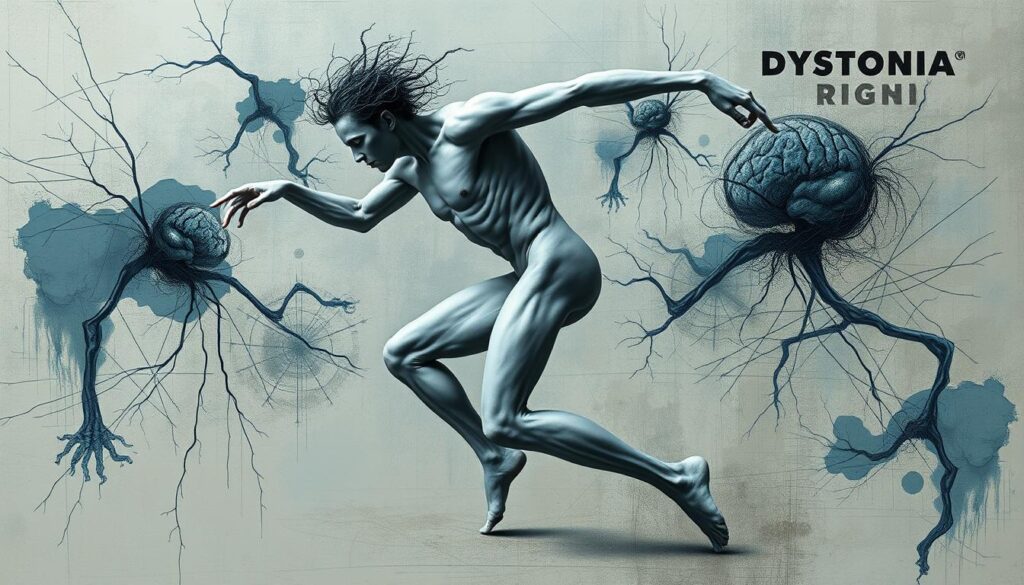
Dystonia is a complex brain disorder affecting muscle movements. It causes unexpected muscle contractions, impacting daily life. Women are twice as likely to have dystonia compared to men12.
Dystonia can target specific muscles or spread throughout the body. Focal dystonia, affecting one area, is ten times more common than generalized dystonia1.
Your genes play a big role in dystonia. Having a family history raises your risk. Researchers have found various triggers, including brain conditions and metabolic disorders21.
Key Takeaways
- Dystonia is a complex neurological movement disorder
- Women are more likely to be affected by dystonia
- Focal dystonia is the most common type
- Genetic factors significantly influence dystonia risk
- Multiple medical conditions can contribute to dystonia development
What is Dystonia and Its Common Symptoms
Dystonia is a complex neurological disorder causing involuntary movements. It affects daily life through unexpected muscle contractions, tremors, spasms, and writhing. About 250,000 Americans have dystonia, making it the third most common movement disorder3.
Types of Muscle Movements in Dystonia
The muscle movements in dystonia can show up in different ways:
- Twisting involuntary contractions
- Repetitive cramps
- Sustained abnormal postures
- Rhythmic tremors
These movements can change in strength and how often they happen. They often get worse with stress or tiredness.
Focal dystonia usually affects people in their 40s and 50s. Women get it about three times more often than men3.
Areas Commonly Affected by Dystonia
| Body Area | Type of Dystonia |
|---|---|
| Neck | Cervical Dystonia |
| Eyelids | Blepharospasm |
| Jaw/Tongue | Oromandibular Dystonia |
| Voice Box | Laryngeal Dystonia |
| Hand/Forearm | Writer’s or Musician’s Dystonia |
Knowing these symptoms can help spot signs of dystonia early. It affects about 1% of people. Genetic and acquired forms bring their own challenges4.
Primary and Secondary Causes of Dystonia
Dystonia is a complex neurological condition that affects muscle movements. It has two main types: primary and secondary dystonia. Understanding its causes helps create better treatment plans.
Primary dystonia occurs without a clear external trigger. Genetic factors play a big role in its development. Some people inherit gene mutations that make them more likely to get dystonia5.
Secondary dystonia has identifiable causes. These can include brain injuries, certain medications, and neurological disorders6. Metabolic diseases and toxin exposure can also lead to secondary dystonia.
- Brain injuries6
- Exposure to specific medications
- Neurological disorders
- Metabolic diseases
- Toxin exposure
Environmental factors can greatly influence dystonia’s progress. Trauma, like spinal cord or head injuries, can trigger symptoms in people with genetic risks6.
| Dystonia Type | Characteristics | Potential Triggers |
|---|---|---|
| Primary Dystonia | Genetic predisposition | Inherited gene mutations |
| Secondary Dystonia | External causes | Medications, injuries, metabolic disorders |
About 50 neurological and metabolic diseases can be linked to secondary dystonia6. The condition often shows complex symptoms. It may combine dystonic movements with other neurological signs6.
“Understanding the underlying cause is crucial in developing an effective management strategy for dystonia.”
If you have ongoing muscle movements, you might have dystonia. It’s best to see a neurological specialist. They can help find the specific type and causes of your condition.
Treatment Options and Management Strategies
Dystonia management requires a tailored approach based on your symptoms. Your healthcare team will create a plan to reduce muscle contractions. The goal is to improve your quality of life7.
Medication is key in managing dystonia. Botulinum toxin injections are effective for focal dystonia. These injections relax specific muscle groups, providing significant relief7.
Medication-Based Approaches
Several medications can help manage dystonia symptoms:
- Anticholinergic agents
- GABAergic medications
- Levodopa
Studies show promising results with various medications. Trihexyphenidyl improved symptoms in 71% of patients during a 36-week study. Early intervention is key for better treatment outcomes7.
Therapeutic Interventions
A multi-faceted approach can enhance your treatment:
- Physical therapy for muscle strengthening
- Occupational therapy for daily activity management
- Deep brain stimulation for severe cases
Managing dystonia is a personalized journey that requires patience and comprehensive care.
Alternative therapies can complement traditional treatments. Yoga, meditation, and biofeedback may help manage dystonia symptoms.
| Treatment Approach | Primary Benefits |
|---|---|
| Botulinum Toxin | Muscle relaxation in specific areas |
| Physical Therapy | Improved muscle flexibility and strength |
| Deep Brain Stimulation | Neurological symptom management |
Your doctor will help create a treatment plan for your specific dystonia type. This plan will address your individual needs8.
Conclusion
Dystonia management requires a comprehensive approach. Personalized treatment strategies can significantly improve your quality of life9. Work closely with healthcare professionals to develop a tailored plan for your specific needs.
Ongoing research is expanding our knowledge about dystonia. Scientists are exploring innovative treatments for more targeted therapies10. They’re studying genetic factors and developing advanced medical interventions to transform dystonia care.
Each dystonia experience is unique. Your treatment plan might include medications, physical therapy, or specialized interventions. Stay informed and maintain open communication with your medical team.
With the right support, you can effectively manage dystonia. Your resilience, combined with medical expertise, creates a powerful strategy. Remain hopeful about the advancing medical landscape surrounding this complex condition.
FAQ
What exactly is dystonia?
Dystonia is a neurological movement disorder causing involuntary muscle contractions. It leads to repetitive or twisting movements. Dystonia can affect one muscle, a group, or the entire body.
Symptoms range from mild to severe. The condition involves uncontrollable muscle movements that can be uncomfortable or painful. Stress, fatigue, or anxiety may worsen symptoms.
How common is dystonia?
Dystonia affects about 1% of the population, with higher prevalence in females. It can impact people of all ages. Some types are more common in specific age groups or have genetic links.
What are the different types of dystonia?
Dystonia types include focal, segmental, multifocal, hemidystonia, and generalized. Focal affects one body part, while segmental impacts adjacent parts. Multifocal affects non-connected parts, and hemidystonia affects one side of the body.
Common affected areas include the neck, eyelids, jaw, tongue, voice box, and hands.
What causes dystonia?
Dystonia can be primary (idiopathic) or secondary. Primary dystonia occurs without an apparent cause and may have genetic factors. Secondary dystonia can result from various conditions or injuries.
Causes of secondary dystonia include brain tumors, stroke, drug reactions, and genetic conditions. Infections, metabolic disorders, toxin exposure, and traumatic brain injuries can also lead to dystonia.
Is dystonia hereditary?
Some forms of dystonia are inherited. Several genes are linked to the condition. These include DYT1, DYT3, DYT5, DYT6, DYT11, DYT12, and DYT28.
Each gene mutation is associated with specific types of dystonia and symptoms.
What treatments are available for dystonia?
Treatment options include medications like levodopa, anticholinergic agents, and botulinum toxin injections. Deep brain stimulation may be considered for severe cases. Therapeutic approaches include speech, physical, and occupational therapy.
Alternative therapies like yoga, massage, and meditation can complement traditional treatments.
Can dystonia be cured?
Currently, there is no cure for dystonia. However, various treatments can help manage symptoms and improve quality of life. The goal is to reduce muscle contractions and minimize pain.
How does stress affect dystonia?
Stress can significantly worsen dystonia symptoms. Many patients report increased muscle contractions during emotional stress or anxiety. Fatigue can also make movements more pronounced and uncomfortable.
When should I see a doctor about dystonia?
Consult a healthcare professional if you experience persistent involuntary muscle movements. Seek help if unexplained muscle contractions interfere with daily activities or cause discomfort. Early diagnosis and treatment can help manage symptoms more effectively.
Can dystonia be completely managed?
While dystonia can’t be cured, it can be effectively managed with a personalized approach. Working closely with healthcare providers is crucial. A comprehensive management strategy can significantly improve your quality of life and reduce symptoms.
Source Links
- Dystonia: What It Is, Causes, Symptoms, Treatment & Types – https://my.clevelandclinic.org/health/diseases/6006-dystonia
- Dystonia – Symptoms and causes – https://www.mayoclinic.org/diseases-conditions/dystonia/symptoms-causes/syc-20350480
- Dystonia – https://www.aans.org/patients/conditions-treatments/dystonia/
- Dystonia: Causes, Types, Symptoms, and Treatments – https://www.webmd.com/brain/dystonia-causes-types-symptoms-and-treatments
- Dystonia – StatPearls – NCBI Bookshelf – https://www.ncbi.nlm.nih.gov/books/NBK448144/
- Secondary Dystonias | Dystonia Medical Research Foundation – https://dystonia-foundation.org/what-is-dystonia/types-dystonia/dystonias/
- Treatment strategies for dystonia – PMC – https://pmc.ncbi.nlm.nih.gov/articles/PMC3495548/
- Diagnosis & Treatment of Dystonia – https://pmc.ncbi.nlm.nih.gov/articles/PMC4248237/
- Dystonia: phenomenology – PMC – https://pmc.ncbi.nlm.nih.gov/articles/PMC4869992/
- Evolution of the concept of dystonia – https://www.scielo.br/j/anp/a/Q6dYmM8cs3zRh9vXdTpKf9n/

