
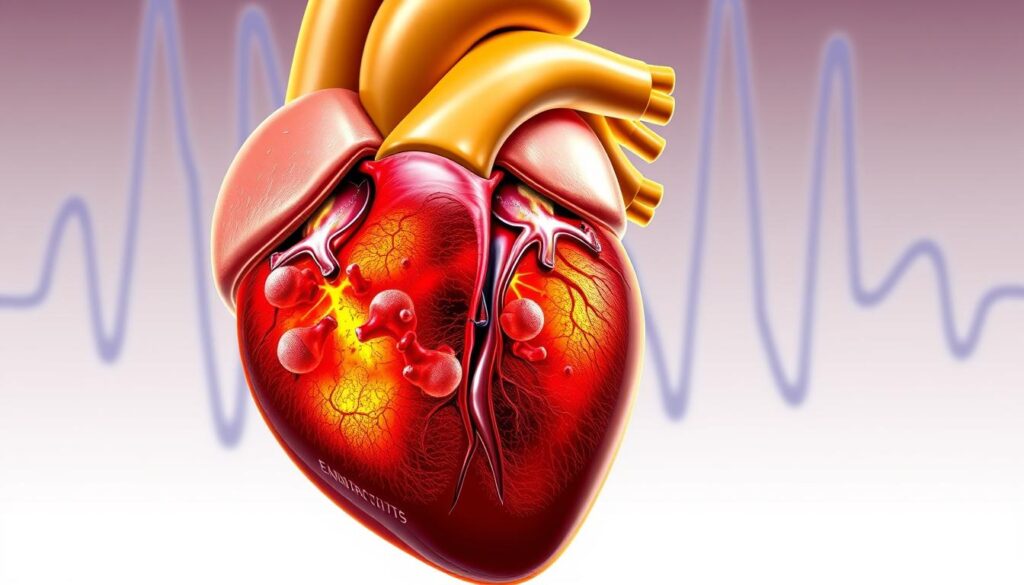
Endocarditis is a severe heart valve infection that can jeopardize your overall health. Bacterial infections are the main culprit behind this cardiac issue. Dangerous microorganisms can enter your bloodstream through various pathways1.
Your risk of endocarditis rises with certain health factors. These include heart conditions, age, and immune system strength1. Bacteria invading your heart’s inner lining can multiply rapidly and cause major damage.
Endocarditis is rare, but understanding it is vital for heart health. Strong immune systems often eliminate bacterial threats before serious problems arise1.
Treatment usually involves aggressive medical interventions. These include intravenous antibiotics and possible heart surgery to fix damaged valves1. Quick medical care can boost recovery chances and prevent long-term heart issues.
Key Takeaways
- Bacterial infections are the primary cause of endocarditis
- Heart valve infections can develop through various health risks
- Early detection is critical for successful treatment
- Preventive measures include maintaining good dental hygiene
- Some individuals have natural resistance to bacterial threats
What is Endocarditis and How Does It Affect Your Heart
Infective endocarditis is a serious heart condition that affects your cardiovascular health. It happens when harmful bacteria or fungi invade your heart’s inner lining. This invasion creates dangerous growths that can disrupt normal heart function2.
This complex heart infection typically affects specific groups of people. Adults over 60 are especially at risk. Men face twice the risk compared to women34.
Types of Bacterial Endocarditis
Experts recognize three primary forms of infective endocarditis:
- Acute Infective Endocarditis: Develops rapidly and can be life-threatening within days2
- Subacute or Chronic Infective Endocarditis: Progresses slowly over weeks or months2
- Prosthetic Valvular Infective Endocarditis: Occurs within a year after heart valve replacement2
The Impact on Heart Valves and Chambers
These infections can lead to valvular heart disease, causing significant damage to delicate heart structures. The infection creates vegetations – irregular growths on heart valves.
These growths can break loose and travel to other organs2.
| Valve Affected | Common Cause |
|---|---|
| Tricuspid Valve | Intravenous drug use2 |
| Mitral or Aortic Valves | Various underlying heart conditions2 |
Your heart murmur might change due to these infections, signaling potential complications. Knowing your risk factors is crucial.
Maintaining good dental hygiene can help prevent this serious condition3.
“Prevention is always better than cure, especially when it comes to your heart’s health.”
Risk Factors and Common Causes of Heart Valve Infection
Knowing heart valve infection risks can help protect your heart health. Endocarditis is rare in healthy hearts. Some conditions increase your risk5.
- Congenital heart defects5
- Artificial heart valves5
- Previous heart valve damage
- Chronic medical conditions
Dental procedures can spread bacteria. Poor oral hygiene may let bacteria enter your bloodstream. This can cause serious heart problems5.
Regular dental care and good oral health can lower these risks5.
Your heart’s health is closely connected to your overall medical history and lifestyle choices.
Intravenous drug use greatly raises your endocarditis risk. Unclean needles can put dangerous bacteria into your blood6.
People who inject illegal drugs are more likely to get serious heart infections6.
Additional risk factors include:
- Long-term catheter use
- Weakened immune systems
- Previous heart surgeries
- Age-related heart changes6
Prevention is always better than treatment. Understand these risks to protect your heart. Take steps to lower your chance of dangerous infections.
Recognizing the Signs of Endocarditis
Early detection of endocarditis is vital for effective treatment. Your body sends signals when your heart might be in trouble. Understanding these warnings could save your life through careful medical observation.
Early Warning Symptoms
Endocarditis often starts with subtle signs that mimic other conditions. A persistent fever is usually the first red flag. It’s often joined by unexplained chills and fatigue7.
You might feel muscle aches and joint pain. A lingering cough that doesn’t improve could also be a sign.
- Persistent fever lasting more than 5 days
- Extreme tiredness
- Decreased appetite
- Muscle and joint aches
Advanced Symptoms and Potential Complications
As endocarditis worsens, more serious symptoms can appear. A new or changed heart murmur might develop, hinting at valve damage8. Shortness of breath, chest pain, and swollen feet or legs are possible.
Early diagnosis is crucial in preventing serious heart damage and potential life-threatening complications.
Advanced endocarditis can lead to severe health issues. Blood cultures help identify the specific infection9. Antibiotic treatment is crucial, often requiring hospital stays for IV medications7.
Without proper care, endocarditis can cause serious health risks. These include:
- Heart failure
- Stroke
- Kidney damage
- Blood clots
If you have ongoing symptoms, call your doctor right away. Quick medical help can greatly improve your chances of recovery8.
Conclusion
Keeping your heart safe from endocarditis is vital. Learn about the risks and take action to protect yourself. Good dental care and hygiene can greatly lower your chances of getting this serious heart infection10.
If you’re at high risk, ask your doctor about taking antibiotics before certain medical procedures. This step is crucial for your safety. Studies show that one in five patients face serious risks during hospital stays11.
Early detection and strong treatment can improve your chances of survival11. Your lifestyle choices are key in preventing endocarditis. Avoid using IV drugs and keep up with regular check-ups.
Address any existing heart issues to reduce your risk. About 80% of patients experience at least one complication, so prevention is crucial11.
Stay informed and practice good health habits. Work closely with your doctors to protect yourself. Your heart’s health is in your hands, so focus on prevention.
FAQ
What is endocarditis and how serious is it?
Endocarditis is a dangerous inflammation of the heart’s inner lining. It happens when germs enter the bloodstream and stick to damaged heart areas. This condition can severely harm heart valves and be fatal. Quick medical treatment is vital for survival.
What are the main types of endocarditis?
There are three main types of endocarditis. Acute infective endocarditis develops suddenly and can be life-threatening within days. Subacute or chronic infective endocarditis progresses slowly over weeks or months.
Prosthetic valvular endocarditis occurs within a year after heart valve replacement.
Who is at highest risk for developing endocarditis?
Your risk is higher if you have artificial or damaged heart valves. Congenital heart defects and a history of endocarditis also increase risk. Other factors include older age, poor dental health, and intravenous drug use.
What are the early symptoms of endocarditis?
Early signs include fever, chills, fatigue, and night sweats. You might also experience aching joints and muscles, and a persistent cough. As it worsens, you may have a fast heart rate and shortness of breath.
Chest pain when breathing and swelling in your feet, legs, or abdomen can also occur.
How is endocarditis typically treated?
Treatment usually involves several weeks of intravenous antibiotics. The specific medication depends on the type of infection. In some cases, surgery may be necessary to fix complications.
Can endocarditis be prevented?
Good dental hygiene and regular check-ups help prevent endocarditis. Avoiding illegal intravenous drug use is crucial. High-risk individuals may need antibiotics before certain dental procedures.
What complications can endocarditis cause?
Untreated endocarditis can lead to heart failure, stroke, and kidney damage. It can also cause an enlarged spleen and blood clots in the lungs. Irregular growths called vegetations may break loose and travel to other organs.
How do doctors diagnose endocarditis?
Doctors use a comprehensive approach to diagnose endocarditis. This includes physical exams, blood cultures, and listening for heart murmur changes. They may also use imaging techniques like echocardiography to detect valve damage.
Source Links
- Endocarditis | Infective Endocarditis | IE | MedlinePlus – https://medlineplus.gov/endocarditis.html
- Heart Valves and Infective Endocarditis – https://www.heart.org/en/health-topics/heart-valve-problems-and-disease/heart-valve-problems-and-causes/heart-valves-and-infective-endocarditis
- Endocarditis: Infection of the heart’s inner lining-Endocarditis – Symptoms & causes – Mayo Clinic – https://www.mayoclinic.org/diseases-conditions/endocarditis/symptoms-causes/syc-20352576
- Endocarditis – https://www.nhs.uk/conditions/endocarditis/
- Endocarditis: Risk Factors, Symptoms, and Diagnosis – https://www.healthline.com/health/endocarditis
- Endocarditis – Causes – https://www.nhs.uk/conditions/endocarditis/causes/
- Endocarditis – Seattle Children’s – https://www.seattlechildrens.org/conditions/endocarditis/
- What is Endocarditis? – https://www.webmd.com/heart-disease/what-is-endocarditis
- Endocarditis: Infection of the heart’s inner lining-Endocarditis – Diagnosis & treatment – Mayo Clinic – https://www.mayoclinic.org/diseases-conditions/endocarditis/diagnosis-treatment/drc-20352582
- Infective endocarditis: A contemporary update – https://pmc.ncbi.nlm.nih.gov/articles/PMC6964163/
- Frontiers | Infective Endocarditis: Clinical Characteristics and Echocardiographic Findings – https://www.frontiersin.org/journals/cardiovascular-medicine/articles/10.3389/fcvm.2022.789624/full

