
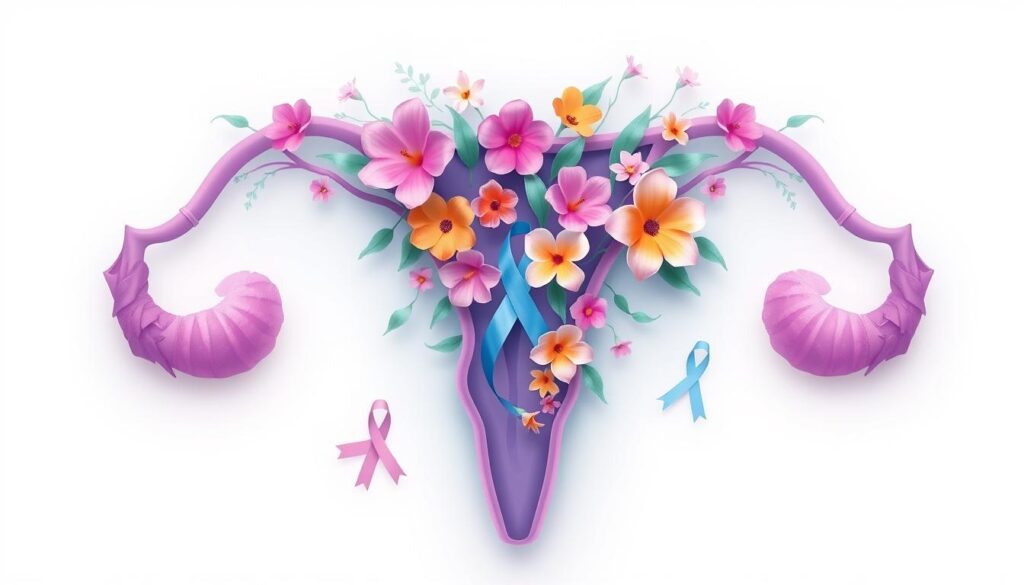
Endometrial cancer develops in the uterus lining, called the endometrium1. It’s a significant health concern, with about 66,200 new cases diagnosed yearly in the United States2.
Your body’s hormones play a crucial role in this cancer’s development. Risk factors include hormonal changes, obesity, and genetic predispositions1. Recognizing early symptoms is vital for successful treatment.
Early detection of endometrial cancer leads to better outcomes. Localized cases have a high 96% five-year survival rate2. Staying informed and proactive about your health can aid prevention and early detection.
Key Takeaways
- Endometrial cancer starts in the uterine lining
- Annual diagnoses in the US reach over 66,200 cases
- Early detection significantly improves survival rates
- Hormonal balance and lifestyle impact cancer risk
- Regular gynecological check-ups are essential
What is Endometrial Cancer?
Endometrial cancer starts in the uterine lining. It affects thousands of women yearly. Knowing about it helps spot early signs and get timely care3.
Our bodies are amazing, but cell changes can cause health issues. Endometrial cancer happens when uterine lining cells grow out of control4.
Types of Endometrial Cancer
Doctors have found several types of endometrial cancer. Each type has its own features:
- Endometrioid adenocarcinoma (most common type)4
- Serous carcinoma
- Clear cell carcinoma
- Uterine carcinosarcoma4
Cancer Stages and Detection
Endometrial cancer stages go from 1 to 4. They show how far the cancer has spread. Early detection is key.
About 66,000 women in the U.S. are diagnosed each year3.
Symptoms to Watch For
Your body often sends warning signs. Main symptoms of endometrial cancer include:
- Abnormal vaginal bleeding
- Bleeding after menopause
- Pelvic pain
- Unusual discharge
“Knowledge is the first step in fighting cancer. Understanding your body can save your life.”
Spotting these symptoms early can boost treatment success. Women over 55 face higher risk. Younger women should stay alert too3.
Causes and Risk Factors
Knowing endometrial cancer causes helps you spot risks and prevent it. Several key factors raise your chances of getting this condition.
Common Risk Factors
Obesity greatly increases endometrial cancer risk. Overweight women have twice the risk, while obese women face three times the risk.
Age is another crucial factor. As you grow older, your risk of developing endometrial cancer increases.
- Body weight impacts hormone levels
- Advanced age increases vulnerability
- Prolonged exposure to estrogen elevates risk
Genetic Influences
Your genes can make you more likely to get endometrial cancer. Lynch syndrome, a hereditary condition, raises your risk through specific genetic mutations5.
If your family has a history of colon or endometrial cancer, consider genetic counseling. It can help you understand potential inherited risks.
| Genetic Mutation | Cancer Risk Impact |
|---|---|
| MLH1 | High endometrial cancer risk |
| MSH2 | Increased genetic susceptibility |
| PMS2 | Moderate cancer risk elevation |
Lifestyle Choices
Your daily habits greatly affect endometrial cancer risk. Lack of exercise, high-fat diets, and conditions like polycystic ovary syndrome can increase your risk56.
“Prevention begins with understanding your personal risk factors and making informed lifestyle choices.”
Some medications, like tamoxifen for breast cancer, can raise endometrial cancer risk5. Regular check-ups and a healthy lifestyle are your best defenses.
Treatment Options for Endometrial Cancer
Understanding your treatment options is vital when facing endometrial cancer. Your medical team will create a personalized plan based on your specific case. Typically, a comprehensive approach starts with surgery7.
Surgical treatments often involve removing the uterus to eliminate cancer cells. For early-stage cases, doctors perform a total hysterectomy and remove ovaries and fallopian tubes7. They might also remove lymph nodes to prevent cancer spread.
Radiation therapy is used when surgery isn’t possible. Chemotherapy drugs like cisplatin and carboplatin with paclitaxel treat high-grade carcinomas7. Advanced cases may need combination treatments, such as pembrolizumab with lenvatinib7.
Follow-up care is crucial for detecting recurrences and managing long-term effects. Recurrent cancer can be treated with radiation, surgery, hormone therapy, or chemotherapy7. Close collaboration with your healthcare team ensures the best treatment strategy.
FAQ
What exactly is endometrial cancer?
Endometrial cancer starts in the uterus lining. It’s the most common uterine cancer type. This cancer forms when endometrial cells change and grow rapidly.
What are the main symptoms of endometrial cancer?
Key symptoms include abnormal vaginal bleeding, especially after menopause. Other signs are bleeding between periods and pelvic pain. Some women experience pain during sex or urination.
If you notice these symptoms, see your doctor right away.
Who is at highest risk for developing endometrial cancer?
Women over 50 and those who are obese face higher risks. Never being pregnant also increases the chance. Early menstruation or late menopause are risk factors too.
Conditions like polycystic ovary syndrome (PCOS) raise the risk. Lynch syndrome and tamoxifen use for breast cancer also increase chances.
How is endometrial cancer typically diagnosed?
Doctors use physical and pelvic exams, plus imaging tests. A biopsy of endometrial tissue is often needed. Transvaginal ultrasound or endometrial sampling help collect tissue for analysis.
What are the primary treatment options for endometrial cancer?
Surgery, often a hysterectomy, is the main treatment. It removes the uterus, ovaries, and fallopian tubes. Other treatments depend on the cancer’s stage and type.
These may include radiation therapy, chemotherapy, or hormone therapy. New options like immunotherapy are also emerging.
What is the prognosis for endometrial cancer?
The outlook is generally positive, especially when caught early. Early-stage cancers have a 96% five-year survival rate. Regular check-ups and quick action on symptoms are key.
Can endometrial cancer be prevented?
You can’t completely prevent endometrial cancer. But you can lower your risk. Stay at a healthy weight and manage hormonal conditions.
Regular exercise helps too. Talk to your doctor about prevention strategies.
How does age impact endometrial cancer risk?
Age plays a big role. Most cases occur in women over 50. Risk increases after menopause due to hormonal changes.
Cellular changes over time also contribute to higher risk as you age.
Source Links
- Endometrial cancer – Symptoms and causes – https://www.mayoclinic.org/diseases-conditions/endometrial-cancer/symptoms-causes/syc-20352461
- Endometrial Cancer – https://www.hopkinsmedicine.org/health/conditions-and-diseases/endometrial-cancer
- Endometrial Cancer – https://www.mdanderson.org/cancer-types/endometrial-cancer.html
- What Is Endometrial Cancer? | Types of Endometrial Cancer – https://www.cancer.org/cancer/types/endometrial-cancer/about/what-is-endometrial-cancer.html
- Endometrial Cancer Risk Factors – https://www.cancer.org/cancer/types/endometrial-cancer/causes-risks-prevention/risk-factors.html
- No title found – https://www.urmc.rochester.edu/encyclopedia/content?contenttypeid=34&contentid=17119-1
- Treatments for endometrial carcinoma – https://cancer.ca/en/cancer-information/cancer-types/uterine/treatment/endometrial-carcinoma

