
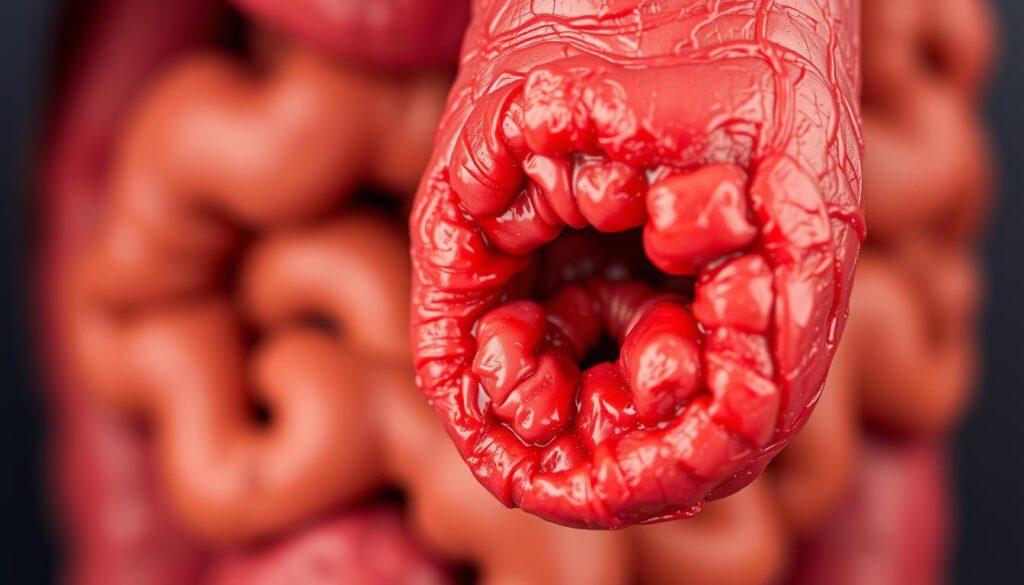
Esophagitis can greatly affect your daily life. This condition causes swelling and irritation in your esophagus. It may lead to chest pain and trouble swallowing1.
Knowing about esophagitis is key for managing your digestive health. It helps prevent possible complications2. The inflammation can come from many sources.
Acid reflux, infections, allergies, or medication side effects can trigger esophagitis. These can harm your esophageal lining over time. This damage makes eating and drinking hard1.
Without treatment, esophagitis may cause serious health problems. These include scarring or narrowing of the esophagus2.
Key Takeaways
- Esophagitis is an inflammation of the esophagus with multiple potential causes
- Symptoms include chest pain and difficulty swallowing
- Various risk factors can contribute to developing the condition
- Prompt medical attention is crucial for proper management
- Lifestyle changes can help prevent and manage esophagitis
What is Esophagitis and Who Does it Affect?
Esophagitis is a tough digestive condition that can affect your health and life quality. It’s an inflammatory disorder of the esophagus lining. About 20% of people in Western countries face some form of esophagitis3.
This condition can cause uncomfortable and potentially serious symptoms. It affects people of all ages, from babies to older adults.
Understanding Esophageal Inflammation
Esophagitis can develop from various triggers, including:
- Chronic acid reflux
- Allergic reactions
- Infections
- Medication side effects
Common Symptoms to Watch For
Spotting esophagitis early can help prevent complications. Key symptoms include:
- Dysphagia: Difficulty swallowing
- Odynophagia: Painful swallowing
- Persistent heartburn
- Chest pain
“Early detection and proper management are crucial in managing esophagitis and preventing long-term complications.”
Reflux esophagitis is often linked to gastroesophageal reflux disease (GERD). It can cause acid reflux and chest discomfort4. Diagnosis rates are rising, matching asthma and allergy trends5.
If you have ongoing swallowing issues or chest pain, see your doctor. They can provide a full evaluation and proper care.
Different Types of Esophagitis
Esophagitis affects people in various ways. Each type has unique causes and symptoms. Knowing these differences helps you spot health issues and get proper care.
Allergic Esophagitis: The Immune System’s Response
Eosinophilic esophagitis is an allergic reaction in your esophagus. It happens when your immune system overreacts to certain foods or environmental triggers6.
Symptoms may include trouble swallowing, chest pain, and food stuck in the throat. Finding and avoiding triggers is key to managing this condition7.
- Difficulty swallowing
- Chest pain
- Food getting stuck in the throat
Reflux Esophagitis: When Acid Fights Back
Reflux esophagitis is the most common form, usually caused by GERD. Being overweight, smoking, and eating certain foods increase your risk7.
Stomach acid can damage your esophagus, causing inflammation. This may lead to long-term issues like Barrett’s esophagus8.
Infectious Esophagitis: Battling Microscopic Invaders
Fungi, viruses, or bacteria can attack your esophagus. People with weak immune systems are at higher risk7.
Common causes include Candida infections, herpes simplex virus, and cytomegalovirus. Correct diagnosis and targeted treatment are vital for recovery8.
- Candida infections
- Herpes simplex virus
- Cytomegalovirus
Medication-Induced Esophagitis: Unintended Consequences
Some medicines can irritate your esophagus. This rare condition affects about four in 100,000 people yearly6.
Antibiotics, aspirin, and NSAIDs may cause esophageal stricture if not used properly7. Careful management is essential to prevent complications.
“Knowledge is the first step in managing any health condition. Understanding the type of esophagitis you’re experiencing can guide more effective treatment.”
Causes and Risk Factors for Esophagitis
Esophagitis has many causes, from lifestyle choices to health conditions. Knowing these factors can help prevent and manage this painful issue. Let’s explore the main contributors to esophageal inflammation.
Common Triggers
Several things can trigger esophageal inflammation. These include dietary choices and environmental factors. Here are some key triggers:
- Spicy and acidic foods
- Caffeine and citrus products
- Medications that irritate the esophagus
Lifestyle Factors
Your daily habits can lead to esophagitis. Obesity, smoking, and alcohol use are major risk factors4. Extra weight strains your digestive system.
Smoking and alcohol can weaken your esophagus lining9. These choices directly affect your digestive health.
“Your lifestyle choices directly impact your digestive health and esophageal function.”
Underlying Health Conditions
Some medical issues can cause esophagitis. A hiatal hernia may lead to chronic acid reflux, raising inflammation risks9. Other conditions include:
- Gastroesophageal reflux disease (GERD)
- Weakened immune systems
- Autoimmune disorders
Knowing these risks helps you make smart health choices. You can take steps to prevent esophageal inflammation4. Learn more about esophagitis at Healthline.
Diagnosis and Treatment Options
Accurate diagnosis is key to managing esophagitis effectively. An upper endoscopy is the best way to examine your esophagus. Doctors use this method to see inflammation and take tissue samples10.
Treatment plans depend on the type of esophagitis you have. Proton pump inhibitors often help reduce acid and ease inflammation10. Your doctor might suggest changing your diet to avoid foods that cause irritation.
Some patients find relief through lifestyle changes. Maintaining a healthy weight and steering clear of irritants can make a difference. In severe cases, esophageal dilation may help with swallowing difficulties10.
Researchers are always working on new treatments to improve outcomes10. If you have ongoing symptoms like trouble swallowing or chest pain, see a specialist. A gastroenterologist or allergist can provide a thorough evaluation10.
FAQ
What is esophagitis?
Esophagitis is an inflammation of the tube connecting your mouth to your stomach. It causes painful swallowing, chest pain, and eating difficulties. Various factors can trigger this condition, including acid reflux, infections, medications, and allergies.
What are the most common symptoms of esophagitis?
Common signs include painful and difficult swallowing, chest pain, and heartburn. Food may get stuck when eating. Infants might have feeding problems and slow growth.
What are the different types of esophagitis?
Allergic esophagitis is triggered by food or environmental allergens. Reflux esophagitis happens due to stomach acid backflow. Infectious esophagitis is caused by bacteria or viruses.
Medication-induced esophagitis occurs when certain drugs damage the esophageal lining.
What increases my risk of developing esophagitis?
Risk factors include GERD, obesity, smoking, and alcohol use. Eating large meals before bed and certain medications can also increase risk. Food allergies, health conditions like hiatal hernia, and weak immune systems play a role.
Pregnancy and older age are additional risk factors.
How is esophagitis diagnosed?
Doctors use endoscopy with biopsy, upper GI series, and esophageal pH testing. They examine your esophagus and may take tissue samples. This helps determine the cause and best treatment.
What treatment options are available for esophagitis?
Treatment depends on the cause but may include medications like proton pump inhibitors. H2 blockers or steroids might also be prescribed. Lifestyle changes are crucial for managing esophagitis.
These changes can include diet modifications, weight loss, and avoiding trigger foods.
Can esophagitis lead to serious complications?
Untreated esophagitis can cause scarring and narrowing of the esophagus. It may increase the risk of esophageal cancer. Reflux esophagitis can progress to Barrett’s esophagus, raising cancer risk further.
When should I see a doctor about esophagitis symptoms?
Seek medical help if you have persistent symptoms or difficulty swallowing. Chest pain, unexplained weight loss, or trouble eating are also reasons to see a doctor. Early diagnosis and treatment can prevent complications and improve life quality.
Source Links
- Esophagitis – Symptoms and causes – https://www.mayoclinic.org/diseases-conditions/esophagitis/symptoms-causes/syc-20361224
- Esophagitis – https://www.hopkinsmedicine.org/health/conditions-and-diseases/esophagitis
- Esophagitis and its causes: Who is “guilty” when acid is found “not guilty”? – https://pmc.ncbi.nlm.nih.gov/articles/PMC5423037/
- Understanding Esophagitis – https://www.webmd.com/digestive-disorders/esophagitis
- Eosinophilic esophagitis – Symptoms and causes – https://www.mayoclinic.org/diseases-conditions/eosinophilic-esophagitis/symptoms-causes/syc-20372197
- What Type of Esophagitis Do I Have? – https://www.verywellhealth.com/what-type-of-esophagitis-do-i-have-4153573
- Esophagitis – https://www.saintlukeskc.org/health-library/esophagitis
- Esophagitis: Practice Essentials, Background, Pathophysiology – https://emedicine.medscape.com/article/174223-overview
- Everything you need to know about esophagitis – https://www.medicalnewstoday.com/articles/9274
- Eosinophilic esophagitis – Diagnosis and treatment – https://www.mayoclinic.org/diseases-conditions/eosinophilic-esophagitis/diagnosis-treatment/drc-20372203

