
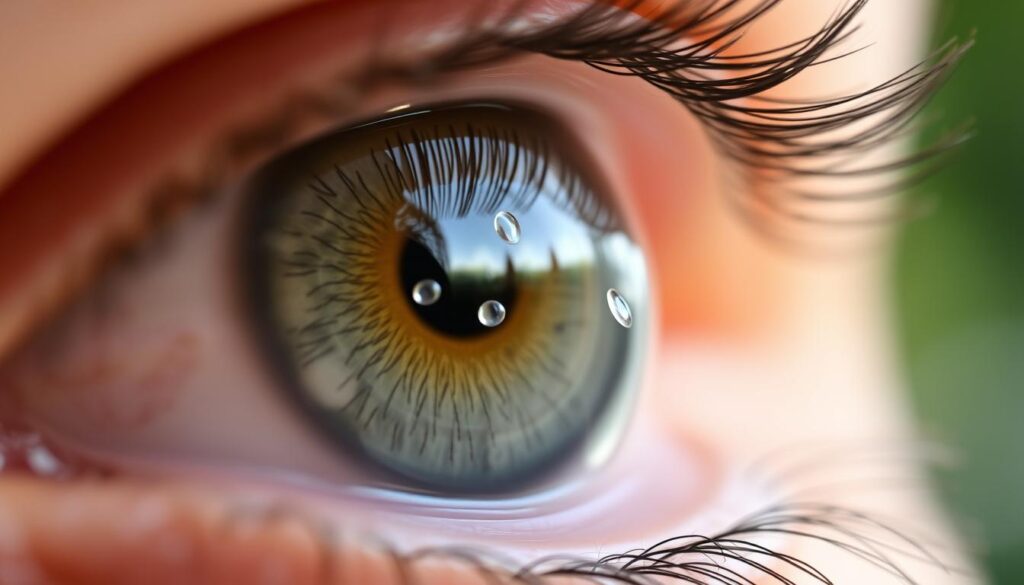
Ever spotted tiny specks or squiggly lines in your vision? These are eye floaters, also called myodesopsia. They’re usually a natural part of eye aging.
As you get older, the fluid in your eyes changes. This causes shadowy shapes to appear. Eye floaters can look like dots, spider-like shapes, or thin threads.
They move when your eyes move. You might notice them more on bright, plain surfaces. Most floaters are harmless and become less noticeable over time.
Knowing about these visual quirks helps you spot normal aging from eye health issues. While common, it’s important to watch for big changes in your vision1.
Key Takeaways
- Eye floaters are typically a normal part of aging
- Most floaters are harmless and become less noticeable
- Regular eye exams can help monitor changes
- Sudden increases in floaters warrant medical attention
- Floaters can appear differently for each individual
What Are Eye Floaters?
Eye floaters are puzzling visual disturbances. These tiny specks drift across your vision, creating momentary distractions. They can be both puzzling and slightly unsettling2.
As you get older, these visual interruptions become more frequent. Vitreous degeneration changes the gel-like substance inside your eye3.
Understanding the Appearance
Floaters manifest in various shapes and sizes:
- Squiggly lines
- Tiny dark spots
- Spider-like shapes
- Threadlike strands
Common Characteristics
Visual anomalies occur when the vitreous humor shrinks. It pulls away from the retina. This process creates small clumps of retinal debris2.
Risk Factors and Causes
Several factors contribute to eye floaters:
- Age-related changes (most common between 50-75 years)3
- Nearsightedness2
- Previous cataract surgery3
- Diabetes
- Eye inflammation
Most floaters are tiny flecks of collagen, naturally occurring protein in your eye3.
While typically harmless, sudden increases in floaters could signal serious eye conditions. Seek immediate medical attention if this occurs2.
When to Be Concerned About Eye Floaters
Eye floaters can signal serious vision problems. Knowing when to seek help is vital for eye health. About 30 percent of people experience these common visual disturbances.
Recognizing Warning Signs
Some eye floater symptoms require immediate medical care. Watch out for these signs:
- Sudden increase in floater count4
- Persistent flashing lights in your vision4
- Peripheral vision loss
- Dark spots that resemble pepper sprinkled across your vision5
Risk Factors to Watch
Some people are more likely to develop problematic eye floaters. Key risk factors include:
| Risk Factor | Potential Impact |
|---|---|
| Nearsightedness | Higher likelihood of experiencing floaters4 |
| Age | Floaters typically emerge between 50-75 years6 |
| Previous Eye Surgery | Increased risk of vitreous separation5 |
Importance of Professional Evaluation
Posterior Vitreous Detachment can be a serious eye condition. It needs expert assessment to ensure proper care. Regular eye exams help track vision changes over time.
If you notice sudden vitreous hemorrhage or persistent flashing lights, see an ophthalmologist right away. Quick action can protect your eyesight.
Managing and Treating Eye Floaters
Eye floaters can disrupt daily vision, making treatment options crucial. Most are harmless, but some need medical help. Managing these visual disturbances may involve various strategies7.
Persistent eye floaters impacting life quality might require medical treatments. Vitrectomy is the main option for problematic floaters. It’s done under local anesthesia and takes weeks for full vision improvement8.
Vitrectomy carries risks like retinal detachment and eye damage. Consider these factors when discussing treatment options with your doctor8.
YAG laser vitreolysis is a non-invasive procedure to reduce eye floaters. It’s effective for floaters caused by posterior vitreous detachment. The treatment takes 20-30 minutes and may need up to three sessions8.
Eye floaters are most common in adults over 55. Laser treatments show a 95% success rate for specific floater types7.
Regular eye exams help prevent complications. Sudden increases in floaters or light flashes might indicate serious conditions. Always consult an eye specialist for the best treatment plan7.
FAQ
What exactly are eye floaters?
Eye floaters are small, shadowy shapes that drift across your vision. They can appear as squiggly lines, spots, or spiderlike shapes. These are caused by clumps in the eye’s vitreous humor, casting shadows on your retina.
Are eye floaters a serious medical condition?
Most eye floaters are normal and not dangerous. They occur during posterior vitreous detachment, a natural aging process. However, a sudden increase in floaters with flashing lights needs immediate medical attention.
What causes eye floaters to develop?
Eye floaters typically develop due to vitreous degeneration as you age. The vitreous humor shrinks and liquifies, creating clumps that cast shadows. Common causes include age-related changes and retinal debris.
Factors like nearsightedness and previous eye surgeries can increase your chances of experiencing floaters.
When should I be worried about eye floaters?
Seek medical help if you notice a sudden increase in floaters with flashing lights. These could signal a retinal tear or vitreous hemorrhage. Watch for new floaters, persistent visual issues, or floaters that greatly affect your vision.
Can eye floaters be treated?
Most eye floaters don’t need treatment. If they greatly impact your life, options are available. Try moving your eyes to shift floaters out of view.
In severe cases, your doctor might suggest a vitrectomy to remove floaters. This surgery is a last resort due to potential risks.
How can I manage eye floaters?
To manage floaters, move your eyes up and down or side to side. This can shift them out of your direct line of sight.
Regular eye exams help monitor their progression and detect potential issues. Discuss management strategies with your eye doctor if floaters become bothersome.
Source Links
- Eye floaters – https://www.healthdirect.gov.au/eye-floaters
- What Causes Eye Floaters? – https://www.hackensackmeridianhealth.org/en/healthu/2023/07/05/what-causes-eye-floaters
- Eye Floaters: Causes, Symptoms, and Treatment – https://www.webmd.com/eye-health/benign-eye-floaters
- Eye floaters: What causes them, and when to see a doctor – https://www.nebraskamed.com/eye-care/eye-floaters-what-causes-them-and-when-to-see-a-doctor
- When to Seek Care for Eye Floaters – https://www.houstonmethodist.org/blog/articles/2023/nov/eye-floaters-when-to-seek-help/
- Eye Floaters: Should I Worry? – https://www.optometrists.org/general-practice-optometry/guide-to-eye-conditions/eye-conditions/treatments-for-eye-floaters/eye-floaters-should-i-worry-2/
- Eye Floaters Treatment | Global Retina Institute – https://eyefloaterstreatment.com/
- Treatments for Eye Floaters – https://www.optometrists.org/general-practice-optometry/guide-to-eye-conditions/eye-conditions/treatments-for-eye-floaters/

