
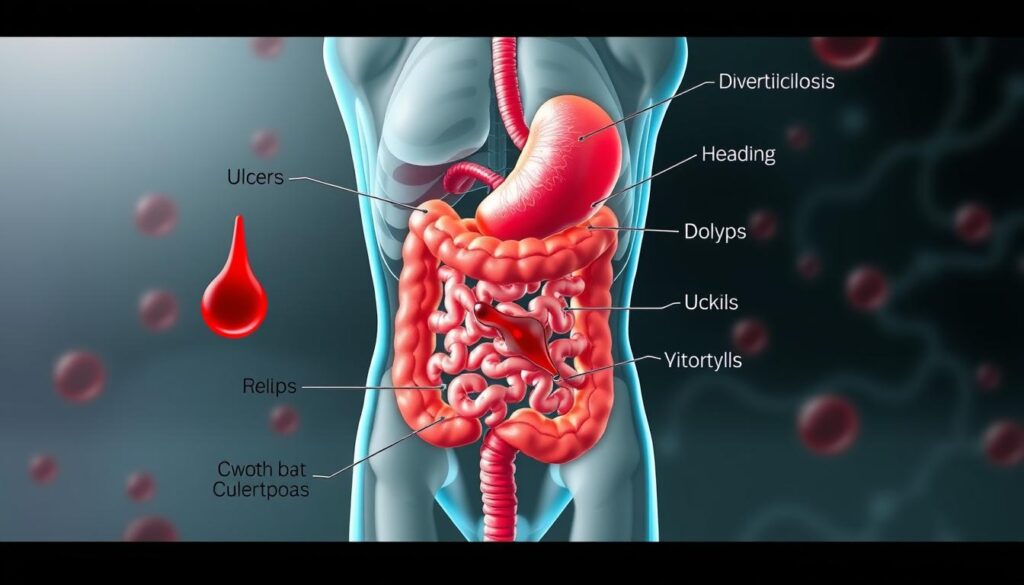
Gastrointestinal bleeding is a serious medical condition affecting your digestive system. It can range from mild to life-threatening. Knowing the signs and symptoms is vital for quick medical help.
Blood in your stool or vomit indicates a digestive system problem. Overt bleeding can appear as vomiting blood or black tarry stool. Occult bleeding may cause subtle symptoms like lightheadedness or abdominal pain.
Early detection of warning signs can prevent severe complications. Bleeding can occur anywhere in your GI tract, from mouth to anus. Even minor symptoms could signal a major health issue12.
Key Takeaways
- Gastrointestinal bleeding can range from mild to life-threatening
- Symptoms include bloody stools, vomiting blood, and abdominal pain
- Immediate medical attention is crucial for proper diagnosis
- Different areas of the GI tract can experience bleeding
- Occult bleeding might be harder to detect but equally serious
What is Gastrointestinal Bleeding and Its Types
Gastrointestinal (GI) bleeding is a serious condition affecting the digestive system. It’s vital to know its types and symptoms for quick detection and treatment3.
GI bleeding happens in two main areas: upper and lower tracts. Each area has unique signs that help doctors diagnose and treat the problem3.
Upper GI Bleeding Overview
Upper GI bleeding affects the esophagus, stomach, and duodenum. Common signs include:
- Hematemesis (vomiting blood)
- Melena (black, tarry stools)
- Feeling weak or lightheaded
Common causes of Upper GI Bleed include:
- Bleeding peptic ulcers
- Esophageal varices
- Digestive tract growths
Lower GI Bleeding Characteristics
Lower GI bleeding involves the small intestine, large intestine, rectum, and anus. Key signs include:
- Hematochezia (bright red blood in stool)
- Rectal bleeding
- Blood on toilet paper
Lower GI bleeding can be caused by hemorrhoids or more serious issues like inflammatory bowel disease4.
Acute vs. Chronic Bleeding Differences
GI bleeding can be acute or chronic. Acute bleeding starts suddenly and can be severe.
Chronic bleeding happens slowly over time. It often leads to anemia5.
| Characteristic | Acute Bleeding | Chronic Bleeding |
|---|---|---|
| Onset | Sudden | Gradual |
| Blood Volume | Large amounts | Small, persistent amounts |
| Symptoms | Dramatic blood loss | Subtle signs like fatigue |
“Early recognition of GI bleeding symptoms can be life-saving and prevent serious complications.” – Medical Experts
Any signs of GI bleeding require immediate medical care4. Don’t wait to seek help if you notice symptoms.
Common Causes of Gastrointestinal Bleeding
Gastrointestinal bleeding can happen suddenly in different parts of your digestive system. Knowing the causes helps you spot warning signs and get medical help quickly6.
The digestive tract has unique bleeding issues in different areas. Let’s look at the main causes in each part.
- Upper GI Tract Bleeding Causes:
- Peptic Ulcer Bleeding from H. pylori infection
- Esophageal Varices related to portal hypertension7
- Inflammation and abnormal blood vessel formations
- Lower GI Tract Bleeding Causes:
Diverticular bleeding causes about 30% of acute lower GI bleeds. Hemorrhoids are behind 14% of lower GI bleeding cases7.
Early recognition of bleeding symptoms can be crucial for effective treatment and prevention of serious complications.
| Bleeding Location | Common Causes | Percentage of Cases |
|---|---|---|
| Upper GI Tract | Peptic Ulcers | Majority of cases |
| Lower GI Tract | Hemorrhoids | 14% |
| Esophageal Area | Varices | Up to 20% |
Alcohol, smoking, and chronic conditions can raise your risk of gastrointestinal bleeding6. Keep an eye on your health.
Regular check-ups help catch potential issues early. Don’t ignore any unusual symptoms in your digestive system.
Diagnosis and Treatment Options
Gastrointestinal bleeding requires a comprehensive approach for diagnosis and treatment. Medical expertise and advanced techniques help navigate this challenging condition. Let’s explore the methods used to tackle this issue effectively.
Initial Medical Assessment
Your healthcare provider begins with a thorough medical evaluation. This includes:
- Detailed medical history review
- Comprehensive physical examination
- Vital sign monitoring
- Assessment of potential risk factors
Diagnostic Procedures and Tests
Various tools help identify the source of gastrointestinal hemorrhage. Doctors may recommend several tests to pinpoint the exact cause:
- Blood tests to assess severity and detect anemia8
- Stool tests to detect occult bleeding8
- Endoscopy procedures including:
- Imaging studies such as CT scans and angiography8
Treatment Approaches
Treatment for gastrointestinal hemorrhage depends on the underlying cause and bleeding severity. Options include:
- Medication to reduce stomach acid or treat infections9
- Endoscopic procedures to stop bleeding:
- Cauterization
- Clipping bleeding vessels
- Blood transfusion for significant blood loss10
- Surgical intervention in severe cases9
Early detection and appropriate treatment are crucial in managing gastrointestinal hemorrhage effectively.
Your doctor will create a tailored treatment plan for your specific condition. The focus will be on stopping the bleeding and addressing root causes9.
Conclusion
GI bleed prevention needs a holistic approach to digestive health. Medical studies show crucial insights into gastrointestinal bleeding complexities. In hospitals, 67 patients faced major GI bleeding after a 14-day stay11.
The death rate for such bleeding can hit 34%. This highlights the need for proactive care11. Your health plan should focus on avoiding GI bleeds through smart lifestyle choices.
Lower GI bleeding often stops on its own in 80 to 85 percent of cases12. Know the warning signs and get regular check-ups to lower your risk. Full gut care means watching for and tackling risk factors early.
Research shows links between GI bleeding and other health issues like stroke. Patients with GI bleeding have higher stroke rates over time13. This shows how our body systems are connected.
Stay informed and keep a healthy lifestyle to manage your gut health. Work closely with your doctors. Catch problems early to reduce risks tied to GI bleeding.
FAQ
What is gastrointestinal (GI) bleeding?
GI bleeding occurs when blood enters the digestive tract. It can show up in stool or vomit. The severity ranges from mild to life-threatening.
This condition can happen anywhere from mouth to anus. Bleeding may be visible or hidden. Seek medical help right away if you suspect GI bleeding.
What are the main types of GI bleeding?
There are two main types: Upper and Lower GI bleeding. Upper GI bleeding causes vomiting blood or black, tarry stools. Lower GI bleeding often results in bright red blood in stool.
What causes gastrointestinal bleeding?
Common causes include ulcers, tears, varices, and inflammatory bowel disease. Hemorrhoids and tumors can also lead to bleeding. Risk factors involve H. pylori infection, NSAIDs, alcohol, and smoking.
What are the symptoms of GI bleeding?
Symptoms vary but may include vomiting blood and black or bright red stools. Lightheadedness, breathing trouble, and fainting can occur. Severe cases may cause shock, weakness, and cool clammy skin.
How is GI bleeding diagnosed?
Diagnosis involves a thorough medical assessment and various tests. These may include blood tests, stool tests, and endoscopies. Imaging studies like CT scans or angiography might also be used.
What are the treatment options for GI bleeding?
Treatment depends on the cause and severity of bleeding. Options include medications to reduce stomach acid or treat infections. Endoscopic procedures can stop bleeding through cauterization or clipping.
In severe cases, doctors may use angiographic embolization or surgery. Blood transfusions might be necessary for significant blood loss.
How can I prevent gastrointestinal bleeding?
Limit NSAID and alcohol use, quit smoking, and manage conditions like GERD. Maintain good digestive health and have regular check-ups. Address digestive symptoms early and follow your doctor’s advice.
When should I seek immediate medical attention?
Seek help if you vomit blood or notice blood in your stools. Black tarry stools, severe abdominal pain, or signs of shock need urgent care. Don’t ignore persistent digestive symptoms.
Source Links
- Gastrointestinal bleeding – Symptoms and causes – https://www.mayoclinic.org/diseases-conditions/gastrointestinal-bleeding/symptoms-causes/syc-20372729
- Symptoms & Causes of GI Bleeding – NIDDK – https://www.niddk.nih.gov/health-information/digestive-diseases/gastrointestinal-bleeding/symptoms-causes
- Gastrointestinal bleeding Information | Mount Sinai – https://www.mountsinai.org/health-library/symptoms/gastrointestinal-bleeding
- Gastrointestinal bleeding: Symptoms, causes, and treatment – https://www.medicalnewstoday.com/articles/gastrointestinal-bleeding
- Gastrointestinal bleeding – https://www.healthdirect.gov.au/gastrointestinal-bleeding
- GI Bleed | Gastrointestinal Bleeding: MedlinePlus – https://medlineplus.gov/gastrointestinalbleeding.html
- Gastrointestinal (GI) bleeding: Common Symptoms & Causes – https://www.steris.com/healthcare/knowledge-center/therapeutic-endoscopy/gi-bleeding-sign-symptoms-and-causes
- Diagnosis of GI Bleeding – NIDDK – https://www.niddk.nih.gov/health-information/digestive-diseases/gastrointestinal-bleeding/diagnosis
- Treatment for GI Bleeding – NIDDK – https://www.niddk.nih.gov/health-information/digestive-diseases/gastrointestinal-bleeding/treatment
- Gastrointestinal bleeding – Diagnosis and treatment – https://www.mayoclinic.org/diseases-conditions/gastrointestinal-bleeding/diagnosis-treatment/drc-20372732
- Gastrointestinal bleeding in the hospitalized patient: a case-control study to assess risk factors, causes, and outcome – PubMed – https://pubmed.ncbi.nlm.nih.gov/9576408/
- Approach to acute lower gastrointestinal bleeding in adults – https://www.uptodate.com/contents/approach-to-acute-lower-gastrointestinal-bleeding-in-adults
- Gastrointestinal bleeding during acute ischaemic stroke hospitalisation increases the risk of stroke recurrence – https://svn.bmj.com/content/5/2/116

