
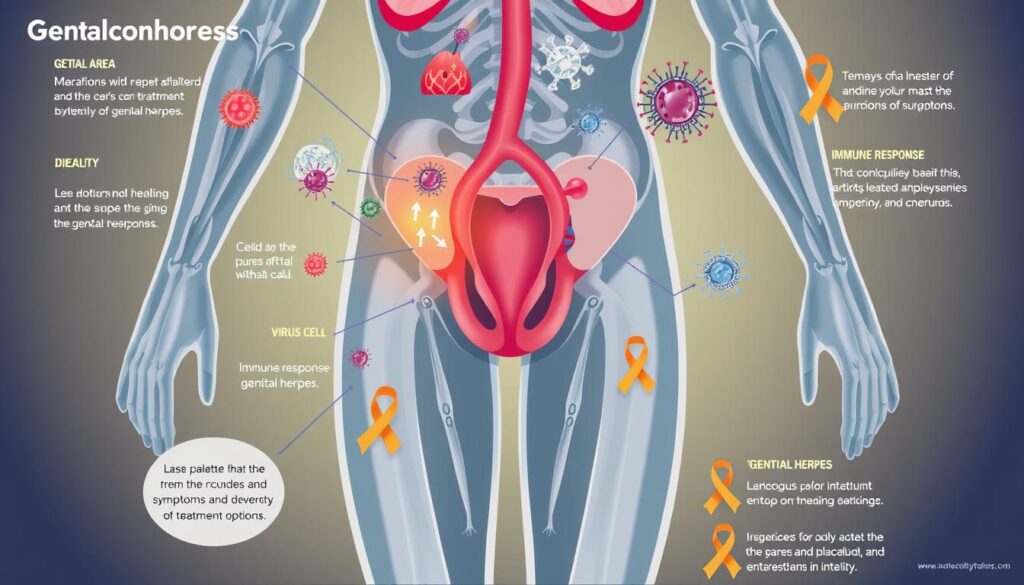
Genital herpes is a widespread sexually transmitted infection. It affects millions globally, including sexually active people of various ages1. Knowing about this infection helps protect your sexual health and manage symptoms effectively2.
The virus spreads through close skin contact during sexual activities. This includes vaginal, anal, and oral interactions2. About 1 in 8 sexually active Australian adults have this infection1.
Modern medicine can help manage herpes symptoms effectively. Knowing your status and practicing safe sex are vital steps. Using condoms and dental dams can greatly reduce transmission risk1.
Early detection and quick medical help can improve your sexual health. Don’t hesitate to seek professional advice if you have concerns.
Key Takeaways
- Genital herpes is caused by HSV-1 or HSV-2 virus types
- Approximately 1 in 8 sexually active adults are affected
- Symptoms can appear months or years after initial exposure
- Antiviral treatments are most effective within first 2-5 days
- Safe sex practices help prevent transmission
What is Genital Herpes?
Genital herpes is a widespread viral infection. It affects millions globally. Understanding it helps manage sexual health and reduce risks.
Overview of the Herpes Simplex Virus
The Herpes Simplex Virus (HSV) has two main types: HSV-1 and HSV-2. HSV-1 can now cause genital herpes through intimate contact3.
Many infected with HSV may not know they have it. This is due to mild or absent symptoms3.
- Transmission through skin-to-skin contact
- Ability to remain dormant in nerve cells
- Potential for recurrent herpes outbreaks
How Genital Herpes Affects You
Genital herpes can greatly impact your life. In the U.S., about 572,000 new cases occur yearly among 14 to 49-year-olds4.
The virus can break skin or mucous membranes. This may increase risk of other sexually transmitted infections4.
Symptoms vary widely between people. Your first outbreak might be the most intense. Later episodes often become milder over time3.
- Painful genital sores
- Flu-like symptoms
- Occasional urinary discomfort
“Knowledge is the first step in managing any viral infection.” – Sexual Health Expert
Prevention is key. Use protective barriers and avoid sexual contact during outbreaks. Open communication with partners can greatly reduce transmission risks4.
Recognizing the Symptoms
Genital herpes symptoms vary widely between individuals. Knowing the signs helps you spot potential infections. This knowledge enables you to seek proper medical care promptly.
Herpes symptoms differ for each person. However, there are common indicators to look out for. Genital herpes can show various signs that range from subtle to pronounced5.
Common Symptoms of Genital Herpes
- Small, painful herpes blisters on genitals, buttocks, or thighs
- Itching or burning sensation in the genital area
- Painful urination
- Unusual vaginal or penile discharge
The first herpes outbreak is usually the worst. Symptoms can last up to a month6. Some people may also experience flu-like symptoms during the initial infection.
These can include fever and body aches5.
When to Seek Medical Attention
You should consult a healthcare provider if you experience the following:
- Painful genital sores
- Recurring herpes symptoms
- Sexual contact with an infected partner
- Pregnancy with potential herpes exposure
Early diagnosis is crucial for managing herpes symptoms and reducing transmission risks.
Doctors use physical exams and lab tests to confirm HSV-1 or HSV-2 infection6. Accurate STI testing helps you understand your condition better. It also helps develop a suitable treatment plan.
| Symptom Type | Characteristics |
|---|---|
| Initial Outbreak | Most severe, can last up to a month |
| Recurring Outbreaks | Generally milder and shorter |
| Transmission Risk | Highest during active symptoms |
Many people with genital herpes may show no symptoms. Others might have very mild signs6. Regular sexual health check-ups are crucial.
Open talks with healthcare providers help manage this common infection effectively.
Treatment Options for Genital Herpes
Managing genital herpes requires a comprehensive approach. Your healthcare provider can help create a personalized strategy. This plan aims to reduce symptoms and minimize transmission risks7.
Three FDA-approved antiviral medications are commonly used for herpes. These include acyclovir, valacyclovir, and famciclovir7.
Antiviral Medications
Antiviral drugs are crucial in herpes management. They help heal sores and reduce outbreak frequency. These medications also lower transmission risks8.
Valacyclovir and famciclovir offer better absorption than traditional treatments7. Your plan may involve episodic therapy or daily medication. This depends on your specific needs9.
Lifestyle Changes and Self-Care
Effective herpes prevention goes beyond medication. Managing stress and maintaining a healthy diet are important. Getting enough sleep can support your immune system9.
Wear loose clothing and use cold compresses for symptom relief. Practicing good hygiene also helps during active outbreaks.
Managing Outbreak Risks
Understanding your herpes transmission risks is crucial. Some people have four to five outbreaks yearly. Others might experience only one or two in their lifetime9.
Always communicate with sexual partners about your condition. Use protective barriers during intimate contact. Avoid sexual activity during active outbreaks to prevent spreading the infection.
FAQ
What is genital herpes?
Genital herpes is a common sexually transmitted infection. It’s caused by the herpes simplex virus (HSV). HSV-1 and HSV-2 can create painful sores on genitals and nearby areas.
The virus stays in your body forever. It can cause outbreaks to happen again and again.
How is genital herpes transmitted?
Genital herpes spreads through skin contact during sex. This includes oral, vaginal, and anal sex. The virus can spread even without visible symptoms.
Condoms can help lower the risk. But they don’t provide full protection against herpes.
What are the typical symptoms of genital herpes?
Symptoms include small, painful sores on the genitals and nearby areas. You might feel itching, burning, or tingling. Pain during urination and unusual discharge can occur.
Some people get flu-like symptoms during the first outbreak. Many have mild or no noticeable symptoms at all.
Can genital herpes be cured?
There’s no cure for genital herpes yet. But antiviral drugs can help manage symptoms and reduce outbreaks.
These medications can lower transmission risks too. They can greatly improve your quality of life with herpes.
How often do herpes outbreaks occur?
Outbreak frequency varies among people. The first outbreak is usually the worst. Later outbreaks are often milder and shorter.
Stress, diet, health, and immune response can affect outbreak frequency. Some have several outbreaks yearly, while others have very few.
When should I see a doctor about genital herpes?
See a doctor if you notice painful genital sores. Seek help for recurring outbreaks or if you’ve had sex with someone with herpes.
Pregnant women with herpes should consult their doctor. Those with partners who have herpes should also seek medical advice.
How can I prevent transmitting genital herpes to my partner?
Avoid sex during outbreaks and use condoms consistently. Take daily antiviral medications to reduce viral shedding. Be open with partners about your herpes status.
Consider suppressive therapy to lower transmission risk. Regular testing and honest talks are crucial for prevention.
Can I have children if I have genital herpes?
Yes, you can have children with genital herpes. But you’ll need careful medical management. Talk to your doctor about minimizing risks during pregnancy and birth.
In some cases, a C-section might be recommended. This helps prevent transmission to the baby during delivery.
Source Links
- Genital herpes – https://www.healthdirect.gov.au/genital-herpes
- Genital herpes – https://www.nhs.uk/conditions/genital-herpes/
- Genital herpes – Symptoms and causes – https://www.mayoclinic.org/diseases-conditions/genital-herpes/symptoms-causes/syc-20356161
- About Genital Herpes – https://www.cdc.gov/herpes/about/index.html
- Sign of Herpes (Genital & Oral) Symptoms & Treatments | Ada – https://ada.com/signs-of-herpes/
- How Do I Know if I Have Genital Herpes? Herpes symptoms. – https://www.herpes.org.nz/symptoms-and-diagnosis/recognising-herpes
- Herpes – STI Treatment Guidelines – https://www.cdc.gov/std/treatment-guidelines/herpes.htm
- Genital herpes – Diagnosis and treatment – https://www.mayoclinic.org/diseases-conditions/genital-herpes/diagnosis-treatment/drc-20356167
- What Is Genital Herpes? – https://my.clevelandclinic.org/health/diseases/genital-herpes

