
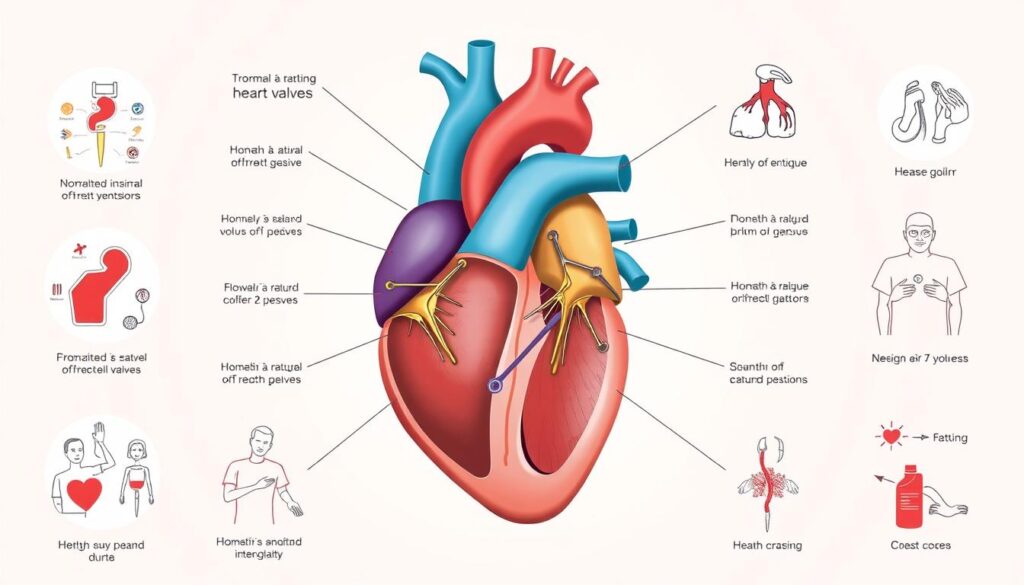
Heart valve disease affects your heart’s ability to pump blood effectively. Your heart’s valves maintain proper blood flow, but sometimes they develop problems. This can compromise your cardiac health1.
The disease can occur through valve regurgitation (leakage) or stenosis (narrowing). These issues can affect multiple heart valves at once1.
About 2.5% of Americans have heart valve problems. It’s a significant health concern, but understanding it can help you recognize risks2.
Heart valve disease has various causes. These include age-related changes, coronary artery disease, infections, and genetic factors1.
The mitral and aortic valves are most often affected by these complications1.
Key Takeaways
- Heart valve disease affects blood flow through the heart
- Two primary valve problems are regurgitation and stenosis
- Multiple heart valves can be impacted simultaneously
- Age and genetic factors contribute to valve disease risk
- Early detection is crucial for effective management
Overview of Heart Valve Disease and Its Impact on Health
Your heart is a complex organ with crucial parts that keep blood flowing smoothly. Heart valves play a vital role in your cardiovascular health. These small structures ensure blood moves correctly through your heart’s chambers3.
How Heart Valves Work in Your Body
The human heart contains four primary valves that regulate blood flow:
- Aortic valve
- Mitral valve
- Pulmonary valve
- Tricuspid valve
Types of Heart Valve Problems
Heart valve diseases can affect your cardiovascular system in several ways:
| Valve Condition | Description | Potential Impact |
|---|---|---|
| Valve Stenosis | Narrowing of valve opening | Restricted blood flow |
| Valve Regurgitation | Incomplete valve closure | Blood leakage backward |
| Valve Prolapse | Valve flaps stretching | Improper valve function |
Common Risk Factors and Causes
Knowing the risk factors for heart valve disease is important. Key contributors include:
- Advanced age3
- Infections like rheumatic fever3
- Previous heart attacks3
- High blood pressure3
- High cholesterol3
- Diabetes3
Congenital heart defects can also lead to valve problems. Some people are born with structural heart valve challenges3.
Early diagnosis and proactive management are key to maintaining heart health4.
“Your heart’s valves are intricate gatekeepers of cardiovascular wellness” – Cardiac Health Experts
Recognizing the Warning Signs and Symptoms
Heart valve disease often develops silently, catching people off guard. Knowing the symptoms is vital for early detection and treatment5. This condition affects up to 2.5% of Americans, making awareness crucial5.
The warning signs of heart valve problems can be subtle yet significant. Key indicators to watch for include:
- Chest pain or tightness
- Shortness of breath, especially during physical activity
- Heart murmurs detected during medical examinations
- Dizziness or fainting spells
- Unusual fatigue or weakness
Some heart valve issues take 10 to 20 years to fully develop. Paying attention to early warning signs is crucial5. Various heart valves can be affected, including aortic, mitral, pulmonary, and tricuspid5.
“Early detection can make a significant difference in managing heart valve disease,” says cardiovascular experts.
Risk factors include older age, certain health conditions, and lifestyle choices. The CDC suggests preventive measures to protect heart health5. These include maintaining a healthy diet, exercising regularly, and quitting smoking.
If you have persistent symptoms like heart palpitations or chest pain, see your doctor. Aortic valve disease can lead to serious complications if untreated6.
Heart Valve Disease Treatment Options
Heart valve disease treatment depends on your condition’s severity and type. Understanding your options is vital for managing your heart health effectively.
Medication Management Strategies
Medications play a key role in treating heart valve disease. Your doctor may prescribe anticoagulants to control symptoms and prevent complications.
Common medications include beta-blockers, digoxin, and calcium channel blockers. Diuretics manage blood pressure, while vasodilators reduce heart workload.
- Beta-blockers to regulate heart rate
- Digoxin for heart rhythm control
- Calcium channel blockers
- Diuretics to manage blood pressure
- Vasodilators to reduce heart workload
Surgical Interventions
Surgery becomes necessary when medications can’t manage your condition. Valve replacement surgery offers two main approaches.
- Mechanical valve replacement: An artificial valve made from strong materials replaces the damaged heart valve7.
- Biological valve replacement: Using valve tissue from cow, pig, or human heart donors7.
Minimally invasive procedures like transcatheter valve repair offer alternative treatment options. TAVR is particularly effective for patients with aortic valve stenosis8.
Recovery and Rehabilitation
Cardiac rehabilitation is crucial for your recovery. Your treatment plan will likely include lifestyle changes to improve heart health.
- Following a heart-healthy diet
- Engaging in regular exercise
- Maintaining a healthy weight
- Avoiding tobacco use
“Recovery statistics are very promising for patients who receive proper treatment”9.
Most patients recover in 4-8 weeks. Ongoing medical supervision ensures optimal heart health9.
Conclusion
Understanding heart valve disease is crucial for protecting your cardiovascular health. Modern medical advances offer hope and effective management strategies. Most heart valve problems can be successfully treated with the right approach10.
Early detection is key in valve disease management. Over 11.3% of people over 65 have moderate to severe heart valve disease11. Regular check-ups can help identify potential issues before they become critical.
Timely interventions, like aortic valve replacement, can improve quality of life12. Your lifestyle plays a vital role in heart health. Physical activity, diet, and managing high blood pressure can impact your risk10.
Work with healthcare professionals to develop a personalized care plan. This will address your unique needs and support long-term cardiovascular wellness. Stay informed about your heart health journey.
Knowledge empowers you to take control of your health. Understanding heart valve disease is essential. Embrace medical support, maintain a positive outlook, and prioritize your cardiovascular care.
FAQ
What is heart valve disease?
Heart valve disease affects how your heart valves work. It regulates blood flow through the heart’s chambers. Problems can include narrowing, leaking, bulging, or blockage in one or more valves.
What are the main symptoms of heart valve disease?
Common symptoms include shortness of breath, fatigue, and chest pain. You might also feel dizzy, faint, or have an irregular heartbeat. Swelling in ankles and feet can occur too.
Symptoms may not show for years. Regular check-ups are crucial for early detection.
What causes heart valve disease?
Risk factors include age, infections, heart attacks, and high blood pressure. High cholesterol and diabetes also play a role. Some people are born with valve defects.
Others develop valve problems later due to various health conditions.
How is heart valve disease diagnosed?
Diagnosis involves a thorough medical evaluation. Doctors listen for heart murmurs with a stethoscope. They perform echocardiograms to see valve function.
Other cardiac tests assess your heart’s health and valve performance.
What treatment options are available for heart valve disease?
Treatment depends on the severity and type of valve problem. Options include medications to manage symptoms. Valve repair surgery and replacement are also possible.
Minimally invasive procedures like balloon valvuloplasty can help. Your cardiologist will recommend the best approach for you.
Can heart valve disease be prevented?
You can reduce your risk with a healthy lifestyle. Manage chronic conditions like diabetes and high blood pressure. Treat infections promptly.
Regular cardiac check-ups are important, especially if you have known risk factors.
What is the recovery process like after heart valve surgery?
Recovery typically takes 4-8 weeks and often includes cardiac rehabilitation. You’ll need regular follow-ups with your cardiologist. They’ll monitor your heart function and manage medications.
Most patients can return to normal activities with proper medical guidance.
Are there different types of heart valve replacements?
Yes, there are two main types: biological and mechanical valves. Biological valves come from animal or human donors.
Each type has pros and cons. The best option depends on your age, health, and specific needs.
What complications can arise from untreated heart valve disease?
Potential complications include heart failure, stroke, and blood clots. Abnormal heart rhythms can also occur. These serious conditions highlight the importance of early detection.
Proper diagnosis and treatment of heart valve problems are crucial.
Source Links
- Heart Valve Diseases – https://www.hopkinsmedicine.org/health/conditions-and-diseases/heart-valve-diseases
- Understanding Heart Valve Disease | Knight Cardiovascular Institute – https://www.ohsu.edu/knight-cardiovascular-institute/understanding-heart-valve-disease
- Heart valve disease – Symptoms and causes – https://www.mayoclinic.org/diseases-conditions/heart-valve-disease/symptoms-causes/syc-20353727
- What Is Heart Valve Disease? – https://my.clevelandclinic.org/health/diseases/17639-what-you-need-to-know-heart-valve-disease
- Early Signs of Heart Valve Problems – https://www.healthline.com/health/heart/early-signs-of-heart-valve-problems
- Aortic valve disease – Symptoms and causes – https://www.mayoclinic.org/diseases-conditions/aortic-valve-disease/symptoms-causes/syc-20355117
- Heart valve disease – Diagnosis and treatment – https://www.mayoclinic.org/diseases-conditions/heart-valve-disease/diagnosis-treatment/drc-20353732
- Heart Valve Disease Treatments and Surgical Procedures – https://www.beaumont.org/treatments/valve-disease-treatment
- Understanding Your Heart Valve Treatment Options – https://www.heart.org/en/health-topics/heart-valve-problems-and-disease/understanding-your-heart-valve-treatment-options
- Valvular Heart Disease | Heart Valve Disease | MedlinePlus – https://medlineplus.gov/heartvalvediseases.html
- Creating a better journey of care for patients with heart valve disease – https://pmc.ncbi.nlm.nih.gov/articles/PMC8689964/
- Valvular Heart Disease: Review and Update – https://www.aafp.org/pubs/afp/issues/2001/0601/p2201.html

