
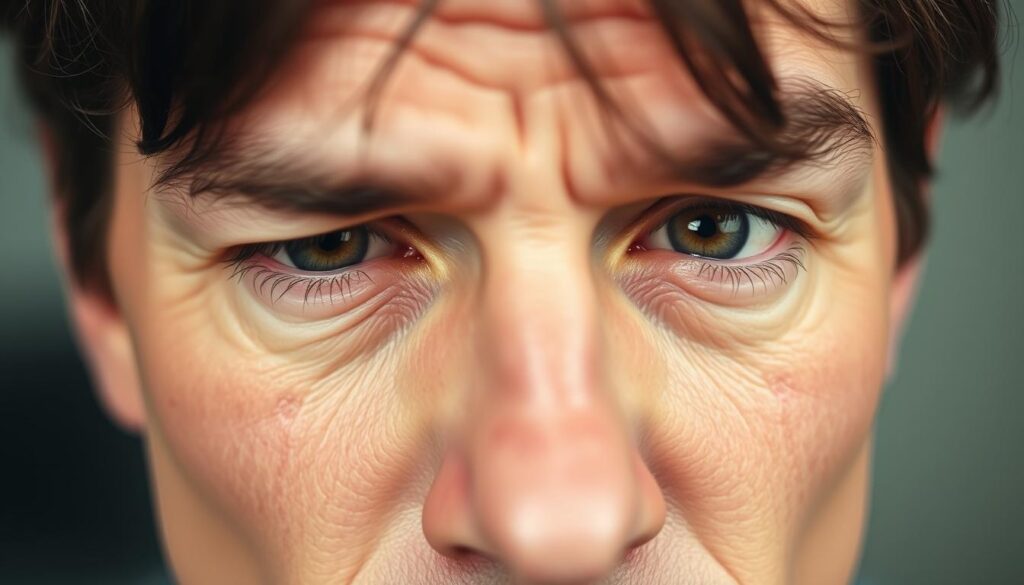
Hemifacial spasm is a tricky nerve problem that affects one side of the face. It causes sudden, uncontrolled muscle movements that can be upsetting1. Learning about this condition can help you handle its signs better.
This issue usually starts around age 44, mostly in women1. In fact, women get it almost twice as often as men2. Asian people seem to have it more frequently too2.
The twitching often begins near the eye and spreads across the face1. Various things can cause these movements. These include pinched nerves, odd blood vessels, or other brain problems.
Key Takeaways
- Hemifacial spasm is a neurological condition causing involuntary facial muscle contractions
- Most common in women between 40-79 years old
- Symptoms typically begin near the eye and progress across the face
- Treatment options include Botox injections and surgical interventions
- Affects approximately 8 in 100,000 people in the United States
What is Hemifacial Spasm and Its Common Symptoms
Hemifacial spasm is a nerve disorder causing one-sided facial twitches. It affects both physical and emotional well-being. The condition presents unique challenges for those experiencing its symptoms.
Early signs are key to recognizing this condition’s impact. It typically starts with subtle muscle movements. These twitches become more noticeable over time3.
Early Signs and Facial Muscle Involvement
Minor eye muscle twitching often marks the beginning. This can lead to unexpected eye closures. The symptoms usually follow a specific pattern:
- Begins with eyelid muscle spasms
- Spreads to muscles around the mouth
- Can eventually involve entire facial muscles on one side
Women, especially in middle age, are more prone to this condition4. Some patients may wait up to 8 years before seeking treatment4.
Progressive Nature of Facial Twitching
Facial twitches in hemifacial spasm can be unpredictable. Most cases affect one side of the face. Rare instances involve both sides3.
The spasms are usually painless but can be intense. Controlling these twitches can be challenging for patients.
Impact on Daily Life and Well-being
Hemifacial spasm can cause emotional stress. Uncontrollable muscle movements may lead to social anxiety. They can also interfere with daily activities.
Stress and fatigue often worsen symptoms. Managing the condition is crucial for maintaining life quality.
Understanding your symptoms is the first step toward effective management of hemifacial spasm.
Some symptoms may resemble Bell’s palsy or Synkinesis. Proper diagnosis is key to getting the right treatment4.
Primary Causes and Risk Factors of Hemifacial Spasm
Hemifacial spasm is a rare neurological movement disorder. It stems from specific conditions that impact your facial nerve5. Understanding these causes can help you better grasp the disorder.
Nerve compression is the most critical factor in this facial nerve disorder. It occurs when a blood vessel presses against the facial nerve6. This compression can trigger involuntary muscle spasms that worsen over time5.
Key Risk Factors
- Age: More common in middle-aged individuals
- Gender: Twice as likely to affect women5
- Ethnicity: Higher prevalence among Asian populations5
Additional causes of hemifacial spasm include:
- Facial nerve injury
- Neurological tumors
- Bell’s Palsy
- Seventh cranial nerve compression6
Stress and fatigue can potentially trigger or exacerbate facial muscle twitches.
Botox treatment offers short-term relief for hemifacial spasm. However, understanding the underlying causes is crucial for managing the condition5. A neurological specialist can help identify your specific risk factors.
They can also develop an appropriate treatment plan tailored to your needs. This approach ensures comprehensive care for those affected by hemifacial spasm.
| Risk Category | Impact on Hemifacial Spasm |
|---|---|
| Nerve Compression | Primary Trigger |
| Age | Increased Susceptibility |
| Gender | Higher Risk for Women |
Conclusion
Living with hemifacial spasm is tough, but treatment options offer hope. Modern medical interventions can effectively control facial muscle twitching. Botox treatment often leads to significant improvement for most patients.
Hemifacial spasm affects about one in ten thousand people. Women and Asian individuals may have a higher risk. It typically starts between ages 45-60, so seek medical advice for persistent facial twitching.
Discussing treatment options with your doctor is crucial. Advanced medical research suggests microvascular decompression surgery for severe cases. However, it has potential risks. Botox injections remain a primary treatment, usually providing relief for 4-6 months7.
Managing hemifacial spasm is a personal journey. Work closely with medical professionals for the best results. Your proactive approach can greatly improve your quality of life.
Stay informed and maintain open communication with your healthcare team. Explore all available treatments to effectively manage this neurological condition.
FAQ
What exactly is hemifacial spasm?
Hemifacial spasm causes uncontrolled muscle movements on one side of your face. It often starts with eyelid twitching. The condition can spread to other facial muscles, affecting daily activities.
Who is most likely to develop hemifacial spasm?
Middle-aged or older women, especially of Asian descent, are more prone to this condition. Stress, anxiety, and fatigue can make symptoms worse.
What causes hemifacial spasm?
Usually, a blood vessel pressing on the facial nerve triggers hemifacial spasm. Other causes include facial nerve injury or tumors. Sometimes, the reason remains unknown.
The condition results from abnormal nerve signals causing involuntary muscle contractions.
What are the typical symptoms of hemifacial spasm?
Symptoms begin with occasional eyelid twitching and may lead to forced eye closure. Over time, spasms can affect lower face muscles, pulling the mouth sideways.
These movements usually occur on one side and are painless. As the condition progresses, controlling these spasms becomes harder.
How can hemifacial spasm be treated?
While there’s no cure, several treatments can manage symptoms effectively. Botulinum toxin injections offer significant relief and are commonly used.
For severe cases, doctors might recommend microvascular decompression surgery. Stress reduction and lifestyle changes also help manage the condition.
Can hemifacial spasm affect both sides of the face?
Hemifacial spasm typically affects only one side of the face. Bilateral cases are rare. Even then, spasms don’t happen on both sides at once.
How does hemifacial spasm impact daily life?
This condition can greatly affect your quality of life. Uncontrolled facial movements may cause embarrassment and interfere with work and driving.
Stress and anxiety can worsen symptoms. This creates a cycle of emotional and physical discomfort.
Are there any long-term complications of hemifacial spasm?
Untreated hemifacial spasm can lead to ongoing facial muscle fatigue and social anxiety. It may also cause psychological stress.
With proper treatment, most people can control symptoms well. This helps maintain a good quality of life.
Source Links
- Facial twitch, Hemifacial Spasm – https://mayfieldclinic.com/pe-hfs.htm
- What is Hemifacial Spasm? – https://www.webmd.com/brain/what-is-hemifacial-spasm
- Hemifacial Spasm | Neurological Surgery – https://neurosurgery.weillcornell.org/condition/hemifacial-spasm
- Hemifacial Spasm Symptoms | Expert Surgeon – https://www.aaroncohen-gadol.com/en/patients/hemifacial-spasm/types/symptoms
- Hemifacial Spasm Causes, Symptoms, and Treatment | UPMC Neurosurgery – https://www.upmc.com/services/neurosurgery/brain/conditions/cranial-nerve-disorders/conditions/hemifacial-spasm
- Hemifacial Spasm | Causes and Symptoms – https://nashvillehemifacialspasm.com/hemifacial-spasm-causes-and-symptoms/
- Hemifacial Spasm – https://www.bcm.edu/healthcare/specialties/neurology/parkinsons-disease-and-movement-disorders/hemifacial-spasm

