
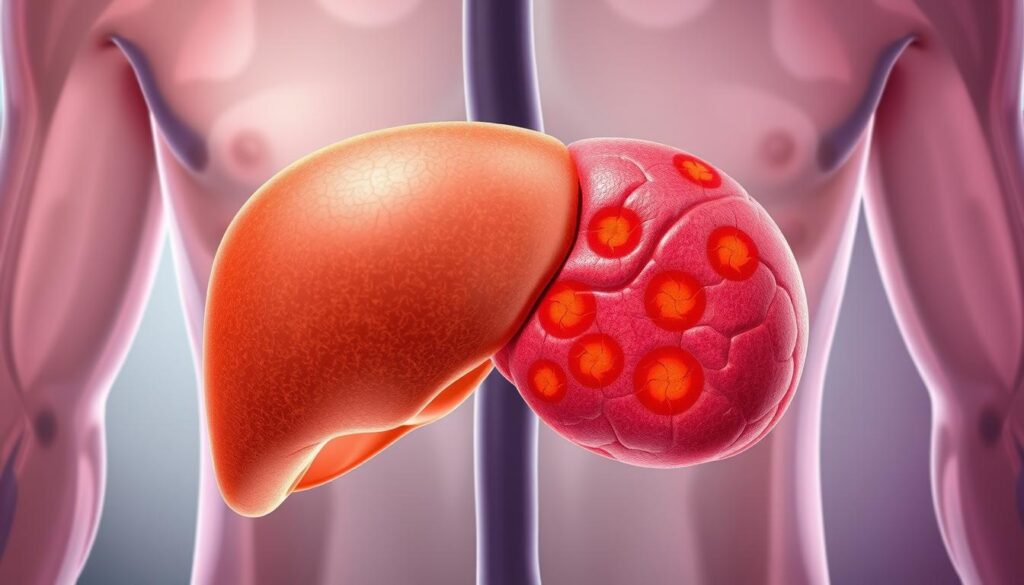
Hepatocellular carcinoma (HCC) is a serious liver cancer affecting thousands of Americans yearly. It grows in the liver’s main cells and can severely impact health1. Knowing about HCC could help with early detection and better treatment.
Liver cancer is one of the fastest-growing cancers in the U.S. It causes over 12,000 deaths each year1. Spotting risk factors and warning signs can greatly improve treatment results2.
People with chronic liver diseases have a higher risk of getting HCC2. This is especially true for those with hepatitis B or C. Your health history, habits, and regular check-ups are key for early action.
Key Takeaways
- Hepatocellular carcinoma is a serious liver cancer affecting thousands annually
- Chronic liver diseases significantly increase HCC risk
- Early detection is crucial for successful treatment
- Regular medical check-ups can help monitor liver health
- Understanding risk factors can guide preventive strategies
What is Hepatocellular Carcinoma: Overview and Prevalence
Hepatocellular carcinoma (HCC) is a major form of primary liver cancer. It grows in the liver’s main cells, called hepatocytes. HCC poses serious health risks worldwide3.
Understanding Primary Liver Cancer
HCC ranks as the fifth most common cancer globally. It makes up over 80% of primary liver cancer cases3. Viral hepatitis infections significantly increase your risk of developing HCC.
Hepatitis B and C play key roles in HCC development. These infections cause a large portion of HCC cases worldwide3.
Key Risk Factors and Causes
- Chronic viral hepatitis (hepatitis B and C)
- Cirrhosis
- Excessive alcohol consumption
- Obesity
- Diabetes
Global patterns show men are more prone to HCC. The male to female ratio is 2.8:13. Viral hepatitis remains a main cause of HCC.
HBV and HCV infections account for 75.7% of new global HCC cases3.
Impact on Liver Function
HCC can severely harm your liver’s ability to work well. The average five-year survival rate is only 19.6%. In advanced stages, it drops to 2.5%3.
Treatments like sorafenib offer hope for patients with this serious condition. These options help manage HCC and improve outcomes.
“Understanding HCC is crucial for early detection and potential intervention” – Hepatology Research Center
| Risk Factor | Global Impact |
|---|---|
| Chronic HBV Infection | 257 million people affected |
| Chronic HCV Infection | 71 million people affected |
| Liver Transplantation Potential | Critical for advanced cases |
Early Warning Signs and Symptoms of Liver Cancer
Liver cancer can be hard to spot early on. About 34,500 people in the U.S. get this diagnosis each year. Most cases occur in those with existing liver problems.
Knowing the early signs is vital for quick action. Look out for these warning signals:
- Unexplained weight loss
- Abdominal discomfort or swelling
- Persistent fatigue
- Jaundice (yellowing of skin and eyes)
- Nausea and vomiting
Regular screening is key for early detection. High-risk people should get AFP tests and imaging studies. Ultrasound screenings can find liver cancer before symptoms show up.
“Early detection can significantly improve treatment outcomes and survival rates” – Liver Cancer Research Foundation
Your risk goes up with certain factors. These include chronic hepatitis, cirrhosis, diabetes, and heavy drinking. If you’re high-risk, talk to your doctor about ablation therapy options.
Advanced tests like CT scans, MRI, and bone scans help stage liver cancer. They also guide treatment plans.
Remember: Regular check-ups and knowing your risk factors are crucial for early detection.45
Treatment Options and Management Strategies
Understanding HCC treatment options is vital for effective management. The approach depends on cancer stage, liver function, and overall health. These factors guide the choice of treatment.
Surgical Interventions and Liver Transplantation
Liver transplantation is a powerful treatment for eligible patients. It can remove the entire diseased liver. This offers a comprehensive solution for complex liver cancer cases6.
- Tumor resection for localized cancers
- Partial hepatectomy to remove specific tumor segments
- Total liver transplantation for advanced cases
Non-surgical Treatment Approaches
Several alternative treatments exist for patients unsuitable for surgery. Ablation therapy is a critical non-surgical intervention. It targets tumors through precise techniques7.
| Treatment Method | Description | Effectiveness |
|---|---|---|
| Radiofrequency Ablation | Heat-based tumor destruction | High for small tumors |
| Cryoablation | Cold-based tumor elimination | Suitable for specific cases |
| Microwave Ablation | Electromagnetic wave treatment | Emerging technique |
Latest Therapeutic Advances
Modern HCC treatment includes targeted therapies like sorafenib. It offers hope for patients with advanced stages. Immunotherapy is an exciting frontier in liver cancer management6.
Early detection and personalized treatment remain key to improving patient outcomes.
Clinical trials explore innovative approaches for liver cancer. They provide patients with potentially groundbreaking treatment options7.
Conclusion
Hepatocellular carcinoma (HCC) remains a critical global health challenge8. Early detection and personalized treatment strategies are crucial. Advanced medical research highlights key developments in managing this condition9.
Surveillance is vital for managing liver cancer risk. Regular screening can dramatically improve outcomes for those with cirrhosis or liver conditions8. Some high-risk trials show promising relative risk reduction9.
Knowing your personal risk factors is essential. This knowledge empowers you to make informed health decisions. HCC is three times more common in males8.
Treatment options are evolving, offering hope for patients at various stages. Medical science is making significant strides in liver cancer management. Your healthcare team is your strongest ally in navigating HCC complexities.
FAQ
What is Hepatocellular Carcinoma (HCC)?
HCC is the most common type of primary liver cancer. It starts in liver cells called hepatocytes. HCC often develops in people with chronic liver diseases, especially cirrhosis from hepatitis B or C. It’s a serious condition causing over 12,000 deaths yearly in the U.S.
What are the main risk factors for developing HCC?
The main risks include chronic liver diseases, especially cirrhosis from hepatitis B or C. Excessive alcohol use, fatty liver disease, and long-term liver damage also contribute. Other factors are diabetes, obesity, and exposure to certain toxins.
Regular medical screening is crucial if you have these risk factors.
What are the early symptoms of Hepatocellular Carcinoma?
Early symptoms can be subtle. They may include abdominal discomfort, unexplained weight loss, and jaundice. Other signs are gastrointestinal bleeding, nausea, persistent itching, and fever.
Many cases are found during routine screening for high-risk individuals. That’s why regular check-ups are so important.
How is Hepatocellular Carcinoma diagnosed?
Diagnosis involves multiple approaches. These include alpha-fetoprotein (AFP) testing, imaging studies like CT scans and MRIs, and liver function tests. High AFP levels can indicate liver cancer.
Your doctor may recommend comprehensive screening if you’re in a high-risk group.
What treatment options are available for HCC?
Treatment depends on the cancer’s stage, your liver function, and overall health. Options include surgical interventions like tumor resection and liver transplantation. Non-surgical approaches such as ablation techniques and chemoembolization are also used.
Other treatments include radiation therapy, targeted drug therapies like sorafenib, and new immunotherapy treatments.
Can Hepatocellular Carcinoma be prevented?
You can’t completely prevent HCC, but you can lower your risk. Get vaccinated against hepatitis B and avoid excessive alcohol use. Manage diabetes, maintain a healthy weight, and get regular screenings if you’re high-risk.
What is the prognosis for Hepatocellular Carcinoma?
The outlook varies based on early detection, cancer stage, and overall health. Early-stage HCC has a more positive outlook with potentially good treatment outcomes. Advanced stages are tougher to treat.
Ongoing research and new treatments continue to improve survival rates and quality of life.
Are there clinical trials available for HCC treatment?
Yes, many clinical trials are exploring new HCC treatments. These trials offer access to innovative therapies and cutting-edge research. If standard treatments haven’t worked, ask your oncologist about clinical trial options.
Source Links
- Liver Cancer (Hepatocellular Carcinoma) – https://www.hopkinsmedicine.org/health/conditions-and-diseases/liver-cancer-hepatocellular-carcinoma
- Hepatocellular carcinoma – Overview – Mayo Clinic – https://www.mayoclinic.org/diseases-conditions/hepatocellular-carcinoma/cdc-20354552
- Hepatocellular carcinoma (HCC): Epidemiology, etiology and molecular classification – https://pmc.ncbi.nlm.nih.gov/articles/PMC8796122/
- Liver cancer – Symptoms and causes – https://www.mayoclinic.org/diseases-conditions/liver-cancer/symptoms-causes/syc-20353659
- Liver Cancer Warning Signs – https://www.wattanosothcancerhospital.com/en/all-about-cancer/warning-signs-must-know-for-liver-cancer
- Current Management of Hepatocellular Carcinoma – https://pmc.ncbi.nlm.nih.gov/articles/PMC4014047/
- Approach Considerations, Nonoperative Therapy, Surgical Therapy – https://emedicine.medscape.com/article/197319-treatment
- Hepatocellular Carcinoma – StatPearls – NCBI Bookshelf – https://www.ncbi.nlm.nih.gov/books/NBK559177/
- CONCLUSIONS – Screening for Hepatocellular Cancer in Chronic Liver Disease: A Systematic Review – https://www.ncbi.nlm.nih.gov/books/NBK222191/

