
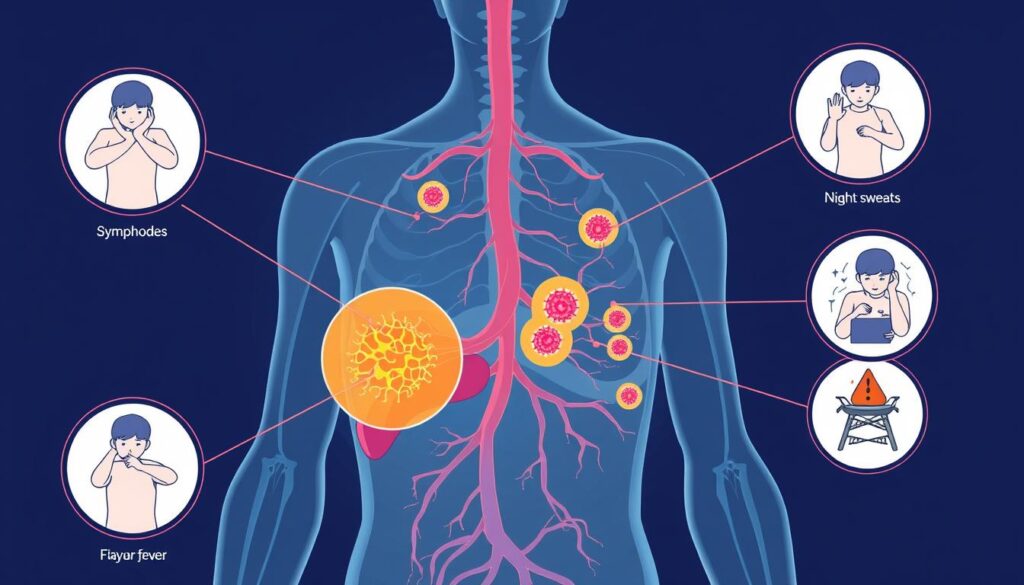
Hodgkin lymphoma is a rare cancer that attacks the body’s immune system. It targets the lymphatic system, disrupting our natural defenses1. Thanks to modern medicine, treatment outcomes have greatly improved for patients2.
This unique disease mainly affects young adults and older individuals. Surprisingly, it impacts about 3 in 100,000 people each year1. Knowing the early signs and risk factors can make a big difference in your health journey2.
Hodgkin lymphoma starts with changes in disease-fighting lymphocytes. These changes create abnormal cells that disrupt normal body functions2. The type of Hodgkin lymphoma depends on these cells’ features and behavior2.
Key Takeaways
- Hodgkin lymphoma is a rare cancer affecting the lymphatic system
- Most common in people in their 20s, 30s, and over 65
- Early detection and understanding can improve treatment outcomes
- Multiple treatment options are available
- Risk factors include family history, gender, and viral infections
What is Hodgkin Lymphoma: Understanding the Basics
Hodgkin lymphoma is a blood cancer affecting the lymphatic system. It has unique cell features and specific markers. This cancer impacts health in distinct ways3.
The Role of Reed-Sternberg Cells
Reed-Sternberg cells are key in Hodgkin lymphoma. They’re larger than normal lymphocytes with unusual traits. These cells grow fast and live longer4.
Types of Hodgkin Lymphoma
Two main types of Hodgkin lymphoma exist. Each has its own features:
- Classical Hodgkin lymphoma: Represents approximately 95% of diagnoses3
- Nodular lymphocyte-predominant Hodgkin lymphoma: Accounts for roughly 5% of cases3
Classical Hodgkin lymphoma has several subtypes:
- Nodular Sclerosing: Most common, representing 60-80% of cases3
- Mixed Cellularity: Comprises 25-30% of diagnoses3
- Lymphocyte-rich and lymphocyte-depleted subtypes
Risk Factors and Causes
Certain groups face higher risks of Hodgkin lymphoma. Age and other factors play a role:
- Most frequently diagnosed among individuals aged 20-343
- Slightly more prevalent in males5
- Risk increases with past Epstein-Barr virus infections5
- Family history can play a significant role5
“Knowledge about Hodgkin lymphoma empowers patients and healthcare providers to recognize and address this complex condition effectively.”
The exact cause of Hodgkin lymphoma remains unknown. Genetic changes and immune system issues likely play a role.
About 8,000 to 9,000 people get diagnosed yearly in the US3.
Common Signs and Symptoms to Watch For
Spotting Hodgkin lymphoma early can be tricky. Its symptoms often look like less serious conditions. Knowing key warning signs helps you decide when to see a doctor6.
Swollen lymph nodes are the main sign of Hodgkin lymphoma. You might see painless swelling in specific areas like:
- Neck
- Armpits
- Groin
- Upper chest
- Abdomen
Key symptoms can point to possible Hodgkin lymphoma6:
- Persistent fatigue that doesn’t improve with rest
- Intermittent fever and chills
- Unexplained weight loss
- Drenching night sweats
- Itchy skin or unexplained rashes
“If a swollen lymph node continues to grow or does not resolve within two weeks, seek medical evaluation” – Medical Experts
Other signs may include coughing, chest pain, or trouble breathing. These happen if chest lymph nodes are affected7.
Some patients feel pain in lymph nodes after drinking alcohol. Others feel full below the ribs due to an enlarged spleen or liver6.
| Symptom Category | Potential Indicators |
|---|---|
| Lymphatic System | Painless swollen lymph nodes |
| Constitutional | Fever, night sweats, weight loss |
| Skin | Itchy skin, rashes |
| Respiratory | Cough, shortness of breath |
These symptoms can match many other conditions. They might suggest Hodgkin lymphoma, but don’t guarantee cancer. Always check with a doctor for proper diagnosis7.
Treatment Options and Management Strategies
Hodgkin lymphoma treatment requires a tailored approach. Your medical team will create a plan based on your condition. They’ll consider various advanced therapeutic options8.
Chemotherapy and Radiation Approaches
Chemotherapy is a key treatment for Hodgkin lymphoma. Strong medicines target and eliminate cancer cells through veins or pills8.
Radiation therapy works with chemotherapy. It uses powerful energy beams to destroy cancer cells precisely9.
- Chemotherapy can be used in various stages of treatment
- Radiation often targets specific lymph node regions
- Combined approaches maximize treatment effectiveness
Stem Cell Transplantation
Stem cell transplantation is crucial when standard treatments fail. It involves placing healthy bone marrow stem cells into your body. This method helps if lymphoma returns or resists initial treatments8.
“Treatment is highly personalized and aims to provide the best possible outcome for each patient.” – Cancer Research Specialists
Managing Side Effects
Treatment can bring tough challenges. You might feel tired, get infections easily, or have trouble breathing9. Your medical team will help manage these symptoms effectively.
| Treatment Type | Potential Side Effects | Management Strategies |
|---|---|---|
| Chemotherapy | Fatigue, Infection Risk | Rest, Nutrition, Immune Support |
| Radiation | Skin Sensitivity | Protective Skincare, Monitoring |
Most Hodgkin lymphoma patients have great outcomes with modern treatments9. Regular check-ups will track your recovery and address any concerns.
Conclusion
Facing Hodgkin lymphoma is tough, but knowledge brings comfort. Medical advances have made it highly treatable, offering real hope10. About 80% of patients experience successful treatment outcomes10.
Ongoing check-ups are vital for monitoring health and spotting potential recurrence. Modern treatments aim to boost your quality of life. For patients aged 20-34, the five-year survival rate reaches 85.7%11.
Understanding your lymphoma type and working with your healthcare team is crucial. Research keeps improving treatments and reducing long-term side effects. Your journey depends on various factors, but hope remains strong.
Stay informed, attend regular check-ups, and maintain a positive outlook. With these steps, you can manage this condition effectively. Look forward to a fulfilling future ahead.
FAQ
What is Hodgkin Lymphoma?
Hodgkin Lymphoma is a blood cancer affecting the lymphatic system. It’s marked by Reed-Sternberg cells and impacts the immune system. This cancer causes abnormal lymphocyte growth and can spread to other organs.
What are the main symptoms of Hodgkin Lymphoma?
Key signs include painless swelling of lymph nodes in the neck, armpits, or groin. Patients often experience fatigue, fever, chills, and unexplained weight loss.
Night sweats and itchy skin are also common symptoms. Coughing, chest pains, or breathing issues may occur if chest lymph nodes are affected.
Who is at highest risk for developing Hodgkin Lymphoma?
Risk factors include being 20-39 or over 65 years old. Men and those with a family history face higher risks.
Previous Epstein-Barr virus or HIV infections also increase the likelihood. The exact cause remains unknown, involving complex DNA changes in lymphocytes.
What are the main types of Hodgkin Lymphoma?
There are two primary types: classical and nodular lymphocyte-predominant Hodgkin Lymphoma. Classical accounts for 95% of cases.
Classical Hodgkin Lymphoma has four subtypes: nodular sclerosing, mixed cellularity, lymphocyte-rich, and lymphocyte-depleted.
How is Hodgkin Lymphoma treated?
Treatment depends on the disease’s type, stage, and individual patient factors. Common approaches include chemotherapy, radiation therapy, and immunotherapy.
For recurring or resistant cases, high-dose chemotherapy with stem cell transplantation might be recommended.
What is the prognosis for Hodgkin Lymphoma?
Hodgkin Lymphoma is highly curable, even in advanced stages. Early diagnosis and treatment significantly improve outcomes.
Many patients can expect a good quality of life after treatment. Long-term follow-up is crucial to monitor for potential complications.
What side effects can I expect during treatment?
Common side effects include fatigue, increased infection risk, dry mouth, and eating difficulties. Long-term complications may involve infertility, heart disease, and lung problems.
Your medical team will work to manage these side effects. They’ll aim to minimize the impact on your quality of life.
How long will I need follow-up care?
Regular follow-ups are essential for years after treatment. These check-ups monitor for cancer recurrence and manage potential late treatment effects.
The frequency and duration of follow-up care depend on your specific case. Your treatment history will also influence the follow-up plan.
Source Links
- Hodgkin Lymphoma: Symptoms, Diagnosis, Causes & Treatment – https://my.clevelandclinic.org/health/diseases/6206-hodgkin-lymphoma
- Hodgkin lymphoma (Hodgkin disease) – Symptoms and causes – https://www.mayoclinic.org/diseases-conditions/hodgkins-lymphoma/symptoms-causes/syc-20352646
- Hodgkin Lymphoma – https://www.mdanderson.org/cancer-types/hodgkin-lymphoma.html
- Hodgkin Lymphoma: The Basics | OncoLink – https://www.oncolink.org/cancers/lymphomas/hodgkin-lymphoma-hodgkin-s-disease/hodgkin-lymphoma-the-basics
- Hodgkin Lymphoma | Hodgkin Disease | Lymphoma | MedlinePlus – https://medlineplus.gov/hodgkinlymphoma.html
- Hodgkin Lymphoma Symptoms – https://www.mdanderson.org/cancer-types/hodgkin-lymphoma/hodgkin-lymphoma-symptoms.html
- Hodgkin Lymphoma in Children and Teens – https://together.stjude.org/en-us/conditions/cancers/hodgkin-lymphoma.html
- Hodgkin lymphoma (Hodgkin disease) – Diagnosis and treatment – https://www.mayoclinic.org/diseases-conditions/hodgkins-lymphoma/diagnosis-treatment/drc-20352650
- Hodgkin lymphoma – https://www.nhs.uk/conditions/hodgkin-lymphoma/treatment/
- Hodgkin Lymphoma – PubMed – https://pubmed.ncbi.nlm.nih.gov/29763144/
- Lymphoma: Diagnosis and Treatment – https://www.aafp.org/pubs/afp/issues/2020/0101/p34.html

