
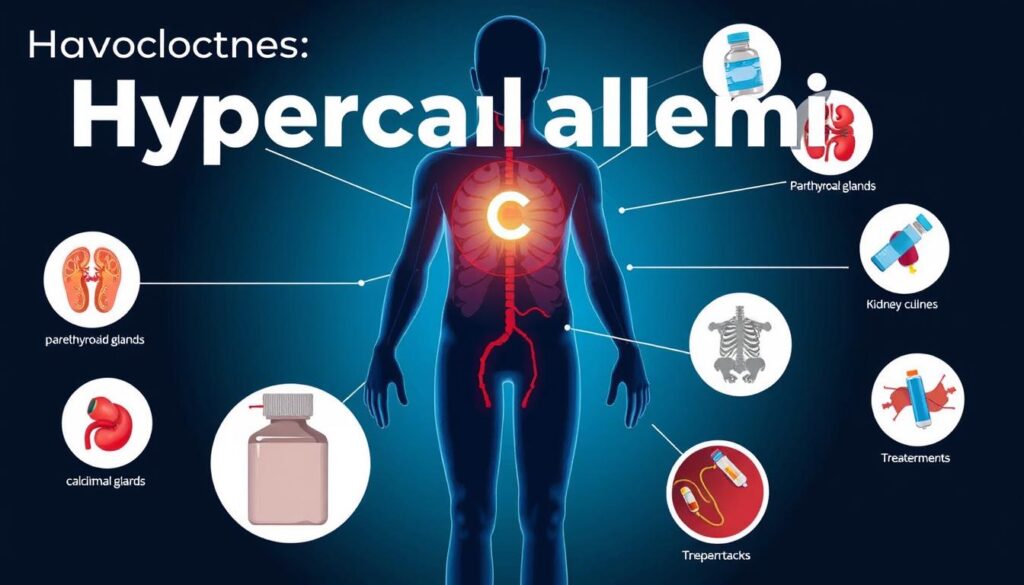
Hypercalcemia disrupts your body’s calcium balance. It affects 1%-2% of people worldwide, with higher rates in women over 501. High calcium levels can interfere with crucial bodily functions.
Primary hyperparathyroidism and cancer cause about 90% of hypercalcemia cases12. Recognizing these imbalances helps identify risks and seek medical help. Calcium balance is vital for bone health, muscles, and nerves.
Knowing hypercalcemia’s causes empowers you to manage your health. Early detection can make a big difference in treatment outcomes. Understanding the underlying mechanisms helps in prevention.
Key Takeaways
- Hypercalcemia affects 1%-2% of the global population
- Women over 50 are more susceptible to this condition
- Primary hyperparathyroidism and cancer are leading causes
- Calcium plays a vital role in multiple bodily functions
- Early detection is crucial for effective management
What Is Hypercalcemia and Why It Matters?
Hypercalcemia occurs when blood calcium levels rise too high. This condition can affect your overall health in many ways3.
High calcium levels can lead to serious health issues. Calcium is vital for your body, but too much can cause problems4.
Understanding Calcium Levels
Normal blood calcium ranges from 8 to 10 mg per deciliter. Hypercalcemia has different levels of severity:
- Mild hypercalcemia: 10.5 to 12 mg per dL3
- Moderate hypercalcemia: 12 to 14 mg per dL
- Severe hypercalcemia: Above 14 mg per dL (potentially life-threatening)3
How Hypercalcemia Affects Your Body
Hypercalcemia can cause various health problems throughout your body. Women over 50 are more likely to develop high calcium levels4.
| Body System | Potential Complications |
|---|---|
| Digestive System | Nausea, poor appetite, constipation4 |
| Kidney Function | Calcium deposits, kidney stones, nephrocalcinosis4 |
| Psychological Health | Depression, concentration difficulties4 |
The main causes of hypercalcemia include primary hyperparathyroidism and certain cancers. Lung and breast cancer are common culprits3.
Knowing these factors can help you manage your health better.
Regular blood tests can catch hypercalcemia early. This helps prevent it from becoming a major health problem4.
Common Causes of Hypercalcemia
Knowing what triggers hypercalcemia is key for managing it well. Several factors can upset your body’s calcium balance. These impact parathyroid disorders and overall health5.
Hyperparathyroidism: A Primary Culprit
Primary hyperparathyroidism is a major cause of calcium imbalance. It’s behind about 90% of hypercalcemia cases, along with cancer5.
Overactive parathyroid glands make too much hormone. This throws off calcium regulation6.
- Increased or high-normal intact PTH levels
- Potential impact on bone diseases
- Possible genetic predisposition
Cancer-Related Calcium Disruption
Some cancers can cause hypercalcemia by releasing calcium-raising substances. Breast cancer, lung cancer, and multiple myeloma often disrupt calcium balance6.
Additional Contributing Conditions
Other factors can also affect calcium levels:
- Kidney stones development
- Medications like vitamin D supplements
- Prolonged immobilization
- Endocrine disorders
Understanding these triggers helps you take proactive steps in managing your health.
Rare causes make up less than 1% of hypercalcemia cases. These include extreme exercise, ketogenic diets, and some medical treatments5.
Always consult with a healthcare professional to determine the specific cause of your calcium imbalance.
Symptoms You Should Watch For
Hypercalcemia often starts without obvious signs. Spotting early symptoms is key for timely treatment and avoiding health issues. Quick action can prevent serious problems.
Early Warning Signs of Hypercalcemia
Your body sends subtle signals when calcium levels rise. Look out for these initial symptoms:
- Persistent fatigue that doesn’t improve with rest7
- Frequent urination
- Increased thirst
- Mild headaches
- Reduced appetite
- Mild muscle weakness
Severe Symptoms Requiring Immediate Attention
Some symptoms point to a more serious situation. These need urgent medical care:
- Severe confusion that impacts cognitive function7
- Intense nausea and continuous vomiting7
- Irregular heartbeat
- Extreme dehydration
- Significant bone pain
“Early detection of hypercalcemia can prevent serious health complications and improve treatment outcomes.”
Cancer patients need to be extra careful. About 1 in 3 people with cancer experience high calcium levels8. Lung, breast, and kidney cancers are more likely to cause hypercalcemia8.
| Symptom Category | Potential Impact |
|---|---|
| Neurological | Confusion, memory problems, irritability |
| Physical | Fatigue, muscle weakness, bone pain |
| Digestive | Nausea, constipation, reduced appetite |
If you notice multiple symptoms, especially severe ones, call your doctor right away. Quick medical help can stop possible complications. It also guides the right treatment7.
Treatment Options for Hypercalcemia
Managing hypercalcemia needs a personal approach based on your condition. Your doctor will create a plan considering the cause and severity of your calcium levels. Hypercalcemia treatment can range from simple monitoring to complex medical care9.
Lifestyle Modifications
You can take steps to manage your calcium levels. Staying hydrated is key, as IV fluids can fix volume depletion9. Regular exercise and a balanced diet help your body regulate calcium.
If you have cancer-related hypercalcemia, know that it affects up to one in five cancer patients10.
Medical Treatments and Therapies
Your doctor might suggest various treatments based on your situation. For cancer-related hypercalcemia, denosumab is often the first choice9. Zoledronic acid works well in managing calcium levels, better than other meds9.
In severe cases, a mix of calcitonin and antiresorptive agents might be used for quick treatment9.
When to Seek Professional Help
See your doctor if you notice ongoing symptoms or big changes in your calcium levels. Severe hypercalcemia can be serious, especially when levels top 14 mg/dL10.
Your medical team will watch your condition, change treatments as needed, and look after your health.
FAQ
What exactly is hypercalcemia?
Hypercalcemia is a condition with high calcium levels in your blood. It affects about 1%-2% of people worldwide. Women over 50 are more likely to have it.
This condition can impact your bones, kidneys, heart, and nervous system. It occurs when calcium levels go beyond the normal range.
What are the primary causes of hypercalcemia?
The main causes are overactive parathyroid glands and certain cancers. These cancers include breast, lung, and multiple myeloma.
Other factors can be medications, vitamin D supplements, and kidney failure. Sarcoidosis and prolonged immobilization may also contribute.
What symptoms should I watch out for?
Early signs include fatigue, increased thirst, and frequent urination. You might also have headaches and mild digestive issues.
As it worsens, you could feel bone pain and muscle weakness. Depression and forgetfulness may occur too.
Severe cases can lead to confusion and irregular heartbeat. Significant dehydration is also possible.
How is hypercalcemia diagnosed?
Doctors use blood tests to measure your calcium levels. They classify it as mild, moderate, or severe based on these results.
Additional tests may check parathyroid hormone and vitamin D levels. Imaging studies might be done to find underlying causes.
What treatment options are available?
Treatment depends on severity and cause. Mild cases might only need monitoring.
Moderate to severe cases may require medications. These include calcimimetics, bisphosphonates, or denosumab.
Critical situations might need IV fluids or surgery. Lifestyle changes like proper hydration and exercise can help too.
Can hypercalcemia be prevented?
You can reduce risks by maintaining healthy vitamin D levels. Staying hydrated and exercising regularly also help.
Regular medical check-ups are important. If you have risk factors, talk to your doctor about prevention strategies.
When should I seek immediate medical attention?
Get help right away if you’re very confused or extremely tired. Irregular heartbeat and severe dehydration are also urgent signs.
Persistent nausea and vomiting could indicate critical calcium levels. These symptoms require immediate medical care.
Source Links
- Hypercalcemia: What Is It, Symptoms, Causes and Treatment – http://www.medparkhospital.com/en-US/disease-and-treatment/hypercalcemia
- Etiology of hypercalcemia – UpToDate – https://www.uptodate.com/contents/etiology-of-hypercalcemia
- A Practical Approach to Hypercalcemia – https://www.aafp.org/pubs/afp/issues/2003/0501/p1959.html
- Hypercalcemia: MedlinePlus Medical Encyclopedia – https://medlineplus.gov/ency/article/000365.htm
- Hypercalcemia: A Review – PubMed – https://pubmed.ncbi.nlm.nih.gov/36282253/
- Hypercalcemia – Endocrine and Metabolic Disorders – Merck Manual Professional Edition – https://www.merckmanuals.com/professional/endocrine-and-metabolic-disorders/electrolyte-disorders/hypercalcemia
- Hypercalcemia: Care Instructions – https://myhealth.alberta.ca/Health/aftercareinformation/pages/conditions.aspx?hwid=uf8677
- Hypercalcemia (High Calcium Level in the Blood) and Cancer – ECU Health – https://healthlibrary.vidanthealth.com/RelatedItems/34,18379-1
- Treatment of hypercalcaemia of malignancy in adults – https://pmc.ncbi.nlm.nih.gov/articles/PMC10541286/
- Hypercalcemia of malignancy and new treatment options – https://pmc.ncbi.nlm.nih.gov/articles/PMC4675637/

