
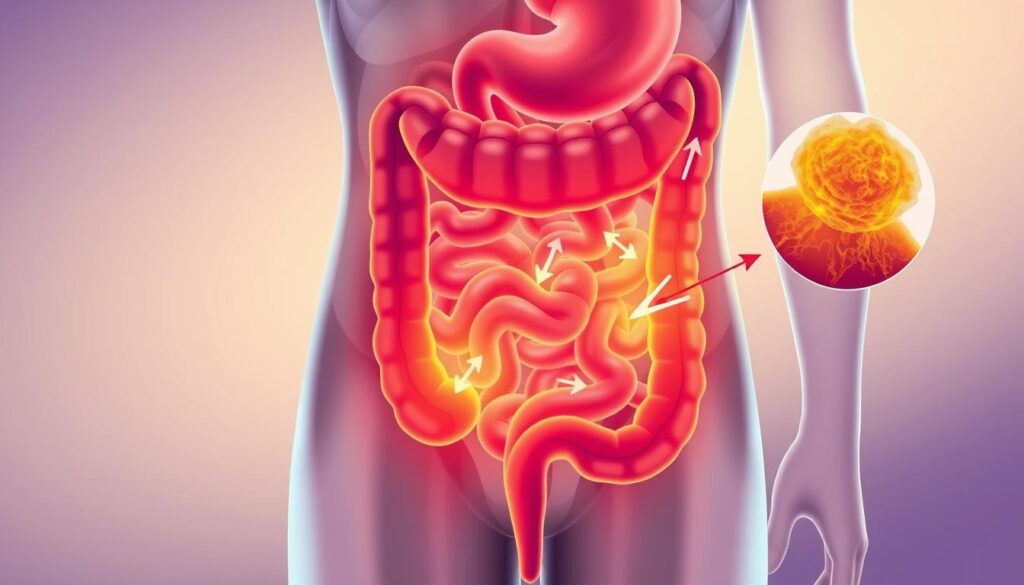
Inflammatory Bowel Disease (IBD) is a group of chronic digestive conditions. It mainly includes Crohn’s disease and ulcerative colitis. These disorders cause severe inflammation in your gut1.
IBD triggers intense internal battles in your body. Common symptoms include persistent diarrhea, rectal bleeding, and unexpected weight loss. You may also experience abdominal pain1.
Crohn’s disease and ulcerative colitis affect different parts of your digestive system. Crohn’s can impact any part of your GI tract. It creates multi-layered inflammation1.
Ulcerative colitis usually targets the large intestine and rectum. The exact cause of IBD remains unknown. However, a weak immune system might play a key role1.
Key Takeaways
- IBD involves chronic inflammation of the digestive tract
- Symptoms vary but often include persistent digestive issues
- Crohn’s disease and ulcerative colitis are primary IBD types
- Immune system dysfunction might contribute to IBD development
- Early diagnosis and management are crucial for quality of life
What is Inflammatory Bowel Disease (IBD)?
Inflammatory Bowel Disease is a group of autoimmune disorders affecting the digestive system. These chronic conditions can greatly impact your gut health. IBD can disrupt your overall well-being2.
IBD has unique traits that affect your body’s digestive tract. The disease includes two main types. These can cause severe belly pain and disrupt daily life2.
Types of Inflammatory Bowel Disease
- Crohn’s Disease: Can impact any part of the digestive system from mouth to anus3
- Ulcerative Colitis: Specifically affects the colon and rectum3
- Indeterminate Colitis: Presents features of both primary conditions
Key Symptoms and Diagnostic Approach
IBD presents various symptoms that can differ in strength. Common signs include:
- Persistent diarrhea
- Severe abdominal pain
- Unexpected weight loss
- Chronic fatigue
IBD is more than just a digestive disorder – it’s a complex condition that can impact multiple body systems.
Diagnosis Process
Diagnosing IBD involves a thorough approach. It includes several methods to identify the condition.
| Diagnostic Method | Purpose |
|---|---|
| Medical History Review | Understanding patient’s symptoms and family background |
| Physical Examination | Checking for signs of inflammation |
| Colonoscopy | Direct visualization of intestinal lining |
| Blood Work | Identifying inflammation markers |
Most people with IBD can manage their symptoms effectively with proper medical guidance2. Early detection and personalized treatment are crucial for managing IBD. These steps help improve quality of life for those affected.
Causes and Risk Factors of IBD
Inflammatory Bowel Disease (IBD) has complex origins. While the exact cause is unknown, researchers have identified several contributing factors. These factors help us understand this challenging condition better.
Genetic Predisposition
Genes play a big role in IBD risk. Over 200 genetic mutations may increase your chances of getting IBD4. Having a close relative with IBD raises your risk significantly.
About 5-20% of IBD patients have a family history of the disease5. People with Jewish ancestry also have a higher statistical risk5.
- Family history increases genetic risk
- Certain genetic mutations contribute to disease development
- People of Jewish ancestry have a higher statistical risk5
Environmental Triggers
Your surroundings can greatly impact IBD development. The risk goes up as countries become more industrialized4. Some environmental factors that may trigger IBD include:
- Early-life gastrointestinal infections
- Antibiotic use in infancy
- Exposure to sterile environments
- Changes in gut bacteria balance4
Lifestyle Factors
Your lifestyle choices can affect your IBD risk. Most people are diagnosed before age 30, with another peak in their 60s5. Key risk factors include:
- Smoking (increases risk for Crohn’s disease)6
- Regular use of nonsteroidal anti-inflammatory drugs6
- Diet and nutritional habits
Understanding these risk factors can help you make informed decisions about your health and potential preventive strategies.
Your immune system plays a crucial role in IBD. A faulty immune response can cause chronic inflammation. This may be triggered by a mix of genetic and environmental factors6.
Treatment Options for Inflammatory Bowel Disease
IBD management requires a tailored approach to your specific needs. The focus is on reducing inflammation and controlling symptoms. Preventing potential complications is also a key goal.
Medication Management Strategies
IBD treatment often involves multiple medications to address various aspects. Doctors recommend anti-inflammatory drugs and immunosuppressants to manage symptoms. These are based on specific medical guidelines.
- Corticosteroid medications provide quick symptom relief7
- 5-aminosalicylic acid medications work best for mild to moderate IBD7
- Immunomodulator treatments help manage long-term inflammation7
- Biologics target specific inflammatory pathways8
Specialized Treatment Approaches
Advanced IBD treatments include innovative biologics targeting inflammatory processes. Anti-TNF medications and anti-integrin therapies work well for moderate to severe cases7.
Primary non-response to these treatments can occur in up to 40% of patients. This highlights the need for personalized medical strategies8.
| Medication Type | Primary Use | Effectiveness |
|---|---|---|
| Corticosteroids | Quick symptom relief | High for short-term management |
| Biologics | Targeted inflammation control | Moderate to high effectiveness |
| Immunomodulators | Long-term inflammation management | Sustained symptom control |
Complementary Treatment Considerations
Your medical team might suggest vitamin and mineral supplements to address nutritional deficiencies7. Antibiotics may be prescribed to manage specific bacterial complications associated with IBD7.
Managing IBD is a collaborative journey between you and your healthcare providers.
Living with IBD: Tips and Support
Managing IBD requires a comprehensive approach to your life. Depression and anxiety often affect patients with IBD. Emotional support is vital for effective IBD management9.
Your IBD journey involves understanding your body and managing symptoms. Creating a supportive environment helps you thrive with this condition.
Emotional Well-being
Mental health is crucial in your IBD journey. The 988 Lifeline Chat and Text offers 24/7 confidential emotional support9. It’s there when you need it most.
Develop coping strategies to handle emotional challenges. Seeking professional support can help you navigate chronic illness difficulties.
Support Networks
A strong support network is key for IBD management. Connect with healthcare providers who understand your needs. Join support groups and involve family in your treatment plan9.
Stay up-to-date on vaccines and get regular health screenings. Open communication can greatly improve your overall well-being9.
Lifestyle Management
Your daily habits can greatly impact IBD symptoms. Eat four to six smaller meals daily to reduce digestive system workload10.
Try low-impact exercises like walking, swimming, and yoga during stable periods10. Stay hydrated and choose easy-to-digest foods.
Avoid potential trigger foods to manage your symptoms effectively10. These small changes can make a big difference in your IBD journey.
FAQ
What exactly is Inflammatory Bowel Disease (IBD)?
IBD is a chronic condition causing digestive tract inflammation. It includes two main types: Crohn’s disease and ulcerative colitis. This autoimmune disorder affects up to 1.6 million Americans, usually diagnosed before age 35.
What are the primary symptoms of IBD?
Common symptoms include abdominal pain, diarrhea (sometimes with blood), and urgent bowel movements. You might also experience weight loss and fatigue. Inflammation can occur in other body parts like eyes, mouth, and joints.
How is IBD diagnosed?
Diagnosis involves a thorough health history review and physical examination. Your doctor may order a colonoscopy with biopsies, stool analysis, and blood work. Imaging tests help determine the type and extent of your IBD.
What causes IBD?
The exact cause is unknown, but it involves an abnormal immune response. Genetic factors play a significant role in IBD development. Environmental triggers like early-life infections and antibiotic use might contribute to its onset.
Can IBD be cured?
There’s no permanent cure, but IBD can be effectively managed. Treatment aims to reduce inflammation, manage symptoms, and prevent flare-ups. With proper care, you can maintain a good quality of life.
What treatment options are available?
Treatment typically includes medications like immunosuppressants, biologics, and anti-inflammatory drugs. Some patients might require surgery to remove damaged intestinal sections. A multi-specialty approach involving various specialists is often recommended.
How does IBD impact daily life?
Living with IBD requires ongoing management and lifestyle adjustments. Focus on stress management, regular exercise, and diet modifications. Building a strong support network is crucial for coping with the condition.
Are there increased health risks with IBD?
IBD increases your risk of colon cancer, especially if diagnosed young. Regular check-ups and frequent colonoscopies are recommended. These help monitor your condition and detect potential complications early.
Can diet help manage IBD symptoms?
Dietary changes can significantly help manage IBD symptoms. Work with a nutritionist to identify trigger foods. Maintain a balanced diet and stay hydrated to reduce inflammation and improve digestive health.
Is stress related to IBD?
Stress doesn’t cause IBD, but it can trigger or worsen symptoms. Use techniques like meditation, counseling, and exercise to manage stress. Building a strong support system can help control your condition and improve well-being.
Source Links
- Inflammatory Bowel Disease (IBD): Understanding Crohn’s Disease and Ulcerative Colitis – https://www.kevinmarksmd.com/blog/1102161-inflammatory-bowel-disease-ibd-understanding-crohns-disease-and-ulcerative-colitis/
- Inflammatory Bowel Disease (IBD) Basics – https://www.cdc.gov/inflammatory-bowel-disease/about/index.html
- Types of Inflammatory Bowel Disease – https://nyulangone.org/conditions/inflammatory-bowel-disease/types
- What Causes IBD – https://www.cdc.gov/inflammatory-bowel-disease/causes/index.html
- Inflammatory Bowel Disease (IBD) – https://www.hopkinsmedicine.org/health/conditions-and-diseases/inflammatory-bowel-disease
- Inflammatory bowel disease (IBD) – Symptoms and causes – https://www.mayoclinic.org/diseases-conditions/inflammatory-bowel-disease/symptoms-causes/syc-20353315
- Medication for Inflammatory Bowel Disease – https://nyulangone.org/conditions/inflammatory-bowel-disease/treatments/medication-for-inflammatory-bowel-disease
- Treatment of Inflammatory Bowel Disease: A Comprehensive Review – https://pmc.ncbi.nlm.nih.gov/articles/PMC8720971/
- Living with IBD – https://www.cdc.gov/inflammatory-bowel-disease/living-with/index.html
- IBD Diet and Exercise | Living with IBD – https://www.crohnsandcolitis.com/ibd/diet-and-exercise

