
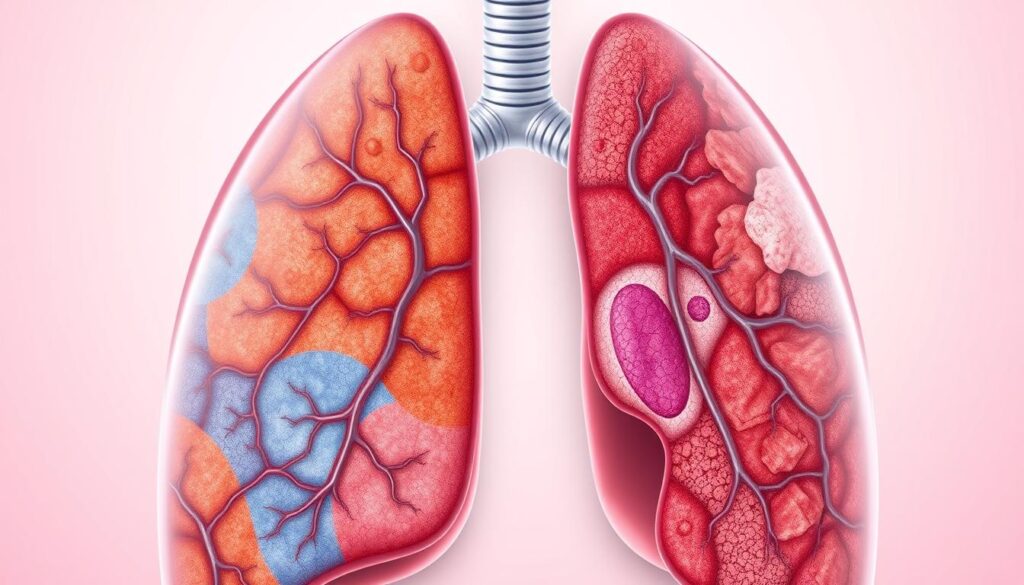
Interstitial Lung Disease (ILD) is a group of lung disorders that affect breathing. These conditions cause lung scarring, making it harder to breathe1. Your lungs gradually lose their ability to work well.
Lung tissue inflammation and scarring damage oxygen exchange structures. This lung disease can come from various sources, including the environment and autoimmune conditions1. Sometimes, the cause is unknown.
Knowing early signs and risk factors is key for managing pulmonary fibrosis. ILD affects more than just breathing. Patients may find daily activities challenging.
Checking your oxygen levels can help manage symptoms2. With proper medical care, you can maintain your quality of life. You can also work on keeping your lungs functioning well.
Key Takeaways
- ILD causes progressive lung scarring and breathing challenges
- Multiple factors can contribute to developing lung disease
- Early detection is critical for managing symptoms
- Oxygen monitoring can help track respiratory health
- Medical support is essential for managing ILD
What is Interstitial Lung Disease
Interstitial lung disease (ILD) is a group of lung disorders affecting respiratory health. These conditions cause inflammation and scarring in lung tissues. ILD makes breathing increasingly difficult3.
Learning about ILD can help you manage your respiratory well-being better. It’s crucial to recognize its impact on your lungs.
Types of Lung Diseases and Their Origins
ILD includes over 200 distinct lung disorders affecting the interstitium. The interstitium is the tissue surrounding the air sacs3.
- Idiopathic Pulmonary Fibrosis (IPF) – the most common form4
- Chronic Hypersensitivity Pneumonitis
- Occupational Lung Diseases
- Diffuse Parenchymal Lung Disease
Common Risk Factors for ILD Development
Several factors can increase your risk of developing ILD:
- Workplace exposure to harmful dust or chemicals5
- Cigarette smoking5
- Autoimmune conditions like lupus or rheumatoid arthritis3
- Radiation or chemotherapy treatments5
Understanding Lung Function Impact
ILD progressively damages lung tissue, making oxygen transfer harder5. You might experience these symptoms:
- Shortness of breath
- Persistent dry cough
- Fatigue
- Unexplained weight loss
Early detection and management are crucial for maintaining respiratory health.
| ILD Type | Prevalence | Primary Characteristics |
|---|---|---|
| Idiopathic Pulmonary Fibrosis | Most common ILD | More prevalent in men4 |
| Lymphangioleiomyomatosis (LAM) | Rare | Primarily affects women4 |
About 3 out of every 10,000 people in the United States are diagnosed with ILD yearly4. Knowing your risk factors and symptoms helps with early intervention and management.
Key Signs and Symptoms of Lung Scarring
Interstitial Lung Disease (ILD) can severely affect your breathing. It causes progressive lung scarring, making it harder to breathe6. Recognizing early signs helps you get timely medical help.
The main symptoms of Pulmonary Fibrosis include:
- Persistent dry cough that doesn’t improve7
- Shortness of breath during physical activities or at rest8
- Extreme fatigue and weakness
- Chest discomfort or pain
- Unexplained weight loss
Your risk of developing these symptoms increases with certain factors such as:
“Early recognition of lung scarring symptoms can be crucial for effective management and treatment.” – Respiratory Health Experts
As ILD progresses, you might face more serious health issues. These can include pulmonary hypertension or respiratory failure6. Quick action can slow the disease and improve your life quality.
| Symptom | Potential Impact |
|---|---|
| Dry Cough | Indicates lung inflammation |
| Shortness of Breath | Reduced oxygen absorption |
| Fatigue | Decreased respiratory efficiency |
Remember, while these symptoms can be alarming, early detection and proper medical care can help manage Interstitial Lung Disease effectively.
Diagnosis and Treatment Options for ILD
Interstitial Lung Disease (ILD) diagnosis and treatment require a thorough approach. Your healthcare journey will involve various strategies to understand and manage this condition. Multiple tests and treatments help pinpoint and address ILD’s complexities.
Diagnostic Testing Methods
ILD diagnosis involves sophisticated procedures. Your medical team may use various tests to identify the type and severity of lung inflammation. These tests are recommended by lung specialists.
- Pulmonary function tests to assess lung capacity9
- Blood tests for underlying conditions
- Chest CT scans to visualize lung tissue
- Bronchoscopy for detailed examination
- Surgical lung biopsy if needed9
Medical Treatment Approaches
ILD treatment varies based on type and progression. For conditions like Sarcoidosis or Connective Tissue Disease-Associated ILD, doctors may suggest targeted therapies. These aim to manage symptoms and slow disease progression.
| Medication Type | Purpose | Examples |
|---|---|---|
| Immunosuppressive Drugs | Reduce inflammation | Mycophenolate, Azathioprine10 |
| Antifibrotic Medications | Slow disease progression | Nintedanib, Pirfenidone10 |
Lifestyle Management Strategies
Managing ILD goes beyond medical treatments. Pulmonary Rehabilitation is crucial for improving your quality of life. This program includes exercise, breathing techniques, and nutritional guidance.
- Exercise conditioning
- Breathing techniques
- Nutritional counseling
- Psychological support10
“Oxygen Therapy can significantly improve your daily functioning and reduce strain on your heart and lungs.”
In advanced stages, lung transplantation might be an option. This is considered when conventional treatments aren’t effective10. Your healthcare team will guide you through each step of your treatment journey.
Conclusion
Understanding Interstitial Lung Disease (ILD) is vital for maintaining lung health. Research shows 28.5% of patients face fatal outcomes directly related to ILD11. Early detection and proactive management are key to improving your prognosis with pulmonary fibrosis12.
Monitoring disease progression is crucial. Studies indicate 50.6% of patients experience disease advancement11. Factors like reduced lung capacity and age play critical roles.
Work closely with healthcare professionals to develop personalized strategies. Stay informed to manage your lung health effectively through comprehensive medical research.
ILD treatment continues to evolve. Some forms of pulmonary fibrosis show a 20-40% five-year survival rate12. Ongoing research offers hope for better outcomes.
Your commitment to understanding your condition can significantly impact your life quality. Following medical advice and staying positive are essential steps. These actions can help improve your potential outcomes.
FAQ
What exactly is Interstitial Lung Disease (ILD)?
ILD is a group of conditions causing lung tissue inflammation and scarring. This scarring makes it hard for lungs to expand and fill with air. ILD can result from hazardous material exposure, autoimmune diseases, or unknown causes.
What are the primary symptoms of Interstitial Lung Disease?
Main symptoms include shortness of breath, persistent dry cough, and fatigue. Chest discomfort and weight loss may occur as the disease progresses. Early medical attention is crucial for proper diagnosis and treatment.
What causes Interstitial Lung Disease?
ILD can be triggered by dust exposure, airborne irritants, and certain medical treatments. Smoking and autoimmune conditions are also potential causes. Some types, like Idiopathic Pulmonary Fibrosis (IPF), have no known specific cause.
How is Interstitial Lung Disease diagnosed?
Diagnosis involves chest X-rays, CT scans, and lung function tests. These measure total lung capacity and assess damage. In some cases, doctors may recommend bronchoscopy or lung biopsy for a definitive diagnosis.
What treatment options are available for ILD?
Treatment depends on the specific type and severity of ILD. Options include medications to reduce inflammation and oxygen therapy to improve breathing. Pulmonary rehabilitation can enhance lung efficiency. Severe cases might require lung transplantation.
Lifestyle management, such as avoiding lung irritants, is also crucial for ILD patients. Maintaining overall health can help manage symptoms and slow disease progression.
Can Interstitial Lung Disease be cured?
The lung scarring caused by ILD is generally irreversible. However, early diagnosis and proper management can slow disease progression. Ongoing medical research continues to develop new treatment approaches for ILD patients.
Who is at highest risk for developing ILD?
Risk factors include older age and exposure to environmental toxins. Smoking, radiation, chemotherapy, and connective tissue diseases also increase risk. Certain occupations with high exposure to lung irritants can lead to ILD.
How can I prevent Interstitial Lung Disease?
Avoid exposure to lung irritants and quit smoking. Use protective equipment in high-risk work environments. Maintain a healthy lifestyle and get regular medical check-ups.
If you have risk factors or experience respiratory symptoms, consult a healthcare professional. Early detection and management are key to better outcomes.
Source Links
- Interstitial Lung Disease – StatPearls – https://www.ncbi.nlm.nih.gov/books/NBK541084/
- Understanding ILD – https://med.stanford.edu/ild/patient-resources/understanding-ild.html
- ILD (Interstitial Lung Disease) – St Vincent’s Lung Health – https://www.svhlunghealth.com.au/conditions/ild-interstitial-lung-disease
- What Are Interstitial Lung Diseases? – https://www.nhlbi.nih.gov/health/interstitial-lung-diseases
- Interstitial lung disease: MedlinePlus Medical Encyclopedia – https://medlineplus.gov/ency/article/000128.htm
- Interstitial lung disease – Symptoms and causes – https://www.mayoclinic.org/diseases-conditions/interstitial-lung-disease/symptoms-causes/syc-20353108
- Interstitial Lung Disease – https://www.lung.org/lung-health-diseases/lung-disease-lookup/interstitial-lung-disease
- Interstitial Lung Disease: Pulmonary Fibrosis – https://www.hopkinsmedicine.org/health/conditions-and-diseases/interstitial-lung-disease-pulmonary-fibrosis
- Interstitial Lung Disease (ILD) Diagnosis & Treatment | Mount Sinai – https://www.mountsinai.org/care/pulmonology/services/pulmonary-fibrosis-ild/treatment
- Treating ILD | Interstitial Lung Disease Treatment – https://www.nationaljewish.org/conditions/ild-pf/ild/ild-treatment
- Disease trajectories in interstitial lung diseases – data from the EXCITING-ILD registry – Respiratory Research – https://respiratory-research.biomedcentral.com/articles/10.1186/s12931-024-02731-3
- Interstitial lung disease: raising the index of suspicion in primary care – npj Primary Care Respiratory Medicine – https://www.nature.com/articles/npjpcrm201454

